Beyond the Dust and Grit: Aaron Agosto’s "Brash Rodeo" Captures the Nuanced Soul of the American West
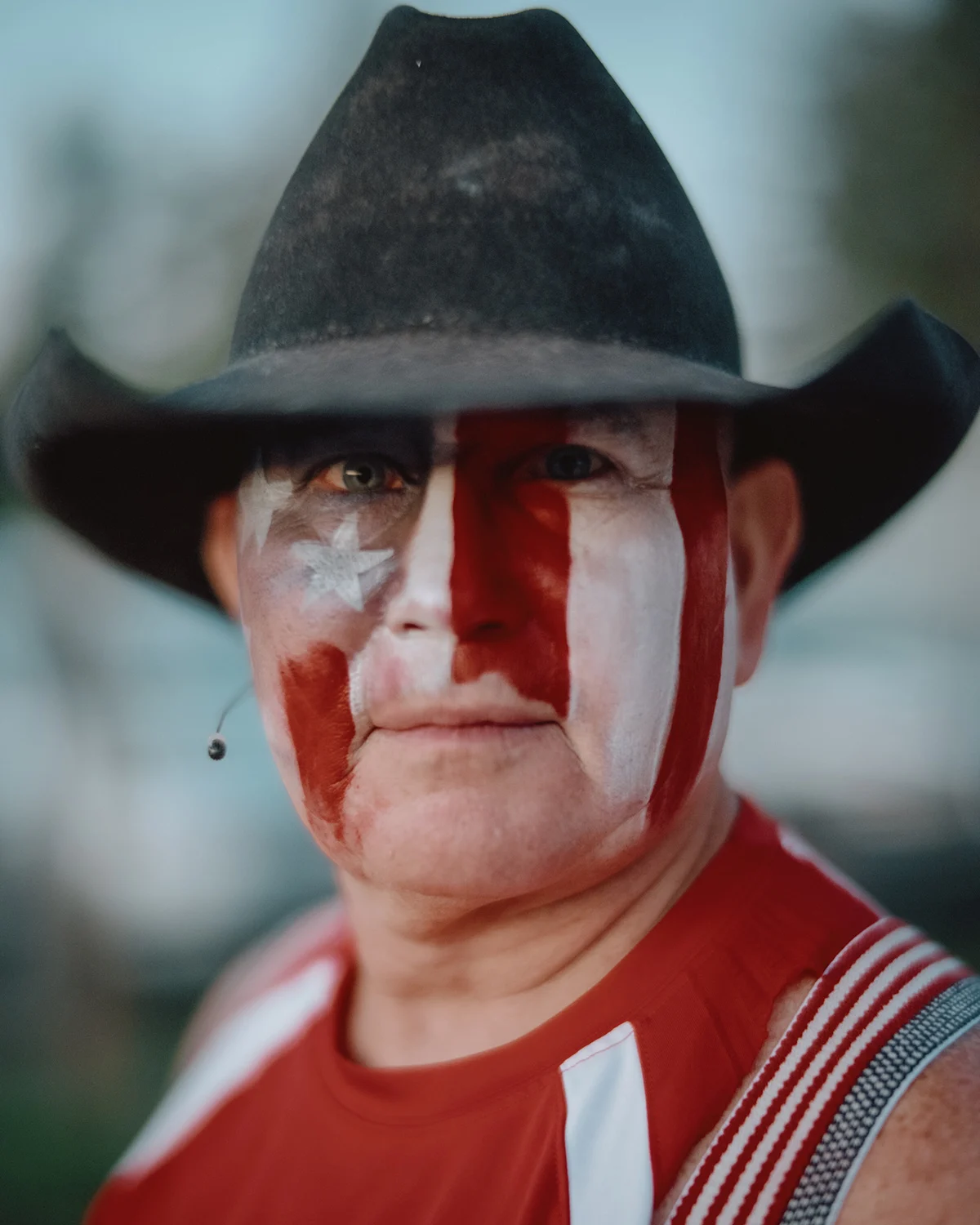
Montana’s Flathead Valley becomes the canvas for a photographer challenging romanticized notions of the frontier, finding unexpected tenderness within the raw energy of a historic rodeo.
Introduction: Unveiling the Unseen West
In the heart of Montana’s breathtaking Flathead Valley, a region steeped in the lore and legend of the American West, photographer Aaron Agosto is meticulously crafting a visual narrative that dares to diverge from the well-trodden path of romanticized frontier mythology. His latest series, "Brash Rodeo," delves into the vibrant, often overlooked, human tapestry woven into the fabric of Montana’s longest-running open rodeo. More than just a collection of action shots, Agosto’s work acts as a powerful lens through which to examine the evolving identity of the West, challenging preconceived notions of rugged individualism, brash machismo, and solitary existence. Instead, he uncovers a surprising undercurrent of softness, connection, and a deeply human desire to belong, all set against the dramatic backdrop of a community that embraces its heritage while forging a new future.
Main Facts: A Photographer’s Journey of Discovery
Aaron Agosto, a photographer whose artistic sensibility is intrinsically linked to the spirit and history of the American West, has embarked on a profound exploration of its contemporary reality. Based in Montana’s Flathead Valley, a region synonymous with sweeping landscapes and a resilient spirit, Agosto’s photographic endeavors are not merely observational but deeply investigative. His series, "Brash Rodeo," centers on a significant cultural institution: Montana’s longest-running open rodeo. This particular rodeo, an event that has echoed through generations, is now under the stewardship of Vance Brash, a man whose own journey from Pittsburgh to the rugged terrain of Montana serves as a fascinating parallel to the broader themes explored in the project.
Vance Brash, a recent transplant to Montana, arrived in 2017 and completed the construction of his home in the spring of 2020. This period of newfound freedom, coupled with a genuine desire to integrate into his adopted community, propelled him to connect with the very essence of his new home. It was this personal quest for belonging that inadvertently laid the groundwork for Agosto’s artistic inquiry. Brash’s initial encounter with the rodeo, far from the violent spectacle he might have anticipated, revealed an unexpected dimension. He describes being captivated by "moments of softness. Softness in the light, and in the interactions, softness in what I expected to be a rugged and hyper masculine environment." This revelation became the cornerstone of Agosto’s photographic vision, transforming the rodeo from a mere sporting event into a complex microcosm of human experience.
The "Brash Rodeo" project, therefore, transcends the traditional documentation of a sporting event. It evolves into a deeply personal and cultural exploration for both the photographer and the subject. For Brash, the rodeo became a conduit for building a connection with a place and culture that was initially foreign to him, while simultaneously challenging his own ingrained perceptions of what the American West truly represented. This journey of demystification is central to Agosto’s artistic mission. He seeks to move beyond the pervasive mythology of the West – a narrative often characterized by "rugged individualism, of brash machismo, and poetic solitude." Through his lens, Agosto endeavors to unveil a more nuanced and authentic understanding of the region and its people, demonstrating that the West is not a monolithic entity but a dynamic and evolving landscape of human relationships and evolving identities.
Chronology: The Genesis and Evolution of "Brash Rodeo"
The genesis of Aaron Agosto’s "Brash Rodeo" series is rooted in a confluence of personal experiences and a burgeoning artistic vision. While the exact timeline of the photographic project’s inception is not explicitly detailed, its foundation can be traced back to Vance Brash’s arrival in Montana in 2017 and the subsequent completion of his home in the spring of 2020. This period, marked by increased free time and a desire for community engagement, provided the fertile ground for Brash’s initial encounter with the rodeo and his subsequent introspection.
It is within this context that Agosto, already a photographer deeply influenced by the spirit of the American West, identified a compelling narrative. The "Brash Rodeo" likely began as a direct response to Brash’s own evolving perceptions. His initial expectation of a "violent spectacle" gave way to a profound appreciation for the subtle, often overlooked, moments of grace and connection. This personal revelation, shared by Brash, likely resonated deeply with Agosto’s artistic sensibilities, which are inherently drawn to the authentic and the human.
The project’s evolution can be understood as a journey of discovery. As Agosto immersed himself in the rodeo environment, he would have systematically documented the various facets of the event. This would have involved:
- Initial Observation and Engagement: Agosto would have spent time at the rodeo, not just as a spectator, but as an observer attuned to the nuances of the environment. This would have included understanding the rhythm of the events, the interactions between participants and spectators, and the prevailing atmosphere.
- Focus on Light and Interaction: True to Brash’s observation, Agosto would have consciously sought out and captured "softness in the light" – the golden hues of dawn or dusk bathing the arena, the subtle shadows playing on faces, or the gentle glow illuminating moments of shared laughter. Equally important would have been the "interactions," the unspoken gestures, the camaraderie, the support offered between individuals, and the collective spirit of the event.
- Challenging Preconceived Notions: As the project progressed, Agosto would have intentionally worked to counter the stereotypical imagery associated with the West. This would involve actively seeking out and highlighting moments that defied expectations of hyper-masculinity and rugged individualism. He would have looked for vulnerability, for tenderness, for expressions of community and shared experience.
- Building a Connection: The series itself becomes a testament to Agosto’s effort to "build a connection with a place and culture that wasn’t his own." This implies a sustained engagement with the rodeo community, fostering trust and understanding, which in turn would have allowed for more intimate and revealing photographic opportunities.
- Developing a Nuanced Perspective: The culmination of the project lies in its ability to present a "more nuanced view of the place and culture." This suggests a body of work that moves beyond superficial representations, offering viewers a deeper understanding of the complexities and contradictions inherent in the contemporary American West.
The timeline, therefore, is not a rigid sequence of dates but a progression of artistic intent and execution, driven by the desire to capture a more authentic and multifaceted portrayal of a cultural landscape.
Supporting Data: The Rodeo as a Microcosm of Community and Identity
To truly appreciate the depth of Aaron Agosto’s "Brash Rodeo" series, it is essential to understand the cultural significance of rodeos in the American West and the specific context of Montana’s longest-running open rodeo. Rodeos are not merely sporting events; they are deeply ingrained cultural phenomena that serve as powerful expressions of identity, heritage, and community.
-
Historical Roots and Cultural Significance: Rodeos trace their origins back to the cattle ranching traditions of the American West. They are a living embodiment of the skills required for working livestock – roping, riding, and handling animals. Beyond the practical skills, rodeos have evolved into elaborate spectacles that celebrate the cowboy ethos, a romanticized ideal of self-reliance, courage, and connection to the land. For many communities, particularly in rural areas, rodeos are annual events that bring people together, fostering a sense of shared identity and pride in their Western heritage. They are often seen as a way to preserve traditional ways of life in the face of modernization.
-
Montana’s Rodeo Legacy: Montana, with its vast ranches and enduring cowboy culture, boasts a rich rodeo history. The state is home to numerous rodeos, each with its own unique character and traditions. The "longest-running open rodeo" in Montana, as referenced in the article, holds particular significance. Its longevity speaks to its deep roots within the community and its ability to adapt and endure over time. These events often serve as vital economic engines for small towns, drawing tourists and participants from far and wide. They are also crucial social gatherings, offering opportunities for families to connect, for neighbors to catch up, and for a sense of community to be reinforced.
-
The "Brash Rodeo" Subjectivity: The specific rodeo that Agosto is documenting, now under the stewardship of Vance Brash, presents a compelling case study. Brash’s personal journey from an urban environment (Pittsburgh) to a rural Western setting (Montana) mirrors the broader demographic shifts and evolving identities within the West. His experience of finding "softness" within the rodeo is particularly illuminating. This challenges the often-stereotypical image of the rodeo as solely a domain of aggressive competition and hyper-masculinity. Instead, it suggests a more complex reality where elements of camaraderie, mutual respect, and even vulnerability can coexist and flourish.
-
Elements of "Softness" within the Rodeo: Agosto’s focus on "softness in the light" and "softness in the interactions" points to several potential visual elements within the rodeo that defy traditional portrayals:
- Light: The photographer might be capturing the ethereal glow of early morning or late afternoon sun, casting long shadows and creating a more contemplative atmosphere. The way light falls on the faces of riders, their families, or even the animals themselves can reveal a gentler side.
- Interactions: This could encompass a wide range of human behaviors: a parent comforting a nervous child before an event, the shared laughter between cowboys after a successful ride, the quiet support offered to a fallen competitor, the camaraderie among the volunteers who make the event possible, or the affectionate interactions between riders and their animals.
- Humanity over Spectacle: By highlighting these moments, Agosto is shifting the focus from the raw spectacle of the competition to the underlying human experiences that define the event. He is looking for the quiet moments of connection, the shared emotions, and the underlying bonds that tie the community together.
-
Challenging the Mythology: The "mythology of the west" that Brash and Agosto are confronting is a powerful and pervasive one. It often centers on the lone hero, the self-made man, and a stoic, unyielding spirit. While these elements are undoubtedly part of the Western narrative, they often overshadow the realities of community, interdependence, and the evolving nature of human connection. Agosto’s "Brash Rodeo" aims to provide a counter-narrative, one that acknowledges the ruggedness but also celebrates the tenderness, the shared humanity, and the capacity for connection that exists within these seemingly tough environments.
Through his lens, Agosto is not just documenting a rodeo; he is deconstructing a stereotype and rebuilding a more nuanced understanding of the American West, one frame at a time. The rodeo, in his hands, becomes a vibrant testament to the enduring power of community and the ever-evolving definition of what it means to be Western.
Official Responses and Artistic Intent: A Dialogue of Perception
While there may not be "official responses" in the traditional governmental or institutional sense to an art project like Aaron Agosto’s "Brash Rodeo," the provided text offers a profound insight into the artistic intent and the dialogue it seeks to initiate. The "official response" here is embodied by Vance Brash himself, whose personal journey and observations serve as the foundational impetus for Agosto’s work.
-
Vance Brash as the Primary "Responder": Brash’s statement, "I went to my first rodeo expecting a violent spectacle, but instead I was drawn to moments of softness. Softness in the light, and in the interactions, softness in what I expected to be a rugged and hyper masculine environment," acts as the primary "response" to the prevailing mythology of the West. This is not a formal declaration, but an authentic personal revelation that directly challenges pre-conceived notions. His experience validates Agosto’s artistic inclination to look beyond the obvious and explore the subtler dimensions of the subject matter.
-
Agosto’s Artistic Mission as a "Response" to Mythology: Aaron Agosto’s work, in its entirety, can be seen as a thoughtful and deliberate "response" to the romanticized and often simplified narratives of the American West. His stated intention to capture a "more nuanced view of the place and culture" is a direct counterpoint to the monolithic portrayals that have dominated popular imagination for decades. This artistic mission is not about negating the historical realities of rugged individualism or hardship, but about enriching them with the complexities of human connection and emotional depth.
-
The Rodeo Community as an Unwitting Participant: While not directly "responding" in a verbal capacity, the individuals within the "Brash Rodeo" community, through their actions and interactions, become unwitting participants in this dialogue. Their everyday behaviors – moments of support, shared laughter, familial bonds, and the collective effort to maintain the rodeo – provide the raw material for Agosto’s exploration. Their authentic engagement with the event, whether they are aware of the artistic project or not, contributes to the nuanced portrayal Agosto seeks to achieve.
-
The Art World’s Implicit "Response": The very act of creating and exhibiting a series like "Brash Rodeo" implies an engagement with the art world and its ongoing discourse about representation, identity, and cultural narratives. By presenting his work, Agosto invites viewers, critics, and curators to engage with his vision, to question their own assumptions about the American West, and to appreciate a more layered and humanistic perspective. The exhibition and potential publication of his work would constitute the broader "response" from the art world.
In essence, the "responses" surrounding "Brash Rodeo" are not about policy or official pronouncements, but about the power of individual experience and artistic interpretation to challenge and reshape perceptions. Vance Brash’s personal epiphany provides the initial spark, and Aaron Agosto’s photographic lens amplifies this sentiment, offering a visual dialogue that enriches our understanding of the American West.
Implications: Reshaping Perceptions and Fostering Deeper Understanding
Aaron Agosto’s "Brash Rodeo" series carries significant implications, extending far beyond the confines of a photographic exhibition. By delving into the nuanced realities of a Montana rodeo, the project has the potential to reshape perceptions, foster deeper understanding, and contribute to a more authentic and multifaceted portrayal of the American West.
-
Challenging Stereotypes and Romanticized Narratives: The most immediate implication of "Brash Rodeo" is its power to dismantle pervasive stereotypes. For generations, the American West has been largely defined by images of solitary cowboys, stoic frontiersmen, and untamed wilderness. While these elements hold historical truth, they often obscure the complex social fabric and emotional lives of the people who inhabit these regions. Agosto’s work, by highlighting moments of "softness" and connection, offers a vital counter-narrative, demonstrating that the West is not solely a land of rugged individualism but also a place of community, vulnerability, and profound human interaction. This can lead to a more empathetic and less monolithic understanding of Western identity.
-
Promoting Cultural Nuance and Authenticity: The series implies a call for greater cultural nuance in how we understand and represent the American West. It suggests that the region is not static but dynamic, evolving with its inhabitants and their experiences. Vance Brash’s personal journey from Pittsburgh to Montana serves as a microcosm of this evolution, illustrating how newcomers can integrate and contribute to the existing culture while also bringing their own perspectives. By capturing these evolving identities, Agosto’s work encourages a more authentic and less idealized representation of Western life, acknowledging its complexities and contradictions.
-
Fostering Empathy and Connection: By focusing on the human element and the shared experiences within the rodeo, Agosto’s photography can foster empathy among viewers. The moments of tenderness, support, and camaraderie he captures are universal human emotions that transcend geographical and cultural boundaries. This can bridge the gap between those who have direct experience of the American West and those who only know it through popular culture, promoting a deeper understanding and appreciation of its people.
-
Encouraging Self-Reflection: For individuals who identify with the "mythology of the West," the series can serve as an invitation for self-reflection. It challenges the notion of a singular, unchanging Western identity and encourages an acknowledgment of the multifaceted nature of personal and community experiences. Vance Brash’s own admission of confronting his "preconceived notions" is a powerful example of this internal dialogue, suggesting that even those deeply embedded in the culture can discover new layers of understanding.
-
The Enduring Relevance of Community in a Changing World: In an increasingly fragmented and individualistic world, the emphasis on community and connection within "Brash Rodeo" holds particular relevance. The rodeo, as depicted by Agosto, is more than just a competition; it is a social nexus, a place where relationships are forged and strengthened. This highlights the enduring human need for belonging and the vital role that shared traditions and communal gatherings play in maintaining social cohesion, even in regions often characterized by their vastness and perceived isolation.
-
Inspiring Future Artistic Exploration: Ultimately, "Brash Rodeo" serves as an inspiration for other artists and storytellers. It demonstrates the power of photography to uncover hidden narratives and to challenge dominant cultural narratives. By showcasing the unexpected tenderness within a seemingly rugged environment, Agosto opens up new avenues for artistic inquiry, encouraging others to look beyond the surface and explore the deeper, more human dimensions of their subjects.
In conclusion, Aaron Agosto’s "Brash Rodeo" is more than just a visual record; it is a profound commentary on identity, community, and the evolving spirit of the American West. Its implications lie in its ability to foster a more nuanced, empathetic, and authentic understanding of a region that continues to capture the imagination, urging us to look beyond the dust and grit to discover the enduring heart of the frontier.