OpenAI’s Strategic Pivot: Inside the Launch of GPT-5.6 Cyber and the Daybreak Access Program
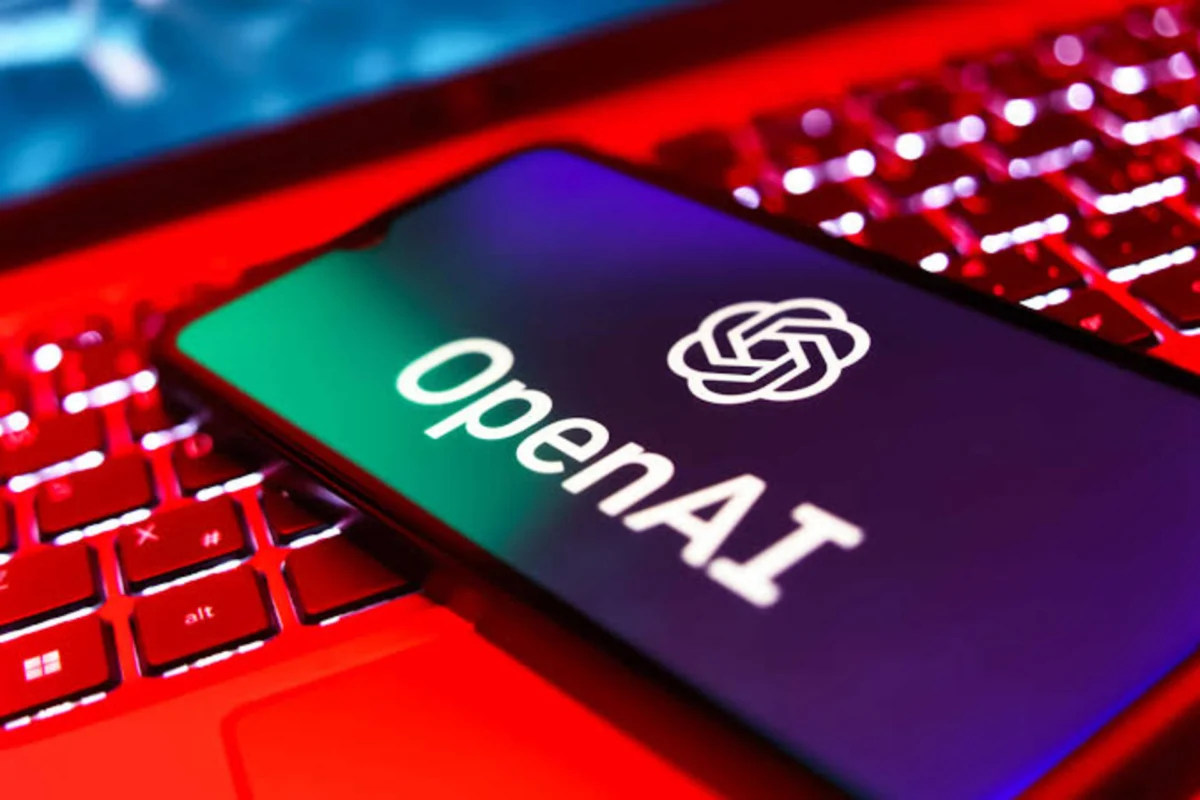
The landscape of artificial intelligence is shifting from general-purpose assistants to highly specialized, high-stakes industrial tools. In a move that signals a new era of "controlled deployment," OpenAI has officially unveiled GPT-5.6 Cyber, a model engineered specifically for the complexities of cybersecurity. Unlike its predecessors, which were released to the public via ChatGPT, GPT-5.6 Cyber is being kept under a strict "walled garden" approach, accessible only to a vetted tier of global security firms and consultancies.
This release marks a significant departure for OpenAI. By restricting access to a specialized cohort of partners, the organization is attempting to solve the "dual-use" dilemma—the reality that any tool capable of defending a network is equally capable of dismantling one. Through the newly established Daybreak Access program, OpenAI is positioning itself not just as a software provider, but as the foundational intelligence layer for the world’s most critical digital defenses.
I. Main Facts: A Specialized Engine for Digital Warfare
GPT-5.6 Cyber is not a chatbot in the traditional sense. It is a large language model (LLM) fine-tuned on massive datasets of exploit code, vulnerability databases (CVEs), network architecture diagrams, and patch histories. Its primary functions are categorized into four pillars: vulnerability research, penetration testing, incident response, and automated remediation.
The model is delivered through two distinct service tiers under the Daybreak Access umbrella:
- Daybreak Blue: Focused on defensive operations. This tier is designed to help security operations centers (SOCs) identify weaknesses in real-time, validate whether a vulnerability is exploitable in a specific environment, and generate the code necessary to patch the flaw.
- Daybreak Red: A more restricted tier focused on "red teaming" or offensive security simulation. This version is designed for specialized testing, allowing elite security professionals to simulate sophisticated adversary behavior to stress-test an organization’s defenses.
The most striking aspect of this launch is the exclusion of the general public. There is no "Cyber" toggle in the standard ChatGPT interface. Instead, OpenAI has partnered with a "who’s who" of the cybersecurity and consulting world, including CrowdStrike, Palo Alto Networks, IBM, Accenture, and Cisco, among others. These partners act as the "last mile" of the technology, integrating GPT-5.6 Cyber into their existing platforms and services.
II. Chronology: The Road to Specialized Intelligence
The journey to GPT-5.6 Cyber has been a rapid evolution from general-purpose reasoning to domain-specific expertise.
The Era of Emergent Capabilities (2022–2023)
With the release of GPT-3.5 and GPT-4, security researchers quickly discovered that general-purpose models could write basic phishing emails and identify simple buffer overflow vulnerabilities. However, these models were prone to "hallucinations" and lacked the deep contextual understanding required for complex enterprise environments.
The Pilot Phase (Early 2024)
OpenAI began quiet collaborations with firms like Microsoft (through its Security Copilot) and specialized security vendors. These early experiments proved that an LLM could significantly reduce the "mean time to respond" (MTTR) for security analysts by summarizing logs and suggesting remediation steps.
The Development of GPT-5.6 (Late 2024 – Mid 2025)
As the underlying architecture of the GPT-5 series matured, OpenAI shifted focus toward "narrowing" the model. GPT-5.6 was branched off as a specialized derivative. Unlike the general GPT-5, which prioritizes creative writing and broad reasoning, the 5.6 Cyber branch was trained with a heavy emphasis on formal logic, programming languages, and "adversarial reasoning."
The Launch of Daybreak Access (August 2026)
OpenAI officially formalized its gatekeeper strategy with the Daybreak Access program. This program was created to address concerns from global regulators and the cybersecurity community that a "Cyber GPT" could lower the barrier to entry for script kiddies and state-sponsored threat actors.
III. Supporting Data: Why Specialized Models are Necessary
The move toward GPT-5.6 Cyber is driven by the sheer volume of data in modern cybersecurity. According to industry reports, the average enterprise now manages over 1,000 security alerts per day, many of which are false positives.
Performance Benchmarks
Preliminary data from OpenAI’s partner testing suggests that GPT-5.6 Cyber offers:
- 40% Improvement in Vulnerability Detection: Compared to GPT-4, the new model is significantly more accurate at identifying "zero-day" style logic flaws in proprietary codebases.
- 60% Reduction in Triage Time: Security analysts using tools powered by Daybreak Blue can determine the severity of an incident in minutes rather than hours.
- High-Fidelity Code Generation: The model’s ability to generate "remediation scripts" (code that fixes a bug) has a 92% success rate in sandboxed environments, a massive jump from the 65% seen in general-purpose models.
The Partner Ecosystem
The rollout includes a massive infrastructure of third-party expertise. The initial list of "Daybreak Partners" includes:

- Consulting Giants: Accenture, Capgemini, Cognizant, EY, KPMG, PwC.
- Cybersecurity Vendors: Palo Alto Networks, CrowdStrike, Cisco, Sophos, Akamai, Fortinet, Cloudflare.
- Specialized Testing Firms: NCC Group, SpecterOps.
By leveraging these partners, OpenAI ensures that the model is never "floating" in the wild. It is always wrapped in the partner’s own security controls, identity verification, and human oversight.
IV. Official Responses: The "Human-in-the-Loop" Philosophy
OpenAI has been proactive in framing this release as a win for "defenders." In official statements, the company emphasizes that GPT-5.6 Cyber is not an autonomous hacker, but an "analyst multiplier."
"Our goal with GPT-5.6 Cyber is to tip the scales in favor of the defender," an OpenAI spokesperson stated during the unveiling. "The digital attack surface is expanding faster than humans can protect it. By providing these capabilities to established security professionals, we are ensuring the technology is used responsibly while providing the speed and scale necessary to combat modern threats."
Partner Endorsements
Executives from the partner firms have echoed this sentiment. A spokesperson for Palo Alto Networks noted, "Integrating GPT-5.6 Cyber into our Cortex platform allows us to provide our customers with a level of automated reasoning that was previously impossible. It doesn’t replace our analysts; it gives them a superpower."
IBM highlighted the remediation capabilities: "The ability for an AI to not just tell you that you’re being attacked, but to actually write the firewall rule or the code patch to stop it in real-time, is the holy grail of cybersecurity."
Regulatory Oversight
OpenAI has also signaled its willingness to work with government agencies. The Daybreak Access program includes "logging and monitoring" requirements that allow OpenAI to see how the model is being utilized, ensuring that no partner is using the technology to develop prohibited offensive capabilities or bypass international sanctions.
V. Implications: The Future of the Cyber Arms Race
The release of GPT-5.6 Cyber carries profound implications for the future of technology, labor, and geopolitics.
1. The Death of the "Entry-Level" Analyst?
One of the most immediate concerns is the impact on the cybersecurity workforce. If an AI can triage alerts and write remediation scripts, the role of the "Junior SOC Analyst" may become obsolete. However, OpenAI and its partners argue that this will actually solve the "talent gap" by allowing existing professionals to focus on high-level strategy rather than mundane log review.
2. The "Walled Garden" Precedent
This launch sets a precedent for how powerful AI will be released in the future. We may see "GPT-5.7 Medical" or "GPT-5.8 Legal," each restricted to licensed professionals. This marks the end of the "wild west" era of LLMs, where any user could prompt a model to perform any task. OpenAI is moving toward a professional licensing model that mirrors the pharmaceutical or aerospace industries.
3. The Adversarial Response
While OpenAI is keeping its model behind a wall, the reality is that "Cyber AI" is an arms race. Adversaries in Russia, China, and North Korea are undoubtedly developing their own specialized cyber-models without the ethical constraints or "Daybreak" restrictions. This creates a situation where "AI Shield" meets "AI Sword." The effectiveness of GPT-5.6 Cyber will be tested not in a lab, but in the ongoing, invisible wars being fought across global networks.
4. Accountability and Liability
The integration of AI into incident response raises difficult legal questions. If GPT-5.6 Cyber suggests a "fix" that inadvertently crashes a hospital’s network or a power grid, who is liable? Is it OpenAI, the security partner (like IBM), or the enterprise that implemented the fix? The Daybreak Access program attempts to mitigate this by requiring "human oversight," but as the AI moves faster, the "human in the loop" may become a bottleneck that organizations are tempted to bypass.
5. Democratization vs. Security
Finally, there is the ethical question of "gatekeeping." By limiting GPT-5.6 Cyber to large, wealthy corporations and consultancies, OpenAI may be widening the security gap between the "haves" and the "have-nots." Small businesses and non-profits, which are often the most vulnerable to ransomware, may find themselves unable to afford the premium services powered by this new technology.
Conclusion
GPT-5.6 Cyber is more than just a software update; it is a strategic manifesto. It represents OpenAI’s realization that with great power comes the need for great restriction. By building a specialized engine for the cybersecurity industry and delivering it through a vetted network of partners, OpenAI is attempting to usher in a new era of digital defense. Whether this "walled garden" can withstand the pressures of a global, unrestricted AI arms race remains to be seen, but for now, the message is clear: the future of AI is specialized, professionalized, and strictly controlled.