
The Lens of Conservation: Paul Nicklen’s ‘Reverence’ and the 30-Year Crusade to Save the Natural World
For more than three decades, the name Paul Nicklen has been synonymous with the breathtaking, the ethereal, and the urgently fragile. As one of the world’s most acclaimed wildlife photographers and a leading voice in marine conservation, Nicklen has spent his life documenting the front lines of the climate crisis. Now, in a career-defining moment, Nicklen is set to release his most ambitious retrospective to date. Titled Reverence, the forthcoming monograph from publisher Hemeria serves as both a visual eulogy for what we are losing and a clarion call for what we must protect.
Scheduled for release on July 28—strategically aligned with World Conservation Day—Reverence is far more than a coffee-table book. It is a curated odyssey through thirty years of expeditions, featuring 160 photographs that span the globe’s most remote ecosystems. From the icy depths of the Arctic to the sun-scorched deltas of the American West, the collection offers a comprehensive look at the biodiversity that defines our planet and the vulnerabilities that threaten it.

Main Facts: A Monumental Collection of Visual Storytelling
The announcement of Reverence marks a significant milestone in the intersection of fine art and environmental activism. Published by the French house Hemeria, the book is designed to be the definitive collection of Nicklen’s work. Of the 160 images included, several are world-renowned staples of National Geographic lore, while others are previously unpublished gems rescued from the photographer’s vast archives.
Nicklen, a co-founder of the non-profit organization SeaLegacy alongside his partner and fellow conservationist Cristina Mittermeier, has long utilized his lens to bridge the gap between scientific data and public emotion. Reverence follows this mission, focusing on three core pillars:

- Global Biodiversity: Showcasing the variety of life, from apex predators like grizzly bears and lions to the specialized marine life of the polar regions.
- Climate Vulnerability: Documenting the literal melting of the world’s "refrigeration system" and the subsequent displacement of species.
- The Concept of "Reverence": An invitation for the viewer to move beyond mere observation and into a state of deep respect and connection with the natural world.
The book’s release on July 28 is a deliberate choice. World Conservation Day serves as an international reminder of the need to preserve our natural resources. By launching Reverence on this day, Nicklen and Hemeria aim to channel the aesthetic power of photography into tangible support for conservation efforts.
Chronology: Thirty Years Beneath the Ice and Across the Tundra
To understand the weight of Reverence, one must look at the three-decade journey that led to its creation. Paul Nicklen’s career did not begin in a studio, but in the small Inuit community of Baffin Island in the Canadian Arctic. Growing up as one of the few non-Inuit in the region, Nicklen developed a foundational understanding of the ecosystem that would later become his primary subject.

The 1990s: From Scientist to Storyteller
Before he was a photographer, Nicklen was a biologist. This scientific background is the "secret sauce" of his work; he understands the behavior of his subjects, allowing him to get closer to dangerous or elusive animals than almost any other photographer. In the late 90s, he realized that data alone wouldn’t save the Arctic—he needed to show the world its beauty.
The 2000s: The National Geographic Era
Nicklen became a fixture at National Geographic, where he produced some of the most iconic images of the 21st century. His work on leopard seals, narwhals, and polar bears transformed him into a household name. It was during this period that he began documenting the thinning of the sea ice, providing visual evidence of a warming planet long before "climate change" was a daily headline.

2014–Present: The Birth of SeaLegacy
In 2014, Nicklen and Cristina Mittermeier founded SeaLegacy. This marked a shift from traditional journalism to high-impact activism. They realized that while magazines reached millions, social media and direct-to-consumer storytelling could reach billions. Reverence represents the culmination of this transition—a legacy project that distills thirty years of adventure into a single, cohesive narrative.
Supporting Data: The Anatomy of an Image
The power of Nicklen’s work lies in its technical precision and its ability to capture "the decisive moment" in environments where humans aren’t meant to survive. Reverence highlights several specific ecosystems and species that provide a data-driven look at our changing world.

The Arctic Bay and the Narwhal
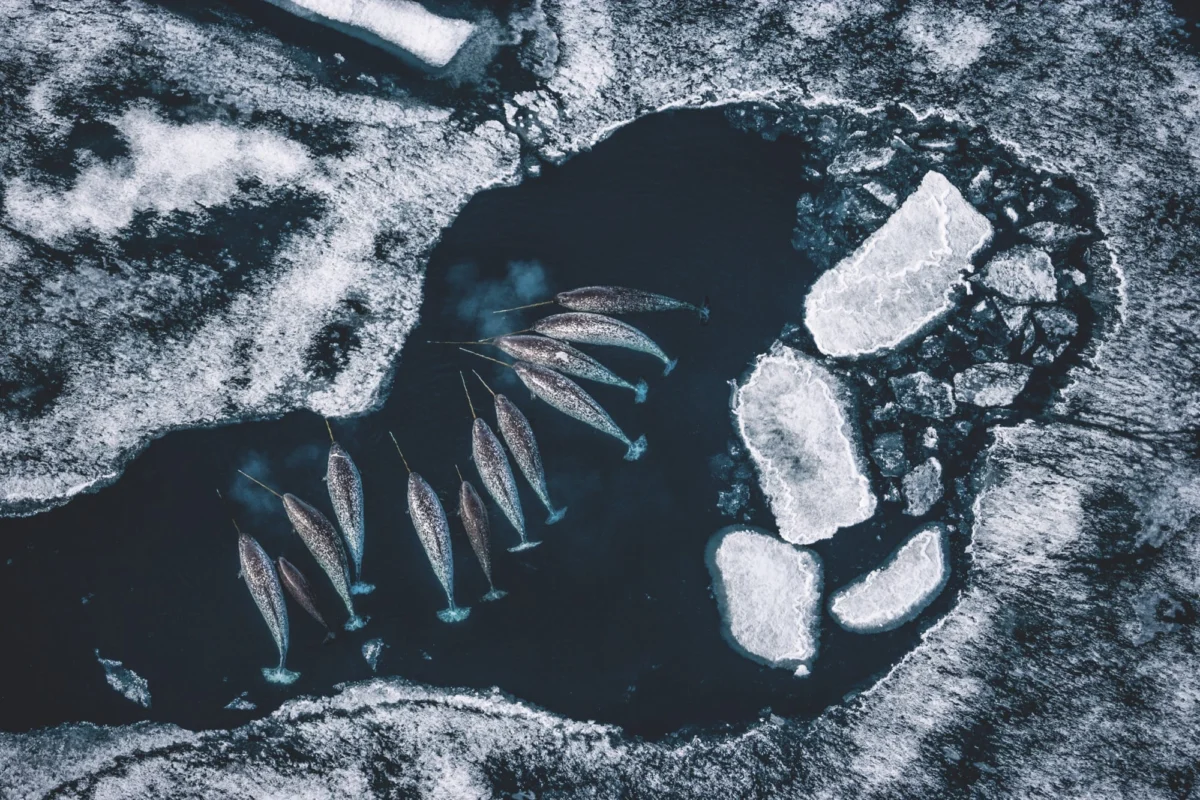
One of the standout spreads in the book features narwhals feeding on cod in the Arctic Bay off Baffin Island. These "unicorns of the sea" are notoriously difficult to photograph. The presence of these whales in specific pockets of open water (polynyas) is a biological indicator of the health of the Arctic ecosystem. Nicklen’s images provide a rare glimpse into a world that is disappearing as the "multi-year ice"—ice that remains frozen year-round—continues to vanish.
The Colorado River Delta
Moving away from the poles, the book includes striking aerial photography of the Colorado River delta. Once a lush waterway, the delta now resembles a skeletal, root-like system due to over-extraction and drought. These images serve as a stark contrast to the blue-hued marine shots, illustrating that the water crisis is not just a polar issue, but a global one.

Apex Predators as Sentinels
The collection features intimate close-ups of lion cubs, wolves on mossy boulders, and charging grizzly bears. Biologists often refer to these as "umbrella species." By protecting the vast territories these animals require to survive, we inherently protect thousands of other species within that same ecosystem. Nicklen’s focus on the "fierce gaze" of these animals is designed to create an empathetic link, turning a distant predator into a relatable individual.
Official Responses and Philosophical Framing
The release of the book has been met with anticipation from both the art world and the scientific community. In a statement regarding the title and theme of the book, the project’s curators noted:

“Reverence is what we feel in the silent presence of a whale beneath the ice, in the fierce gaze of a polar bear, in the timeless dance of ocean and light. It is what the natural world evokes when we stop long enough to truly see it.”
This sentiment is echoed by Cristina Mittermeier, who has often spoken about the concept of "Enoughness" and the need for humanity to recalibrate its relationship with nature. The collaboration between Nicklen and Mittermeier has become a gold standard for modern conservation, blending Nicklen’s raw, visceral style with Mittermeier’s lyrical and culturally focused perspective.

Publishing experts at Hemeria have emphasized the book’s production quality, noting that the physical medium of a book allows for a "slow consumption" of imagery that social media cannot provide. In an era of "doom-scrolling," Reverence is intended to be an antidote—a space for reflection and quietude.
Implications: Photography as a Tool for Policy and Survival
The release of Reverence carries implications that extend far beyond the shelves of bookstores. In the broader context of environmental policy, Nicklen’s work has historically been used to influence decision-makers.

Visual Evidence in the Court of Public Opinion
Nicklen’s images have been presented to world leaders and at international climate summits. When a photographer captures a polar bear struggling on a fragment of ice, it provides a "moral shock" that data sets cannot replicate. Reverence serves as a permanent archive of this evidence, ensuring that as species go extinct or habitats change beyond recognition, there is a record of what once was.
The Expansion of the "Blue Economy"
Through SeaLegacy, Nicklen and Mittermeier advocate for the "Blue Economy"—the sustainable use of ocean resources for economic growth, improved livelihoods, and jobs while preserving the health of the ocean ecosystem. Reverence acts as a marketing tool for the planet, selling the "value" of a living whale or a standing forest over the short-term gains of extraction.

Inspiring the Next Generation
Perhaps the most significant implication of the book is its role in education. By documenting 30 years of work, Nicklen provides a roadmap for future "artivists" (artist-activists). He proves that a camera can be as effective as a laboratory beaker or a legislative gavel in the fight for the environment.
Conclusion
As July 28 approaches, the conservation community looks toward the release of Reverence not just as a celebration of Paul Nicklen’s career, but as a renewal of a vow. The 160 images contained within its pages are more than just photographs; they are the heartbeats of the planet captured in silver and ink.

In a world increasingly disconnected from the rhythms of the wild, Nicklen’s work demands that we look closer. It demands that we acknowledge the "root-like systems" of our rivers and the "silent presence" of the whales. Ultimately, Reverence suggests that we will only save what we love, and we can only love what we truly see. Through this comprehensive collection, Paul Nicklen ensures that the world is seen in all its resilient, fragile, and magnificent glory.




Leave a Comment