The Rise of Even Realities: How a Shenzhen Unicorn is Challenging Meta’s Smart Glasses Dominance
The landscape of wearable technology is undergoing a seismic shift. While the tech world has spent the last decade anticipating a "killer app" for augmented reality (AR), a new contender has emerged from the manufacturing hubs of Shenzhen to claim a seat at the table. Even Realities, a startup that recently achieved a $1 billion "unicorn" valuation, is not just another hardware manufacturer. It represents a strategic pivot in the smart glasses sector—one that prioritizes privacy, aesthetic minimalism, and a surprising focus on the American consumer market over its domestic Chinese base.
As Meta continues to dominate the global market with its Ray-Ban collaboration, Even Realities is betting on a different vision: a camera-free, display-centric experience that seeks to integrate seamlessly into daily life without the social friction of "always-on" recording devices.
Main Facts: The $1 Billion Bet on Minimalist AR
Even Realities has rapidly ascended to the top tier of hardware startups, reaching a $1 billion valuation on the back of its G2 smart glasses. Despite its roots in Shenzhen—a city often referred to as the "Silicon Valley of Hardware"—the company’s trajectory is atypical. Unlike many Chinese tech firms that scale domestically before attempting international expansion, Even Realities has built its foundation on Western soil.
A Trans-Pacific Business Model
The company’s investor profile is predominantly of Chinese origin, leveraging the massive venture capital and manufacturing expertise available in the Pearl River Delta. However, the user data tells a different story. More than 50% of Even Realities’ current user base resides in the United States. Even more striking is the developer ecosystem: approximately 80% of the developers building applications and integrations for the G2 glasses are based in the U.S.
The G2 Product Strategy
The flagship G2 glasses are a departure from the current market leader, the Meta Ray-Ban Smart Glasses. While Meta focuses on audio, photography, and "POV" live-streaming, Even Realities has purposefully omitted the camera. The G2 focuses on:
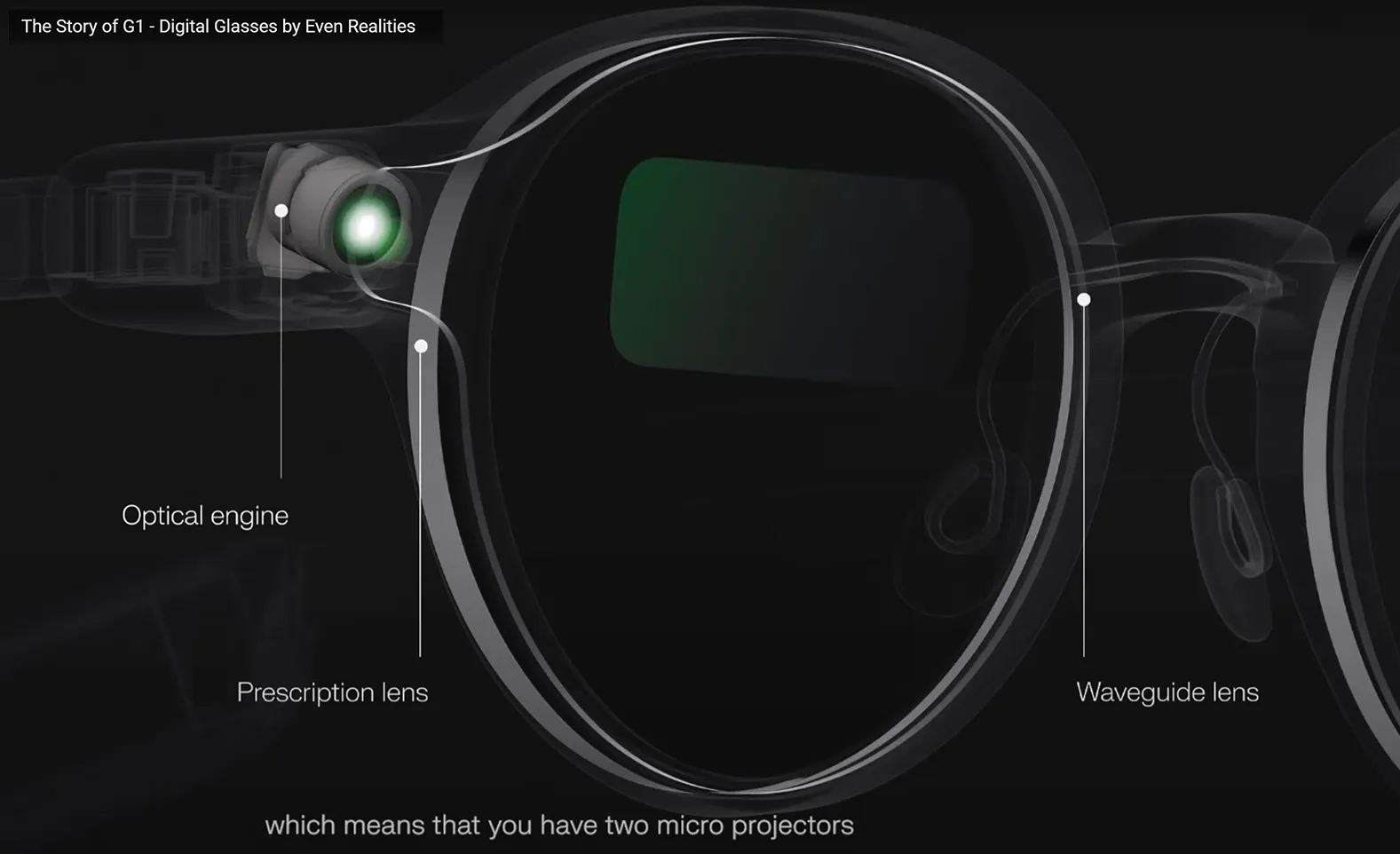
- Heads-Up Display (HUD): Utilizing Micro-LED technology to project notifications, navigation, and prompts directly into the user’s line of sight.
- AI Integration: Real-time translation and AI-powered prompts that assist with daily tasks.
- Privacy-First Design: By removing the camera, the company avoids the "Glasshole" stigma and privacy concerns that have plagued smart eyewear since 2013.
- Premium Pricing: Starting at $599, the G2 positions itself as a high-end productivity tool rather than a mass-market social media accessory.
Chronology: The Evolution of the "Face Computer"
To understand the emergence of Even Realities, one must look at the turbulent history of the smart glasses category.
2013–2015: The Google Glass Era
The category effectively began with Google Glass. While innovative, it failed due to its high price, awkward aesthetics, and the social backlash against its integrated camera. It became a cautionary tale for the industry, pushing AR into the enterprise and industrial sectors for nearly a decade.
2021–2023: The Meta and Ray-Ban Renaissance
Meta (formerly Facebook) changed the trajectory by partnering with EssilorLuxottica to create the Ray-Ban Stories, followed by the much more successful Meta Ray-Ban Smart Glasses. This era proved that consumers would wear smart glasses if they looked like "real" glasses. Meta’s strategy focused on the "social" aspect—capturing photos and videos hands-free.

2024–2026: The Rise of the AI Wearable
With the explosion of Large Language Models (LLMs), smart glasses found their "brain." In 2026, the market saw a 167% year-over-year growth in shipments, reaching 2.25 million units in the first quarter alone. Meta captured nearly 70% of this market. However, this period also saw the birth of specialized competitors like Even Realities, which sought to fill the gaps left by Meta’s camera-centric approach.
Present Day: The Unicorn Milestone
Even Realities’ $1 billion valuation marks the point where the industry has recognized "camera-free AR" as a viable, high-growth sub-sector. The company is now moving from a niche startup to a direct competitor with Big Tech in the U.S., Japan, South Korea, and Europe.
Supporting Data: Market Dynamics and the Competitive Gap
The smart glasses market is no longer a speculative venture; it is a multi-billion dollar battlefield. According to IDC estimates for the first quarter of 2026, the market is characterized by rapid consolidation at the top and fierce innovation at the edges.
| Feature | Meta Ray-Ban Smart Glasses | Even Realities G2 |
|---|---|---|
| Base Price | ~$299 | $599 |
| Primary Input | Voice / Touch | Voice / Ring (R1) / Motion |
| Display | None (Audio-only/AI) | Micro-LED Heads-Up Display |
| Camera | 12MP (Photo/Video) | None |
| Market Share | ~70% (Global) | <5% (Emerging) |
| Target Audience | Social Media Creators | Professionals / Privacy-Conscious |
The Cost of Innovation
While Meta benefits from massive economies of scale and a lower entry price, Even Realities is targeting a higher-margin demographic. When factoring in prescription lenses and the "R1" smart ring—a peripheral used for discreet navigation of the glasses’ UI—the total cost for an Even Realities setup can exceed $1,000. This places it in the same luxury tech bracket as the Apple Watch Ultra or high-end Bose frames.
Global Shipment Trends
The 2.25 million units shipped in Q1 2026 represent a turning point. Analysts suggest that if growth continues at this rate, smart glasses could begin to cannibalize the smartwatch market by 2028. Even Realities is positioning itself to be the "thinker’s" alternative in this volume-driven market.
Official Responses and Market Sentiment
Industry analysts and early adopters have voiced a mix of skepticism and admiration for Even Realities’ "American-first" strategy.
The Developer Perspective
With 80% of its developers based in the U.S., the company has successfully tapped into the Silicon Valley ethos. One lead developer for a third-party translation app noted, "The lack of a camera is actually a feature, not a bug. It allows us to build apps for environments where cameras are banned—offices, hospitals, and private meetings. The G2 is a tool for information, not a tool for surveillance."
Investor Sentiment
Investors backing Even Realities have indicated that the company’s valuation is tied to its "software-plus-hardware" ecosystem. By controlling the manufacturing in Shenzhen but the intellectual property and developer relations in the U.S., the company creates a moat that is difficult for other Chinese startups to replicate. "They aren’t just selling hardware," says one venture partner. "They are selling a lifestyle of ‘digital intentionality’ that resonates with the current Western pushback against social media saturation."

Meta’s Standing
While Meta has not officially commented on Even Realities, Mark Zuckerberg has been vocal about the "North Star" for his company: glasses that eventually replace the smartphone. Meta’s dominance is currently secure due to its massive distribution network, but industry insiders suggest that Meta is watching the "display-only" niche closely as Micro-LED technology becomes cheaper and more efficient.
Implications: The Future of the "Face Race"
The success of Even Realities has several profound implications for the future of technology and geopolitics.
1. The Geopolitical Hybrid Model
Even Realities represents a new breed of "stateless" tech companies. By using Chinese capital and manufacturing to dominate Western markets, they bypass some of the traditional barriers faced by companies like Huawei or TikTok. Because the G2 lacks a camera and focuses on productivity rather than social media data harvesting, it may avoid the regulatory scrutiny that has hampered other Chinese tech exports.
2. The Privacy vs. Utility Trade-off
The industry is currently split on a fundamental question: Do people want a camera on their face? Meta says yes; Even Realities says no. The outcome of this rivalry will determine the social etiquette of the 2030s. If Even Realities continues to grow, it will prove that there is a massive market for "invisible" technology—devices that provide information without recording the environment.
3. The "Screenless" Revolution
As AI becomes more capable, the need for a physical screen (like a smartphone) diminishes. Smart glasses are the natural successor. Even Realities’ focus on a HUD suggests a future where our digital lives are overlaid on the physical world rather than tucked away in our pockets. This "Ambient Computing" is the ultimate goal for the entire industry, from Apple to Google.
4. Competition from Other Chinese Giants
Even Realities is not alone. The "China vs. Meta" race is heating up with entries from:
- Alibaba: Developing Quark AI glasses focused on shopping and search.
- Rokid: Valued at $2.58 billion, focusing on high-end AR for gaming and industry.
- RayNeo (TCL): Leveraging massive display manufacturing capabilities to lower the price of AR eyewear.
Conclusion
Even Realities is a bold experiment in the hardware world. It is a company that understands that to win the "Face Race" in the West, it must offer something Big Tech cannot: a device that respects the boundaries of the wearer and those around them.
While Meta currently holds the lion’s share of the market, the $1 billion valuation of this Shenzhen-based underdog proves that the market is hungry for alternatives. As the G2 continues to find traction in the U.S. and beyond, the next few years will determine if Even Realities can scale its vision or if it will be absorbed by the very giants it seeks to challenge. For now, the "camera-free" unicorn is a clear signal that the future of smart glasses is not just about what we see, but how we choose to be seen.