An Unprecedented Shift: Schell Games Breaks Two-Decade Streak with First-Ever Layoffs
The landscape of the virtual reality (VR) and independent gaming industry has been rocked by the news that Schell Games, a pillar of stability and creative innovation for over twenty years, has implemented the first layoffs in its storied history. Based in Pittsburgh, Pennsylvania, the studio has long been regarded as a sanctuary for developers, guided by a leadership philosophy that explicitly prioritized job security over aggressive, high-risk expansion. However, as the broader gaming industry continues to face what experts describe as a "hemorrhaging" of talent and capital, even the most resilient institutions are finding themselves unable to maintain the status quo.
Main Facts: The End of a Twenty-Year Streak
Schell Games, founded in 2002 by Jesse Schell—a former Disney Imagineer and renowned author of The Art of Game Design—confirmed late last week that it has reduced its workforce. While the exact number of affected employees has not been officially disclosed by the studio, reports from departing staff indicate that the cuts were far-reaching, impacting core creative and operational departments.
The layoffs reportedly hit several key areas of the studio’s infrastructure, including:
- Marketing and Communications: The team responsible for the visibility of the studio’s diverse portfolio.
- Art and Visual Effects (VFX): The creative engine behind the studio’s distinctive aesthetic in titles like I Expect You To Die.
- Game Design: The architects of the studio’s renowned puzzle and social mechanics.
This move marks a jarring departure from the company’s historical identity. For twenty-two years, Schell Games operated on a "work-for-hire" and "original IP" hybrid model designed specifically to weather economic downturns. By diversifying into educational software, location-based entertainment, and high-profile VR titles, the studio managed to survive the 2008 financial crisis, the volatility of the early VR market, and the initial disruptions of the COVID-19 pandemic without ever resorting to a reduction in force—until now.
Chronology: From Stability to a "Hemorrhaging" Market
To understand the weight of this announcement, one must look at the trajectory of Schell Games over the last decade, particularly its role as a pioneer in the VR space.
The Rise of a VR Powerhouse (2016–2022)
Schell Games transitioned from a boutique design firm into a global VR leader with the release of I Expect You To Die in 2016. The game became a foundational title for the Oculus (now Meta) Rift and Quest platforms, proving that escape-room mechanics were a perfect fit for the medium. This success was followed by sequels and new ventures, including the sword-fighting rhythm game Until You Fall.
The Among Us VR Phenomenon (2022–2024)
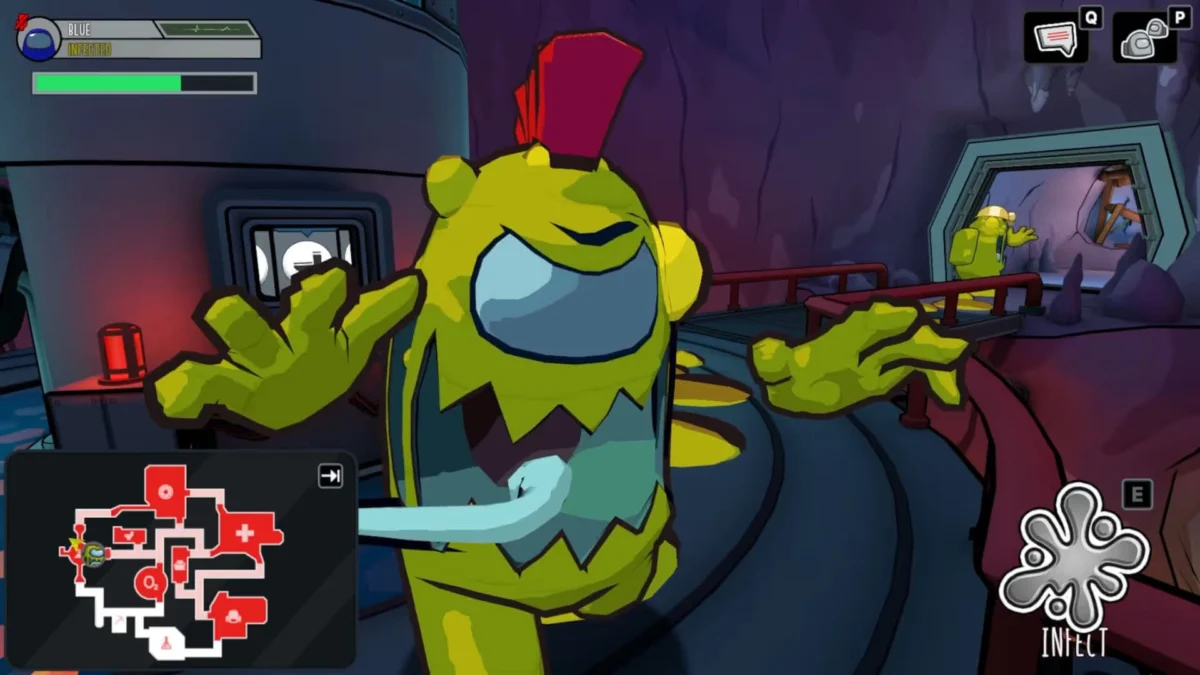
The studio reached a new peak of mainstream visibility when it partnered with Innersloth and Robot Teddy to bring the social deception hit Among Us into 3D virtual reality. Among Us VR was a massive commercial success, garnering millions of players and cementing Schell Games’ reputation as the go-to studio for porting complex social IPs into the VR space.
The Pivot and the Port (2024–2025)
In a move that some analysts now view as a precursor to resource consolidation, Schell Games eventually ported Among Us VR to flatscreen devices under the title Among Us 3D. However, earlier this year, the studio announced it would be stepping away from the project entirely, handing the reins back to the original developer, Innersloth. This transition allowed Schell to focus on internal projects like Silent Slayer: Vault of the Vampire and the free-to-play Project Freefall, but it also signaled a shift in the studio’s long-term partnership strategy.
The 2026 Correction
By late 2025 and early 2026, the cumulative weight of a cooling VR market and a global contraction in tech spending began to take its toll. Despite having several active projects, the studio reached a breaking point, leading to the "unprecedented" layoffs announced last week.
Supporting Data: The Broader Industry Context
Schell Games does not exist in a vacuum. The layoffs are part of a systemic "correction" that has plagued the gaming industry since 2024. According to industry trackers, over 10,000 game development jobs were lost globally in 2024 alone, a trend that has persisted into 2026.
The VR Sector Specifically
The VR industry, once hailed as the "next frontier" of computing, has faced particular challenges. High hardware costs and a slower-than-expected adoption rate for high-end headsets have forced many studios to downsize. Schell Games is the latest in a string of prominent VR-focused developers to announce cuts:
- nDreams: The UK-based studio behind Synapse recently underwent a significant restructuring.
- Polyarc Games: The creators of the beloved Moss series reduced their headcount to focus on leaner development cycles.
- Mighty Coconut: Despite the massive success of Walkabout Mini Golf, the studio has had to streamline operations.
- Kluge Interactive: The developers of Synth Riders have also faced similar pressures.
The "Hemorrhage" Quote
One employee affected by the Schell Games layoffs summarized the situation on social media, stating, "This has happened not because of anything you did or did not do. Our industry (and beyond) right now is hemorrhaging." This sentiment reflects a macro-economic reality where venture capital has dried up, and the "growth at all costs" mentality of the early 2020s has been replaced by a desperate need for profitability and lean operations.
Official Responses and Philosophical Contradictions
The most poignant aspect of the Schell Games layoffs is the direct contradiction they pose to the long-held philosophy of CEO Jesse Schell. For years, Schell was a vocal advocate for "people-first" management, often critiquing the industry’s reliance on "crunch" and cyclical layoffs.
The 2024 Promise
As recently as 2024, Jesse Schell participated in a high-profile interview with GamesIndustry.biz, where he doubled down on his commitment to job security. He stated:
"At the heart of it all is choosing not to put jobs at risk. We’ll put cash at risk when we make a game, but we don’t put jobs at risk. Even if our own IP brings in zero dollars, we still haven’t put any jobs at risk—we still have a path forward where we’ll be able to keep people on. So, in a lot of ways, it’s a choice."
This quote has been widely circulated in the wake of the layoffs, highlighting the severity of the current economic climate. If a CEO who views layoffs as a "choice" and a "philosophical failure" is forced to make them, it suggests that the "path forward" he previously envisioned has been obstructed by unforeseen market forces.
While the studio has not issued a formal press release detailing the exact percentages of the workforce let go, the internal messaging shared by employees suggests a somber atmosphere. The studio has reportedly attempted to provide severance packages and outplacement support, maintaining as much of its "human-centric" culture as possible during a fundamentally dehumanizing process.
Implications: What This Means for the Future of VR
The layoffs at Schell Games serve as a "canary in the coal mine" for the independent development sector. There are several key implications for the future of the studio and the VR industry at large.
1. The Death of the "Safe Haven" Model
For decades, Schell Games was the "safe haven" for developers in the Midwest and the broader industry. Their ability to maintain a no-layoff policy was a powerful recruiting tool. With that streak broken, the psychological contract between independent studios and their employees has been fundamentally altered. Developers may now view even the most stable-seeming studios with a degree of skepticism.
2. A Shift Toward "Survive to Thrive"
The studio’s recent project shifts—moving away from the maintenance of Among Us 3D and focusing on Silent Slayer—suggest a pivot toward smaller, more manageable projects. We are likely to see Schell Games, and others like them, move away from massive, multi-year "live service" style VR titles in favor of tighter, high-quality experiences that require fewer overhead costs to maintain.
3. The Reality of the VR Plateau
The VR industry is currently in a "plateau of productivity," but it is a plateau that is narrower than many anticipated. While Meta continues to subsidize the ecosystem, the organic growth required to sustain dozens of mid-to-large-sized independent studios is not yet fully realized. Schell Games’ layoffs are a signal that even the best-selling titles (I Expect You To Die, Among Us VR) may not provide enough of a cushion to protect a large workforce against a broader economic downturn.
4. The Pittsburgh Tech Ecosystem
As the largest gaming employer in Pittsburgh, Schell Games’ downsizing has local implications. The studio has been a cornerstone of the city’s transition from a steel-driven economy to a tech and robotics hub. While the city remains a center for AI and autonomous vehicles, the blow to its creative tech sector will be felt in the local talent pool and at institutions like Carnegie Mellon University, which has a long-standing relationship with Jesse Schell.
Conclusion
The layoffs at Schell Games represent more than just a headcount reduction; they represent the end of an era of perceived immunity for veteran independent studios. For twenty-two years, Jesse Schell and his team proved that it was possible to build a world-class gaming company without the "burn and turn" of human capital.
That this streak has ended in 2026 is a testament to the unprecedented volatility of the modern gaming market. As the studio moves forward, it will face the difficult task of rebuilding its culture and reclaiming its identity as a bastion of stability. For the rest of the industry, the message is clear: if it can happen at Schell Games, it can happen anywhere. The "hemorrhage" of the gaming industry continues, and the path to recovery remains uncertain.