The Great Bifurcation: Analyzing the Surprising Resilience and Harsh Realities of the 2026 Indie Summer Box Office
For years, a dark cloud of fatalism loomed over the independent film industry. Analysts and studio executives alike whispered that the "bottom had fallen out" of the specialized box office. The prevailing wisdom suggested that in a post-streaming landscape, the theatrical experience was reserved exclusively for IP-driven spectacles, billion-dollar superhero franchises, and "event" cinema. The mid-budget movie, once the backbone of the American film industry, was supposedly a relic of the past.
However, the summer of 2026 has fundamentally challenged that narrative. Between May and August, audiences didn’t just show up for blockbusters; they turned independent features like Obsession and Backrooms into genuine cultural phenomena. Yet, while the headlines celebrate these massive wins, a closer look at the data reveals a "Great Bifurcation"—a widening gap between the indie "haves" and "have-nots" that is reshaping how Hollywood defines success.
The Summer by the Numbers: A Statistical Overview
According to comprehensive data from Rentrak, the specialized market—comprised of independent distributors and mini-majors—released 315 titles between May 1 and August 26. Collectively, these films grossed $795.6 million at the domestic box office.
To put that in perspective, the total summer box office reached $4.44 billion. The fact that independent cinema accounted for nearly 18 percent of that total is, by any metric, a significant achievement. It suggests that nearly one out of every five dollars spent at the cinema this summer went to a non-studio tentpole.
However, the wealth was not spread evenly. The summer was dominated by two "black swan" events: Obsession and Backrooms. Together, these two films accounted for a staggering 58 percent of the entire indie box office haul. The remaining 313 films were left to fight over the remaining 42 percent.

The disparity is even more stark when examining individual performances:
- Only 51 of the 315 titles (16%) surpassed the $1 million domestic mark.
- A total of 158 titles (50%) failed to reach even $100,000.
- Those bottom 158 films combined for a meager $3.8 million in total revenue.
This data suggests that while the "ceiling" for indie films has never been higher, the "floor" has become a basement.
Chronology of a Resurgence: From Viral Clips to Box Office Gold
The path to this summer’s success began not in Hollywood boardrooms, but on digital platforms. The emergence of filmmakers like Curry Barker and Kane Parsons represents a pivotal shift in the "YouTube-to-Theatrical" pipeline.
The Rise of the New Auteurs
In early May, the industry watched with bated breath as A24 and Focus Features prepared their summer slates. The momentum began with the viral tailwinds of Backrooms, directed by twenty-something Kane Parsons. Having built a massive following on YouTube, Parsons brought a pre-packaged audience to theaters—a demographic that Hollywood has traditionally struggled to capture in the streaming era.
The Festival-to-Multiplex Leap
By June, Focus Features’ Obsession proved that the traditional festival acquisition model still held immense power if the product was right. Purchased for $15 million out of the Toronto International Film Festival (TIFF), the film defied the standard "decay curve" of modern releases. Instead of a massive opening followed by a steep drop, Obsession saw its numbers increase in its second and third weekends—a feat of word-of-mouth longevity rarely seen since the pre-digital era.

Performance Tiers: The Great, The Good, The Meh, and The Ugly
To understand the health of the industry, we must look beyond the averages and examine the specific titles that defined the season.
The Great: The Tier of Their Own
1. Obsession (Focus Features) – $263.4M Domestic
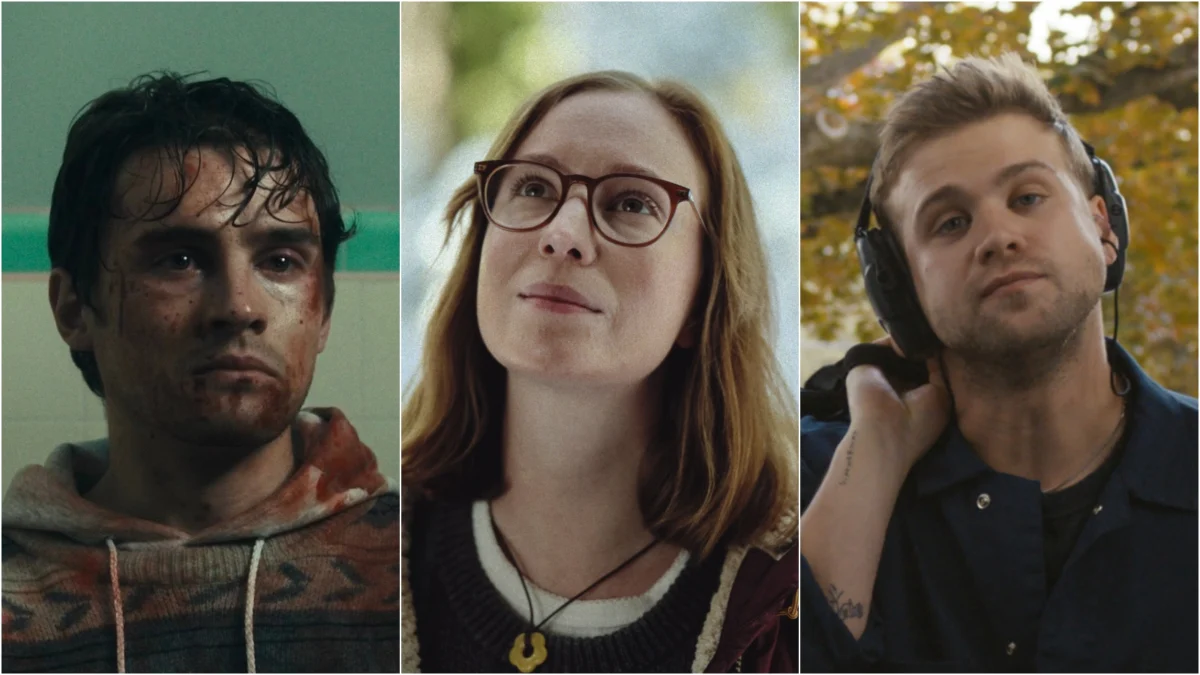
Produced on a shoestring budget of $750,000, Obsession has become the gold standard for independent ROI. With a global haul surpassing $500 million, it is one of the most profitable films in history. Notably, it remained in the Top 10 for 11 consecutive weeks without ever hitting the No. 1 spot. It now joins Sing and Oppenheimer as one of the highest-grossing films to never lead the weekend box office—a testament to its incredible "legs."
2. Backrooms (A24) – $197.5M Domestic
Kane Parsons’ transition from YouTube to the silver screen resulted in a $395 million worldwide gross on a $10 million budget. It outperformed A24’s star-studded Marty Supreme, proving that a fresh, terrifying concept can outweigh the drawing power of an A-list lead like Timothée Chalamet.
3. Hadestown: The Musical (Bleecker Street/LD Entertainment) – $20.7M Domestic
Initially billed as a five-night-only event, this staged capture of the West End sensation became a sleeper hit through sheer demand. It surpassed Hamilton to become the highest-grossing staged capture in history, proving that "event-izing" niche content is a viable theatrical strategy.
The Good: Solid Breakouts
The Invite (A24) – $25.2M Domestic
Olivia Wilde’s adult-oriented cringe comedy proved that sex and sharp dialogue still have a place in theaters. Despite concerns that its Sundance-friendly "lacerating banter" might alienate the Midwest, the film found a broad audience, positioning itself as a potential awards season dark horse.

Tuner (Black Bear) – $4.5M Domestic
After the failure of Christy, Black Bear found redemption with Tuner. Starring breakout Leo Woodall, the film utilized a platform release strategy to perfection, grossing $14.4 million globally despite never expanding beyond 504 screens.
The Meh: Middle-of-the-Road Outcomes
I Love Boosters (Neon) – $9.7M Domestic
Despite a tireless grassroots campaign by director Boots Riley, I Love Boosters struggled to justify its $20 million budget. While its 2.5x multiple from its opening weekend was respectable, it failed to reach the heights of Riley’s previous work, Sorry to Bother You.
Teenage Sex and Death at Camp Miasma (MUBI) – $3.6M Domestic
Jane Schoenbrun’s follow-up to I Saw the TV Glow arrived with high expectations and a Cannes pedigree. However, the $10 million horror-satire failed to expand successfully beyond urban centers, leaving MUBI to rely on future streaming revenue to break even.
The Ugly: The Seasonal Disappointments
Gail Daughtry and the Celebrity Sex Pass (Sony Pictures Classics) – $1.4M Domestic
Despite a "Wet Hot American Summer" reunion and a cast featuring Jon Hamm and John Slattery, this comedy arrived stillborn. Opening on a thousand screens to less than $1 million, it served as a sobering reminder that "star power" in comedy is no longer a guarantee of theatrical attendance.
Her Private Hell (Neon) – $912K Domestic
Nicolas Winding Refn’s latest divisive vision failed to find an audience. While Refn remains a critical darling for some, the film’s inability to reach the $1 million mark domestically suggests that the market for purely "idiosyncratic, ultraviolent" auteur cinema is shrinking.

Official Responses and Market Sentiment
The industry reaction to these numbers has been one of cautious optimism mixed with strategic pivots.
Focus Features and A24 have reportedly doubled down on "discovery" talent. Sources within the studios suggest a shift away from over-inflated star vehicles toward high-concept horror and "viral-ready" thrillers. The success of Barker and Parsons has led to a gold rush for digital creators, with major agencies like CAA and WME aggressively scouting YouTube and TikTok for the next cinematic visionary.
Bleecker Street executives noted that the success of Hadestown has changed their approach to alternative content. "We’re no longer looking at staged captures as ‘filler’ for quiet weeks," one executive noted anonymously. "We’re looking at them as tentpoles for a specific, underserved demographic."
Conversely, the struggles of Sony Pictures Classics and Magnolia with traditional comedies like Gail Daughtry and I Want Your Sex have sparked a debate about the "theatricality" of the genre. The consensus among exhibitors is that unless a comedy feels like a "must-see event" (like The Invite), audiences are content to wait for the streaming window.
Implications: The Future of Specialized Film
The summer of 2026 has provided a roadmap for the survival of independent cinema, but it is a narrow and treacherous one.

1. The Death of the "Passive" Release
The data from the 158 films that failed to break $100,000 suggests that simply "putting a movie in theaters" is no longer a viable strategy. For an indie film to succeed, it must be an "event." Whether it’s the five-night-only lure of Hadestown or the viral mystery of Backrooms, the audience needs a reason to leave their couch now.
2. The YouTube Pipeline is Real
The most significant takeaway is the validation of digital-first creators. Curry Barker and Kane Parsons didn’t just make good movies; they understood how to communicate with an audience that doesn’t read traditional film criticism. This "direct-to-consumer" relationship is the new currency of Hollywood.
3. The Shrinking Middle
The "Great Bifurcation" remains the industry’s biggest challenge. While Obsession and Backrooms saved the summer’s bottom line, the lack of a healthy "middle class" of films (those earning between $10M and $40M) is concerning. Without a robust middle, the indie ecosystem becomes overly reliant on "lottery ticket" hits, making long-term financial planning nearly impossible for smaller distributors.
In conclusion, the independent box office is not dead—it is evolving. The summer of 2026 proved that the theatrical experience still holds a unique power to turn small films into giants. However, for the hundreds of films that vanished without a trace, the message is clear: in the modern market, being "good" is no longer enough. You have to be an obsession.