The Architecture of Efficiency: Inside Ridley Scott’s Collaborative Mastery on ‘The Dog Stars’
In an era where blockbuster filmmaking often feels bogged down by committee-driven decisions and bloated production schedules, Ridley Scott remains a singular anomaly. At 87 years old, the director continues to operate at a tempo that would exhaust filmmakers half his age. His latest project, The Dog Stars, serves as both a departure in tone and a masterclass in his established methodology. A post-pandemic odyssey that balances the romantic with the dark, and the frightening with the funny, the film’s successful execution relied entirely on a shorthand developed over decades with a hand-picked "filmmaking family."
As The Dog Stars arrives in theaters, the story behind its creation reveals a director who has moved beyond the need for traditional experimentation, instead favoring a refined, collegiate system of production that prioritizes speed, practical reality, and deep-seated trust.
Main Facts: A Post-Apocalyptic Pivot
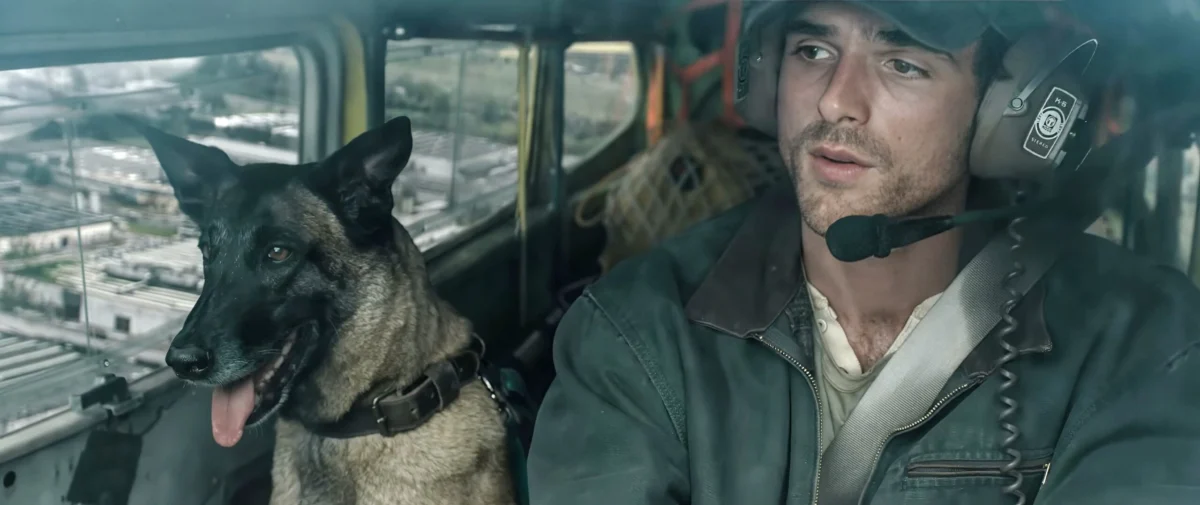
Based on the celebrated novel by Peter Heller, The Dog Stars marks a significant shift for Scott following the grand historical scales of Napoleon and Gladiator II. The film stars Jacob Elordi as Hig, a survivor of a devastating global pandemic living in a secluded hangar with his dog, Jasper, and a cantankerous, well-armed neighbor.
The project presented a unique tonal challenge. Unlike the stark cynicism of many post-apocalyptic narratives, The Dog Stars is described by Scott as "romantic but not sentimental." It is a film that finds humor in the end of the world and hope in the ruins. To navigate these shifting sands of emotion, Scott leaned heavily on his department heads, many of whom have been by his side since the 1980s.
The central thesis of Scott’s current career phase—and the primary reason for the film’s cohesive feel—is a philosophy he shared in a recent episode of IndieWire’s Filmmaker Toolkit podcast: "The more we work together, the simpler it becomes." This simplicity is not a lack of ambition, but rather the removal of friction in the creative process.
Chronology: Four Decades of Shorthand
The lineage of Scott’s crew on The Dog Stars provides a roadmap of modern cinema history. The most prominent example is editor Claire Simpson. Scott’s professional relationship with Simpson began forty years ago with the 1987 neo-noir Someone to Watch Over Me. Scott had been an admirer of her work on Oliver Stone’s visceral masterpieces Salvador and Platoon, recognizing in her a rhythmic sensibility that matched his own visual dynamism.

Though they spent years working on separate projects, their paths converged again in 2017 for All the Money in the World—a film famous for its last-minute reshoots that required a legendary level of editorial efficiency. Since then, Simpson has been a staple of the "Scott Unit," working on every subsequent film.
On The Dog Stars, Simpson was paired with Sam Restivo, a co-editor who represents the newer generation of Scott collaborators. Restivo’s journey reflects the "trial by fire" nature of working for the director. Having joined the fold for Napoleon and Gladiator II, Restivo had to quickly master the "Scott Method": a multi-camera approach that generates a mountain of footage daily. This chronology of mentorship—from the veteran Simpson to the rising Restivo—ensures that Scott’s specific language of cinema is preserved even as his team evolves.
Supporting Data: The Logistics of "Scott Speed"
To understand the success of The Dog Stars, one must look at the data of its production. Ridley Scott is famous for using between four and eleven cameras simultaneously. This allows him to capture entire scenes in a single take, preserving the spontaneity of performances and significantly shortening the filming schedule.
The Editorial Burden
The result of this multi-camera setup is a massive influx of data. Restivo noted that the editorial team must work at a "breakneck pace" just to keep up with the daily footage. Unlike other directors who may take months to find the "soul" of a film in the edit suite, Scott’s editors are assembling the movie in real-time as it is shot.
One of the most difficult sequences to calibrate was the film’s opening. It is a largely silent introduction to Hig’s isolated life. Restivo and Simpson struggled to find the exact "artful and elegant" tone Scott envisioned until they experimented with "needle drops"—pre-existing music used to set the mood. The breakthrough came with Hozier’s "Like Real People Do." The soulful, melancholy, yet haunting track provided the "haunting" anchor the editors needed to lock in the pacing for the entire first act.
Practicality Over Pixels
Production designer Chris Seagers, another long-term veteran, oversees a workflow that begins with Scott’s own hand-drawn storyboards. Scott, a trained illustrator, provides "Ridleygrams"—detailed sketches that serve as the definitive blueprint for every department.

For The Dog Stars, a major technical hurdle was Hig’s plane, a 1956 Cessna 182 that functions as a primary character. Rather than relying on green screens and CGI, the production utilized:
- A fully functional real aircraft for wide shots and landings.
- An electric-powered version for specific movement needs.
- A gimbal-mounted cockpit for interior sequences involving actors and the dog.
This commitment to practical effects, overseen by SFX supervisor Neil Corbould, ensures that the visual effects (VFX) team, led by Charley Henley, is only used to "augment" reality rather than create it from scratch. This data-driven approach to "in-camera" filmmaking is what gives Scott’s films their grounded, tactile quality.
Official Responses: The Human Element
The "collegiate" atmosphere Scott fosters isn’t just about technical efficiency; it’s about a shared psychological language. Casting director Kate Rhodes James, who has worked on Scott’s films and his TV series Raised by Wolves, explains that Scott’s requirements are often visual as much as they are emotional.
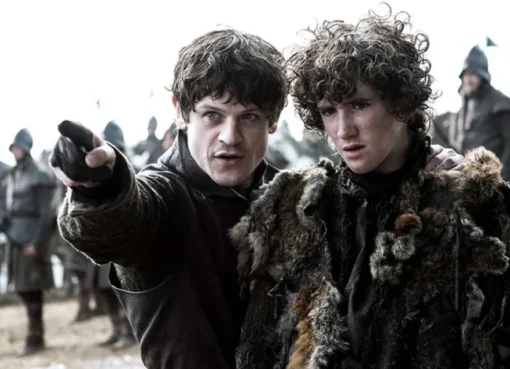
"Ridley loves strong faces; he loves the unusual," James stated. "He wants me to produce somebody that’s going to be visually arresting." This philosophy led to the casting of Ewan Bremner (Trainspotting) as one of the "roaches"—the desperate, threatening survivors Hig encounters. Bremner, who had worked with Scott previously on Black Hawk Down, understood the tonal requirements immediately, delivering a performance that balanced threat with the film’s specific brand of dark humor.
The response from the cast and crew is near-unanimous: working for Scott is an invitation into a long-term partnership. James noted that Scott was so impressed with Bremner’s work on The Dog Stars that he immediately cast him in his upcoming adaptation of Treasure Island. This "job for a lifetime" mentality is what allows Scott to bypass the usual friction of production. There is no need for long explanations; there is only execution.
Implications: The Legacy of the "Tennis" Method
The broader implications of Scott’s work on The Dog Stars suggest a potential path forward for an industry currently struggling with rising costs and "VFX bloat." By maintaining a consistent team, Scott has effectively turned filmmaking into a high-precision manufacturing process that doesn’t sacrifice artistic soul.

The "Tennis" Philosophy
Scott’s humorous remark—that having a trusted team allows him to "go play tennis"—belies a deeper truth about leadership. By delegating to experts who understand his aesthetic down to the molecular level, Scott is able to focus entirely on the "big picture." This efficiency is why he is able to release a film almost every year, while other directors of his stature often take five-year breaks between projects.
The Future of the Scott Unit
As Scott moves toward Treasure Island and other upcoming projects, The Dog Stars stands as a testament to the power of the "Director-as-General" model. It proves that:
- Shorthand is the greatest currency in Hollywood. The 40-year bond between Scott and Simpson is more valuable than any software or AI tool.
- Practicality breeds better performances. By putting Jacob Elordi in a moving, gimbal-mounted plane with a panting dog, Scott captures an authenticity that digital environments cannot replicate.
- Efficiency allows for creative risk. Because Scott saves time and money through his rigorous process, he is granted the freedom to make mid-budget, tonally complex films like The Dog Stars that other studios might deem too "risky."
In the final analysis, The Dog Stars is more than just a survival story; it is a celebration of the craft of filmmaking itself. It is the result of a group of artists who have spent their lives learning how to speak the same language, led by a man who refuses to slow down, and who has found that the secret to great art is simply finding the right people to help you build it.
The Dog Stars is currently playing in theaters nationwide.