The Battle for Digital Autonomy: Inside Europe’s Quest for AI Sovereignty at TechBBQ 2024
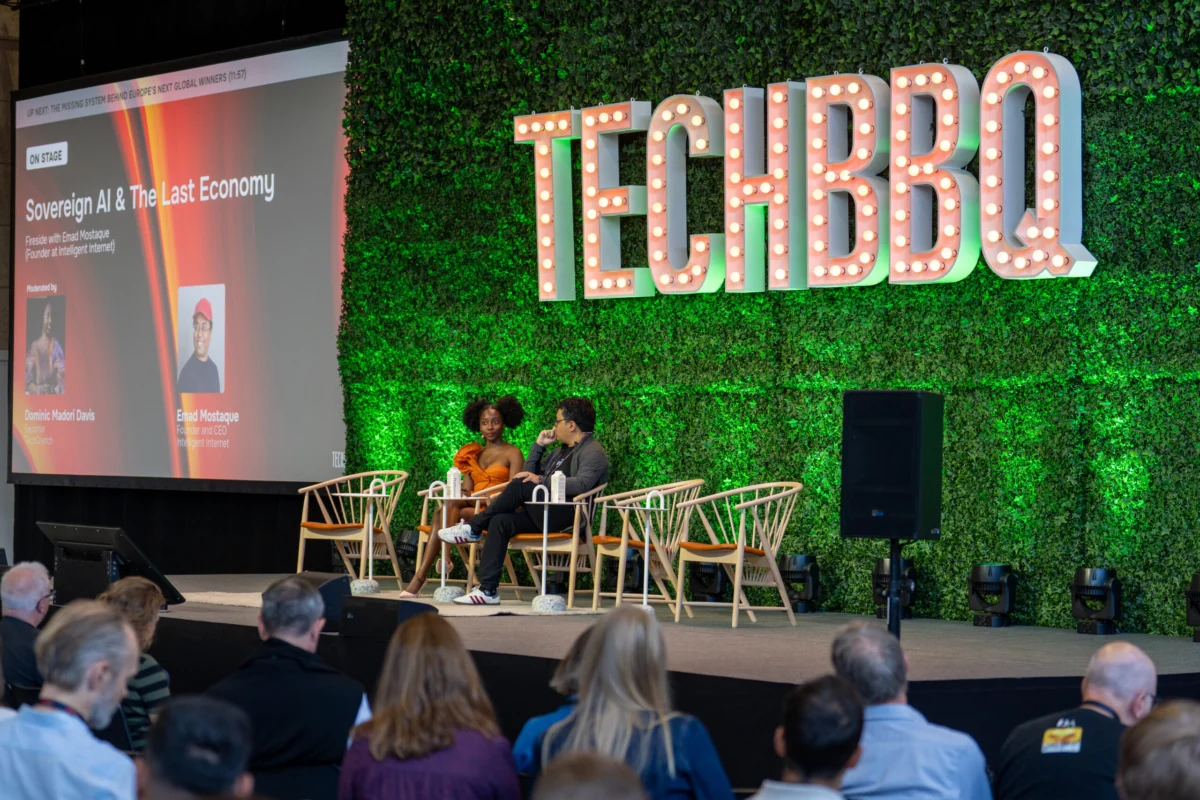
In the heart of Copenhagen, amidst the industrial-chic backdrop of the annual TechBBQ conference, the atmosphere this August was charged with more than just the typical startup fervor. While the event is traditionally a celebration of the Nordic and Baltic tech ecosystems, the 2024 edition took on a decidedly more somber and strategic tone. The central question permeating the workshops, the main stages, and even the late-night cocktail hours was no longer just about "what" could be built with Artificial Intelligence, but rather "who" would own the foundations upon which it is built.
As Europe grapples with its position in a global landscape dominated by American and Chinese tech giants, the theme of this year’s conference, "Emerging from Agency," proved to be a prophetic framing for a continent at a crossroads.
Main Facts: The Shift from Innovation to Infrastructure
TechBBQ 2024 served as a microcosm for a broader European anxiety: the fear of becoming a "vassal continent" in the AI era. The event brought together thousands of investors, founders, and operators to discuss a fundamental shift in the technological paradigm.
The core takeaway from the event was the emergence of "AI Sovereignty" as the primary objective for the European ecosystem. This concept refers to the ability of a nation or region to develop, govern, and control its own AI models and the physical infrastructure (data centers and chips) required to run them. The consensus among attendees was clear: renting computing power and model access from Silicon Valley is a temporary fix that poses long-term risks to Europe’s economic and political independence.
Key highlights of the event included:
- A Focus on Agency: Moving beyond the hype of generative AI to discuss human oversight and decision-making.
- Geopolitical Friction: The recent withdrawal of specific AI models from the European market served as a catalyst for discussions on dependency.
- High-Level Advocacy: Prominent figures like Signal President Meredith Whittaker and Stability AI co-founder Emad Mostaque offered stark warnings about the concentration of power.
- Ecosystem Integration: A significant emphasis on Nordic-African collaboration, highlighting the global nature of the innovation race.
Chronology: From Model Blackouts to Strategic Realignment
To understand the urgency felt at TechBBQ, one must look at the events leading up to the conference. Earlier in 2024, the European tech community received a wake-up call when Anthropic, a leading AI safety and research company, made its "Mythos" and "Fable" models unavailable to users outside Europe for a period. While the specific reasons often involve regulatory alignment with the EU AI Act, the practical result was a sudden disruption of service for European startups.
The Early 2024 Catalyst:
The "Mythos and Fable" incident acted as the "Sputnik moment" for many Copenhagen attendees. Software teams that had integrated these models into their workflows found themselves suddenly cut off, forced to scramble for alternatives. This disruption shifted the conversation from theoretical risks to practical vulnerabilities.
August 26-27: The Conference Days:
During the two-day summit, the "Emerging from Agency" theme was explored through various lenses. On the first day, the focus remained on the technical and regulatory hurdles. Ellen de Brever, an angel investor and head of partnerships at the Novo Nordisk Foundation Cellerator, noted that the conversation had matured. "It shifted from what AI can do to what we’re actually willing to let it do," she observed.
By the second day, the discourse moved toward the geopolitical. Panels moderated by industry experts delved into whether privacy and AI could truly coexist in a world where data is the new oil. The conference concluded not with a definitive answer, but with a collective realization that human connection and face-to-face relationship building remain the only irreplaceable assets in an automated world.
Supporting Data: The Cost of Dependence
The drive for European AI sovereignty is supported by a growing body of economic and technical data. Currently, the vast majority of the world’s "compute"—the raw processing power needed to train large language models (LLMs)—is controlled by a handful of companies: Microsoft (via OpenAI), Google, and Amazon (AWS).
The Economic Gap:
European startups often pay a "tech tax" when they build on US-hosted infrastructure. This includes not only the direct costs of API calls and cloud hosting but also the indirect costs of data egress and compliance with trans-Atlantic data privacy frameworks. According to industry sentiment expressed at the conference, the reliance on US-based AI labs creates a precarious environment where European innovation can be "turned off" at the whim of a foreign corporation or a shift in foreign policy.
The Privacy Paradox:
Meredith Whittaker, President of Signal, highlighted a disturbing trend in data collection. She argued that the current AI era is essentially a "data collection apparatus" disguised as a suite of helpful tools. As AI agents are integrated into operating systems (such as the partnership between Apple and OpenAI), the volume of personal data being funneled into these models is reaching unprecedented levels. For Europe, which prides itself on the GDPR and a culture of privacy, this represents a fundamental clash of values.
The Nordic Advantage:
Despite the challenges, the Nordic region remains a powerhouse. Denmark, Sweden, and Finland consistently rank at the top of global innovation indices. TechBBQ showcased that the region has the "growth capital" and the "founder network" (often referred to as the "Spotify Mafia") to potentially lead a sovereign AI movement if the right infrastructure is prioritized.
Official Responses: Warnings from the Vanguard
The most impactful moments of the conference came from the official addresses delivered by tech leaders who have been on the front lines of the AI revolution.
Meredith Whittaker (Signal):
Whittaker was uncompromising in her assessment of the current trajectory. She spoke out against the integration of AI assistants into core operating systems, labeling it a strategy to make users forget the "collateral consequences" of data acquisition. "There is still a huge market need for privacy," she stated. Her presence at the conference signaled that the "sovereignty concerns" of European customers are becoming a viable market niche for privacy-focused technologies.
Emad Mostaque (Stability AI / Intelligent Internet):
Mostaque provided a more systemic view of the power dynamics at play. He defined sovereignty as "the ability to resist power being exerted over you." His warning was stark: "Inevitably, every country will be run by AI… the person that controls the AI controls the country." Mostaque’s transition from leading a major AI lab to focusing on "Intelligent Internet" reflects a shift toward decentralized, sovereign AI solutions that don’t rely on centralized Silicon Valley gatekeepers.
Ellen de Brever (Novo Nordisk Foundation Cellerator):
Representing the investor and institutional side, de Brever emphasized the human element. She argued that the rise of AI agents is not a story of machines gaining power, but of humans deciding what agency they are willing to surrender. Her perspective served as a reminder that the "driver’s seat" of technology should always be occupied by human judgment.
Implications: Rethinking the Social Contract
The discussions at TechBBQ 2024 suggest that Europe is entering a period of profound restructuring. The implications of the AI sovereignty movement extend far beyond the tech sector, touching upon the very foundations of modern society.
1. The Future of Work and Economic Participation:
Mia Negru of the nonprofit Life With Artificials raised a critical point during the conference. If intelligent agents take over cognitive work and robots handle physical labor, the traditional relationship between work and economic participation will break. This may force European governments to rethink ownership models and democracy itself. If the AI that drives the economy is owned by a foreign power, the ability of a domestic government to provide for its citizens is severely diminished.
2. The Move Toward "Local" AI:
We are likely to see a surge in "Small Language Models" (SLMs) and locally hosted AI solutions. Instead of sending data to a central server in Virginia or California, European companies will increasingly look for models that can run on-premise or within "sovereign clouds" located on European soil. This shift will create a massive opportunity for European hardware and infrastructure providers.
3. The Persistence of the "Human Premium":
As AI becomes a commodity, the value of human connection is expected to rise. The "rooftop soirées" and "fire dancers" mentioned by attendees were not just social perks; they were the essential glue of the ecosystem. The conference proved that while machines can process data, they cannot build the trust required for high-stakes investment and cross-border collaboration.
4. Geopolitical Realignment:
The summit on Nordic-African collaboration highlighted a new strategic axis. By sharing innovation and investment strategies, these two regions may find ways to bypass the traditional power centers, creating a multi-polar tech world that is more resilient to the shifts in US or Chinese policy.
Conclusion
TechBBQ 2024 was a clarion call for a more assertive Europe. The "BBQ" may have been lighthearted, but the message was serious: agency is not something that is given; it is something that must be taken and defended. As the conference wrapped up, the founders and investors heading back to their respective hubs across the continent carried with them a new mission. It is no longer enough to build the next great app; the goal now is to build the very ground that Europe stands on in the digital age. In the words of Ellen de Brever, it is about "reminding each other of what technology can never quite replace"—and ensuring that humans, not algorithms, remain in control of the future.