The Resurrection of Wile E. Coyote: How a Shelved ‘Write-Off’ Outpaced a Ridley Scott Epic
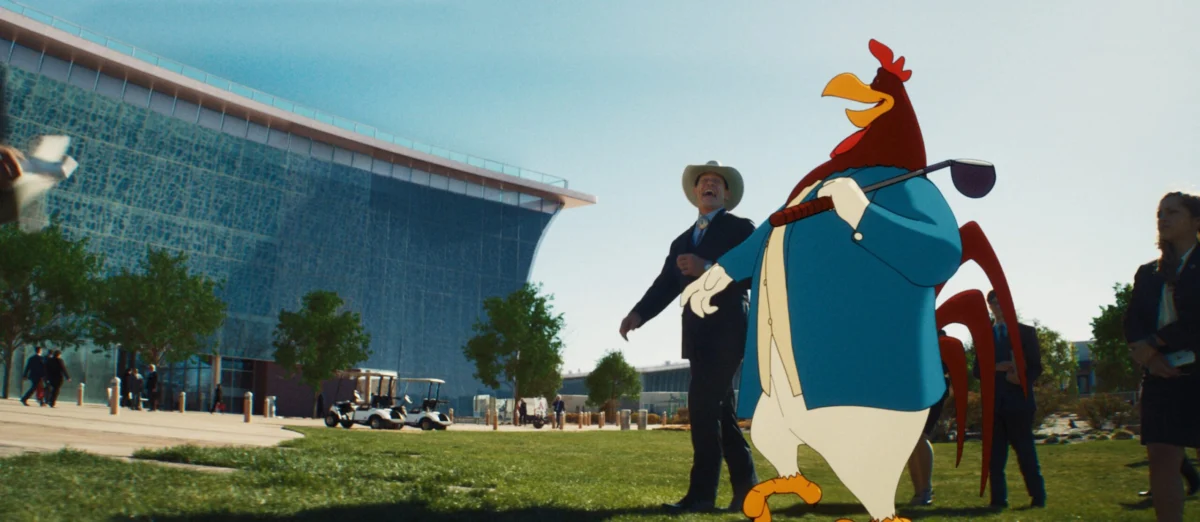
In an industry often defined by calculated risks and corporate spreadsheets, the weekend box office offered a narrative twist that few Hollywood analysts could have scripted. Coyote vs. Acme, a hybrid live-action and animated feature once destined for a digital bonfire as a corporate tax write-off, did more than just reach theaters—it thrived. Debuting to a surprising $15.4 million, the film successfully outperformed a high-budget sci-fi adventure from one of cinema’s most venerable directors, Ridley Scott, and one of its fastest-rising stars, Jacob Elordi.
The victory of the Looney Tunes-inspired legal satire over Scott’s $70 million vehicle, The Dog Stars, represents a symbolic and financial turning point. It marks the culmination of a year-long saga involving corporate controversy, public outcry, and a high-stakes distribution gamble that has fundamentally questioned the ethics of "content shelving" in the streaming era.
Main Facts: A David vs. Goliath Box Office Showdown
The domestic box office rankings for the weekend revealed a stark disparity between expectations and reality. Coyote vs. Acme, distributed by the relatively obscure Ketchup Entertainment, secured the number two spot with a $15.4 million opening. While these figures are modest compared to summer tentpoles, they are monumental when viewed through the lens of the film’s history.
In contrast, The Dog Stars, a 20th Century Studios and Disney production directed by Ridley Scott and starring Jacob Elordi, floundered. Despite an $80 million price tag and the "prestige" branding of a Scott-directed epic, the film limped into a fifth-place finish with a mere $8 million domestic debut.
Key Performance Indicators:
- Coyote vs. Acme: $15.4 million opening; $50 million acquisition cost; $20 million recouped via foreign rights sales.
- The Dog Stars: $8 million opening; $70–$80 million production budget; high marketing spend by Disney/20th Century.
The performance of Coyote vs. Acme is particularly noteworthy because it bested several major releases from its former parent company, Warner Bros. Discovery (WBD). Its opening weekend surpassed the debuts of high-profile WB titles such as Evil Dead Burn ($13.7M) and Lee Cronin’s The Mummy ($13.5M), proving that the audience demand WBD executives had dismissed was, in fact, palpable.
Chronology: From the "Death Row" of Cinema to the Silver Screen
The journey of Coyote vs. Acme from a finished film to a "deleted" asset, and finally to a theatrical release, is a timeline of modern Hollywood’s most controversial business practices.
November 2023: The Shelving
Under the leadership of CEO David Zaslav, Warner Bros. Discovery announced that Coyote vs. Acme would not be released theatrically or on its streaming platform, Max. Instead, the company intended to use the film as a $30 million tax write-off. This followed the similar, highly criticized cancellations of Batgirl and Scoob! Holiday Haunt. The decision was framed as a strategic "content impairment" move to balance the books following the Warner-Discovery merger.
The Backlash and the Rescue Effort
The announcement triggered an unprecedented wave of fury within the creative community. Filmmakers, animators, and fans took to social media under the hashtag #ReleaseCoyoteVsAcme. Reports surfaced that the film had tested exceptionally well with focus groups, scoring in the high 90s—a rarity for family-oriented hybrids. High-profile directors reportedly reached out to WBD to protest the "erasure of art" for corporate accounting.

Early 2024: The Relenting
Faced with a public relations nightmare and potential damage to their relationship with top-tier talent, WBD pivoted. They agreed to allow the filmmakers to shop the movie to other distributors. After months of negotiations with giants like Amazon and Netflix—who reportedly offered bids that WBD deemed too low—the film found an unlikely home in Ketchup Entertainment.
August 2026: The Release
Ketchup Entertainment, a boutique distributor, finalized a $50 million deal to acquire the film. By selling foreign rights for $20 million and keeping domestic marketing costs lean, Ketchup positioned the film to be profitable at a much lower threshold than a major studio would require.
Supporting Data: Comparative Market Analysis
To understand the magnitude of this upset, one must look at the 2026 theatrical landscape. Warner Bros. has had a volatile year, and the success of a film they discarded highlights a potential miscalculation in their internal auditing.
Warner Bros. 2026 Domestic Openings:
- Mortal Kombat II: $38.5 million
- Supergirl: $37.1 million
- Wuthering Heights: $32.8 million
- Coyote vs. Acme: $15.4 million (Distributed by Ketchup)
- Evil Dead Burn: $13.7 million
- The Mummy (2026): $13.5 million
- The Bride!: $7.0 million
- They Will Kill You: $4.9 million
The data suggests that Coyote vs. Acme outperformed 50% of the films Warner Bros. actually chose to keep on its slate. Furthermore, the film’s "brainy" concept—a satire where Wile E. Coyote sues the Acme Corporation for its defective products—appears to have resonated with both nostalgic adults and children, a demographic synergy that Ridley Scott’s The Dog Stars failed to capture.
The Dog Stars, despite its pedigree, suffered from what analysts call "genre fatigue." As an $80 million sci-fi drama, its $8 million opening represents one of the worst financial failures of Ridley Scott’s career, rivaling the underperformance of The Last Duel, but without the excuse of a mid-pandemic box office.
Official Responses and Industry Reaction
The sentiment among the creators of Coyote vs. Acme is one of vindication. While official statements from Warner Bros. Discovery remained focused on "long-term asset management," the creative team has been more vocal.
In a recent interview, the director of Coyote vs. Acme described the theatrical release as "nothing short of a miracle." The director noted, "For a year, we were told this movie didn’t exist. To see it not only exist but beat a Ridley Scott film at the box office is the ultimate punchline to a very long, very stressful joke."
Industry insiders suggest that Ketchup Entertainment’s success with the title has sent shockwaves through the "Big Five" studios. Ketchup’s strategy—mitigating risk through foreign pre-sales and relying on the organic "rescue" buzz—provided a blueprint for how smaller distributors can handle "orphaned" studio content.

Conversely, the silence from the Disney/20th Century camp regarding The Dog Stars has been telling. Sources close to the production suggest that the film’s grim tone and high budget made it a difficult sell in a market currently favoring high-concept escapism or established intellectual property (IP).
Implications: A New Era for Animation and Accountability
The success of Coyote vs. Acme carries profound implications for the future of the film industry, particularly regarding how studios treat completed projects.
1. The Death of the "Write-Off" Strategy?
The public and financial success of this film serves as a cautionary tale for CEOs like David Zaslav. If a "write-off" can be sold and then outperform the studio’s own kept assets, the logic of "impairing" content for tax breaks becomes harder to justify to shareholders. It suggests that internal studio evaluations of a film’s "commercial viability" may be disconnected from actual audience appetites.
2. The Power of the "Rescue" Campaign
We are entering an era where the audience has a direct say in distribution. Much like the "Snyder Cut" movement, the #ReleaseCoyoteVsAcme campaign proved that grassroots digital activism can influence corporate boardrooms. This creates a new variable in film marketing: the "underdog" narrative.
3. Ridley Scott and the "Prestige" Problem
For Ridley Scott, The Dog Stars is a rare blemish on a career defined by grand spectacles. It raises questions about the viability of high-budget, original sci-fi in a theatrical environment dominated by "safe" IP. If a legendary director and a "Gen Z" heartthrob like Jacob Elordi cannot draw an audience to an $80 million drama, studios may become even more hesitant to greenlight non-franchise material.
4. The Satire of Greed
There is a poetic irony in the film’s plot. Coyote vs. Acme is a meta-commentary on a giant, unfeeling corporation (Acme) that prioritizes profit over the safety and well-being of its users (Coyote). The fact that this specific story was nearly suppressed by a real-world corporate merger adds a layer of depth to its success. It didn’t just win at the box office; it won the cultural argument.
Conclusion
The $15.4 million opening of Coyote vs. Acme is more than a data point; it is a victory for the preservation of art over the convenience of accounting. While it may not be the highest-grossing film of the year, its journey from the "vault of the deleted" to the top of the charts ensures its place in Hollywood history. As Wile E. Coyote finally catches his metaphorical roadrunner, the rest of the industry is left to wonder if they’ve been chasing the wrong metrics all along.