The Sustainability Revolution in Urban Mobility: How Spain’s Liux is Reclaiming the European Microcar
The narrow, cobblestone streets of Europe’s historic city centers are undergoing a quiet but profound transformation. For decades, the "yoghurt pots"—the diminutive, buzzing Italian microcars of the mid-20th century—defined urban transit. Today, that aesthetic remains, but the internal combustion engines have been replaced by electric drivetrains, and the manufacturing hubs have shifted from Turin and Paris to Shenzhen and Guangzhou. Even the Smart car, once the crown jewel of European ultra-compact design, has migrated its production to China.
Amidst this shift, a Spanish startup named Liux is attempting a bold counter-offensive. With a philosophy rooted in "real circularity" and a manufacturing base firmly planted in the Iberian Peninsula, Liux is positioning its flagship microcar, the "Liux Big," as a sustainable, European-made alternative to the influx of Chinese EVs.
Main Facts: A "Big" Vision for Small Spaces
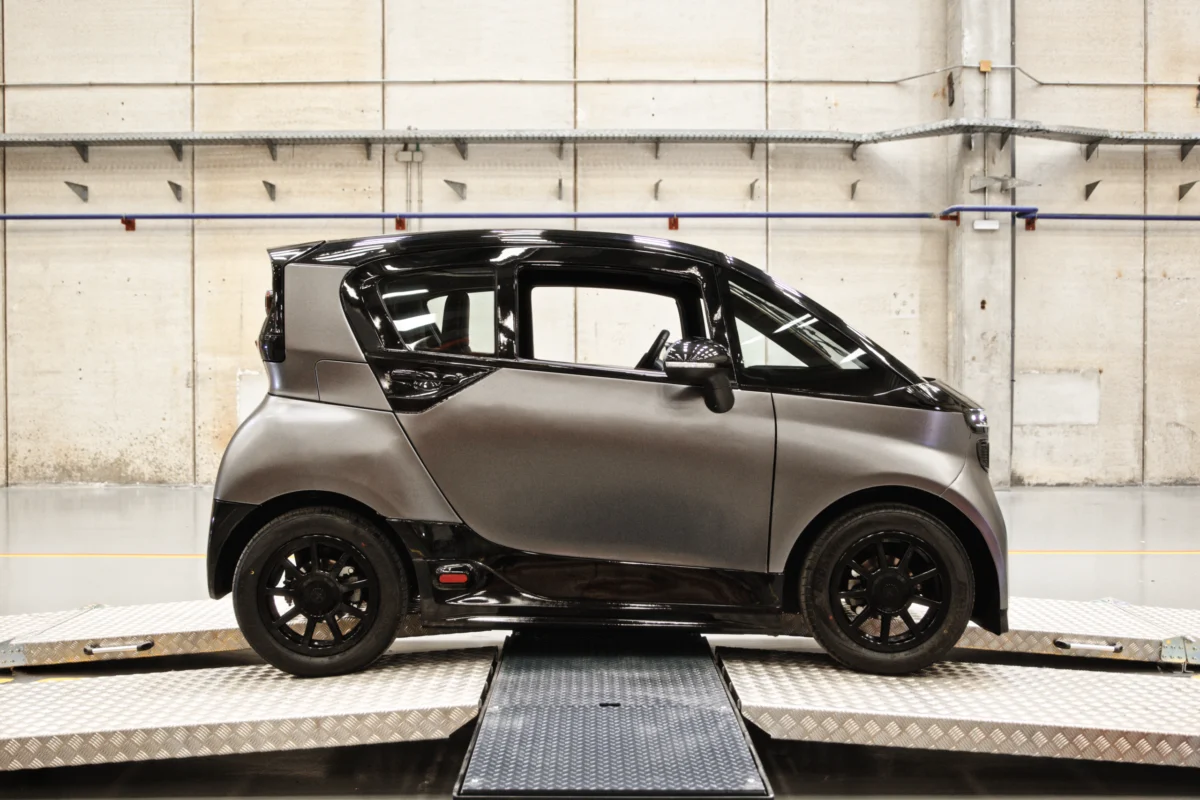
The Liux Big is an electric microcar designed specifically for the L7e category—a European vehicle classification for heavy quadricycles. Despite its name, which the founders admit is a tongue-in-cheek reference to its diminutive stature, the vehicle represents an outsized ambition to redefine how cars are built, used, and eventually recycled.
Key Specifications and Features:
- Sustainability-First Construction: The car’s body is crafted from a novel linen-based biocomposite. Unlike traditional carbon fiber or plastics, this material is designed for "material integrity," allowing it to be extracted and recycled at the end of the vehicle’s life.
- Powertrain and Charging: The Liux Big will be offered with two battery configurations: a 15 kWh and a 20 kWh version. Critically, the batteries are designed to be rechargeable at home, facilitating use for city dwellers who may not have access to dedicated street-side charging infrastructure.
- Pricing and Market Position: Liux aims to keep the price point below €18,000 (approximately $21,000) before government subsidies. While this places it at the premium end of the microcar market—competing with the likes of the Swiss-designed Microlino—it remains significantly more affordable than full-sized electric SUVs.
- Capacity: Despite its small footprint, which allows for perpendicular parking to the curb, the vehicle boasts a 260-liter trunk, a feat achieved through aggressive spatial optimization.
Chronology: From Supercars to Sustainable Micro-Mobility
The story of Liux is not one of a traditional automotive giant, but of two founders with radically different backgrounds converging on a singular mission.
2017–2021: The Genesis of the Partnership
The technical DNA of Liux comes from David Sancho, an engineer whose previous claim to fame was the Boreas, a hybrid supercar unveiled at the 24 Hours of Le Mans in 2017. Sancho’s expertise in high-performance electric vehicles provided the foundation for Liux’s engineering. He teamed up with Antonio Espinosa de los Monteros, a social entrepreneur who had successfully founded Auara, a B Corp that sold mineral water in recycled bottles to fund water projects in developing nations.
2022: The "Animal" and the Strategic Pivot
In late 2022, the duo unveiled their first prototype, the "Liux Animal." It was a sleek, fully electric five-seater SUV made almost entirely from plant-based materials. While the Animal generated significant headlines, the founders quickly realized the immense hurdles of full-scale automotive homologation for a startup. They made the strategic decision to pivot to a smaller platform—the Liux Big—where the regulatory path was clearer and the urban need more pressing.

2024–2026: Homologation and Scaling
Over the past two years, Liux has focused on the grueling process of securing Europe-wide homologation. By 2026, the company successfully achieved this milestone for the Liux Big. During this period, the company grew to 65 employees and secured approximately €16 million ($18.5 million) in funding, including significant contributions from European Union grants aimed at fostering green technology.
2027 and Beyond: Production Ramping
Liux is currently preparing to commence sales in the first half of next year. The company has established a three-facility production network in Spain, including a flagship plant in Azuqueca de Henares, near Madrid.
Supporting Data: The Economics of Lean Manufacturing
Liux’s survival in a market dominated by Chinese industrial might depends on its "lean management" philosophy, a system inspired by Toyota’s production principles.
Production Targets
The Azuqueca factory is purposefully small, focusing on the final assembly stages to minimize overhead. However, the scalability of this model is ambitious. Liux projections suggest a production capacity of 20,000 cars per year by 2030. This decentralized, modular approach to manufacturing allows the company to remain agile and avoid the "valley of death" that often claims automotive startups with massive, underutilized factories.
Consumer Interest
The market response has been encouraging. To date, more than 7,500 people have joined the waiting list for the Liux Big. Demographic data from this list reveals a specific niche: the primary interested party is a city dweller aged 55 to 60. For this demographic, the Liux Big is viewed not as a primary vehicle for long-distance travel, but as a sustainable, easy-to-park second car for daily urban errands.
Safety Standards
While the L7e category does not legally require the same rigorous crash testing as standard passenger cars (M1 category), Liux has invested heavily in safety engineering. The company has performed extensive public demonstrations of the vehicle’s stability, including high-speed slaloms and emergency braking maneuvers, to combat the perception that microcars are inherently "flimsy" or unsafe.

Official Responses: Defining the "European" Car
In conversations regarding the company’s identity, CEO Antonio Espinosa de los Monteros offers a nuanced perspective on the reality of modern manufacturing.
"The idea of a European car does not exist," Espinosa told TechCrunch. This surprising admission highlights the impossibility of a 100% sovereign European supply chain. While the assembly, design, and biocomposite innovation happen in Spain, the battery cells and certain electronic components are inevitably sourced from global markets, primarily Asia.
However, Espinosa argues that the soul of the car remains European through its commitment to the circular economy. "One thing that’s very clear for David and me is that recycling isn’t just a lab concept," he stated. "What makes something recyclable has to do with how it’s built. When you build something, you have to try to preserve the integrity of the material and the components so that a second life is possible."
Head of Production Beatriz Belda González, a veteran of BMW’s Munich operations, emphasizes that the "Made in Spain" label is more than just marketing. It is an operational choice to utilize local talent and lean manufacturing to prove that European production can still be competitive if it focuses on high-value, sustainable innovation rather than mass-market volume.
Implications: A New Paradigm for Urban Transit
The emergence of Liux and the impending launch of the Big have several significant implications for the automotive industry and urban planning.
1. The Challenge to Chinese Dominance
For years, the narrative has been that Europe cannot compete with China on EV pricing. Liux is testing a different hypothesis: that European consumers will pay a slight premium for a vehicle that is demonstrably more sustainable and easier to repair. By using linen biocomposites instead of energy-intensive plastics or carbon fiber, Liux is appealing to the "conscious consumer" who views their vehicle choice as an extension of their environmental values.

2. The Micro-Mobility Maturity
The Liux Big represents a "maturing" of the micro-mobility sector. By moving away from the "toy-like" feel of early electric quadricycles and focusing on interior ergonomics and safety, Liux is attempting to bridge the gap between a moped and a car. If successful, this could accelerate the "15-minute city" concept, where heavy, space-consuming SUVs are replaced by right-sized vehicles for urban tasks.
3. Circularity as a Business Model
The automotive industry has long struggled with the "end-of-life" phase of vehicles, particularly regarding composite materials and batteries. Liux’s focus on "material integrity" could serve as a blueprint for larger manufacturers. If a startup can successfully implement a fully recyclable body made from plant fibers, it puts pressure on legacy automakers to move beyond traditional, non-recyclable fiberglass and plastics.
4. The Future of Ownership
While Liux is starting with a direct-to-consumer model, the company is already eyeing B2B partnerships. The potential for the Liux Big to serve in autonomous taxi fleets or corporate car-sharing programs is significant. Its modular nature and ease of maintenance make it an ideal candidate for high-utilization urban fleets.
Conclusion
The Liux Big is more than just a small car; it is a high-stakes experiment in European industrial resilience. By combining the high-performance engineering of a supercar designer with the circular-economy ethics of a social entrepreneur, Liux is attempting to build a vehicle that fits the physical and moral landscape of the 21st-century city. Whether it can scale to its 20,000-unit goal in the face of global competition remains to be seen, but for now, the "yoghurt pot" is back—and this time, it’s green, Spanish, and surprisingly ambitious.