The Vintage of Non-Fiction: Venice Film Festival Becomes the Premier Launchpad for Verité Cinema
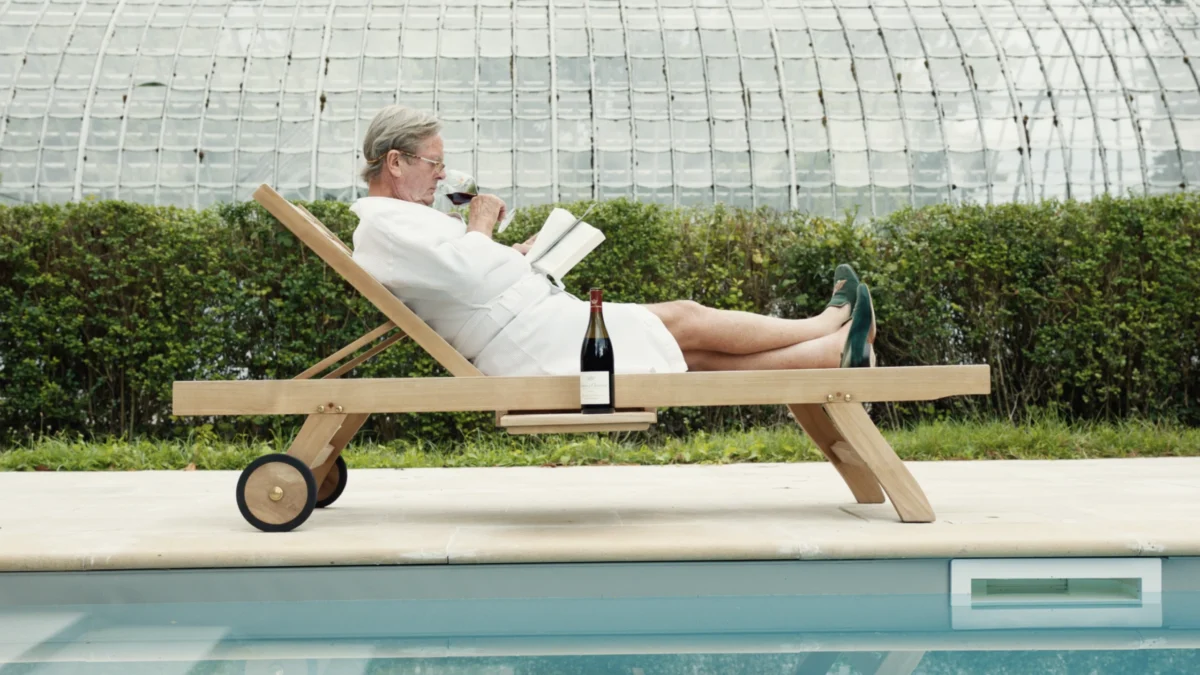
The Venice Film Festival, historically celebrated as the crown jewel of European narrative cinema and a primary staging ground for Oscar-contending dramas, is undergoing a profound transformation. As the 2026 lineup reveals, the Lido is no longer merely a sanctuary for the avant-garde or the Hollywood elite; it has rapidly ascended to become the world’s most coveted launching point for high-caliber non-fiction filmmaking. Among the sprawling, multi-hour epics and socio-political portraits slated for world premieres, one film stands out for its concise, sensory-driven approach to a timeless subject: Burgundy, the latest offering from acclaimed directors Michael Dweck and Gregory Kershaw.
While this year’s documentary slate is characterized by massive runtimes—including Luca Guadagnino’s seven-hour exploration of Bernardo Bertolucci and Alex Gibney’s four-hour dissection of Elon Musk—Dweck and Kershaw’s 90-minute observational masterpiece promises a different kind of immersion. By focusing on the "rituals of daily life" within France’s legendary wine country, Burgundy seeks to bridge the gap between traditional documentary and cinematic poetry.
I. Main Facts: A New Chapter for Documentaries at the Lido
The 2026 Venice Film Festival has solidified its reputation as a non-fiction powerhouse. This year’s documentary selection is not just an auxiliary category but a central pillar of the festival’s identity. The inclusion of Burgundy represents a strategic move to highlight films that prioritize atmosphere and character over traditional investigative structures.
The Film and Its Creators
Burgundy is directed by the duo of Michael Dweck and Gregory Kershaw, whose previous collaboration, The Truffle Hunters, earned universal acclaim and a spot on the 2021 Academy Award shortlist for Best Documentary Feature. Produced with an observational lens, the film eschews the "talking head" format in favor of a verité style that allows the audience to inhabit the world of its subjects.
Narrative Scope
The documentary follows a diverse ensemble of characters within the Burgundy (Bourgogne) region of France:
- The Aspiring Sommelière: A young woman honing her craft under the tutelage of a master.
- The Vineyard Worker: A youth seeking entry into an elite world he has previously only observed from the periphery.
- The Aristocratic Winemaker: A mogul contemplating the weight of his family’s legacy and the future of his estates.
- The Maître d’Hôtel: A legendary figure in the hospitality world searching for a worthy successor.
- The Wine Critic: A seasoned professional reflecting on the evolution of taste and the pursuit of the "sublime."
Production and Sales
The film is represented internationally by the sales agent Charades. Following its premiere at Venice on Thursday, September 3, the production is actively seeking U.S. distribution. Given the directors’ track record with Sony Pictures Classics for The Truffle Hunters, industry insiders expect a competitive bidding war for the North American rights.
II. Chronology: From the Forests of Piedmont to the Slopes of Bourgogne
To understand the significance of Burgundy, one must trace the trajectory of Dweck and Kershaw’s filmmaking evolution and the broader shift in the Venice Film Festival’s programming strategy.
2020–2021: The Rise of The Truffle Hunters
In 2020, Dweck and Kershaw released The Truffle Hunters, an executive-produced project by Luca Guadagnino that followed elderly men in Northern Italy searching for the elusive Alba truffle. The film was a breakout hit at Sundance and Cannes, eventually becoming a staple of the 2021 awards season. Its success proved there was a significant global appetite for "slow cinema" documentaries that focused on disappearing traditions and the relationship between humans and the earth.
2024–2025: Immersion in the French Countryside
Following the success of their Italian odyssey, the directors turned their sights to France. Their methodology involved an extended period of "embedded" filmmaking. Rather than arriving with a pre-set script, the directors spent years living among the winemaking families of Burgundy. This period of "staying long enough to stop observing," as the directors put it, allowed them to capture the intimate, often drunken, and deeply spiritual connection the locals have with their land.

2026: The Venice Announcement
In mid-2026, the Venice Film Festival announced a documentary slate that shocked many industry veterans with its scale. Alongside Burgundy, the festival programmed:
- "My Undesirable Friends" (Part II): Julia Loktev’s massive, award-winning continuation of her previous work.
- "Joie de Vivre": A seven-hour Bertolucci documentary by Luca Guadagnino.
- "Musk": Alex Gibney’s four-hour biographical portrait.
Within this landscape of "maximalist" non-fiction, Burgundy was positioned as a focused, 90-minute sensory experience, set to premiere on the festival’s second Thursday.
III. Supporting Data: The Documentary Boom and the "Long-Form" Trend
The data surrounding the 2026 Venice lineup suggests a growing divergence in documentary filmmaking: the "Epic" vs. the "Intimate."
Runtime Divergence
The average runtime of the top five most-discussed documentaries at Venice 2026 is approximately 4.5 hours.
- Joie de Vivre: 420 minutes
- Musk: 240 minutes
- My Undesirable Friends (Part II): ~180 minutes
- Burgundy: 90 minutes
This suggests that while some filmmakers are utilizing the documentary format to create exhaustive historical or biographical archives, others, like Dweck and Kershaw, are refining the "feature-length" format to maximize emotional and aesthetic impact.
The Market for "Terroir" Cinema
Films centered on gastronomy and heritage—often referred to as "Terroir Cinema"—have shown high performance in the specialized theatrical market. The Truffle Hunters grossed nearly $1 million in a depressed pandemic-era box office, a feat for a subtitled documentary. Burgundy enters a market where audiences are increasingly seeking "escapist" non-fiction—films that offer a high-definition, cinematic window into worlds that are otherwise inaccessible.
IV. Official Responses: The Directors’ Vision and Festival Perspective
The anticipation for Burgundy is fueled by the philosophical framework provided by its creators and the festival organizers.
The Directors’ Statement
In a joint statement, Michael Dweck and Gregory Kershaw emphasized that Burgundy is less a report on winemaking and more a study of human devotion.
"We started Burgundy the way we start all our films: looking for people still tethered to their dirt," the directors stated. "Places where the past isn’t history, but the rituals of daily life. Then we stayed. Long enough to understand that pleasure in Bourgogne is not a hobby but a discipline, practiced daily, with the gravity other people reserve for religion."

The directors further explained their stylistic choice to avoid standard interviews: "Stay that long and you stop observing. We began dreaming stories onto the lives we were following, until the film became what it is: a portrait of a magical community, rendered through drunken eyes. We want you to luxuriate… to notice that a life built on pleasure is not a simple life, that these people are as tangled as the rest of us, only afloat on something exquisite."
The Venice Film Festival Synopsis
The festival’s official description highlights the film’s narrative complexity:
"Behind every bottle lies a world shaped by ritual and inheritance, and by those striving to preserve or transform it. Through the eyes of a new generation searching for its place, Burgundy opens the doors to a world rarely seen from within… Devotion, desire and heritage intertwine in a portrait where the observed and the invented become inseparable."
V. Implications: The Future of Documentary Distribution and Cultural Heritage
The premiere of Burgundy at Venice has several significant implications for the film industry and the documentary genre at large.
1. The Validation of the "Aesthetic" Documentary
For decades, documentaries were judged primarily on their journalistic merit or their ability to effect social change. Burgundy reinforces a shift toward the "aesthetic documentary," where cinematography, sound design, and pacing are as important as the subject matter. This trend makes documentaries more viable for theatrical exhibition, as they offer an experience that justifies a large-screen viewing.
2. Venice as the New "Documentary Mecca"
Traditionally, IDFA (International Documentary Film Festival Amsterdam) or Sundance were the primary stops for non-fiction. However, Venice’s ability to pair documentaries with high-fashion branding and the prestige of the Italian Lido has made it the preferred choice for filmmakers whose work has high "cross-over" potential into the art and luxury sectors.
3. Preservation of Intangible Heritage
As globalization and climate change threaten traditional agricultural practices, films like Burgundy serve as vital cultural archives. By documenting the "rituals of daily life" and the "discipline of pleasure," Dweck and Kershaw are capturing a specific moment in French history. The film’s focus on a "new generation" also hints at the tensions between modernization and tradition, a theme that resonates far beyond the borders of Bourgogne.
4. The U.S. Distribution Landscape
The search for a U.S. distributor for Burgundy will be a litmus test for the current market. As streaming services pivot toward "true crime" and celebrity-driven content, the acquisition of a purely observational, artistic film like Burgundy will indicate whether independent distributors still see a path for "high-art" non-fiction in the American theatrical market.
In conclusion, as the Venice Film Festival kicks off, all eyes are on the Lido to see if Burgundy can replicate the magic of The Truffle Hunters. In a year defined by massive, sprawling documentaries, Dweck and Kershaw’s 90-minute "drunken" portrait of France may well be the most intoxicating film of the season.