Retro Sensibilities and Modern Shortcuts: An In-Depth Review of Discovery: Rogue Planet
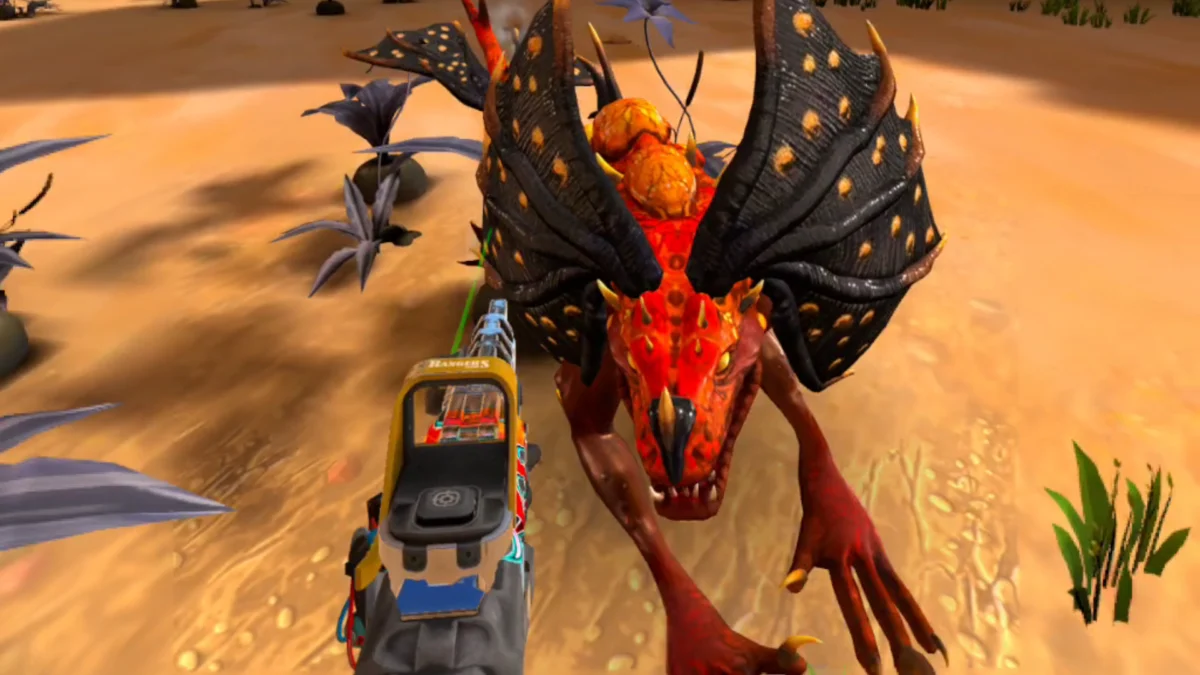
The virtual reality landscape of 2026 continues to oscillate between high-budget, boundary-pushing spectacles and experimental indie ventures that seek to capture the nostalgia of gaming’s golden eras. Discovery: Rogue Planet, the latest offering from Immersmind Studio for the Meta Quest 3 and 3S, firmly plants its flag in the latter camp. Released on August 13, 2026, the title arrives as a polarizing tribute to the narrative-driven first-person shooters (FPS) of the late 1990s and early 2000s. While it successfully channels the spirit of classics like Halo: Combat Evolved, System Shock, and Metroid Prime, it also brings with it a controversial modern twist: a heavy reliance on generative AI for its storytelling and world-building.
Main Facts: At a Glance
To understand Discovery: Rogue Planet, one must first look at the technical and commercial framework in which it exists. Immersmind Studio has positioned this title as an accessible, budget-friendly entry into the sci-fi shooter genre.
- Discovery: Rogue Planet
- Developer: Immersmind Studio
- Platform: Meta Quest 3, Meta Quest 3S (Optimized for Quest 3)
- Release Date: August 13, 2026
- Price Point: $14.99 USD
- Genre: Narrative-driven Sci-Fi First-Person Shooter
- Estimated Playtime: 4 to 5 hours for the main campaign
- Additional Modes: Optional Arena Mode, In-game achievement system, and collectibles.
The game places players in the boots of a stereotypically rugged bounty hunter navigating the treacherous frontiers of Rogax, a planet teeming with hostile mercenaries and alien fauna. At a price point of $14.99, it enters a crowded marketplace, attempting to balance retro charm with the hardware capabilities of Meta’s latest headsets.
Chronology of the Experience: From Farmhand to Frontier Legend
The gameplay loop of Discovery: Rogue Planet is intentionally linear, mimicking the "mission-based" structure of the early 2000s. The experience is divided into distinct phases that dictate the flow of the narrative.
The Tutorial and Initial Onboarding
The journey begins on a dusty farm on Rogax. Rather than a high-stakes space battle, the story starts with a mundane task: clearing vermin. This serves as a functional, if uninspired, tutorial. Here, players are introduced to the core mechanical pillars:
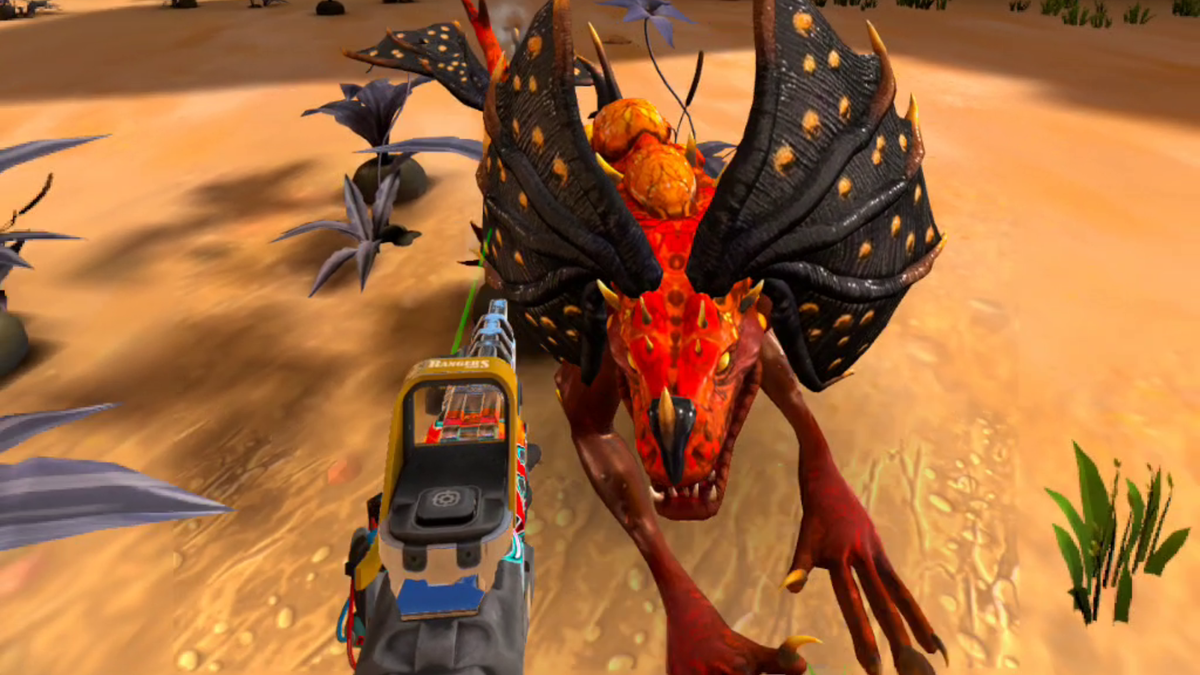
- Weapon Handling: Basic aiming and firing mechanics.
- The Inventory System: A virtual body-slot system, including a shoulder sling and a chest-mounted ammo pouch.
- The Multitool: A versatile device reminiscent of the one found in Star Wars: Tales From the Galaxy’s Edge, used for environmental interaction and repairs.
The Mission Loop
Following the tutorial, the game settles into a predictable rhythm. Players receive a briefing, transition to a contained map, and execute a series of objectives. These tasks—ranging from retrieving lost data to repairing derelict machinery—are punctuated by frequent combat encounters. The level design offers surprising verticality, utilizing ladders and multi-tiered structures that encourage players to explore for loot chests and hidden spray cans used for weapon customization.
Narrative Interludes
Between missions, the game shifts to a "black screen" storytelling mode. These segments present 2D comic-book-style images accompanied by voiceovers. It is here that the game’s reliance on generative AI becomes most apparent. These interludes act as the primary vehicle for plot progression, though they physically remove the player from the immersive VR environment, a design choice that has drawn significant criticism for breaking the "presence" that defines the medium.
Supporting Data: Technical Analysis and Gameplay Mechanics
While the game draws inspiration from the past, its execution is a mix of responsive gunplay and dated technical hurdles.
Combat and Arsenal
The strongest aspect of Discovery: Rogue Planet is its variety. The game features over twenty distinct weapons, including:
- Melee: Various knives with different reach and damage profiles.
- Small Arms: A range of pistols and revolvers.
- Heavy Ballistics: Shotguns and rifles that feel distinct in their handling.
A robust attachment system allows players to modify their loadouts, and the inclusion of collectible spray cans adds a layer of personalization. Despite the variety, the combat is hampered by "cringeworthy" enemy AI. Hostiles generally follow a single directive: run directly at the player. This lack of tactical depth makes the game feel more like an arcade gallery than a modern tactical shooter, though the sheer volume of enemies provides a consistent, if simple, challenge.
The "Grab Jank" and UI Issues
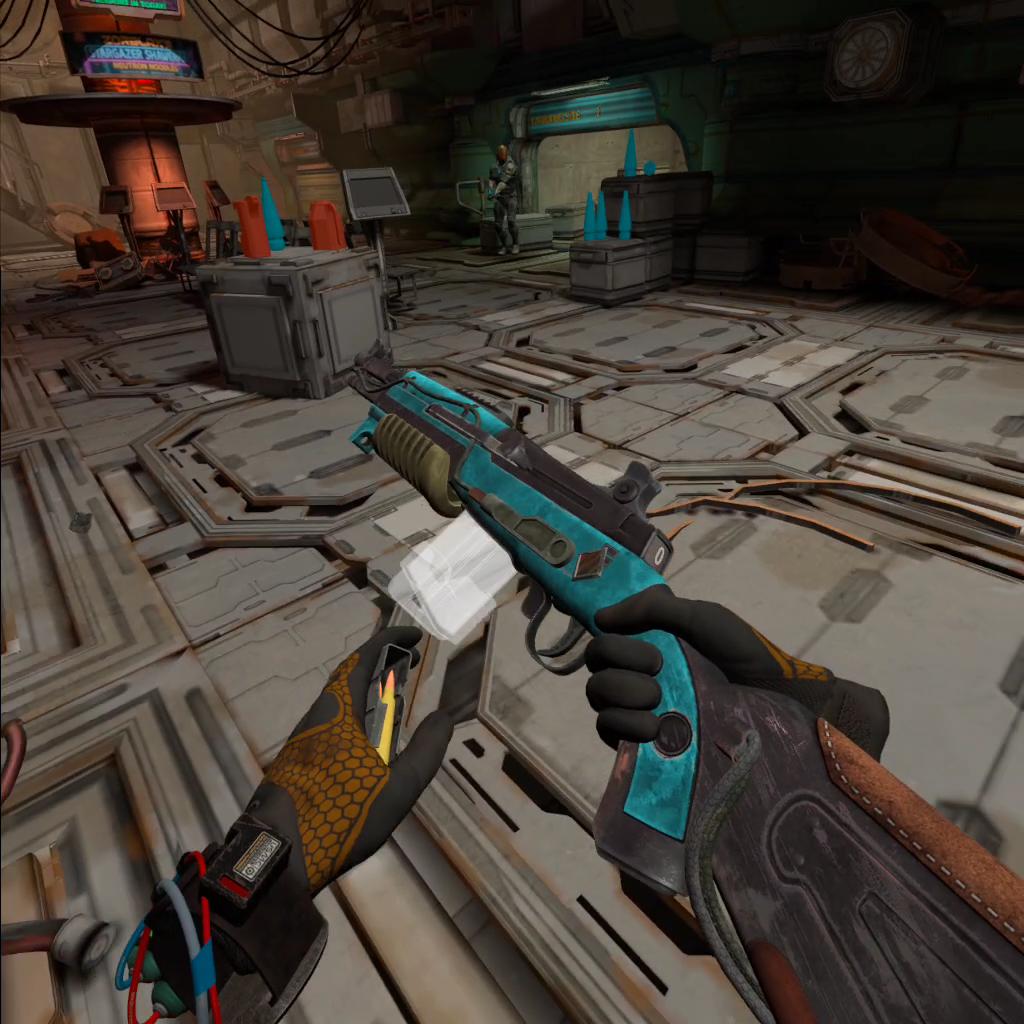
A recurring complaint in the VR community involves the physical layout of the player’s inventory. In Discovery: Rogue Planet, the tablet used for mapping and weapon switching is placed directly behind the ammo pouch, while the knife is positioned just above it. This leads to frequent "grab jank," where a player might accidentally pull out a map when they intended to reload. This stands in stark contrast to industry leaders like Metro Awakening or The Walking Dead: Saints & Sinners, which utilize more spaced-out, intuitive "virtual body" layouts.
Visual and Auditory Fidelity
Graphically, the game is a paradox. While it manages to cram a significant amount of environmental detail into the Quest 3’s mobile chipset—spanning deserts, swamps, and caves—the actual fidelity is lackluster. Low-resolution textures and grainy AI-generated assets make the game look older than it is. The sound design follows suit; weapons lack the "thump" expected of sci-fi armaments, and haptic feedback is noticeably weak, failing to provide the tactile immersion found in contemporary VR shooters.
The AI Controversy: Official Context and Implementation
The most discussed element of Discovery: Rogue Planet is its integration of generative AI. This is not merely a tool used for background assets but is central to the game’s narrative delivery.
Generative Storytelling
The 2D images used in cutscenes bear the hallmarks of prompt-generated art, often resulting in visual inconsistencies. More jarring, however, is the voice acting. The dialogue delivery is characterized by unnatural pauses, stilted inflections, and a lack of emotional resonance. Ironically, the most "human" sounding character is Fifi, a silver-tongued robot companion. The disparity between the written text on the screen and the spoken AI dialogue further suggests a disjointed production process.
Developer Strategy
While Immersmind Studio has not issued a formal manifesto on their use of AI, the game’s structure implies a strategic choice: using AI to fill the "narrative gap" that a small indie budget could not otherwise afford. By bypassing traditional concept artists and voice actors for the bulk of the exposition, the studio was able to deliver a 5-hour campaign at a $14.99 price point. However, as noted in reviews of similar titles like Soul Covenant and System Critical 3, the VR audience remains largely resistant to this "static image" storytelling method, regardless of how the images are produced.
Implications: The Future of Indie VR and AI Integration
The release of Discovery: Rogue Planet serves as a case study for the future of the VR industry. It highlights several emerging trends and potential pitfalls for developers.
1. The Democratization of Content vs. Quality
Generative AI allows small teams to create "content-rich" games with multiple biomes and lengthy scripts. However, Rogue Planet demonstrates that quantity does not equal quality. If the AI-generated elements pull the player out of the experience, the added "length" of the game may actually decrease its overall value.
2. The Return of the "AA" Experience
There is a clear hunger for mid-tier, linear VR shooters. Not every game needs to be a 40-hour open-world epic. Rogue Planet’s success in providing a functional, entertaining 5-hour loop suggests that if a developer can marry this price point with higher-quality, human-driven assets, they could dominate the Quest store.
3. Ethical and Aesthetic Choices for Consumers
The inclusion of generative AI has become a "personal choice" for the consumer. While some players view it as a necessary evil for low-cost indie development, others see it as a dilution of the medium’s artistic integrity. The fact that Rogue Planet does not dock its score based solely on the presence of AI, but rather the quality of the result, suggests a shift in how critics may evaluate games moving forward.
Conclusion: A Functional Throwback
Discovery: Rogue Planet is a game of contradictions. It is a mechanically sound shooter with a generous arsenal and stable performance, yet it is bogged down by primitive AI and a narrative delivery system that feels out of place in 2026. For $14.99, it offers a nostalgic trip back to the era of Turok and GoldenEye, provided the player can look past the "uncanny valley" of its AI-generated cutscenes.
Ultimately, the game stands as a testament to the fact that the core FPS formula—shooting, looting, and exploring—remains satisfying even when the "wrapper" is flawed. Whether or not it represents a sustainable path for VR development depends entirely on whether future studios can use these new tools to enhance immersion rather than detract from it. For now, Discovery: Rogue Planet is a decent, if unpolished, addition to the Quest 3 library that succeeds in spite of its shortcuts.