The Digital Vanguard: Concept Art World’s 2026 Vision and the Preservation of Human Creativity

Main Facts: A New Chapter for Visual Development
In an era where the boundary between human creativity and algorithmic generation is increasingly contested, Concept Art World (CAW) has reaffirmed its position as a premier sanctuary for digital craftsmanship. The platform, a long-standing pillar in the entertainment industry, recently unveiled a high-profile showcase featuring four titans of the industry: Francesco Lorenzetti, Thea Turner, Richard Anderson, and Tyler Edlin.
This spotlight comes at a pivotal moment for the visual development community. As the gaming, film, and animation sectors undergo rapid technological shifts, CAW has doubled down on its mission to provide a curated, high-quality resource for professionals and aspiring artists. More than just a gallery, the platform serves as a bridge between the raw imagination of the artist and the multi-billion dollar production pipelines of major studios.
Crucially, the latest updates to the platform include a stringent legal framework regarding the burgeoning field of Artificial Intelligence. By explicitly prohibiting the training of AI systems using its hosted content, Concept Art World is taking a definitive stand in the "Human-First" art movement. This policy reflects a broader industry-wide pushback against unauthorized data scraping, positioning CAW not only as a promotional hub but as a legal fortress for intellectual property.
Chronology: From Sketchbooks to Digital Dominance
The evolution of Concept Art World mirrors the broader history of the entertainment industry’s visual language. To understand the significance of the current showcase, one must look at the trajectory of the medium.
The Traditional Roots (Pre-2000s)
Before the digital revolution, concept art was a physical endeavor. Artists like Ralph McQuarrie (Star Wars) and Syd Mead (Blade Runner) utilized gouache, markers, and acrylics to build worlds. During this era, visual development was a "behind-the-scenes" secret, rarely seen by the public until art books were released years after a film’s debut.
The Digital Migration (2000–2015)
The advent of the Wacom tablet and Adobe Photoshop transformed the workflow. Online communities began to form, creating a global village for artists. Concept Art World emerged during this period of transition, filling a void left by the decline of traditional print magazines. It provided a centralized, high-definition digital space where the quality of work was the only barrier to entry.
The Era of Hyper-Specialization (2016–Present)
As the fidelity of video games and VFX reached photorealistic levels, the role of the concept artist became more specialized. We moved from "generalists" to experts in specific niches: weapon design, architectural world-building, and costume anatomy. The current featured artists—Lorenzetti, Turner, Anderson, and Edlin—represent the pinnacle of this specialization, each bringing a unique pedagogical and stylistic contribution to the craft.
Supporting Data: The Architects of Modern Mythology
The four artists currently highlighted by Concept Art World represent a cross-section of the industry’s elite. Their collective portfolios provide the visual blueprint for modern pop culture.
Francesco Lorenzetti: The Master of Atmosphere
Lorenzetti is renowned for his ability to weave narrative through environmental design. His work often explores the intersection of light and shadow, creating "mood paintings" that dictate the emotional tone of a project before a single frame is filmed. In the competitive world of AAA gaming, Lorenzetti’s style is a benchmark for atmospheric storytelling.
Thea Turner: Character and Narrative Depth
Turner’s work emphasizes the "human" element of concept art. Her designs are characterized by a profound understanding of costume history and anatomical expression. In an industry often criticized for generic character designs, Turner’s portfolio showcases how visual development can be used to communicate a character’s history, social status, and personality through a single static image.
Richard Anderson (Flaptraps): The Impressionist of Concept Art
Known in the industry as "Flaptraps," Richard Anderson has worked on some of the biggest franchises in cinema, including Guardians of the Galaxy and Captain Marvel. His style is a masterclass in efficiency—using bold, painterly strokes to convey complex forms. Anderson’s work is a favorite among directors because it prioritizes "the feel" and "the silhouette," allowing for rapid iteration in the high-pressure environment of film pre-production.
Tyler Edlin: Education and World-Building
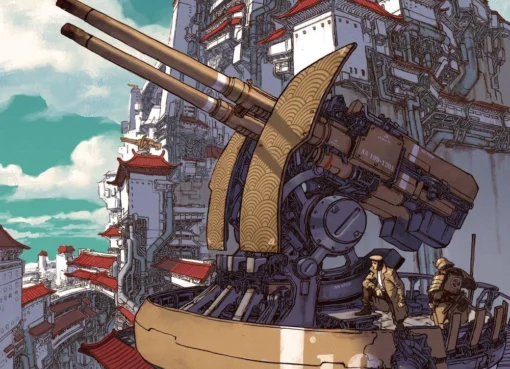
Tyler Edlin occupies a unique space as both a top-tier concept artist and a leading educator. His "Brushwork Atelier" and various tutorials have shaped the next generation of artists. Edlin’s work often focuses on sprawling, imaginative landscapes that feel lived-in and historically grounded, a testament to his deep knowledge of architectural principles.
Industry Economic Impact
The importance of these artists is underscored by market data. The global video game market is projected to exceed $300 billion by 2027, while the animation and VFX market continues to grow at a CAGR of nearly 10%. Concept art is the "R&D" of this sector; for every dollar spent on final production, a significant portion is dedicated to the visual development phase, where the "look and feel" of a multi-million dollar asset is decided.
Official Responses: The Stance Against Generative AI
One of the most significant aspects of the current Concept Art World interface is the explicit legal disclaimer: "Any training of AI systems using this content is strictly prohibited." This is not merely a suggestion; it is a formal policy response to the existential threat many artists feel from Large Image Models (LIMs).
The Platform’s Philosophy
In an official capacity, CAW describes itself as a "trusted resource for creative professionals." The decision to ban AI training is a move to protect the commercial value of the human artists they feature. By ensuring that the work of Richard Anderson or Tyler Edlin isn’t used to synthesize "style-alike" images without compensation, CAW is setting a standard for digital galleries in the late 2020s.
Industry-Wide Consensus
The response from the professional community has been overwhelmingly positive. Organizations like the Concept Art Association have long advocated for "human-made" protections. CAW’s stance aligns with a growing movement of "Opt-In" only databases, where the artist maintains total control over their digital footprint.
"The value of a concept artist isn’t just the final image," says an industry spokesperson. "It’s the thousand decisions they made to get there. AI can mimic the result, but it cannot replicate the intent. Concept Art World is protecting the intent."
Implications: The Future of the Visual Development Craft
The updates to Concept Art World signal a broader shift in the creative economy. As we look toward the 2030s, several implications emerge for the future of film, gaming, and digital art.
1. The Premium on "Human-Verified" Art
As AI-generated imagery becomes ubiquitous and "cheap," high-end productions will likely place a premium on human-verified concept art. Studios will seek the "un-mimickable" nuances found in the work of artists like Lorenzetti and Turner to ensure their projects have a unique visual identity that hasn’t been diluted by algorithmic averaging.
2. The Rise of the "Artist-Educator"
The prominence of Tyler Edlin on the platform suggests that the future of the industry lies in mentorship. As tools become easier to use, the fundamental principles—composition, color theory, and perspective—become more important than ever. Concept Art World is evolving from a simple gallery into a pedagogical archive where the "how" is as important as the "what."
3. Legal and Ethical Boundaries
The "No AI Training" clause will likely become the industry standard. We can expect to see more platforms implementing technical "poisoning" or "cloaking" (such as Nightshade or Glaze) to protect artists. CAW is at the forefront of this legal frontier, asserting that an artist’s style is an extension of their identity and property.
4. Cross-Platform Integration
With a presence on Bluesky, Instagram, Pinterest, Tumblr, LinkedIn, and YouTube, Concept Art World is demonstrating how a niche community can maintain a "decentralized" presence. By diversifying their social reach, they ensure that the work of their featured artists remains visible across different demographics, from the professional networking of LinkedIn to the aesthetic-focused audience of Pinterest.
Conclusion
Concept Art World remains more than just a website; it is a barometer for the health of the visual arts in the entertainment industry. By showcasing the exceptional talents of Francesco Lorenzetti, Thea Turner, Richard Anderson, and Tyler Edlin, while simultaneously drawing a hard line against the unauthorized use of their work by AI, CAW is championing a future where human creativity remains at the heart of our digital myths. As we move further into the decade, the platform’s commitment to quality, protection, and education will undoubtedly serve as the gold standard for the global creative community.