
The Post-HoloLens Era: Xvisio Technology Emerges as a Formidable Challenger in Enterprise AR
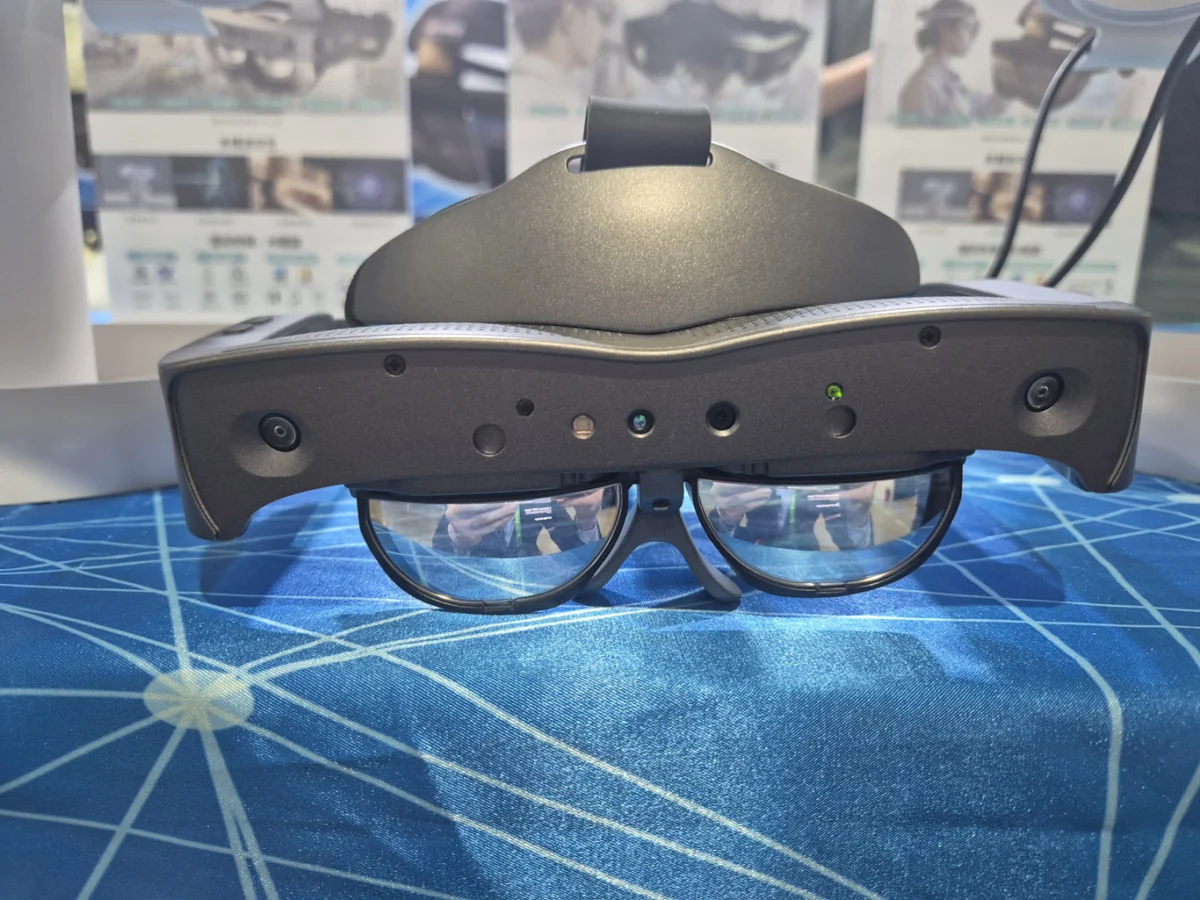
SHANGHAI – As the industrial augmented reality (AR) landscape undergoes a significant transition, characterized by Microsoft’s pivot away from its pioneering HoloLens hardware, a new wave of specialized manufacturers is rising to fill the vacuum. Among the most prominent contenders is Xvisio Technology, a Chinese firm that has moved beyond the prototype stage to offer a commercially available ecosystem designed specifically for enterprise-grade spatial computing.
With the recent unveiling of the SeerLens II series, Xvisio is positioning itself not merely as a peripheral manufacturer, but as a comprehensive alternative for corporations currently reliant on aging HoloLens 2 units. By combining high-resolution "all-in-two" tethered architectures with sophisticated self-tracking peripherals, Xvisio aims to solve the weight and thermal issues that have long plagued standalone AR headsets.

Main Facts: A Comprehensive Ecosystem for Spatial Computing
Xvisio Technology’s entry into the high-end AR market is defined by two flagship headsets: the SeerLens II B50R Pro and the SeerLens II B50H Max. Unlike consumer-grade "smart glasses" intended for media consumption, these devices are built for complex industrial workflows, featuring six-degrees-of-freedom (6DOF) tracking, hand-gesture recognition, and spatial anchoring.
The company’s strategy centers on a "platform-agnostic" hardware approach. Recognizing that different industries require varying levels of computational power, Xvisio’s headsets are designed to tether to a variety of units, including Windows PCs, Android smartphones, or the company’s proprietary Seerpad—a dedicated computational box powered by the Rockchip 3588s chipset.

Beyond headsets, Xvisio is carving out a niche in the peripheral market. One of their most technologically advanced offerings is a 6DOF controller that utilizes on-board cameras for self-tracking, a method similar to the technology found in Meta’s Quest Pro controllers. This allows for precise interaction in 3D space without the need for external base stations or the "dead zones" common in headset-based optical tracking.
Chronology: From Component Specialist to Systems Integrator
The journey of Xvisio into the spotlight of the AR industry has been one of incremental technological accumulation. Initially known for its expertise in SLAM (Simultaneous Localization and Mapping) and high-speed camera modules, the company has spent years perfecting the "eyes" of spatial computing.

The Breakthrough Booth Experience
At a recent major industry exhibition in China, Xvisio demonstrated the maturity of its hardware ecosystem. The demonstration began not with a headset, but with a four-legged robotic dog. The robot, controlled by a technician using Xvisio’s self-tracking 6DOF controllers, served as a proof-of-concept for the company’s low-latency tracking capabilities.
Following the robotics demonstration, the company provided hands-on access to the SeerLens II series. This marked a significant milestone, as the company moved from discussing specifications to demonstrating a fully functional, production-ready product line. Attendees were able to test the devices using the Unity MRTK (Mixed Reality Toolkit) demo—the same environment used to showcase Microsoft’s HoloLens—signaling a direct challenge to the incumbent American hardware.

Product Availability
While other potential HoloLens substitutes, such as those from Shoujing, remain in the pre-release or developmental phases, Xvisio confirmed that the SeerLens II series is currently shipping worldwide. This availability is critical for enterprises currently facing "end-of-life" hardware cycles for their existing AR fleets.
Supporting Data: Technical Specifications and Performance Metrics
The SeerLens II series is divided into two distinct tiers, catering to different ergonomic and visual requirements. Both utilize "Birdbath" optical engines, which provide high brightness and color saturation at a lower cost than waveguide technology, albeit with some trade-offs in transparency.

1. SeerLens II B50R Pro (The Compact Workhorse)
Designed for extended wear in environments where mobility is paramount, the B50R Pro emphasizes a lightweight footprint.
- Resolution: 1920 x 1080 per eye.
- Field of View (FOV): 46° (Diagonal).
- Weight: Approximately 100 grams.
- Tracking: 6DOF SLAM via integrated stereo cameras.
- Design: Compact form factor with a halo-style adjustment strap.
- Price: Approximately $4,000 USD.
2. SeerLens II B50H Max (The High-Performance Flagship)
The B50H Max is intended for high-fidelity simulations and complex engineering tasks where visual clarity is the primary requirement.

- Resolution: 2560 x 1440 per eye (2K per eye).
- Field of View (FOV): 50° (Diagonal).
- Weight: Approximately 160 grams.
- Tracking: Enhanced 6DOF SLAM and 26-joint hand tracking.
- Design: Flip-up visor mechanism (similar to HoloLens 2) for easy transitions between digital and physical tasks.
- Price: Approximately $5,400 USD.
The Computational Backbone: Seerpad
To power these optics, Xvisio offers the Seerpad, which acts as the "brain" of the system.
- Processor: Rockchip 3588s.
- Memory: 8GB DDR4 RAM.
- OS: Xvisio OS (Android-based).
- Connectivity: Ethernet, Wi-Fi 6, Bluetooth.
Official Responses and Strategic Positioning
Xvisio’s leadership has emphasized that their hardware is built on the pillars of "stability and interoperability." During the hands-on demonstrations, company representatives highlighted that their SDK is fully compatible with Unity’s AR Foundation.

Bridging the Software Gap
"We understand that the enterprise market has invested heavily in the HoloLens ecosystem," a company spokesperson noted (via translation). "By supporting MRTK and AR Foundation, we allow developers to migrate their existing applications to Xvisio hardware with minimal code changes. Our goal is to provide a seamless transition for the professional user."
The "All-in-Two" Philosophy
The company defends its decision to use a tethered (all-in-two) design rather than a standalone (all-in-one) unit like the Quest 3 or HoloLens 2. By offloading the battery and processor to a pocket-sized box, Xvisio can keep the headset weight under 200 grams, significantly reducing neck strain during 8-hour work shifts. Furthermore, this design prevents the "heat-on-the-forehead" issue that has been a major complaint among industrial AR users.

Implications: Challenges and Opportunities in the Global Market
The emergence of Xvisio as a viable HoloLens alternative carries significant weight for the future of industrial spatial computing, but it is not without hurdles.
The Birdbath Trade-off
While Xvisio’s visuals are praised for being bright and crisp, the use of Birdbath optics presents a challenge for "true" augmented reality. Birdbath lenses are naturally darker than the waveguides used in HoloLens or Magic Leap. In the SeerLens II, this results in a darkened view of the physical world—almost like wearing sunglasses indoors. For certain surgical or high-precision manufacturing tasks, this reduction in ambient light could be a deterrent.

Geopolitical and Security Considerations
As a Chinese-based manufacturer, Xvisio faces a complex landscape in Western markets. Several US-based industry analysts have noted that government contractors and sensitive aerospace firms may be hesitant to adopt Chinese hardware due to data security regulations and geopolitical tensions. Xvisio’s ability to provide transparent data-handling protocols will be essential for widespread Western adoption.
The Price of Professionalism
At a price point ranging from $4,000 to $5,400, Xvisio is clearly not competing with consumer devices like the Apple Vision Pro ($3,499) on price alone. Instead, they are banking on the "industrial reliability" of their 6DOF tracking and the ergonomic benefits of their lightweight design. For a factory floor or a training center, the ability to flip up a visor or use a self-tracking controller may justify the premium.

The Verdict on Tracking and Interaction
Initial testing suggests that Xvisio’s SLAM tracking is robust, though slightly less "locked-in" than Microsoft’s industry-leading spatial mapping. Hand tracking remains a work in progress; while functional for button presses and object manipulation, a perceptible lag remains between physical movement and virtual response. However, for most industrial applications—such as remote assistance or guided assembly—this latency is well within workable limits.
Conclusion
Xvisio Technology represents a shift in the AR power dynamic. As Western tech giants recalibrate their XR strategies toward consumer "pass-through" VR (like the Quest 3 and Vision Pro), Xvisio is doubling down on the dedicated optical see-through market. For enterprises left stranded by the stagnation of the HoloLens line, the SeerLens II series offers a tangible, albeit expensive, path forward into the future of spatial work. Whether Xvisio can overcome the optical limitations of Birdbath designs and the hurdles of international trade remains to be seen, but their current hardware suite proves they are a serious contender for the title of the new "Enterprise Standard."



Leave a Comment