The Price of Dissent: Susan Sarandon Confronts Hollywood’s Political Power Structure at Venice 2026

VENICE — In a defiant and candid appearance at the 2026 Venice Film Festival, Academy Award-winning actress Susan Sarandon addressed the professional fallout of her political activism, specifically regarding her long-standing advocacy for Palestinian rights. Speaking at a press conference for her latest film, The Echo Chamber, Sarandon provided a rare glimpse into the "blacklisting" mechanisms of modern Hollywood, while signaling a shift in the global narrative surrounding the Israel-Palestine conflict.
Sarandon, a veteran of both the screen and the picket line, remains a polarizing figure in the American entertainment industry. Her presence in Venice, promoting an Italian-led production, underscores a growing trend of "canceled" American stars finding refuge and creative freedom in European cinema.
Main Facts: The Venice Declaration
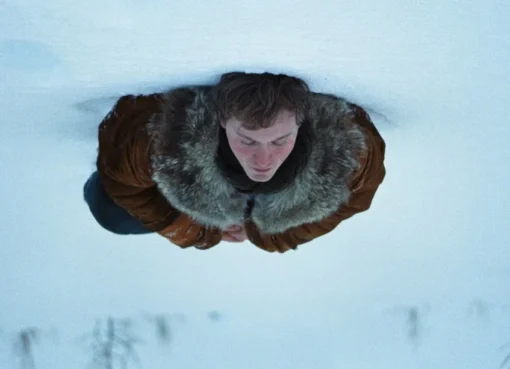
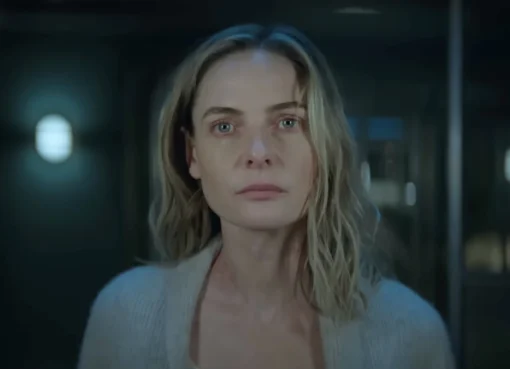
At the center of the discussion was The Echo Chamber, a high-profile production directed by Andrea Pallaoro. The film is notable not only for its cast—which includes Luca Marinelli and Alicia Vikander—but for its pedigree: it is an adaptation of the final script written by the legendary Italian filmmaker Bernardo Bertolucci before his death in 2018.
During the press conference, Sarandon was asked about her current standing in Hollywood following her 2023 dismissal from United Talent Agency (UTA). Her response was a blistering critique of the industry’s "power structure."
"I’ve still had movies taken away recently because there are agencies that are telling people not to hire me still," Sarandon revealed. She characterized the industry’s resistance as a byproduct of "strongly held positions within my industry that are held by Zionists," noting that these individuals "have not relaxed their feelings" toward her.
Despite the domestic professional chill, Sarandon claimed a sense of victory in the shifting public discourse. She pointed to a heightened public awareness regarding the financial and military ties between the United States and Israel. "I think that the narrative has completely changed in terms of the historical relevance of Palestine and the ties of Zionists with America and our politics," she said. "That has been a major revelation for people—how much money the United States gives to Israel."
Chronology: From Advocacy to Agency Severance
To understand Sarandon’s current position in 2026, one must look back at the escalating series of events that began in late 2023.
November 2023: The Breaking Point
The catalyst for Sarandon’s formal exit from the Hollywood mainstream occurred during a pro-Palestinian rally in New York City in November 2023. During her speech, Sarandon remarked that many Jewish Americans were "getting a taste of what it feels like to be a Muslim in this country, so often subjected to violence."
The comments were immediately condemned by various advocacy groups and industry peers who viewed them as downplaying antisemitism. Within days, United Talent Agency (UTA), which had represented Sarandon for decades, announced they were dropping her as a client.

2024–2025: The "Quiet" Blacklist
Following her severance from UTA, Sarandon’s domestic output slowed significantly. While she remained active on social media and at grassroots protests, reports began to surface of her being removed from several independent projects under pressure from financiers.
This period mirrored the experiences of other actors, such as Melissa Barrera, who was fired from the Scream franchise during the same window for similar social media posts. The industry appeared to enter a "new McCarthyism," where political stances on the Levant became a litmus test for employability in major studio productions.
2025–2026: The European Pivot
Recognizing the barriers in Los Angeles, Sarandon pivoted toward international co-productions. This culminated in her casting in The Echo Chamber. Director Andrea Pallaoro reportedly faced "warnings" against hiring the actress but chose to prioritize her artistic fit for the role of a legendary singer-songwriter over political optics.
Supporting Data: The Geopolitical and Economic Context
Sarandon’s comments in Venice regarding the "revelation" of U.S. aid to Israel are supported by shifting polling data and fiscal reports that have emerged between 2023 and 2026.
Public Opinion Shifts
Data from the Pew Research Center and Gallup throughout 2024 and 2025 showed a widening generational divide. Among Americans under the age of 30, sympathy for the Palestinian cause began to equal or exceed sympathy for Israel for the first time in the history of the polling. This "narrative change" Sarandon referenced is a documented demographic shift that has put the Hollywood "Old Guard" at odds with younger audiences and creators.
U.S. Military Aid
Sarandon highlighted the "billions" in aid provided to Israel. Historically, the U.S. has provided Israel with approximately $3.8 billion in annual military aid under a 10-year memorandum of understanding. However, the supplemental funding packages passed in 2024 and 2025 in the wake of regional escalations brought these figures into the mainstream spotlight, fueling the "awareness" Sarandon spoke of in Venice.
The "Army Combination" Claim
In her Venice remarks, Sarandon claimed that the U.S. had "voted to combine the army of the United States with the army of Israel." While likely a rhetorical reference to the unprecedented levels of intelligence sharing, joint exercises, and integrated missile defense systems (such as the integration of the U.S. "Iron Dome" batteries), the statement reflects the perception of an inseparable military alliance that has become a central point of contention for anti-war activists.
Official Responses: The Industry Reacts
The response to Sarandon’s Venice comments has been split along ideological lines, reflecting a fractured industry.
The Director’s Defense
Andrea Pallaoro, speaking alongside Sarandon, defended his decision to cast her. "In Europe, we have a different tradition of separating the artist’s political life from the work," Pallaoro stated. "To lose an actress of Susan’s caliber because of her convictions would be a loss for cinema itself. I was told there would be ‘complications’ with American distribution, but the art must come first."

Agency and Studio Silence
Major talent agencies, including UTA and CAA, have declined to comment officially on Sarandon’s latest remarks. However, off-the-record briefings from studio executives suggest that the "Sarandon problem" remains a matter of "risk assessment." One executive noted that while Sarandon remains a legendary talent, the "distraction factor" and potential for boycotts from influential donor bases make her a "difficult sell" for projects requiring massive domestic marketing spends.
Advocacy Groups
Jewish advocacy organizations, such as the Anti-Defamation League (ADL), have previously criticized Sarandon for what they describe as "inflammatory rhetoric" that fails to acknowledge the complexities of the conflict or the trauma of the October 7 attacks. Her use of the word "Zionists" to describe the Hollywood power structure has been flagged by some critics as utilizing tropes regarding Jewish control of the media.
Implications: A New Era of Global Cinema
The Sarandon-Venice incident has several long-term implications for the film industry and the intersection of celebrity and politics.
1. The Rise of "Offshore" Talent
Sarandon’s success in finding high-quality work in Italy suggests that the "Blacklist" of the 2020s is less effective than that of the 1950s. In a globalized streaming economy, actors can bypass the Hollywood studio system by working with European and Asian production houses that are less sensitive to American domestic political pressures.
2. The Death of the "Neutral" Celebrity
The era where A-list stars could remain politically neutral is effectively over. Sarandon’s experience serves as a cautionary tale for some and a blueprint for others. As the public demands more "authenticity" from celebrities, the professional cost of that authenticity is becoming more quantifiable.
3. The Bertolucci Legacy
The success of The Echo Chamber also serves to rehabilitate the late Bernardo Bertolucci’s final creative vision. By casting Sarandon—a woman who embodies the "rebel" spirit Bertolucci often explored—Pallaoro has created a film that is as much a political statement as it is a piece of art.
Conclusion: "I Found My Family"
As the press conference concluded, Sarandon appeared more at peace than embattled. "I found my family, I found my people, and I’m OK," she told the gathered journalists.
Her journey from the heights of the Hollywood establishment to the status of an international "independent" icon reflects a broader fragmentation of the American cultural landscape. Whether Sarandon will ever return to the fold of major studio filmmaking remains doubtful. However, her performance in The Echo Chamber—which received a seven-minute standing ovation in Venice—proves that while an agency can drop a client, they cannot easily erase a legacy.
As the 2026 festival continues, the "Echo Chamber" Sarandon spoke of is no longer just a film title; it is a description of the polarized world she continues to challenge, one festival at a time.