The Human Terrain of Generative Media: Exploring the Painterly AI Aesthetics of Jacob Holster

In an era where the digital landscape is increasingly saturated with hyper-realistic renders, ultra-glossy 3D animations, and the clinical precision of high-fidelity generative imagery, a new movement is emerging that seeks to reclaim the "hand" of the artist within the machine. At the forefront of this movement is Jacob Holster, an artist and academic whose work, under the moniker @bandyquantguy, challenges the prevailing aesthetic of artificial intelligence. By eschewing the "uncanny valley" of perfect realism in favor of a warm, textured, and profoundly painterly style, Holster is redefining what it means to create art in the age of algorithms.
Main Facts: Bridging the Academic and the Aesthetic
Jacob Holster occupies a unique position in the contemporary art world. He is not merely a digital creator experimenting with new tools; he is a scholar-practitioner whose creative output is deeply rooted in academic inquiry. Currently serving as an Assistant Teaching Professor of Music Education at Penn State University, Holster’s primary research focuses on the intersection of artificial intelligence, pedagogy, and creative practice.
This dual identity—as both an educator and an AI filmmaker—is central to understanding his work. While many AI artists focus on the technical "prompt engineering" required to produce a specific image, Holster approaches the medium as a continuation of humanistic traditions. His work is characterized by:

- Tactile Textures: A deliberate move away from digital "smoothness" toward the impasto and brushwork of traditional oil painting.
- Conceptual Depth: Projects that explore the nature of consciousness, human geography, and the evolution of creativity.
- Rhythmic Composition: Utilizing his background in music to inform the pacing and flow of his short films.
His recent series, Paint World, and the acclaimed short film Art Is Human Terrain, have garnered significant attention for their ability to evoke emotional resonance through technology that is often criticized as being cold or derivative.
Chronology: From Music Education to the Digital Canvas
The evolution of Jacob Holster’s artistic voice is a testament to the interdisciplinary nature of modern creative work. His journey did not begin in a film studio, but in the realm of music education and research.
The Academic Foundation
Holster’s career at Penn State University provided the initial framework for his exploration of AI. In his role as an Assistant Teaching Professor, he began investigating how generative technologies could be integrated into the classroom. His focus was not just on the efficiency of AI, but on its potential to democratize creative expression and provide new avenues for student engagement. This period was marked by a deep dive into the ethics of AI and the cognitive processes behind artistic creation.
The Shift to Generative Filmmaking
As generative AI tools for video and imagery began to mature, Holster transitioned from theoretical research to practical application. He recognized that the "glitches" and "hallucinations" of early AI models, which many saw as flaws, could be harnessed to create a new form of impressionism. Around this time, he established his Instagram presence as @bandyquantguy, a name that hints at his background in both music ("bandy") and data-driven analysis ("quant").
The "Paint World" Era
The launch of the Paint World series marked a definitive shift in Holster’s style. In works such as Le Voyage [Paint World 28] and Recipe for Consciousness [Paint World 38], Holster moved away from the standard AI "look." Instead of striving for photographic accuracy, he began to push the software toward the aesthetics of the 19th-century salon and early 20th-century surrealism. This period saw a rapid refinement of his technique, resulting in the warm, evocative visuals that have become his signature.
Supporting Data: Analysis of Key Works and Aesthetics
To understand the impact of Holster’s work, one must analyze the specific aesthetic choices that distinguish his portfolio from the broader field of generative media.
The "Paint World" Series: A Living Gallery
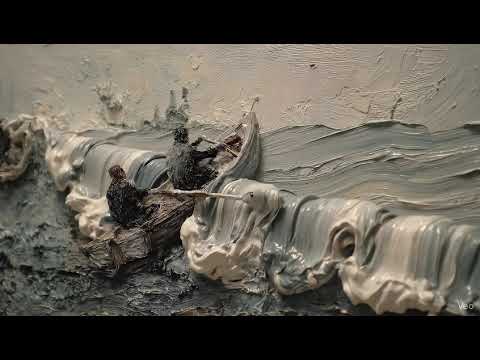
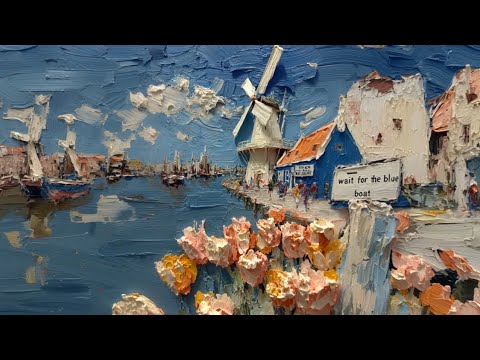
The Paint World series serves as an ongoing experiment in "digital impasto." In Paint World 18 (wait for the blue boat), the viewer is presented with a scene that feels as though it were pulled from a dream. The water is not rendered with the physics-based accuracy of a high-end CGI engine; instead, it moves with the thick, viscous quality of wet paint.
- Texture and Light: Holster utilizes AI to simulate the way light hits physical pigment. The highlights are not just bright pixels; they are "raised" surfaces that catch the light, creating a sense of three-dimensionality that is tactile rather than mathematical.
- Color Palette: His work often features a palette of ochres, deep blues, and earthy siennas, evoking a sense of nostalgia and "analog warmth" that contrasts sharply with the neon-drenched aesthetic of much contemporary digital art.
"Art Is Human Terrain": The Conceptual Pinnacle
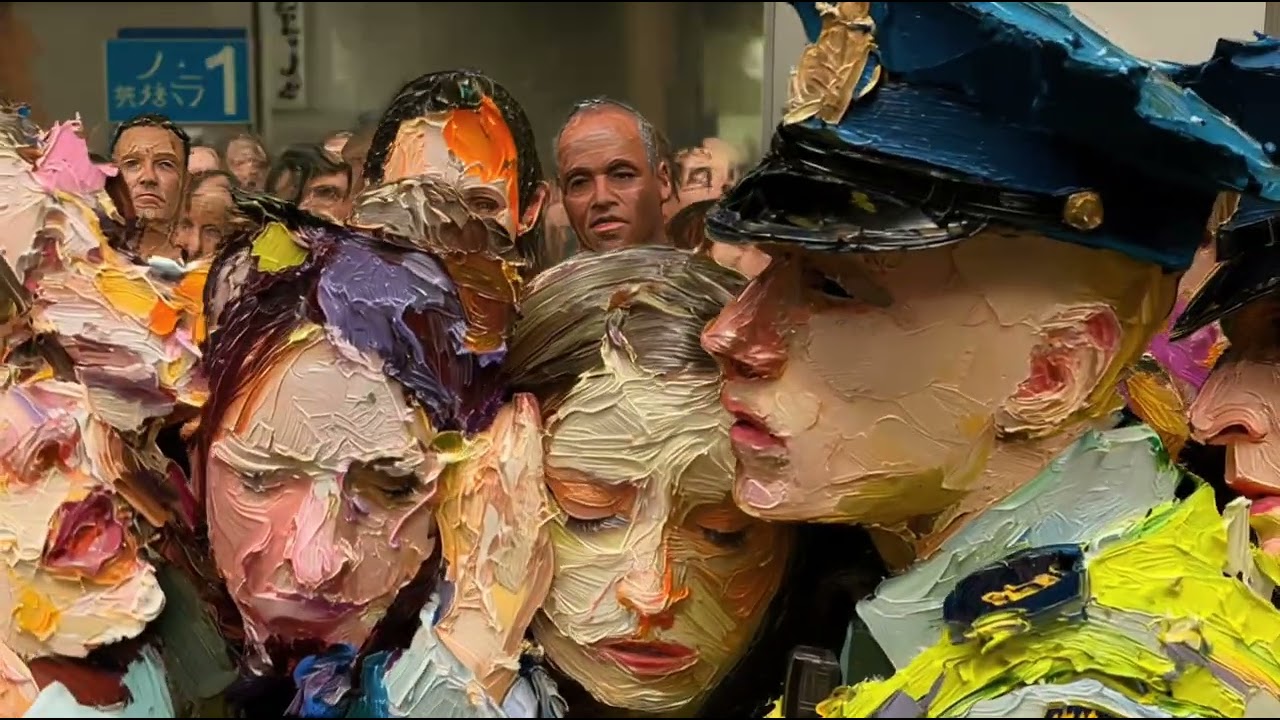
The film Art Is Human Terrain [Paint World 33] represents a culmination of Holster’s philosophy. The title itself suggests a rejection of the idea that AI art is "artificial." By framing art as "human terrain," Holster asserts that even when generated by a machine, the creative impulse, the curated vision, and the emotional impact are fundamentally human.
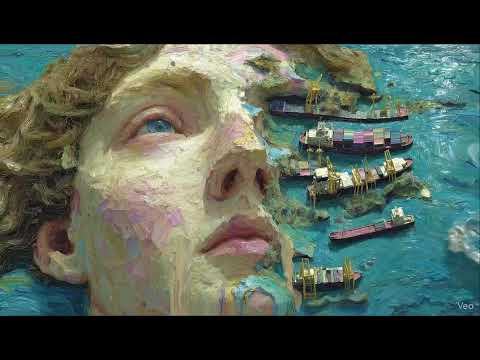
The film explores the relationship between the figure and the landscape, using shifting textures to blur the lines between the two. It suggests that our environment—and by extension, the tools we use to depict it—is an extension of our own consciousness.
Official Responses and Academic Context
Holster’s work does not exist in a vacuum; it is part of a larger dialogue within the academic community regarding the role of AI in society and education. At Penn State, the integration of AI into the curriculum is a subject of intense discussion, and Holster’s contributions are pivotal.
Pedagogy and Practice
Holster’s research examines how AI can be used as a "pedagogical partner." He argues that by removing some of the technical barriers to creation, AI allows students to focus more on the conceptual and narrative aspects of their work. However, he also emphasizes the importance of maintaining a critical eye. His own work serves as a case study for students, demonstrating that the tool should not dictate the style; rather, the artist’s vision should bend the tool to its will.
The Ethics of the Image
In various academic forums, Holster has addressed the concerns surrounding AI and copyright. His approach to AI is one of synthesis and transformation. By focusing on a "painterly" style that is intentionally abstract and stylized, he creates work that is clearly a departure from the training data—a unique expression that uses the AI as a medium rather than a copy machine.
Implications: The Future of the "Painterly" AI Movement
The work of Jacob Holster has significant implications for the future of digital media, filmmaking, and the broader art market.
1. The Democratization of the "High-Art" Aesthetic
Historically, creating a painterly animated film would require thousands of hours of hand-painting or expensive, proprietary software. Holster’s work demonstrates that AI can provide an "entry point" for creators to explore high-concept, fine-art aesthetics without the need for a massive studio budget. This could lead to a resurgence of experimental and surrealist filmmaking.
2. The Move Toward "Humanistic" Technology
As society becomes more wary of the "perfect" and "fake" nature of AI-generated content (such as deepfakes or hyper-realistic influencers), there is a growing demand for art that feels "real" in an emotional and tactile sense. Holster’s focus on texture, warmth, and imperfection suggests a path forward where technology is used to enhance, rather than replace, the human touch.

3. Redefining Artistic Agency
Holster’s success challenges the notion that the "AI does all the work." His portfolio proves that a strong, consistent artistic voice can emerge through generative tools. The agency lies in the curation, the specific aesthetic direction, and the ability to weave disparate digital threads into a cohesive narrative.
Conclusion: The New Impressionism
Jacob Holster (@bandyquantguy) is more than just an AI artist; he is a bridge-builder. He bridges the gap between the traditional and the digital, the academic and the experimental, and the machine and the human. Through his Paint World series and his research at Penn State, he is proving that artificial intelligence does not have to result in the "death of the artist." Instead, it can be the birth of a new kind of impressionism—one where the brushstrokes are made of data, but the soul of the work remains undeniably human.
As we look toward the future of generative media, Holster’s work serves as a reminder that the most important "terrain" in any artistic endeavor is the human one. By focusing on texture, emotion, and scholarly depth, he has created a body of work that doesn’t just show us what AI can do, but what an artist can do with AI. For those tired of the clinical perfection of the digital age, the warm, painted worlds of Jacob Holster offer a necessary and beautiful sanctuary.