The Humanist Machine: Jacob Holster and the Evolution of Painterly AI Aesthetics
In an era where generative artificial intelligence is often synonymous with the "uncanny valley"—a realm of hyper-polished, plastic-looking skin and mathematically perfect but soul-less landscapes—a new movement is emerging. At the forefront of this movement is Jacob Holster, known to the digital art community as @bandyquantguy. A scholar, educator, and filmmaker, Holster is redefining the relationship between the algorithm and the easel. His work does not seek to replicate the world with photographic precision; instead, it seeks to capture the "human terrain" of memory, texture, and emotion through a painterly lens that defies the clinical nature of the silicon chip.
Main Facts: The Intersection of Pedagogy and Pixels
Jacob Holster occupies a unique position in the contemporary art world. By day, he serves as an Assistant Teaching Professor of Music Education at Penn State University. His academic research focuses on the convergence of artificial intelligence, pedagogy, and creative practice. By night—and through his prolific Instagram presence—he translates these theoretical frameworks into a series of hauntingly beautiful AI-generated films and still images.
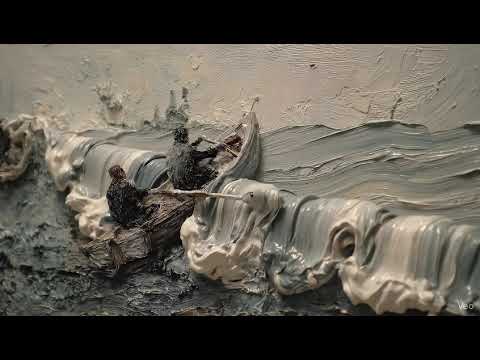
His primary body of work, the "Paint World" series, represents a departure from the standard "out-of-the-box" AI aesthetic. While many users of tools like Midjourney or DALL-E 3 lean toward realism, Holster’s work is characterized by:

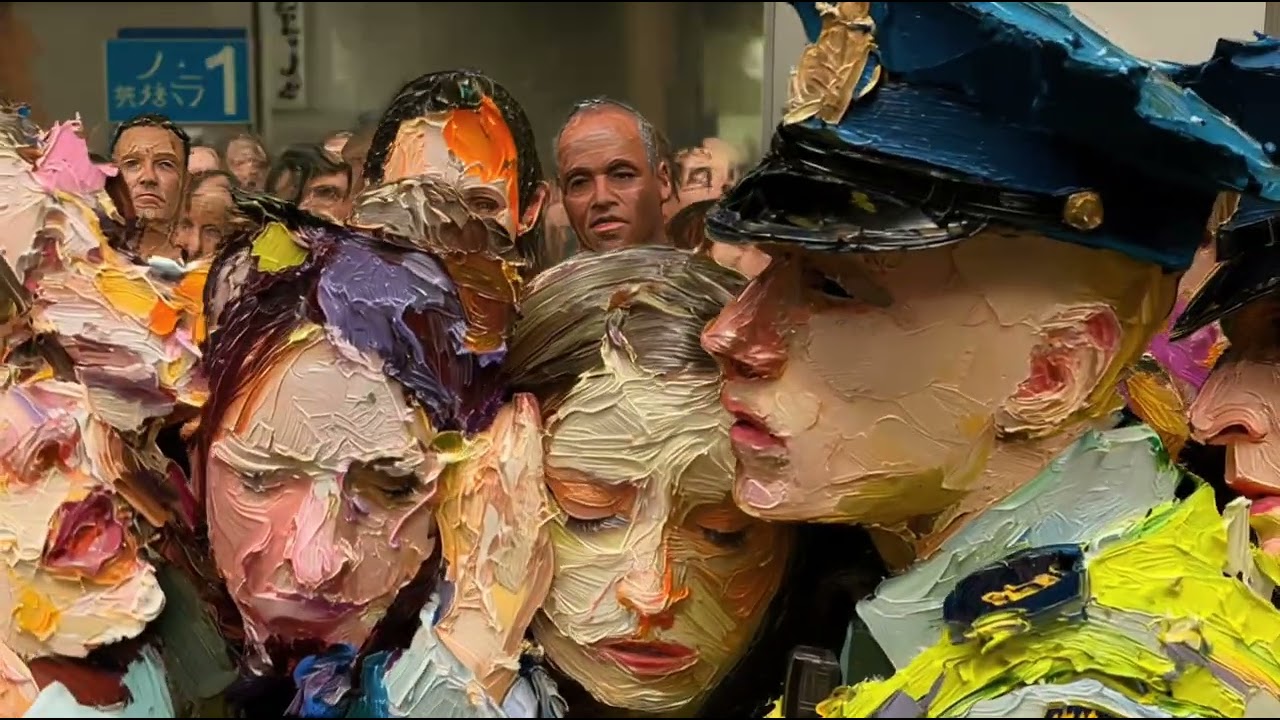
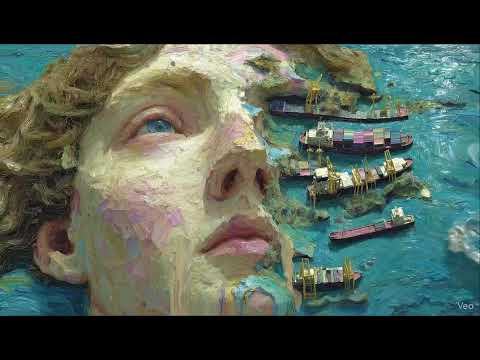
- Tactile Texture: Heavy impasto effects, visible brushstrokes, and a sense of physical "grit" that mimics oil on canvas.
- Conceptual Depth: Moving beyond mere visual appeal to explore themes of consciousness, human legacy, and the nature of creativity.
- Multimodal Artistry: Integrating sound and visual narrative, drawing on his background in music to create rhythmic, atmospheric experiences.
His recent short film, Art Is Human Terrain, has become a touchstone for those arguing that AI can be a tool for genuine human expression rather than just a shortcut for content production.
Chronology: From Music Education to Visual Synthesis
The journey of Jacob Holster is not the typical path of a digital artist. It is a progression rooted in the philosophy of learning and the structures of sound.
The Academic Foundation
Holster’s career began in the rigorous world of music education. At Penn State, his role involves training the next generation of educators. However, as generative AI began to disrupt the creative industries in the early 2020s, Holster saw an opportunity to study how these tools could be integrated into the creative process. His early research examined how AI could assist in music composition and pedagogical structures, but he soon realized that the visual potential of these models offered a new "terrain" for exploration.
The Birth of "Paint World" (2023-2024)
As AI image generators evolved from the abstract "blobs" of early GANs (Generative Adversarial Networks) to the sophisticated diffusion models of today, Holster began experimenting with "style-shifting." He resisted the trend of creating AI art that looked like high-definition photography. Instead, he began a series of experiments titled Paint World.
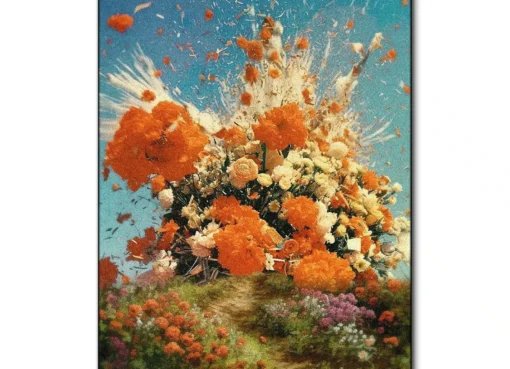
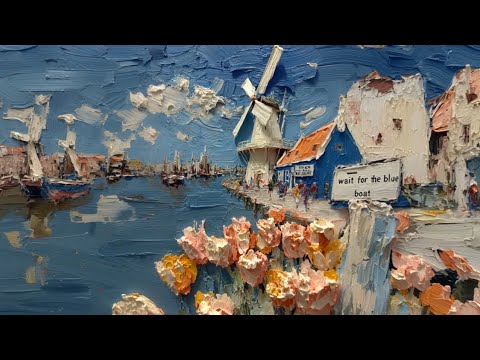
Works like Le Voyage [Paint World 28] and wait for the blue boat [Paint World 18] marked a turning point. In these pieces, the AI was prompted and steered toward Impressionist and Post-Impressionist sensibilities. The chronology of his work shows an increasing mastery over "digital lighting"—moving from flat colors to the warm, amber glows seen in Recipe for Consciousness [Paint World 38].
The Cinematic Pivot (2024-Present)
In the last year, Holster has moved from static images to "AI Cinema." By utilizing temporal consistency tools and motion synthesis, he has brought his "Paint World" to life. This culminated in Art Is Human Terrain, a project that functions as both a manifesto and a piece of art. It solidified his reputation as an artist who uses technology to look backward at traditional craft while moving forward into the digital frontier.
Supporting Data: The Technical and Theoretical Shift
To understand why Holster’s work is significant, one must look at the data surrounding the "AI Fatigue" currently hitting the art world. A 2023 study on digital aesthetics suggested that audiences are increasingly able to identify "standard" AI art due to its lack of texture and over-reliance on high-contrast, glossy finishes.
The "Anti-Gloss" Movement
Holster’s work aligns with a statistical shift toward "Lo-Fi AI." By introducing digital noise, grain, and "painterly" prompts, artists like Holster are effectively "de-tuning" the AI. His process involves:
- Prompt Engineering for Texture: Using specific keywords related to physical media (e.g., "heavy gesso," "palette knife," "scumbled oil").
- LoRA Training: Utilizing "Low-Rank Adaptation" to train models on specific artistic styles, ensuring the AI understands the "logic" of a brushstroke rather than just the "logic" of a pixel.
- Temporal Harmonization: In his films, Holster ensures that the "painterly" flicker is consistent across frames, preventing the "boiling" effect that often plagues low-quality AI video.
Academic Integration
At Penn State, Holster’s work serves as a case study. Data from his pedagogical research suggests that when students are taught to view AI as a "collaborative medium" rather than a "generator," the creative output becomes significantly more individualized. Holster’s own portfolio serves as the primary evidence for this theory: despite using the same underlying models as millions of others, his work remains instantly recognizable.
Official Responses: The Philosophy of "Human Terrain"
Holster’s work has garnered attention not just for its beauty, but for its defiance of the "AI as a replacement" narrative. In his own theoretical framework, he describes art as "Human Terrain"—a phrase that suggests art is a landscape shaped by human experience, even if the tools used to map that landscape are mechanical.
The Artist’s Perspective
In discussions surrounding his film Art Is Human Terrain, Holster posits that the "human" element in AI art is found in the selection and intent. "Technology is not a replacement for artistic sensibility," Holster has noted through his various platforms. Instead, he views it as a medium through which to explore new dimensions of texture and narrative.
Critical Reception
Critics in the surrealist and digital art communities have praised Holster for bringing "warmth" back to the screen. Surrealism Today noted that his work offers a "refreshing counterpoint" to the landscape of hyper-realistic renders. By bridging the gap between his scholarly inquiry into AI and his visual experimentation, Holster has created a feedback loop: his research informs his art, and his art provides the data for his research.
Implications: The Future of the AI-Human Collaborative
The work of Jacob Holster has far-reaching implications for the future of art, education, and the broader creative economy.
1. The Redefinition of "Digital Art"
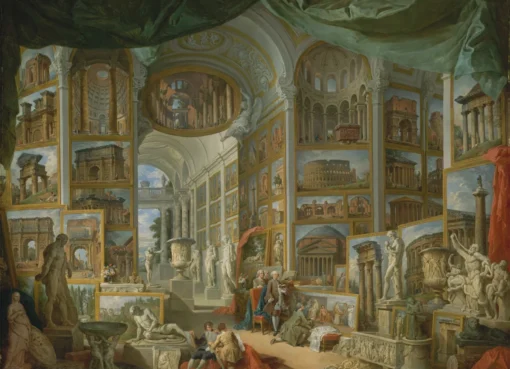
Holster is helping to move the needle away from "AI Art" as a separate category and toward "AI-assisted Fine Art." As his techniques become more widespread, we can expect a resurgence of traditional aesthetics in digital spaces. The "Paint World" series proves that the future of the screen might look a lot more like a 19th-century gallery than a 21st-century sci-fi movie.
2. Pedagogical Evolution
As an Assistant Teaching Professor, Holster is at the epicenter of a massive shift in how we teach creativity. His work implies that the "Music Education" of the future—and indeed all arts education—will require a "tech-fluency" that is deeply rooted in classical theory. To use AI well, one must understand the "human terrain" of art history.
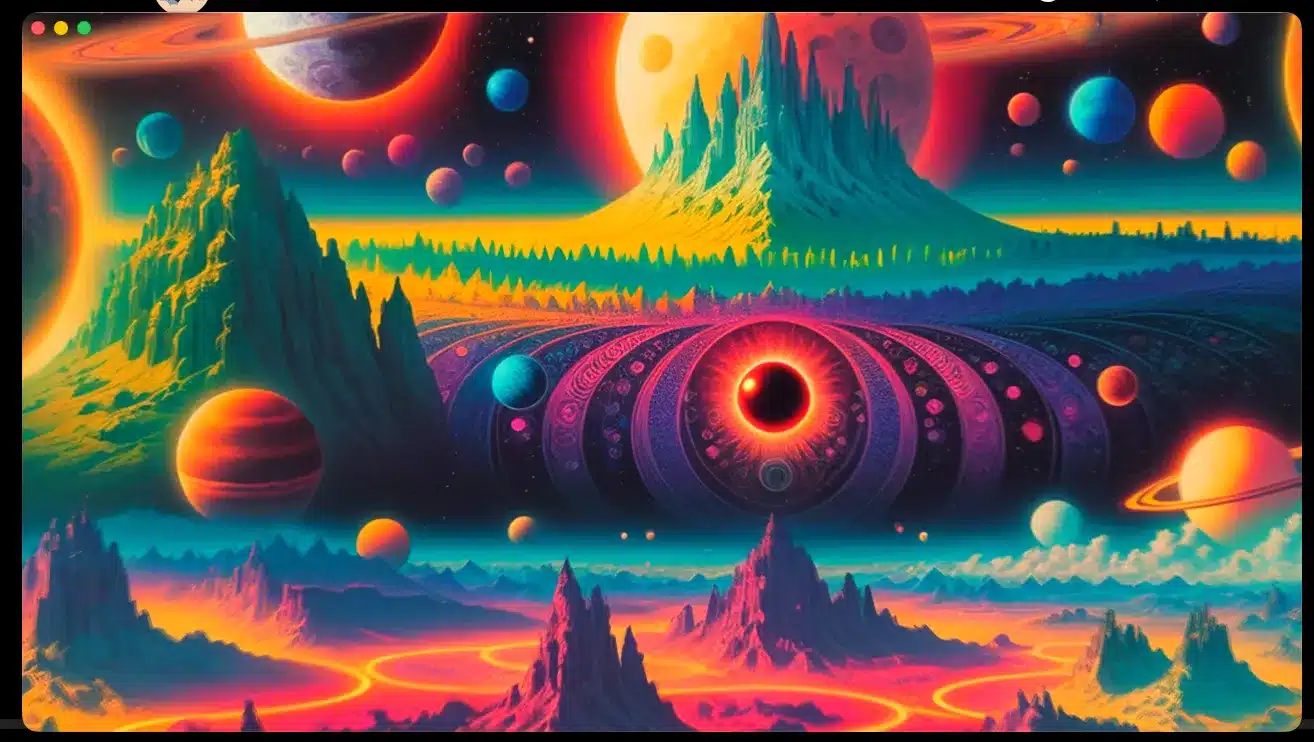
3. The Humanization of the Machine
Perhaps the most profound implication of Holster’s work is the psychological comfort it provides. In a world increasingly anxious about the "death of the artist," Holster’s "painterly" aesthetics offer a bridge. By making the machine "paint," he reminds the viewer that the machine is fed on a diet of human history. The textures he evokes are a reminder of the human hand, even when that hand is moving a mouse or typing a prompt rather than holding a brush.
Conclusion: The New Impressionism
Jacob Holster (@bandyquantguy) is more than just an "AI artist." He is a digital cartographer mapping the intersection of soul and software. Through his "Paint World" series and films like Art Is Human Terrain, he has demonstrated that the clinical precision of artificial intelligence can be softened, textured, and humanized.
As we look toward the future of generative media, the path blazed by Holster suggests that the most successful artists will not be those who use AI to replace the human touch, but those who use AI to amplify it. In the warm, oil-slicked frames of a Holster film, we don’t just see the power of a computer; we see the enduring, textured resilience of the human spirit in the digital age.

Where to Explore His Work:
- Instagram: @bandyquantguy
- YouTube: @bandyquantguy
- Academic Profile: Penn State University, Department of Music Education.