From Mixed Reality to Immersive Automation: Loop One: Done Exits VR Beta

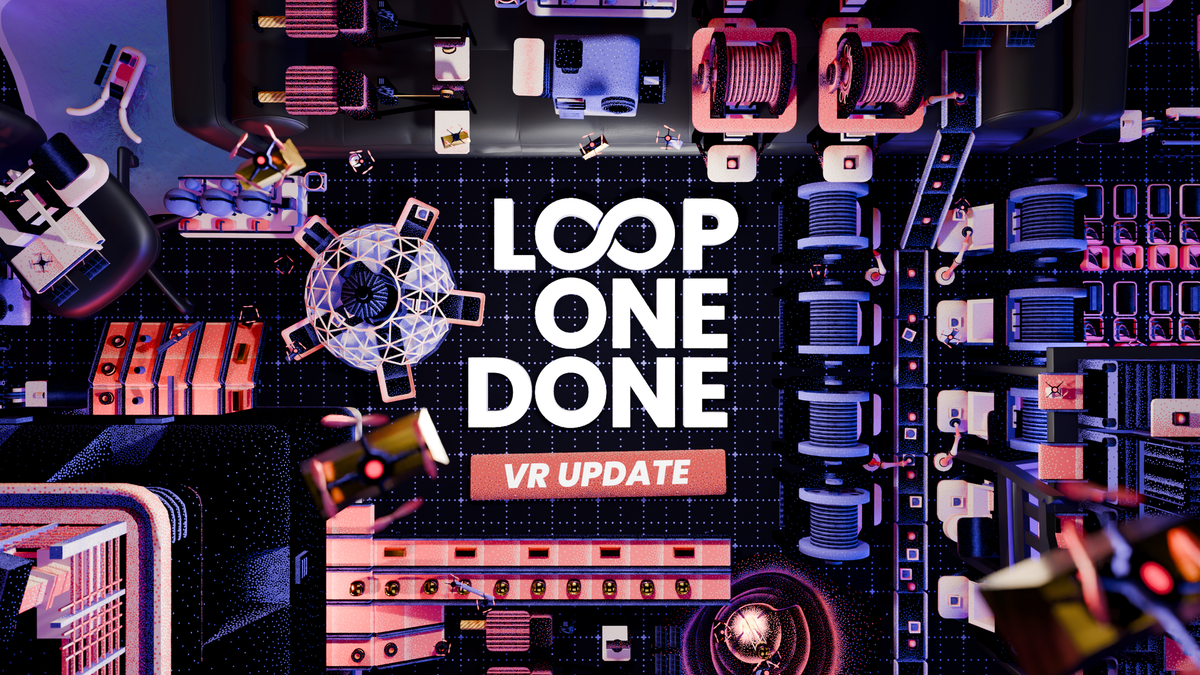
The landscape of virtual and mixed reality gaming is undergoing a significant transformation, moving away from simple tech demos toward complex, systems-driven experiences. At the forefront of this evolution is Loop One: Done, a factory management and automation title that has recently achieved a major milestone. Developer Jonas Sandstedt has officially announced that the game’s dedicated Virtual Reality (VR) mode has exited its beta phase on the Meta Quest platform, signaling a new era of accessibility and immersion for the solo-developed project.
This update represents more than just a technical patch; it is a fundamental expansion of the game’s identity. Originally conceived as a Mixed Reality (MR) exclusive, Loop One: Done now offers a dual-pathway experience, allowing players to choose between building automated empires in their living rooms or within meticulously crafted virtual environments.
Main Facts: The Evolution of Loop One: Done
Loop One: Done has carved out a unique niche within the Meta Quest ecosystem by blending the addictive "one-more-turn" logic of factory builders like Factorio or Satisfactory with the spatial intuition of XR (Extended Reality). The core premise involves recording "loops" with drones and robots to automate complex tasks, eventually building a massive, multi-floored server tower.
The latest update brings several critical changes to the platform:
- Full VR Mode Exit from Beta: The VR mode, which allows for a completely immersive experience without the passthrough background of Mixed Reality, is now considered stable and feature-complete for Early Access.
- New Virtual Environments: To support the VR mode, three distinct virtual environments have been added, providing players with atmospheric backdrops that contrast with the previous reliance on the user’s physical surroundings.
- UI and Locomotion Overhaul: A redesigned User Interface (UI) now follows the player dynamically, paired with new locomotion settings designed to mitigate motion sickness and improve navigation within large-scale factories.
- Enhanced Interaction Systems: The update introduces improved hand-tracking and "micro-gestures," allowing for more precise tool switching and object manipulation—a necessity for a game described as a "tactile toy."
- New Content: The update isn’t just functional; it includes new recipes and streamlined methodologies for movement, expanding the depth of the automation gameplay.
Currently, Loop One: Done is available in Early Access on the Meta Quest Store for $12.99. In a move to bolster its player base, the title was also added to the Meta Horizon+ subscription service as of September 1, 2026, making it free for subscribers.
Chronology: The Journey from Passthrough to Full Immersion
The development trajectory of Loop One: Done mirrors the broader trends of the Quest hardware lifecycle.
The Mixed Reality Foundation (Early 2026)
When Loop One: Done first appeared on the scene, it was positioned as a flagship example of what high-quality passthrough technology could achieve. By focusing on Mixed Reality, Jonas Sandstedt utilized the Quest 3’s color passthrough to let players "build" on their real-world desks and floors. This initial phase was critical for establishing the game’s "tactile" feel, as players could see their own hands and physical environment while interacting with digital drones.
The VR Beta Launch (Mid-2026)
Recognizing that many players preferred the escapism of total immersion—or perhaps lacked the physical space to build a sprawling factory in their homes—Sandstedt launched the VR Update in beta earlier this year. This allowed the developer to gather data on how players navigated large-scale structures without the visual anchor of a real-world room. During this period, the community provided feedback on locomotion and the need for a UI that didn’t feel "tethered" to a static point in space.
The Official VR Release (September 2026)
The current update marks the end of that experimental phase. By refining the hand-tracking and adding micro-gestures, the developer has addressed the "friction" points often found in VR management games. The transition from beta to a full VR mode coincides with the game’s inclusion in Meta Horizon+, suggesting a push for a wider, more diverse audience ahead of its planned Steam release in Q3 2026.
Supporting Data: Technical Specifications and Gameplay Mechanics
The success of an automation game hinges on the reliability of its systems. Loop One: Done utilizes a unique "recording" mechanic that differentiates it from its peers.
The Loop Mechanic
Unlike traditional automation games where you might place a conveyor belt to move items, Loop One: Done asks players to record actions. You physically move a drone or a robot through a sequence of tasks—picking up a component, moving it to a processor, and returning. The game then "loops" this recorded action. As the factory grows, the player must manage the timing and spatial paths of dozens of these loops to prevent collisions and bottlenecks.
Hand-Tracking and Micro-Gestures
One of the most praised aspects of the new update is the refinement of hand-tracking. In a factory setting, precision is paramount. The addition of "micro-gestures" allows players to switch between building tools, deletion modes, and selection menus with subtle finger movements rather than large, sweeping arm gestures. This reduces physical fatigue, a common complaint in long-session VR gaming.
The Server Tower Architecture
The end-goal of the game is the construction of a multi-floored server tower. This provides a vertical progression system. As players unlock research tokens through order fulfillment, they gain access to advanced facilities. The move to VR mode has allowed the developer to play with the scale of these towers, giving players a sense of "vertigo" and awe as they look up at their creations—an effect that was significantly diminished in the MR-only version.
Official Responses: The Solo Developer’s Vision
Jonas Sandstedt has been vocal about the philosophy guiding the game’s development. In official statements, Sandstedt describes the project as "a toy about building and solving problems in a very tactile way."
This "toy-like" description is intentional. Sandstedt aims to move away from the "work-like" feel of some management simulators, focusing instead on the joy of physical interaction. "I wanted to create something where the player feels like they are reaching into a diorama," Sandstedt noted during the VR mode announcement. "The transition to full VR allowed us to create environments that complement that feeling—where the atmosphere matches the complexity of the machines you’re building."
Regarding the new UI, Sandstedt emphasized the need for "player-centric" design. "In VR, the player is the center of the world. The UI shouldn’t be a wall you walk toward; it should be a tool that is always exactly where you need it to be." This philosophy led to the development of the "floating" UI that adapts to the player’s position and orientation.
The developer also expressed excitement about the upcoming Steam release, noting that the PCVR version would allow for even higher fidelity environments and more complex physics simulations, though the core "tactile" experience would remain consistent across all platforms.
Implications: What This Means for the XR Industry
The move of Loop One: Done from an MR-focused title to a dual MR/VR experience carries several implications for the future of the industry.
1. The Necessity of Dual-Mode Design
Developers are increasingly finding that "MR-only" can be a limiting factor for sales. By offering a robust VR mode, Sandstedt has made the game viable for players who use their headsets in dark rooms, small spaces, or who simply prefer the immersion of a digital world. This "hybrid" approach is likely to become the standard for Quest developers.
2. The Power of Solo Development in VR
Loop One: Done serves as a case study for the viability of solo development in the XR space. While AAA VR titles often struggle with high production costs and niche audiences, solo developers can iterate quickly based on community feedback. The success of this title reinforces the idea that "mechanic-first" games (like automation builders) are often more successful in VR than "graphics-first" cinematic experiences.
3. The Role of Subscription Services
The inclusion of the game in Meta Horizon+ is a strategic move. For an Early Access title, building a community is vital for bug reporting and feature requests. By removing the $12.99 barrier for subscribers, Meta is providing Sandstedt with a massive "test lab" of players, while Sandstedt provides Meta with high-quality, system-heavy content that keeps subscribers engaged.
4. Anticipation for PCVR
With a Steam release slated for Q3 2026, the VR community on PC is watching closely. The "tactile" nature of Loop One: Done could benefit immensely from the higher-precision tracking of lighthouse-based systems (like the Valve Index) and the increased processing power of modern GPUs. If the Quest version is the "toy," the PCVR version has the potential to be a high-fidelity industrial simulator.
In conclusion, the exit of Loop One: Done’s VR mode from beta is a landmark moment for the title. It signifies the maturation of a project that began as a clever use of passthrough technology and has grown into a deep, atmospheric, and highly polished automation experience. As the game prepares for its full launch and subsequent expansion to PC, it remains a shining example of how spatial computing can breathe new life into classic gaming genres.