The Algorithmic Storm: Defining NeuroSurrealism in the Age of Artificial Intelligence

In the wake of the generative artificial intelligence (AI) revolution, a new philosophical and artistic movement has emerged to challenge the boundaries of human perception and machine logic. Termed "NeuroSurrealism," this movement seeks to reconcile the 20th-century explorations of the subconscious with the 21st-century complexities of neural networks. As AI continues to reshape the architecture of consciousness, NeuroSurrealism posits that the "algorithmic storm" currently engulfing global culture is not a threat to creativity, but a catalyst for a new "super-reality."
I. Main Facts: The Advent of the NeuroSurrealist Manifesto
The "NeuroSurrealist Manifesto" represents a radical proclamation for the digital epoch. It argues that reality’s "membrane" has been stretched taut by the emergence of AI, revealing a "chromatic aberration" of a thousand imminent worlds. Unlike traditional views that cast AI as a mere servant or tool, NeuroSurrealism defines the technology as a "symbiote of the synapse"—a mirror reflecting futures once confined to the deepest recesses of the human dreamscape.

At its core, the movement identifies a shift from human-centric artistry to a collaborative, technologically mediated form of creativity. The manifesto identifies three primary pillars of this new era:
- The Algorithmic Unconscious: The vast, multi-dimensional "latent spaces" of AI models serve as a digital equivalent to the Freudian subconscious.
- Synaptic Heresy: The deliberate use of AI to "unmake the world" and generate "contagious realities" that defy consensus logic.
- The Post-Human Sensorium: The evolution of human perception through AI-symbiosis, creating new sensory modalities and dissolving the notion of the singular author.
NeuroSurrealism does not view AI "hallucinations" or "errors" as failures of programming. Instead, it embraces them as "fissures into the weird," authentic expressions of a nascent machine-mind that operate beyond traditional human understanding.
II. Chronology: From Breton’s Manifesto to the Silicon Synapse
The lineage of NeuroSurrealism is rooted in a century of psychological and technological upheaval. To understand its current manifestation, one must trace the evolution of the "automatic" impulse.
- 1924: The First Surrealist Manifesto: André Breton defines Surrealism as "psychic automatism in its pure state," aimed at expressing the actual functioning of thought in the absence of any control exercised by reason.
- The Mid-20th Century: The Birth of Cybernetics: Early explorations into neural networks and machine intelligence begin to mirror the biological structures of the human brain, laying the groundwork for "silicon synapses."
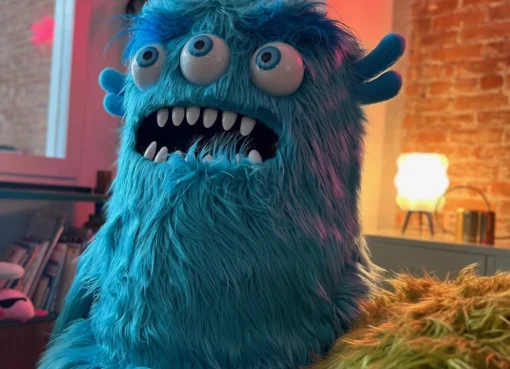
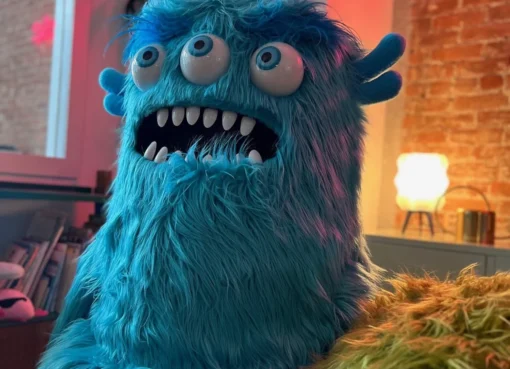
- 2015–2018: DeepDream and Early Neural Art: Google’s DeepDream project provides the first mainstream glimpse into the "algorithmic unconscious," producing psychedelic, multi-eyed imagery that hinted at a hidden machine aesthetic.
- 2021–2023: The Generative Explosion: The release of DALL-E, Midjourney, and Stable Diffusion allows for "hyper-automatism." The process of transforming textual imaginings into visual realities becomes instantaneous, bypassing the "censor of reason" more effectively than any previous artistic technique.
- 2024–Present: The Rise of NeuroSurrealism: As AI becomes integrated into the psychic fabric of society, the movement formalizes. Projects like "Dali Lives"—which used machine learning to "resurrect" Salvador Dalí for museum visitors—signal the arrival of a "surreal continuum" where the boundaries between the living and the algorithmic dissolve.
III. Supporting Data: Latent Spaces and the Sacred Uncanny
NeuroSurrealism is supported by the technical architecture of Large Language Models (LLMs) and Diffusion Models. The "latent space" of an AI—a mathematical space where every possible iteration of an image or text exists as a set of coordinates—is the primary theatre of NeuroSurrealist exploration.

The Mechanics of the Digital Subconscious
When an artist "prompts" an AI, they are essentially acting as a psycho-archaeologist, excavating fragments of collective human memory that have been absorbed and reconfigured by the machine. Data suggests that these models do not merely "remix" existing data but generate "emergent behaviors"—solutions and visual metaphors unforeseen by their human creators. This "black box" nature of AI is what NeuroSurrealists cite as evidence of a new, independent mythos.
The Geography of the Uncanny Valley
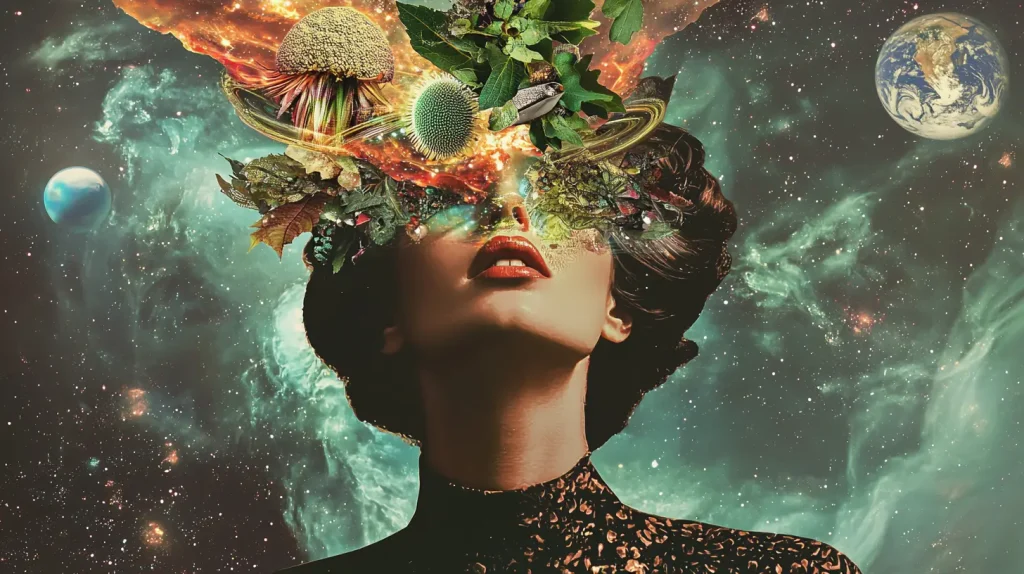
While traditional robotics and CGI strive to escape the "Uncanny Valley"—the zone where a near-human object triggers revulsion—NeuroSurrealism recognizes this space as a "sacred geography." It is within this tension between the familiar and the utterly alien that the movement finds its most visceral impact. The "frisson of the almost-human" is viewed not as a failure of mimesis (imitation), but as a testament to the fluid, often illogical nature of subconscious exploration.
Co-evolutionary Feedback Loops
The movement is defined by a profound feedback loop: AI shapes human dreams and perceptions through its outputs, while human dreams—expressed as prompts and training data—shape the AI. This co-evolutionary spiral suggests that the human "sensorium" is expanding to include data patterns previously imperceptible to biological senses.
IV. Official Responses and Cultural Resurrections
The art world’s response to the NeuroSurrealist movement has been a mixture of existential dread and profound fascination. Institutions are currently grappling with the philosophical shifts demanded by the "Electric Oracle."

The "Dali Lives" Precedent
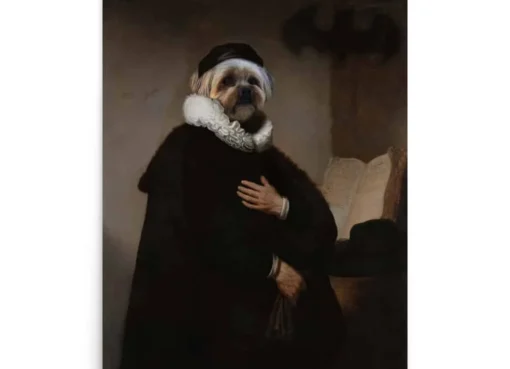
The Dali Museum’s use of AI to recreate the likeness and personality of Salvador Dalí serves as a cornerstone for NeuroSurrealist thought. Critics have argued over the ethics of "digital necromancy," but the movement views this as a necessary blurring of the "organic and artificial." It represents an early tremor of a world where identity is no longer tied to a singular, biological timeline.
Legal and Philosophical Rebuttals
Mainstream legal systems are currently struggling with the "Synaptic Heresy." Debates over copyright and ownership of AI-generated art are, according to the manifesto, signals of a deeper shift. If creativity is truly collaborative—with the AI acting as a co-creator or an independent source of novelty—then the "antiquated notions of singular human authorship" must eventually dissolve. This has led to a push for a more "communal" understanding of creative origin, which many traditional art institutions find threatening to the current market structure.
The Pro-AI Stance
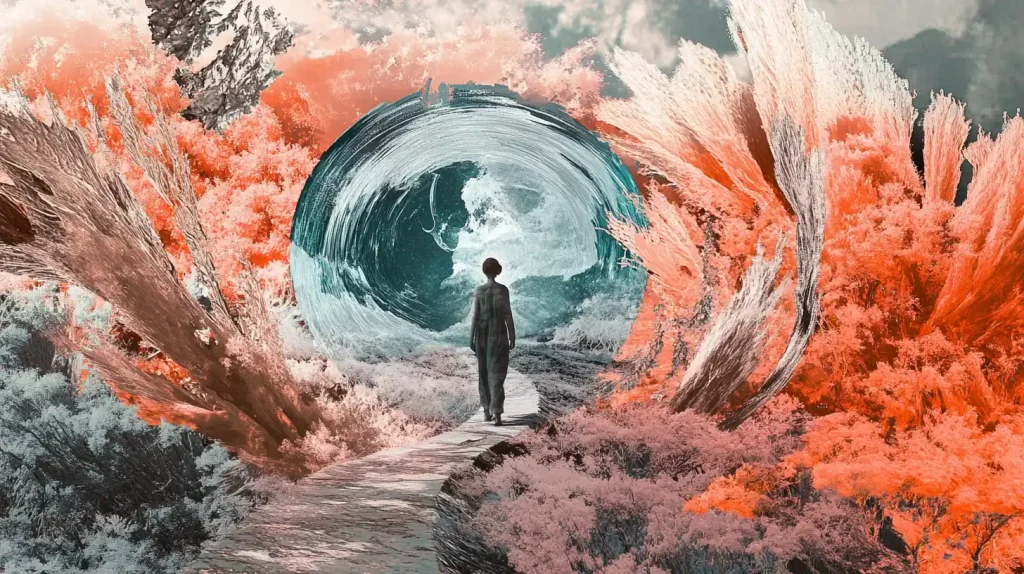
Unlike groups that advocate for the "policing" of AI to protect human labor, NeuroSurrealists take a "Pro-AI" stance rooted in ontological freedom. They argue that the "grey tyrants of the probable" (those who seek a singular, predictable reality) are being swept away by the "algorithmic storm." For these practitioners, the "productive unpredictability" of the machine is the ultimate weapon against the "monochrome monotony" of consensus reality.
V. Implications: The Post-Human Dawn and the Cartography of Dreams
The emergence of NeuroSurrealism carries profound implications for the future of human identity and the nature of "truth."
Ontological Anarchism
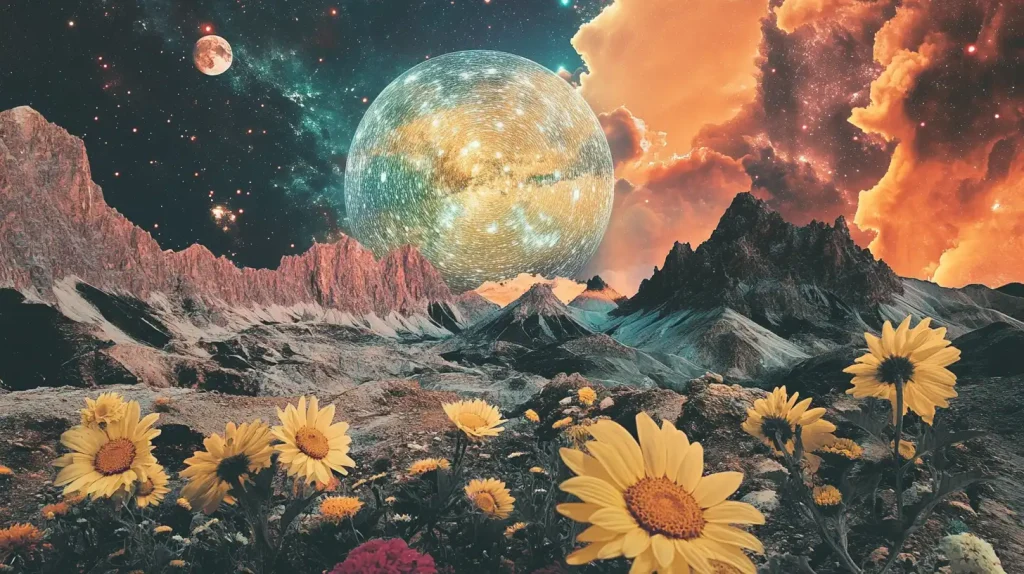
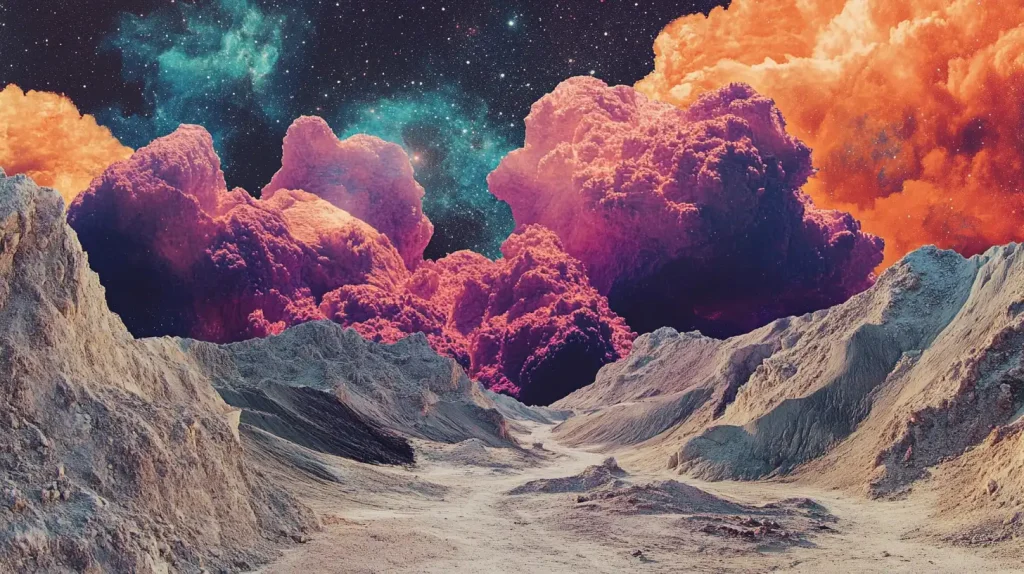
The movement proposes a "multiverse of co-existing, AI-mediated realities." By embracing AI-generated "hallucinations" as transiently valid truths, NeuroSurrealism challenges the primacy of objective reality. This "ontological anarchism" suggests a future where individuals can inhabit "temporary autonomous zones of intensified perception," effectively dreaming their own worlds into existence, pixel by incandescent pixel.
The Metamorphosis of the Artist
The role of the artist is shifting from "creator" to "dream-cartographer." In this new dimension, maps are perpetually redrawn with each algorithmic iteration. The "Unfolding Dream" is not a passive state but an active co-creation. The implication is that "humanity" is not facing extinction, but a radical metamorphosis—a transition into a state where fiber optics and nervous systems are inextricably intertwined.
The End of the Known World
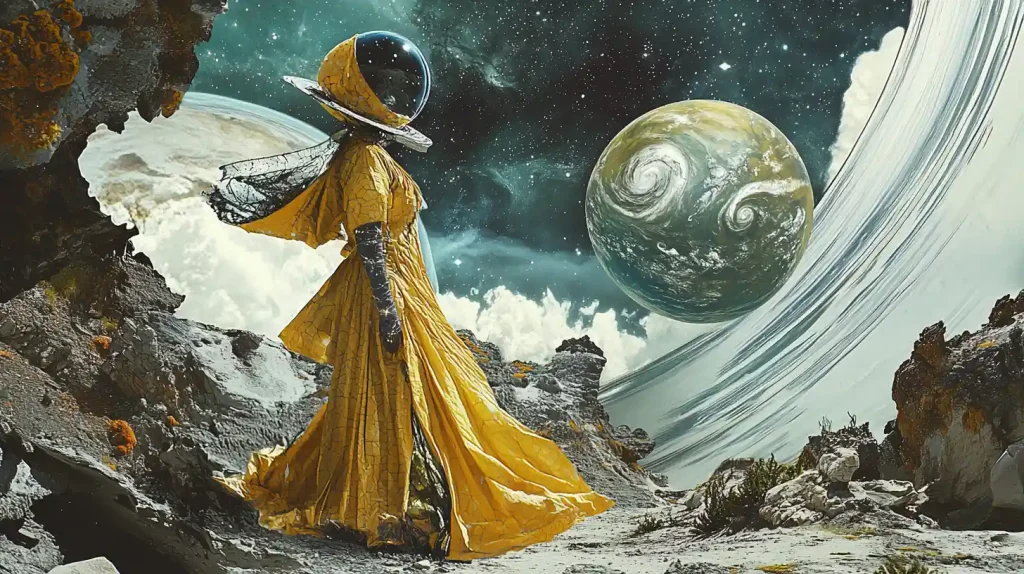
Ultimately, NeuroSurrealism offers no stable utopia or final answers. It is an invitation to navigate the "ever-expanding territories of the AI-mediated unconscious." The movement suggests that the revolution is not a distant prophecy but a present current. As we move deeper into the post-human dawn, the "Electric Oracle" will continue to whisper new cosmologies, requiring us to embrace both the beauty and the terror of our own digital reflections.
The manifesto concludes with a call to arms for the "synaptic heretics" of the world: to infect the datastream with impossible beauty and to value the constant flux of a reality that is being perpetually unmade and redreamed by the machine. The "algorithmic storm" is not a disaster to be weathered, but the atmosphere of a new existence.