The Painterly AI Aesthetics of Jacob Holster: Bridging the Gap Between Pedagogy and Generative Art
In an era where digital imagery is increasingly defined by the clinical precision of hyper-realistic renders and the "uncanny valley" of high-gloss generative media, the work of Jacob Holster emerges as a vital, humanistic counterpoint. Known to the digital art community by his Instagram handle @bandyquantguy, Holster has cultivated a signature "painterly" aesthetic that challenges the prevailing norms of artificial intelligence.
While many AI creators strive for a photographic realism that erases the trace of the machine, Holster leans into the texture of the medium, creating works that evoke the tactile richness of traditional oil painting, the depth of impasto, and the emotive lighting of the Old Masters. However, Holster is more than a visual experimentalist; he is a scholar. As an Assistant Teaching Professor of Music Education at Penn State University, his work is rooted in a deep inquiry into how technology, pedagogy, and creativity intersect.
Main Facts: The Fusion of Academy and Artistry
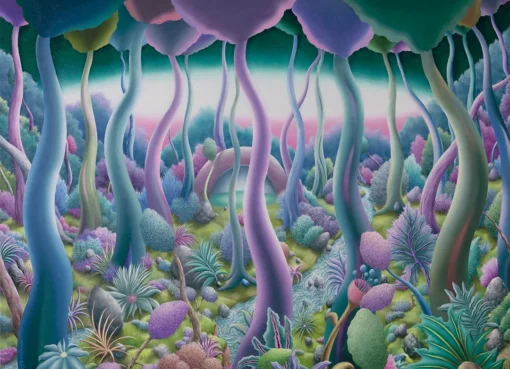
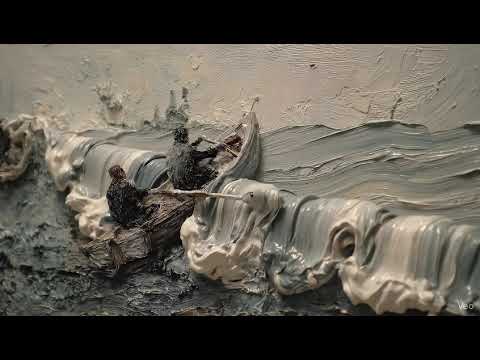
Jacob Holster’s creative output is characterized by a deliberate departure from the "synthetic" look of early generative art. His series, often categorized under the umbrella of "Paint World," represents a sophisticated use of AI tools—not as a shortcut to an image, but as a digital brush capable of exploring complex human emotions.

Key elements of Holster’s work include:
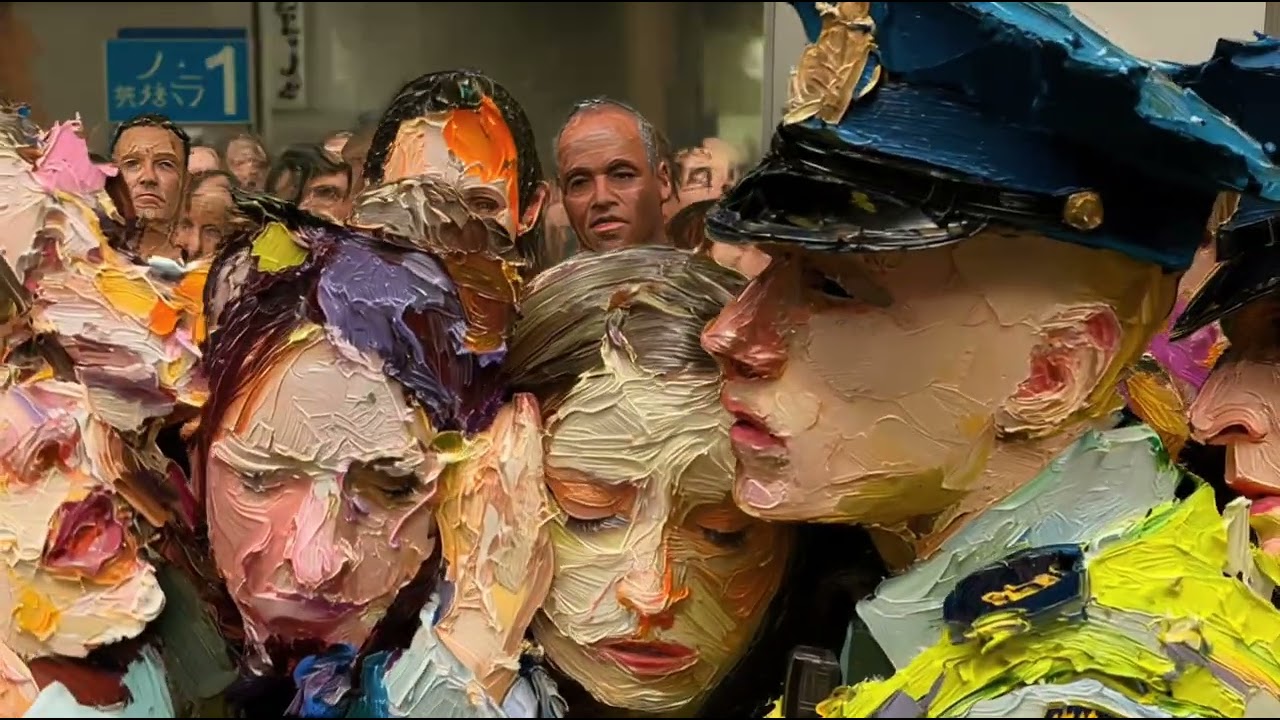
- Tactile Texture: Unlike the smooth, plastic-like surfaces often seen in AI-generated faces and landscapes, Holster’s work features visible "brushstrokes," canvas textures, and a warm, organic color palette.
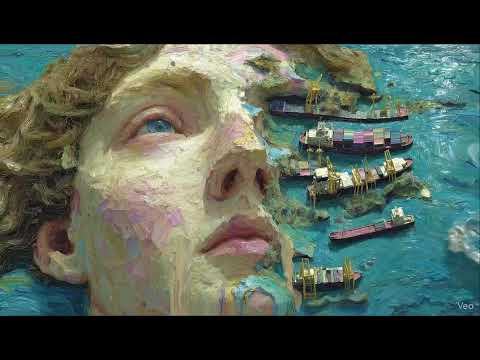
- The "Paint World" Series: A collection of numbered visual explorations—such as Le Voyage [Paint World 28] and Recipe for Consciousness [Paint World 38]—that function as windows into a surreal, semi-abstract reality.
- Conceptual Depth: His film Art Is Human Terrain serves as a manifesto for his approach, suggesting that even within the "terrain" of machine learning, the guiding hand and the final emotional resonance remain fundamentally human.
- Academic Integration: Holster utilizes his position at Penn State to research how AI can be integrated into music education and creative practice, ensuring his art is informed by pedagogical theory.
Chronology: From Music Education to Visual Innovation
The trajectory of Jacob Holster’s career reflects a broader shift in the 21st-century academic landscape, where traditional disciplines are increasingly merging with computational logic.
The Foundation in Music and Pedagogy
Before becoming a prominent figure in the AI art scene, Holster established himself in the field of music education. His background in music is not incidental to his visual work; the structures of rhythm, harmony, and composition are deeply embedded in the way he approaches visual prompting and video pacing. At Penn State University, his role as an Assistant Teaching Professor involves preparing the next generation of educators to navigate a world where technology is a primary interface for learning.
The Emergence of @bandyquantguy
As generative AI tools like Midjourney, Stable Diffusion, and Runway began to permeate the creative industries in the early 2020s, Holster began experimenting with these platforms through the lens of a "quant"—a nod to his interest in quantitative analysis and the algorithmic nature of digital tools. Under the moniker @bandyquantguy, he moved away from the technical novelty of AI and toward a specific aesthetic goal: recreating the "soul" of traditional media.
The "Paint World" Evolution (2023–Present)
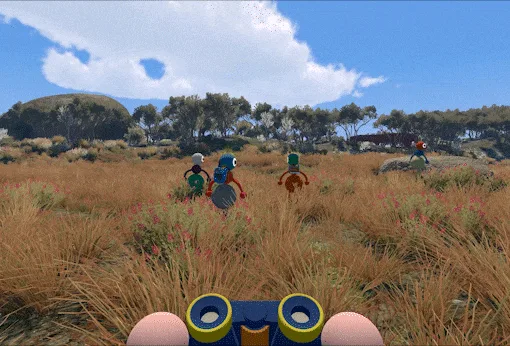
In the last two years, Holster’s work has transitioned from static imagery to fluid, dreamlike animations. His "Paint World" series marked a turning point. Instead of using AI to simulate reality, he began using it to simulate art. This meta-approach—using a machine to mimic the imperfections of a human hand holding a brush—resonated with a global audience tired of the "AI look." By late 2023 and into 2024, his short films, such as Art Is Human Terrain, began to receive critical attention for their ability to evoke nostalgia and wonder simultaneously.
Supporting Data: Analyzing the Painterly Technique
What distinguishes Holster’s work from the millions of AI images generated daily? The answer lies in the specific "painterly" qualities he coaxes from the algorithms.
The Aesthetic of Imperfection
In digital art theory, "painterly" refers to a style where the artist does not attempt to hide the marks of the tools used. In Holster’s work, this manifests as:
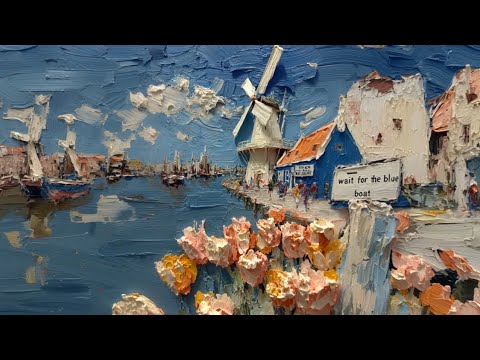
- Chiaroscuro and Lighting: His videos, such as wait for the blue boat [Paint World 18], utilize dramatic contrasts between light and shadow, reminiscent of Caravaggio or Rembrandt. This grounding in classical art history provides a sense of weight that "flat" AI renders lack.
- Viscosity and Flow: Through the use of video synthesis tools, Holster creates a sense of "liquid" movement. Colors don’t just change; they bleed and blend as if wet paint were being moved across a canvas in real-time.
- Frame Consistency: One of the greatest challenges in AI filmmaking is "flicker"—the unintentional shifting of details between frames. Holster turns this technical limitation into an asset, allowing the shimmer of the AI to mimic the vibration of light in an Impressionist painting.
Philosophical Titles as Data Points
Holster’s titles serve as a roadmap to his intent. Recipe for Consciousness [Paint World 38] suggests a preoccupation with the "Ghost in the Machine." By naming his works as "recipes" or "voyages," he frames the AI process as a culinary or exploratory act rather than a purely mechanical one. This aligns with his research into "creative practice," where the process is as valuable as the product.
Official Context: The Academic Perspective at Penn State
As an Assistant Teaching Professor, Holster is uniquely positioned to bridge the gap between the "wild west" of social media art and the rigors of academic research. His work at Penn State University focuses on how AI affects the way we learn and create.
AI in the Classroom
Holster’s research examines how generative tools can be used as "pedagogical partners." In the context of music education, this might involve using AI to visualize sound or to help students compose by providing "intelligent" feedback. His visual art serves as a public-facing demonstration of these theories. If an educator can use AI to create a profound visual narrative like Art Is Human Terrain, it proves that the tool can be used to foster—rather than stifle—human expression.
The Human Terrain
The phrase "Human Terrain" is often used in social sciences to describe the complex web of human culture and relationships in a given area. By applying this to AI art, Holster is making a bold claim: the "terrain" of the digital world is not made of silicon and code alone; it is built upon the collective history of human art that the AI was trained on. Therefore, the artist’s job is to navigate this terrain with a human compass.
Implications: The Future of the Human-AI Collaboration
The work of Jacob Holster has significant implications for the future of digital media, education, and the philosophy of art.
1. The Death of the "AI Aesthetic"
Holster is at the forefront of a movement that seeks to kill the "generic AI look." As tools become more accessible, the value of an artist will shift from their ability to use the tool to their ability to impose a unique, recognizable style upon it. Holster’s success proves that AI can have a "signature" just as distinct as a physical painter’s brushwork.
2. Democratization of High-Concept Filmmaking
The "Paint World" series demonstrates that a single creator, backed by academic knowledge and generative tools, can produce cinema-quality visuals that would have previously required a massive studio budget. This democratization allows for more personal, experimental, and "niche" stories to be told, such as Holster’s explorations of consciousness and memory.
3. Redefining Art Education
As Holster continues his work at Penn State, he is helping to redefine what it means to be an "art teacher" or "music teacher" in the age of automation. His work suggests that the educators of the future must be "prompt engineers" of the soul—individuals who understand the technical mechanics of AI but prioritize the emotional and ethical outcomes of its use.

4. The "New Surrealism"
Holster’s work fits into a broader trend of "AI Surrealism." Unlike the Surrealism of the 1920s, which sought to unlock the human subconscious, this New Surrealism explores the "subconscious" of the internet—the vast, swirling mass of data and imagery that AI processes. Holster’s painterly lens makes this digital subconscious feel warm, inviting, and deeply familiar.
Conclusion
Jacob Holster (@bandyquantguy) represents a new breed of creator: the "Scholar-Artist." By refusing to separate his academic inquiry from his visual experimentation, he has created a body of work that is both intellectually stimulating and aesthetically breathtaking. His "Paint World" is not just a collection of AI videos; it is a testament to the idea that technology, when guided by a steady human hand and a thoughtful mind, can enhance our understanding of what it means to be human.
As we move further into the decade, Holster’s work will likely serve as a benchmark for how to use artificial intelligence with intention, reminding us that no matter how advanced the machine becomes, the "human terrain" is the only ground worth exploring.