The Token Arbitrage: How pxpipe is Slashing Claude Code Bills by 70% via "Visual Compression"
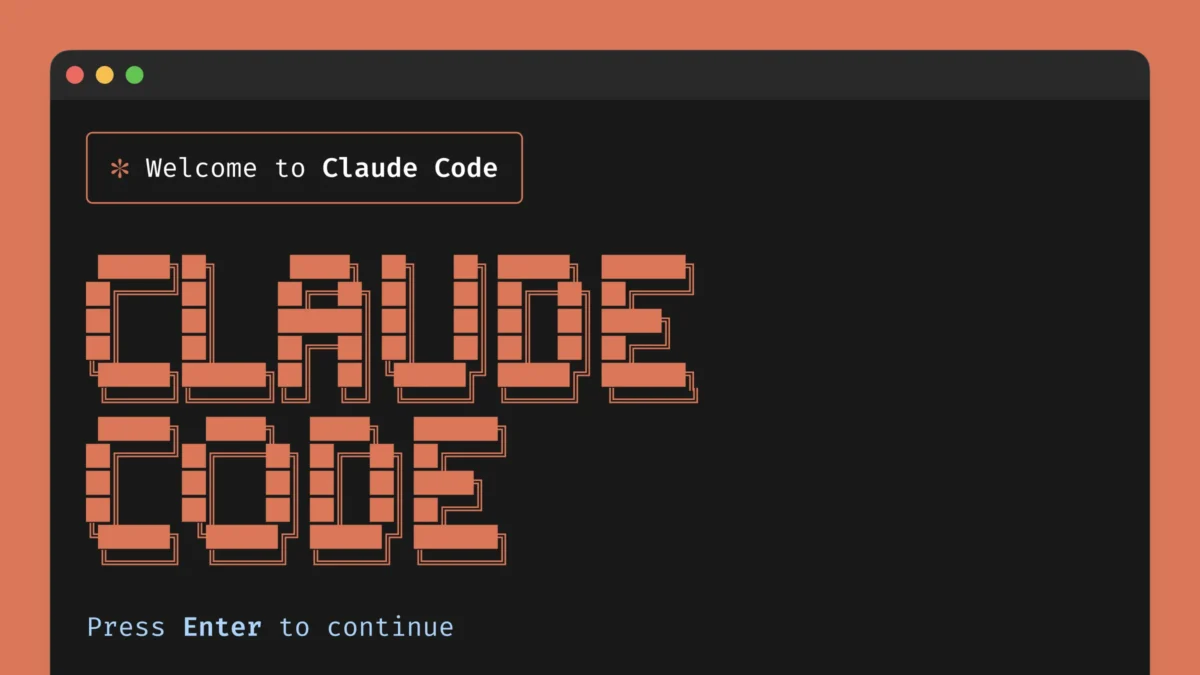
In the rapidly evolving landscape of artificial intelligence, the cost of intelligence is often as significant a barrier as the intelligence itself. As developers increasingly lean on "agentic" coding tools like Claude Code, they are discovering a painful financial reality: the more context a model requires to be effective, the more expensive every subsequent interaction becomes. However, a new open-source project titled pxpipe has introduced a radical, almost counterintuitive method to bypass these escalating costs. By converting dense text blocks into PNG images before they reach the model, pxpipe is reportedly reducing API bills by as much as 70%.
This technique, which many are calling "visual token arbitrage," exploits a specific quirk in how AI providers like Anthropic and OpenAI price their multimodal inputs. While text is billed per token—a metric that scales linearly with the amount of data—images are billed based on fixed pixel dimensions and visual "patches." For dense data, the latter is proving to be significantly more economical.
Main Facts: The Logic of the "PNG Trick"
At its core, pxpipe functions as a local proxy. It sits between a developer’s environment (specifically Claude Code) and the Anthropic API. When a request is sent, pxpipe intercepts the data and performs a strategic triage. It identifies "bulky static context"—elements like system prompts, extensive tool documentation, long-running chat histories, and massive log files—and renders them into high-density PNG images.
The financial motivation for this is rooted in the "tokenomics" of modern Large Language Models (LLMs). For Anthropic’s Claude models, text billing is straightforward: every word or character fragment is a token. In a massive coding project, the "boilerplate" context (the instructions on how the tools work and the current file structure) can easily consume tens of thousands of tokens per request.
Images, however, are processed differently. Anthropic’s vision-capable models (such as the Claude 3.5 and the newer Fable and Mythos series) break images down into a grid of patches. A single, dense PNG page containing 48,000 characters of text might be billed as approximately 2,700 "image tokens." If that same text were sent as standard string data, it would cost roughly 25,000 tokens. By forcing the model to "look" at the text rather than "read" it as a sequence of tokens, pxpipe achieves a compression ratio of nearly 10:1 for specific types of data.
Chronology: From Context Bloat to Creative Compression
The development of pxpipe follows a year of mounting frustration within the AI engineering community regarding "context drift" and "context cost."
- The Rise of Agentic Coding (Late 2024 – Early 2025): Tools like Claude Code and various IDE extensions began allowing models to perform complex, multi-step tasks. This required the model to maintain a massive amount of "state"—everything from the entire codebase structure to the output of every terminal command.
- The Billing Crisis: As context windows expanded to 200k and even 1 million tokens, developers found that a single hour of coding could result in hundreds of dollars in API fees. The "recursive" nature of agents meant that with every new command, the entire history was re-sent, compounding the cost.
- The DeepSeek Influence: The concept of using vision for text efficiency gained academic traction with the release of DeepSeek-OCR. Research showed that models could process documents as images with high accuracy while drastically reducing the token footprint.
- The Launch of pxpipe: Recognizing that Anthropic’s vision models were becoming increasingly adept at Optical Character Recognition (OCR), the developers behind pxpipe (teamchong) released the tool to automate this process specifically for the Claude Code CLI.
Supporting Data: Measuring the Savings
The efficacy of pxpipe is not merely theoretical; early benchmarks suggest a transformative shift in the cost-to-performance ratio for AI agents.

In one production snapshot provided by the project’s developers, the end-to-end savings averaged 59%. However, as the session progressed and the context grew more "dense" with tool outputs and logs, the savings spiked. A later trace measured a 70% reduction in total billed tokens.
The most striking example cited in the project’s documentation involves a session using the Fable 5 model. In a standard configuration, a complex coding task resulted in a bill of $42.21. When the same task was routed through pxpipe, which compressed the static context into PNGs while leaving the model’s actual reasoning and output untouched, the cost dropped to $6.06.
Comparison Table: Text vs. Image Billing via pxpipe
| Data Type | Standard Text Cost (Est. Tokens) | pxpipe PNG Cost (Est. Tokens) | Savings % |
|---|---|---|---|
| System Prompt (48k chars) | 25,000 | 2,700 | 89.2% |
| Comprehensive Tool Docs | 12,000 | 1,600 | 86.6% |
| Cumulative Session Logs | 50,000 | 4,500 | 91.0% |
| Total Session (Avg.) | N/A | N/A | ~70% |
The proxy is designed to be intelligent. It doesn’t convert everything to images. Recent user messages and the model’s immediate previous responses are retained as text to ensure the highest possible semantic clarity for the current "train of thought." The "profitability check" built into pxpipe ensures that if a block of text is too sparse (like a short sentence), it remains as text, as rendering it into an image would actually cost more in image tokens than the original text tokens.
The Catch: Accuracy and the "Lossy" Nature of Vision
Despite the impressive financial figures, pxpipe is not a "silver bullet" for every workflow. The project’s README contains significant warnings regarding the reliability of this method.
The primary issue is that image processing is inherently "lossy" compared to tokenized text. When a model reads a text token, it is receiving a mathematically precise identifier for a word or character. When it "reads" a PNG, it is performing a visual interpretation.
Risks identified include:
- Character Misidentification: Similar-looking characters (e.g.,
lvs1,Ovs0) can be swapped, which is catastrophic for code, hashes, or API keys. - Hallucination of Values: If the resolution of the rendered PNG isn’t perfect, the model might "guess" a plausible value for a blurred string rather than admitting it cannot read it.
- Model Sensitivity: Not all models are created equal in their OCR capabilities. The developers noted that Fable 5 is the current "gold standard" for this technique. Conversely, models like Opus 4.7 and Opus 4.8 are disabled by default because they frequently misread the rendered pages. Even GPT-5.5 reportedly struggled with the image-based context, though the newer GPT-5.6 has been included in the default scope.
Because of these risks, pxpipe is recommended primarily for "dense but non-critical" context—background information that helps the model understand the environment but doesn’t require byte-perfect recall for every single character.

Official Responses and Industry Context
While Anthropic has not officially commented on pxpipe, the tool represents a growing trend of "jailbreaking" the economic constraints of AI. Industry analysts suggest that if tools like pxpipe become mainstream, AI providers may be forced to restructure their pricing models.
"We are seeing a game of cat-and-mouse between the labs and the developers," says one AI infrastructure analyst. "The labs price images cheaply to encourage multimodal use cases like robotics and medical imaging. Developers, however, are using that cheap visual bandwidth to ‘smuggle’ in text. It’s a classic case of market arbitrage."
The broader context involves the staggering costs of AI compute. With training and inference costs driving infrastructure spending into the trillions, providers are desperate to find a balance between profitability and user growth. Tools like pxpipe threaten that balance by allowing users to extract more "intelligence" per dollar than the providers’ current models intended.
Implications: The Future of "Multimodal Context"
The success of pxpipe points toward a future where "context" is no longer a monolithic block of text. Instead, we may see a hybrid approach to AI memory.
- Semantic Tiering: High-priority, immediate data will remain as high-cost, high-accuracy text tokens.
- Visual Tiering: Historical data and reference documentation will be "archived" into visual formats (like PNGs) or compressed embeddings.
- Pressure on OCR: This trend will put immense pressure on AI labs to improve the OCR capabilities of their vision models. If a model can’t perfectly read a PNG of a code file, the "PNG trick" becomes a liability.
- The "Token-Free" Future: Some researchers argue that the very concept of "tokens" is a temporary artifact of current architecture. Future models might process all inputs—text, code, images, and video—as a continuous stream of visual or sensory data, rendering the distinction (and the arbitrage) moot.
For now, pxpipe remains a powerful, if "experimental," tool for the budget-conscious developer. It serves as a stark reminder that in the world of AI, the most innovative breakthroughs aren’t always in the algorithms themselves, but in how we navigate the complex economy that surrounds them. For those running massive Claude Code sessions that previously cost the price of a fine dinner, a "strange PNG trick" might just be the most important tool in their repository.