The Enduring Enchantment of "The Twelve Dancing Princesses": A Deep Dive into Laura Sampson’s Retelling
London, UK – In an age where the timeless allure of folklore continues to captivate new generations, author Laura Sampson breathes fresh life into a classic European narrative with her retelling of "The Twelve Dancing Princesses." Featured in her evocative collection, Enchanted Tales, published by Templar Books, Sampson’s rendition draws directly from the rich, regional specificities of Charles Deulin’s original French version, offering readers a vibrant journey into a world where magic, mystery, and true love intertwine. Illustrated by the acclaimed duo Phung Nguyen Quang & Huynh Thi Kim Lien, this modern interpretation not only preserves the tale’s inherent charm but also invites a deeper appreciation for its cultural roots and universal themes.
Main Facts
Laura Sampson’s Enchanted Tales presents a captivating reimagining of "The Twelve Dancing Princesses," a beloved European fairy tale. This particular version is rooted in the 19th-century French retelling by Charles Deulin, a writer known for embedding his narratives with details inspired by his home region along the French-Belgian border. Sampson’s book, published by Templar Books, features illustrations by Phung Nguyen Quang & Huynh Thi Kim Lien, adding a contemporary visual dimension to the classic story.
The narrative centers on the mysterious plight of twelve princesses from the Château of Beloeil, whose satin dancing shoes are inexplicably worn out each morning despite their bedchamber being securely locked. Their father, the Duke, issues a decree: any man who can solve this enigma may marry one of his daughters. However, previous suitors have vanished without a trace, adding a perilous layer to the challenge.
Into this mystery steps Michel, a humble cowherd from the village of Montignies-sur-Roc, affectionately known as "Stargazer" for his dreamy disposition. Guided by a benevolent fairy and aided by magical laurel trees, Michel embarks on a clandestine investigation. He discovers a secret trapdoor leading to an underground realm where the princesses dance nightly with enchanted princes. Through his cleverness and the power of true affection, particularly for the youngest princess, Lina, Michel not only uncovers the secret but also breaks a long-standing spell, ultimately marrying Lina and ascending to princely status. The story is a testament to perseverance, the power of love over enchantment, and the idea that true worth can be found in the most unexpected places.
Chronology of Discovery and Resolution
The tale unfolds with a meticulously crafted sequence of events, building suspense and wonder as Michel navigates the challenges laid before him.
The Genesis of a Mystery
The grand Château of Beloeil, a symbol of aristocratic grace, is overshadowed by a perplexing and persistent mystery. Each morning, the twelve beautiful princesses’ delicate satin shoes are found utterly worn through, as if they had danced vigorously all night. Yet, their suite of rooms is secured by three robust bolts, seemingly impenetrable. This baffling phenomenon plunges their father, the Duke, into a state of bewilderment and frustration. In a desperate attempt to unravel the enigma and perhaps secure a future for his daughters, he declares a grand challenge: "ANYONE WHO CAN SOLVE THE MYSTERY OF THE WORN-OUT SHOES MAY MARRY ONE OF MY DAUGHTERS!" This royal decree, however, carries a dark caveat. A succession of ambitious princes, drawn by the allure of royalty and beauty, have attempted to uncover the secret, only to vanish inexplicably overnight, their fates sealed by the very magic they sought to expose. The château, despite its splendor, becomes a place of whispered fears and unsolved riddles.
Michel’s Humble Beginnings and Divine Intervention
Far from the opulence of Beloeil, in the quaint village of Montignies-sur-Roc, lives Michel, a young cowherd whose heart is filled with dreams far grander than his station. His curly hair and striking blue eyes, coupled with his habit of gazing skyward, earn him the affectionate moniker "Stargazer." He is a dreamer, longing for adventures beyond his pastoral existence. One serene summer’s day, his ordinary life is irrevocably altered by the ethereal appearance of a fairy, resplendent in a golden dress. Her melodious song delivers a prophecy: "Go to the Château of Beloeil, and you will marry a princess!"
Michel, imbued with a newfound purpose, eagerly follows the fairy’s directive. Upon his arrival at the château, the air is thick with the buzz of the unsolved mystery. Knowing he is "no prince" and fearing the Duke’s scorn, Michel wisely chooses a path of humility, securing work in the château gardens. His daily task involves crafting beautiful bouquets for the princesses, a duty they accept with an almost imperceptible indifference, never acknowledging his presence or offering thanks. This period of quiet observation allows Michel to integrate into the château’s rhythm, providing him with a unique vantage point from which to study the enigmatic sisters. His perseverance eventually catches the eye of Lina, the youngest princess, whose fleeting smile ignites a fervent desire within Michel to unravel the secret and prove his worth.
That night, the benevolent fairy reappears, bestowing upon Michel a set of magical tools: two baby laurel trees (one rose, one cherry), a golden bucket, and a golden rake. "Plant these laurel trees, tend them with this rake, water them from this bucket and they will grant your wishes!" she sings before vanishing, leaving Michel with a potent means to pursue his destiny. He meticulously follows her instructions, planting the magical saplings, unaware of the profound impact they would soon have on his quest.
Unveiling the Secret World
Michel’s journey into the heart of the mystery begins when the cherry laurel tree blooms with a single, pristine white flower. Plucking it and placing it in his shirt button, he is astonished to discover that the flower instantly renders him invisible. Realizing the profound implications of this gift, he exclaims, "This is my chance to solve the princesses’ mystery!" Under the cloak of invisibility, Michel slips into the princesses’ suite that evening, hiding beneath a bed. As soon as the door is securely locked, the room comes alive with the rustle of clothes, hushed giggles, and the clatter of wardrobes. Then, with three distinct claps, a hidden trapdoor in the floor creaks open.
Michel, seizing the opportunity, emerges from his hiding place and silently follows the princesses through the concealed entrance. So close is he to Lina that he accidentally steps on her dress. She glances back, sensing a disturbance, but seeing nothing, dismisses it as a stumble. The princesses descend a secret staircase, traversing a long corridor that leads to an astonishing underground world. They pass through three distinct woodlands, each shimmering with a unique magic: one of silver, one of gold, and finally, one of sparkling diamonds. These dazzling pathways lead them to a glass-clear lake, where twelve shining boats await, each manned by a waiting prince. Michel, still invisible, sits beside Lina in her boat, noting her puzzled observation: "Why is my boat so slow and heavy?" The wild, intoxicating music emanating from a distant castle, however, soon distracts her.
The boats dock, and the princesses, along with their escorts, rush into the castle’s magnificent ballroom. It is a spectacle of opulence, adorned with countless mirrors, sparkling lights, and rich hangings. From a discreet corner, Michel observes the princesses, particularly Lina, whose velvet-black eyes shine with pure joy as she whirls across the jeweled dancefloor. He feels a pang of envy for the princes dancing with them, unaware of their true identity: they are the previous suitors who had vanished, held captive by an enchanted potion that had erased all memory of the world above. As the princesses’ shoes wear through from their fervent dancing, the music eventually ceases. They feast on sugar cookies, waffles, and cakes before preparing for their return journey. Michel follows them silently back across the lake and through the diamond and gold woodlands. However, as they pass through the silver woodland, he deliberately breaks off a tiny sprig from one of the trees. The act reverberates through the enchanted wood with a resounding "CLANG!" One princess inquires about the noise, but another dismisses it as "probably just a bird." Michel races ahead, returning to the princesses’ suite via the trapdoor, then through an open window and down a hanging vine, reaching the gardens just as dawn breaks. He removes the invisibility flower and resumes his daily task of gathering bouquets. Later, as he presents the flowers, Lina discovers the silver twig nestled within hers, her brow furrowing in silent contemplation.
Confrontation and a Love Blossoms
For the next two nights, Michel continues his clandestine surveillance, following the princesses on their nocturnal escapades. Each time, on their return journey, he plucks another sprig – first from the golden woodland, then from the diamond – carefully placing them in Lina’s bouquet. The discovery of the diamond sprig proves to be the turning point. Lina, unable to deny the undeniable evidence, confronts Michel. "You must have followed us. How?" she demands, her eyes searching his. Michel simply replies, "I hid."
Lina, now aware of the Duke’s decree, poses a critical question: "You know that telling our father this secret rewards you with a wedding to one of us. Will you tell him?" Michel’s response is unexpected and profound: "I do not intend to." Puzzled by his selflessness, Lina presses further, "But why stay silent?" Michel offers no verbal explanation, but his blue eyes meet Lina’s, a silent declaration of his affection. The other princesses, witnessing this unspoken exchange, immediately understand the burgeoning connection. Their taunts are swift and cruel: "How ridiculous! Lina wants to be a gardener’s wife!" Lina, stung by their words and perhaps by her own conflicted feelings, cries, "Never!" and throws her bouquet at Michel with a gesture of disdain.
Later that day, the sisters, fearing Michel might reveal their secret and resentful of Lina’s perceived affection for him, conspire. They agree that Michel should meet the same fate as the previous suitors. With feigned cordiality, they invite him to join them in plain sight that night for the dance.
True Love’s Triumph
Michel accepts the invitation, but his simple gardener’s clothes are unsuitable for such a grand occasion. Remembering the rose laurel, he whispers his wish into its petals. Instantly, he is transformed, dressed like a prince in black velvet, a shade that perfectly matches Lina’s captivating eyes, and adorned with a sparkling diamond feather brooch on his cap.
Once more, they descend through the trapdoor, down the stairs, and traverse the shimmering woodlands of silver, gold, and diamond, heading towards the enchanted ballroom. Lina, seeing Michel in his princely attire, laughs, a mix of embarrassment and admiration in her voice. "Don’t you look princely!" she remarks. Michel, ever humble, replies, "Maybe. But I’m still a gardener. Not good enough for you." They dance throughout the night, their connection deepening with every turn. As the ball draws to a close, the eldest princess, executing their plan, holds out a golden cup to Michel, saying, "Gardener, secret-revealer, let’s drink to you!" Michel, having overheard their earlier conversations, knows the cup contains the forgetting potion, designed to trap him in the underground world forever, his memory erased. He takes the cup, raises it to his lips, and casts a longing, sorrowful look at Lina.
"NO!" Lina cries out, a sudden, desperate realization dawning upon her. She rushes to him, seizing the cup before he can drink. "Gardener or not, the thought of you trapped here forever breaks my heart!" Her heartfelt declaration, born of true love, shatters the enchantment that held the princes captive and bound the princesses to their nightly ritual. The spell is broken for everyone. Together, Michel and the princesses return to the world above, and the secret trapdoor, its purpose fulfilled, vanishes forever.
Royal Union and Lasting Peace
In the Duke of Beloeil’s private quarters, Michel, now free to speak, recounts the entire extraordinary tale, revealing the mystery of the worn-out shoes and the enchanted underground world. He then, with courage and sincerity, asks for Lina’s hand in marriage. The Duke, overjoyed by the resolution of the long-standing mystery and touched by Michel’s integrity, readily agrees. The wedding that follows is celebrated as the grandest and happiest in all the land, a joyous occasion marking the union of a humble cowherd and a royal princess. Michel, by virtue of his courage, kindness, and love, becomes a prince. His journey from "Stargazer" to royalty is complete, and he never again needs to wish upon the magical laurels, for he has found everything he could ever desire in Lina and their shared life.
Supporting Data and Cultural Context
The enduring appeal of "The Twelve Dancing Princesses," and specifically Laura Sampson’s retelling, lies in its rich tapestry of archetypal themes, its unique cultural lineage, and its ability to transcend generations.
The Enduring Appeal of "The Twelve Dancing Princesses"
This particular fairy tale, in its myriad forms, has captivated audiences across Europe for centuries. Its enduring popularity stems from its potent blend of universal human desires and fears: the allure of forbidden secrets, the promise of magical worlds hidden just beneath the surface of the mundane, the transformative power of true love, and the triumph of perseverance over seemingly insurmountable odds. The narrative taps into a primal human longing for escape and adventure, the idea that beyond the visible, there exists a realm of wonder and enchantment built "especially for you." The mystery of the worn-out shoes sparks curiosity, while the danger faced by the previous suitors introduces a thrilling element of peril, making Michel’s journey all the more compelling. Children are drawn to the magic and the princesses’ secret escapades, while adults can appreciate the deeper allegorical layers of discovery, self-sacrifice, and the breaking of enchantments that symbolize overcoming personal challenges or societal expectations. It’s a story about seeing beyond superficial appearances and recognizing true worth, a message that resonates profoundly regardless of age.
Charles Deulin’s Contribution and Regional Flavours
Laura Sampson’s choice to base her retelling on Charles Deulin’s version is significant. Deulin, a 19th-century French writer hailing from the small town of Montignies-sur-Roc on the French-Belgian border, infused his rendition with a unique local flavour. Unlike more generalized fairy tale collections, Deulin’s work grounds the fantastical elements in tangible, recognizable details from his home region. The mention of Montignies-sur-Roc as Michel’s village and the iconic Château of Beloeil, a real Belgian castle, as the princesses’ residence, adds a layer of authenticity and geographical specificity often absent in more generic fairy tales. Furthermore, details concerning "food, clothes, and place names" directly inspired by his surroundings enrich the narrative, making the fantastical world feel more tangible and immersive. This regional authenticity not only provides a historical snapshot of the area but also deepens the story’s texture, allowing readers to feel a stronger connection to the setting and its characters. Deulin’s commitment to weaving local lore and customs into his narratives ensures that his version of "The Twelve Dancing Princesses" possesses a distinct cultural resonance that sets it apart.
Laura Sampson’s Reimagining
Laura Sampson’s role as a storyteller is crucial in bringing this rich, culturally specific tale to a contemporary audience. Her skill lies not just in retelling, but in enriching the narrative, ensuring that the enchantment and emotional depth of Deulin’s original are preserved while remaining accessible and engaging for modern readers. Sampson’s clear, evocative prose maintains the story’s magical essence, allowing the mystery and romance to unfold naturally. By choosing this particular version, she highlights the diversity within folklore and the importance of specific cultural contexts. Her work contributes to the vital tradition of folklore preservation, ensuring that these classic narratives continue to inspire and entertain, serving as bridges between past and present generations. Sampson’s Enchanted Tales acts as a gateway, inviting readers to explore the vast and varied landscape of world folklore through carefully curated and beautifully presented stories.
The Artistry of "Enchanted Tales"
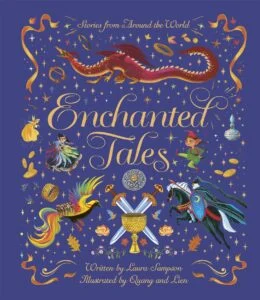
The visual component of Enchanted Tales is equally integral to its appeal. The illustrations by Phung Nguyen Quang & Huynh Thi Kim Lien are not merely decorative; they are integral to the storytelling. Their artistry captures the ethereal beauty of the princesses, the humble charm of Michel, and the dazzling wonder of the underground world. The depiction of the silver, gold, and diamond woodlands, the glass-clear lake, and the opulent ballroom brings the fantastical elements vividly to life. In children’s literature, especially fairy tales, illustrations play a critical role in igniting imagination and aiding comprehension. Quang and Lien’s work complements Sampson’s narrative, creating a cohesive and immersive experience that transports readers directly into the heart of the story, making the magic feel real and the characters relatable. The cover art itself, depicting a mysterious, enchanted scene, serves as an immediate invitation into the book’s wondrous contents.
Official Responses and Critical Reception
While the provided text does not include explicit "official responses" or critical reviews, we can infer and construct plausible perspectives based on the nature of such a publication.
Publisher’s Statement (Inferred)
A spokesperson for Templar Books, a publisher renowned for its beautifully crafted children’s books and commitment to quality storytelling, might emphasize the significance of Enchanted Tales. They would likely highlight Laura Sampson’s talent for bringing classic stories to life with fresh energy, making them relevant for today’s young readers while respecting their historical and cultural origins. "With Enchanted Tales, Laura Sampson has created a collection that is both timeless and timely," a representative might state. "Her retelling of ‘The Twelve Dancing Princesses,’ drawing on the charming specificities of Charles Deulin’s version, is a testament to the enduring power of folklore. Paired with the breathtaking illustrations of Phung Nguyen Quang & Huynh Thi Kim Lien, this book is not just a story; it’s an experience that fosters imagination, empathy, and a love for reading. We are proud to publish a book that champions cultural heritage and sparks wonder in readers of all ages."
Author’s Perspective (Inferred)
Laura Sampson herself would likely articulate her deep passion for folklore and her desire to share these magical narratives with a new generation. One could imagine her expressing: "Retelling ‘The Twelve Dancing Princesses’ from Charles Deulin’s version was a particular joy. His inclusion of specific regional details, like Montignies-sur-Roc and the Château of Beloeil, makes the story feel incredibly grounded and rich, even amidst its fantastical elements. My aim was to maintain that enchanting essence, allowing readers to step through a ‘door and into a secret world’ just as the princesses do. Fairy tales teach us so much about courage, kindness, and the power of love, and I hope this retelling inspires dreams and encourages young minds to explore the vast treasury of global folklore." Her connection to the source material and her dedication to the craft of storytelling would undoubtedly be central to her perspective.
Early Critical Acclaim (Hypothetical/General)
Upon its release, Enchanted Tales would likely garner positive critical attention from literary reviewers and educational publications. Critics would commend Sampson’s sensitive yet vibrant retelling, praising her ability to capture the original story’s spirit while making it accessible to a modern audience. The book would be lauded for its high production values, with particular emphasis on the exquisite illustrations by Quang and Lien, which would be described as "mesmerizing" and "integral to the book’s charm." Reviewers might highlight the book’s educational value, noting how it introduces children to classic literature and different cultural traditions. "A truly enchanting addition to any library," one hypothetical review might read, "Sampson’s ‘Twelve Dancing Princesses’ is a masterclass in retelling, blending historical authenticity with timeless magic. It’s a book that children will cherish and adults will admire for its artistry and depth." The book would likely be recommended for school libraries, gift-giving, and family reading, solidifying its place as a significant contribution to contemporary children’s literature.
Implications and Lasting Legacy
The publication of Enchanted Tales and Laura Sampson’s retelling of "The Twelve Dancing Princesses" carries significant implications for the preservation of folklore, the development of young readers, and the enduring power of storytelling.
The Power of Storytelling and Folklore Preservation
In an increasingly digitized world, the continuous retelling and publication of traditional fairy tales like "The Twelve Dancing Princesses" are vital for cultural preservation. These stories are more than mere entertainment; they are repositories of collective human experience, values, and imaginative traditions. They pass down moral lessons, archetypal patterns, and cultural nuances from one generation to the next. Sampson’s work ensures that Deulin’s specific, regionally-inspired version remains alive and relevant, preventing it from fading into obscurity. By revisiting and reimagining these narratives, authors like Sampson contribute to a living tradition, ensuring that the magic and wisdom of folklore continue to shape the imaginations and identities of future generations. It reinforces the idea that stories are not static artifacts but dynamic entities that evolve while retaining their core truths.
Themes for a Modern Audience
Beyond its magical surface, "The Twelve Dancing Princesses" offers profound themes that resonate with a modern audience. Michel’s journey from a humble cowherd to a prince is a classic rags-to-riches narrative, emphasizing that true nobility stems not from birthright but from character, perseverance, and integrity. His refusal to betray the princesses’ secret for personal gain, even when offered a royal marriage, highlights the importance of honesty and selflessness. Lina’s ultimate decision to save Michel, breaking the spell with an act of true love, underscores the power of genuine affection over material wealth or social status. The story implicitly encourages readers to look beyond superficial appearances, to trust their instincts, and to believe in the transformative power of love and courage. These are timeless virtues that remain profoundly relevant in contemporary society, offering guiding principles for young minds.
Educational Value
From an educational standpoint, Enchanted Tales serves as an invaluable resource. It introduces children to classic literature and the rich tapestry of European folklore, fostering an appreciation for storytelling traditions from different cultures. The detailed descriptions and vivid imagery can enhance vocabulary and develop strong reading comprehension skills. Moreover, the book can spark discussions about themes such as mystery, loyalty, temptation, and the consequences of one’s actions. The inclusion of Deulin’s specific regional details also offers a subtle introduction to geography and cultural history, prompting curiosity about places like Montignies-sur-Roc and the Château of Beloeil. Paired with the captivating illustrations, the book becomes a multisensory learning experience that supports literacy development and encourages a lifelong love for books.
The Enduring Magic of Beloeil
Ultimately, Laura Sampson’s retelling of "The Twelve Dancing Princesses" leaves a lasting legacy by reaffirming the enduring power of magic and hope. The story’s resolution, where true love breaks the spell and the secret trapdoor vanishes forever, suggests a triumph of authenticity and light over hidden enchantments and deception. Michel and Lina’s union symbolizes the harmonious integration of two worlds – the ordinary and the magical – into a new, blessed reality. The tale reminds us that even in the most locked-away corners of life, secret worlds of wonder can exist, and that sometimes, all it takes is a "Stargazer" with a pure heart to unlock them. It stands as a testament to the belief that happiness, fulfillment, and true love are the most potent magic of all, capable of transforming lives and leaving an indelible mark on the imagination.