
The Evolving Shield of the Nile: A Chronicle of Ancient Egyptian Warfare
Cairo, Egypt – Ancient Egypt, often romanticized for its monumental architecture, divine pharaohs, and profound spiritual beliefs, also boasted a rich and complex military history. Far from a land solely dedicated to peace and preservation, Egypt’s military evolved significantly over millennia, adapting to internal strife, foreign invasions, and the ambitions of its rulers. This journey, from loosely organized regional militias to a highly structured imperial army, mirrors the rise and fall of one of history’s greatest civilizations.
Early Foundations: The Genesis of Egyptian Military Organization
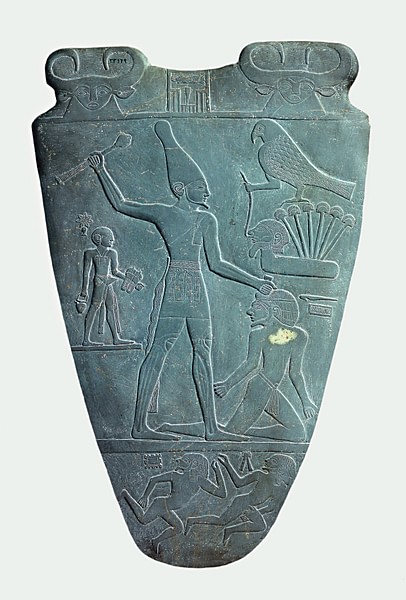
The earliest glimpse into Egyptian martial ideology comes from the Narmer Palette, a ceremonial engraving dating back to circa 3200-3000 BCE. This iconic artifact depicts King Narmer (circa 3150 BCE), often identified with Menes, triumphing over his enemies with the explicit sanction of his gods. Initially regarded as a literal historical account of Egypt’s unification under its first pharaoh of the First Dynasty, modern scholarship now interprets the palette as a powerful symbolic rendering. It emphasizes the concept of the king as a divinely approved, mighty warrior—a crucial cultural value—rather than a precise historical record of conquest. Whether Narmer truly united the country by force remains debated, but the visual narrative unequivocally established the pharaoh’s martial authority.
Unlike the boastful military inscriptions of Mesopotamian rulers, particularly the Assyrians, early Egyptian records of warfare are scarce. This scarcity reflects a fundamental difference in national ethos: Egyptians, convinced of their land’s perfection, prioritized preservation over aggressive conquest. Early conflicts predominantly concerned civil unrest rather than foreign expansion. This paradigm held throughout the Early Dynastic Period in Egypt (circa 3150-2613 BCE) and well into the Middle Kingdom (2040-1782 BCE), when a standing army finally embarked on campaigns beyond its borders.
Despite scholarly disagreement on Narmer’s methods, the necessity of a strong military under a unifying leader to maintain cohesion was undeniable. The Early Dynastic Period witnessed considerable internal unrest, possibly even a temporary division of the country, punctuated by civil wars among factions vying for the throne. Such conditions underscored the vital role of a military force in securing the nascent state.
The Old Kingdom: Regional Militias and the Nomarchs’ Influence
During the Old Kingdom of Egypt (circa 2613-2181 BCE), the central government at Memphis did not command a singular, unified army in the modern sense. Instead, it relied heavily on regional governors, known as nomarchs, to supply military manpower. Each nomarch would conscript soldiers from their administrative district (nome), dispatching them to the king’s service. These battalions marched under standards emblazoned with their nome’s totem, their primary loyalties tethered to their local communities, their comrades-in-arms, and their respective nomarchs.
The effectiveness of this decentralized militia is evidenced by successful campaigns in Nubia, Syria, and Canaan. Old Kingdom monarchs undertook these expeditions to secure borders, suppress uprisings, or seize vital resources for the crown. While these soldiers fought for the king and country, they functioned more as a coalition of distinct military units united by a common objective rather than a cohesive national army. Their ranks were frequently bolstered by Nubian mercenaries, whose loyalty to the pharaoh was contingent on consistent payment.
Scholar Margaret Bunson provides insight into the Old Kingdom soldier and their arsenal: "The soldiers of the Old Kingdom were depicted as wearing skull caps and carrying clan or nome-totems. They used maces with wooden heads or pear-shaped stone heads. Bows and arrows were standard gear, with square-tipped flint arrowheads and leather quivers. Some shields, made of hides, were in use but not generally. Most of the troops were barefoot, dressed in simple kilts, or naked" (Bunson, 168). The bows were simple, single-arched weapons, challenging to draw, with limited range and accuracy. Soldiers, typically drawn from the lower-class peasantry, received minimal training and were unlikely to possess extensive hunting experience, as hunting was a royal sport and peasantry owned no land. Nevertheless, archers firing en masse from close quarters could be highly effective, often preceding hand-to-hand combat. The Egyptian navy during this period served purely as troop transport, not for direct engagement with enemy vessels.
However, the growing power of individual nomarchs ultimately became a contributing factor to the Old Kingdom’s collapse and the onset of the First Intermediate Period of Egypt (circa 2181-2040 BCE). As central authority waned, nomarchs asserted greater control over their regions, constructing temples in their own honor and deploying their militias for personal gain. The kings at Memphis, attempting to reassert authority, moved their capital to the more centrally located city of Herakleopolis, but their efforts proved futile. This fragmented landscape set the stage for a new military paradigm.
The Middle Kingdom: The Dawn of Professional Warfare
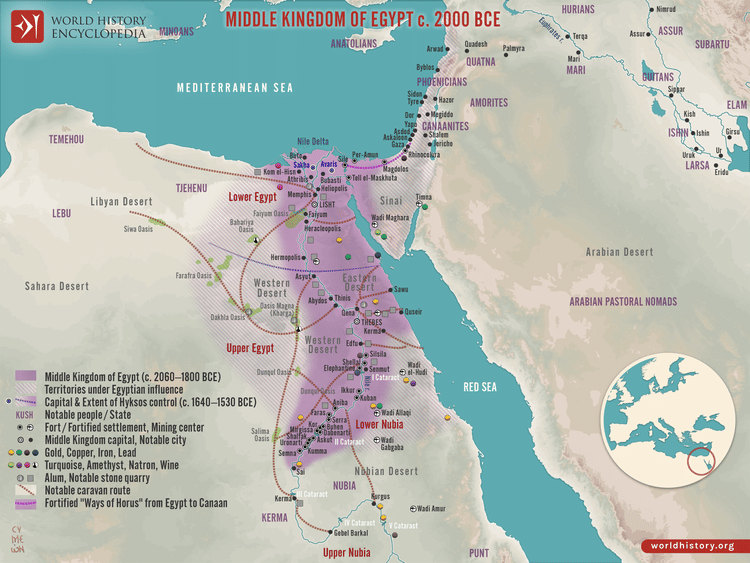
The reunification of Egypt under Mentuhotep II (circa 2061-2010 BCE) of Thebes marked the beginning of the Middle Kingdom of Egypt. Mentuhotep II likely led an army primarily composed of Theban conscripts, though it is plausible that a professional fighting force was already mobilizing within his district. While evidence is unclear, some scholars suggest a core of professional soldiers might have existed as far back as the Predynastic Period (circa 6000-3150 BCE). However, most consensus points to Mentuhotep II’s successor, Amenemhat I (circa 1991-1962 BCE), as the architect of Egypt’s first truly standing army.
This institutional shift was profoundly strategic. By establishing a professional army directly loyal to the king and the unified nation, Amenemhat I effectively centralized military power, diminishing the influence of the individual nomarchs. The king now commanded a force whose loyalty transcended regional affiliations.
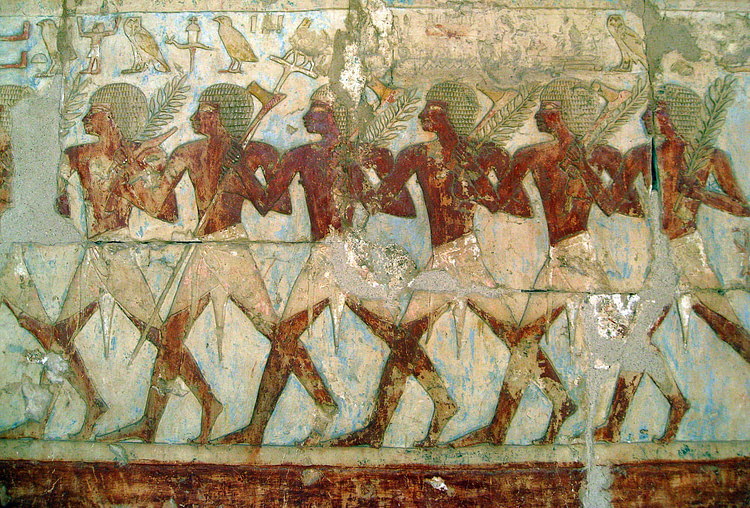
By the Middle Kingdom, Egyptian troops were better equipped, brandishing copper axes and swords. The long bronze spear became standard issue, complemented by body armor crafted from leather worn over short kilts. The military apparatus became more organized, featuring a "minister of war and a commander in chief of the army, or an official who worked in that capacity" (Bunson, 169). These professional troops underwent rigorous training, with elite "shock troops" leading the vanguard in battle.
While specifics on ranks and responsibilities remain somewhat obscure, military service offered significantly enhanced opportunities for advancement compared to earlier eras. Scholar Marc van de Mieroop notes: "Although our knowledge of the military in the Middle Kingdom is very limited, it seems that its role in society was much greater than in the Old Kingdom. The army was well organized and in the 12th dynasty it had a core of professional soldiers. They served for prolonged periods of time and were regularly stationed abroad" (Van de Mieroop, 112). While the bulk of forces still came from provincial conscripts for specific campaigns, the professional core provided unprecedented stability and reach.
The military prowess of the Middle Kingdom reached its zenith under the warrior-king Senusret III (circa 1878-1860 BCE). His campaigns in Nubia and Canaan, which solidified Egypt’s borders, made him a legendary figure, later inspiring the Greek tales of the conqueror Sesostris. Crucially, Senusret III abolished the position of nomarch, further centralizing power and establishing direct royal control over the regions that supplied his soldiers. This era cemented the king’s role as the supreme commander and the army as a national instrument of power.
The Second Intermediate Period: Hyksos Innovations and the Road to Empire
Following the strength of the 12th Dynasty, the 13th Dynasty proved weaker, unable to maintain an effective central government. This vacuum allowed for the rise of the Hyksos, a Semitic people who had immigrated from Canaan and settled in Lower Egypt at Avaris. Over time, their accumulated wealth translated into significant political power, marking the beginning of the Second Intermediate Period (circa 1782-1570 BCE). Egypt became fractured, with the Hyksos controlling the north, native Egyptians in the middle, and Nubians to the south. This uneasy coexistence, characterized by trade and occasional tension, persisted until the Theban king Seqenenra Taa (circa 1580 BCE) challenged the Hyksos king Apepi at Avaris, initiating open conflict. The Hyksos were eventually expelled by Ahmose I (circa 1570-1544 BCE) of Thebes, ushering in the glorious New Kingdom of Egypt.
During this tumultuous period, the Egyptian army heavily relied on Medjay, Nubian warriors who served as formidable mercenaries, functioning as scouts, light infantry, and later, as cavalry. Critically, the Hyksos presence fundamentally reshaped Egyptian warfare. Prior to their arrival, horses and, consequently, chariots were unknown in Egypt.
Though later Egyptian and Greek chroniclers often cast the Hyksos era as a period of chaos and destruction, these foreign rulers introduced groundbreaking military and technological innovations. Egyptologist Barbara Watterson highlights their contributions: "The Hyksos, being from western Asia, brought the Egyptians into contact with the peoples and the culture of that region as never before and introduced them to the horse-drawn war chariot; to a composite bow made from wood reinforced with strips of sinew and horn, a more elastic weapon with a greater range than their own simple bow; to a schimitar-shaped sword, called the Khopesh, and to a bronze dagger with a narrow blade cast in one piece with the tang. The Egyptians developed this weapon into a short sword" (Watterson, 60). These advancements—particularly the chariot and the composite bow—would prove instrumental in the subsequent era of Egyptian imperial expansion.
Having experienced foreign invasion and occupation for the first time, the rulers of the New Kingdom (circa 1570-1069 BCE) were determined to prevent a recurrence. This strategic imperative fueled an aggressive policy of expanding Egypt’s borders to create buffer zones, thereby launching the Egyptian Empire.
The New Kingdom: Imperial Grandeur and Military Zenith
The New Kingdom represents the zenith of Egyptian prestige, power, and wealth, a period familiar to modern audiences through iconic pharaohs like Hatshepsut, Thutmose III, and Ramesses II. As Marc van de Mieroop asserts, "New Kingdom Egypt was an imperialist state: the country annexed territories outside its traditional borders and controlled them for its own benefit. This policy had its roots in earlier periods, when military conquest was a regular part of royal duties, but peaked in the New Kingdom when Egypt was in an almost permanent state of war" (Van de Mieroop, 157).
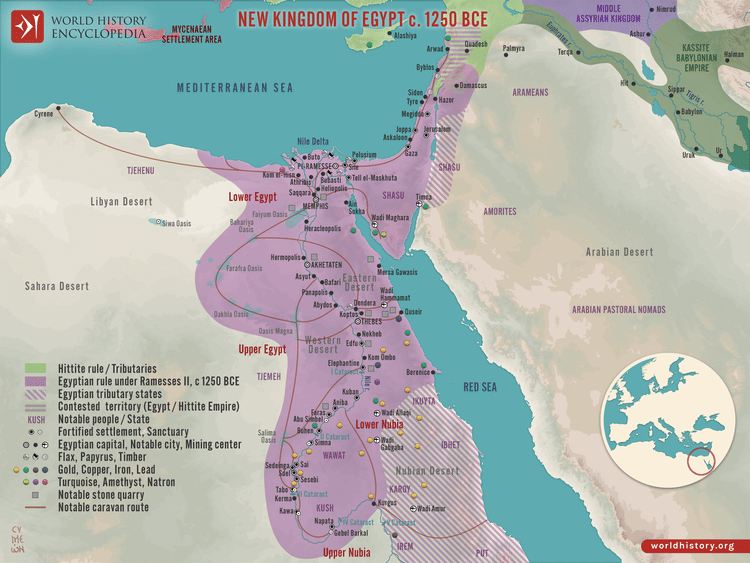
The imperial expansion began with Ahmose I’s pursuit of the Hyksos into Canaan and Syria. Amenhotep I (circa 1541-1520 BCE) further extended southern borders into Nubia, while Thutmose I (1520-1492 BCE) campaigned as far as the Euphrates River in Mesopotamia. Even Queen Hatshepsut (1479-1458 BCE), known for her peaceful reign, dispatched expeditions to Nubia and Syria, and her famed trade mission to Punt included a significant military escort.
However, Thutmose III (1458-1425 BCE) is widely considered the greatest warrior king of the early New Kingdom. Leading at least 17 campaigns over 20 years, he conquered Libya, expanded deeply into Nubia, and secured vast territories throughout the Levant, establishing the Egyptian Empire at its greatest extent. Such ambition necessitated a radically transformed, professional military. Bunson describes this evolution: "The army was no longer a confederation of nome levies but a first-class military force. The king was the commander in chief but the vizier and another administrative series of units handled the logistical and reserve affairs…The army was organized into divisions, both chariot and infantry. Each division numbered approximately 5,000 men. These divisions carried the names of the principal deities of the nation" (Bunson, 170).
Under this new, highly structured organization, the chain of command was strictly hierarchical. Within each division, an officer commanded 50 soldiers, reporting to a superior officer responsible for 250 men. This officer, in turn, reported to a captain, who answered to a troop commander. Above them was the troop overseer, a military official in charge of a garrison, who reported to the fortification overseer, a higher official overseeing the forts where the division was stationed. This individual reported to a lieutenant commander, who answered to the general, who was ultimately accountable to the Egyptian vizier and the pharaoh.
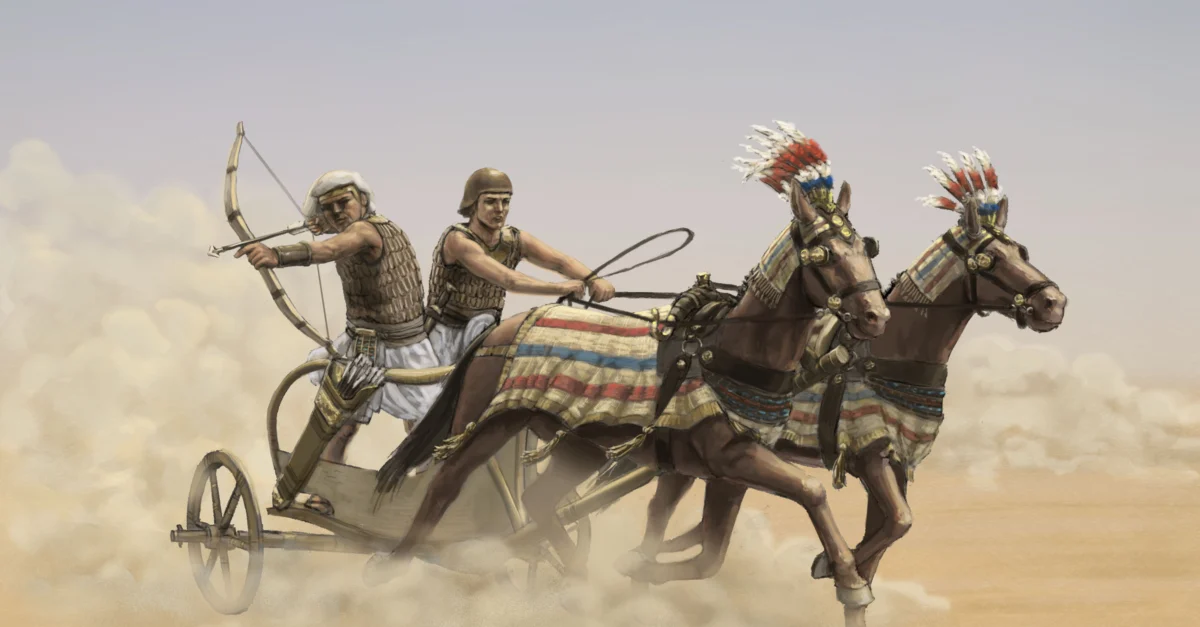
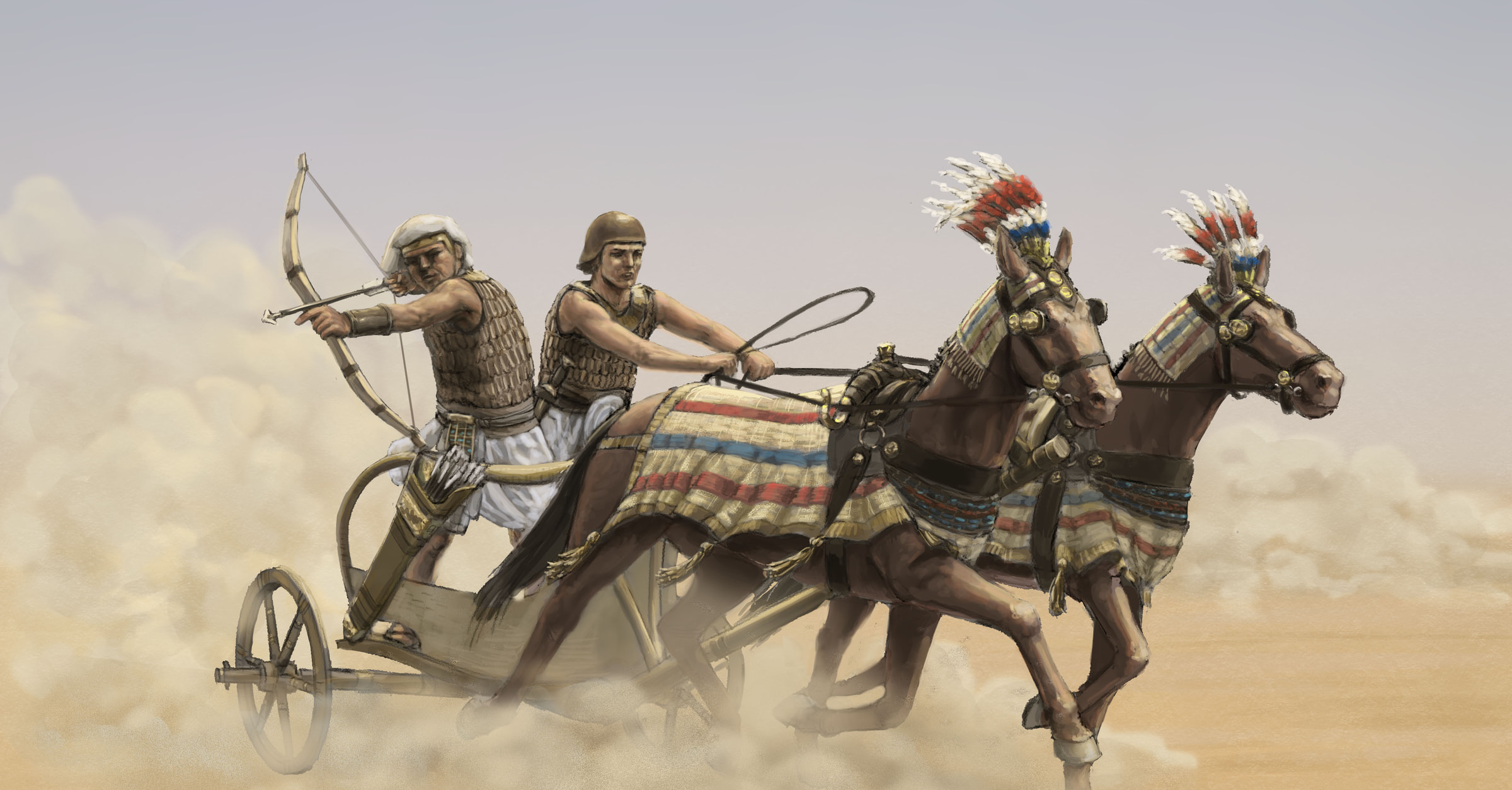
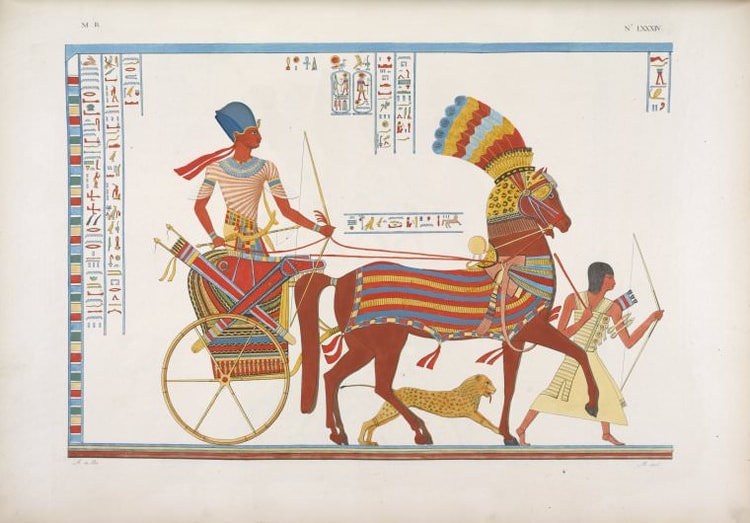
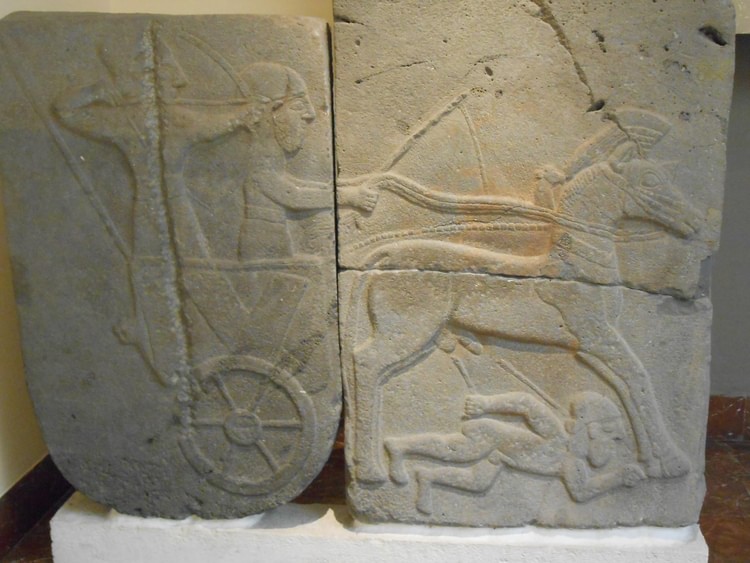
A pivotal element of this imperial army was the horse-drawn chariot, refined from the Hyksos model. Egyptians engineered lighter, more maneuverable, and faster chariots. Each chariot carried two men: a highly trained driver controlling the vehicle, and a warrior armed with a bow, arrows, and a spear. Chariot forces were organized into squadrons of 12 chariots and 24 men, led by a 13th squadron commander. Charioteers held an elite status, often men of wealth who provided their own equipment and received greater rewards, as "Charioteers were trained fighters and also men of wealth, who provided their own equipment. They received greater rewards than other soldiers and had a high social status" (Van de Mieroop, 158).
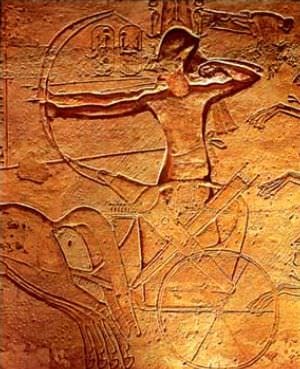
This formidable army allowed for the opulent reigns of pharaohs like Amenhotep III (1386-1353 BCE), under whom Egypt enjoyed unprecedented peace and prosperity, as conflicts were kept far from its borders. It was also this army, under Ramesses II (1279-1213 BCE), that famously engaged the Hittites in 1274 BCE at the Battle of Kadesh.
Ramesses II moved his capital from Thebes to a new city, Per-Ramesses ("City of Ramesses"), built on the former site of Avaris in Lower Egypt. While adorned with lavish monuments and temples, Per-Ramesses was, as Egyptologist Toby Wilkinson describes, "less pleasure dome and more military-industrial complex" (Wilkinson, 314). It housed a vast bronze-smelting factory churning out armaments and extensive facilities for the king’s chariot corps. From this military hub, Ramesses II launched his Kadesh campaign, leading four divisions totaling 20,000 men. Though Ramesses II’s inscriptions proclaimed an overwhelming Egyptian victory, his Hittite counterpart, Muwatalli II, claimed similar success. Modern scholars largely conclude the battle was a tactical draw, yet it famously culminated in the world’s first recorded peace treaty, signed between the Egyptian and Hittite Empires in 1258 BCE.
The Egyptian Navy: Guardians of the Nile and Coastline
Beyond the infantry and chariotry, a third crucial branch of the military emerged: the navy. While initially limited to troop transport in the Old Kingdom, and even for riverine operations like Kamose’s siege of Avaris in the Second Intermediate Period, the navy gained significant prestige in the New Kingdom as foreign invaders began to threaten Egypt’s prosperity by sea.
The most notable of these threats came from the Sea Peoples, a mysterious coalition of diverse ethnicities who harried Mediterranean coasts between circa 1276 and 1178 BCE and potentially contributed to the Bronze Age Collapse. Ramesses II, his successor Merenptah (1213-1203 BCE), and Ramesses III (1186-1155 BCE) all confronted the Sea Peoples during their reigns.
Ramesses II, leveraging an efficient intelligence network, strategically positioned his navy along the Nile’s mouth. He deployed a smaller fleet to lure the Sea Peoples into a trap, then unleashed his larger, more numerous ships from the flanks to annihilate them. It’s important to note that many Egyptian naval engagements were essentially land battles fought on water. Egyptian sailors were not primarily seafarers; their vessels, often incredibly large with crews of around 250 (or 50, with 20 for sailing and 30 for combat), were designed for boarding actions. The ships themselves did not engage in ship-to-ship combat; rather, land troops fought hand-to-hand on the decks of enemy vessels, leading to their eventual sinking.
Ramesses III employed similar tactics against the Sea Peoples, luring them into a trap and then relying on guerrilla warfare. Merenptah, avoiding a sea battle entirely, met the enemy on land at Pi-yer, where his New Kingdom army decimated over 6,000 enemy soldiers. The true strategic value of the Egyptian navy lay in its capacity for intimidation and the swift transport of land troops. Thutmose III effectively utilized the navy for various campaigns, often repurposing cargo ships into naval vessels, outfitted with bulwarks for crew protection and sometimes enhanced for maneuverability on the Nile.
Decline and Fall: The Twilight of Egyptian Military Supremacy
Ramesses III was the last truly effective pharaoh of the New Kingdom. After his reign, the empire began to unravel, and major military successes became increasingly rare. A significant contributing factor to this decline was Ramesses II’s decision to move the capital from Thebes to Per-Ramesses. Thebes was home to the powerful Temple of Amun at Karnak, and its priests, already influential, gained even greater autonomy and amassed vast wealth and power in the absence of the royal court. By the reign of Ramesses XI (1107-1077 BCE), Egypt was effectively divided between the pharaoh’s rule from Per-Ramesses and the powerful priestly hierarchy at Thebes.
This internal fragmentation ushered in the Third Intermediate Period of Egypt (circa 1069-525 BCE). Egypt’s naval power was eclipsed by the faster, better-equipped, and more experienced Greek and Phoenician navies. Furthermore, Egypt entered the Iron Age II around 1000 BCE, beginning to produce iron tools and weapons. However, iron forging required charcoal from burned timber, a resource scarce in Egypt. This meant expensive imports and a technological disadvantage against powers with abundant iron resources.
The consequences of this military and technological decline became starkly apparent in 671 BCE when the Assyrian king Esarhaddon, commanding a professional army wielding superior iron weapons, armor, and tactics, invaded Egypt. He massacred the Egyptian army, burned Memphis, and took royal captives back to Nineveh. Five years later, in 666 BCE, his son Ashurbanipal completed the conquest, extending Assyrian rule beyond Thebes. The technological and tactical superiority of the Assyrian military proved decisive.
The Late Period of Ancient Egypt (525-332 BCE) began after the Assyrian invasions, marked by dwindling Egyptian royal authority and incessant internal strife. Egyptian royalty often fought amongst themselves, relying on Greek mercenaries who shifted loyalties based on payment. Many of these Greek soldiers eventually settled in Egypt. While the Egyptian military did acquire iron weapons and develop a strong cavalry during this period, these innovations were insufficient to restore its former power, hindered by the high cost of imported iron and the absence of a strong, unified central government to support a large-scale military.
The final blow to indigenous Egyptian military independence came in 525 BCE with the Persian invasion. At the Battle of Pelusium, the Persian general Cambyses II employed an extraordinary psychological tactic: he ordered his men to round up animals, particularly cats (sacred to the goddess Bastet), and drive them before the army. His soldiers also painted the image of Bastet on their shields. Cambyses II threatened to hurl cats over the city walls if the Egyptians did not surrender immediately. Fearing for the animals’ safety and the wrath of Bastet, the Egyptians laid down their arms, surrendering without a true military engagement.
Alexander the Great took Egypt from the Persians in 331 BCE. After his death, the country came under the rule of his general Ptolemy, who became Ptolemy I (323-283 BCE). The Ptolemaic Dynasty, being Macedonian-Greek, implemented their own military tactics and weaponry. Consequently, the distinct history of ancient Egyptian warfare, defined by its unique organizational structures, weaponry, and ethos, largely concludes with the fall of the New Kingdom. Subsequent innovations and military progress were no longer integrated into a strong, centralized Egyptian state, marking the end of its independent martial legacy.
Conclusion: A Legacy of Adaptation and Resilience
The chronicle of ancient Egyptian warfare is a testament to a civilization’s continuous adaptation in the face of evolving threats and ambitions. From the symbolic displays of Narmer’s divine authority, through the decentralized militias of the Old Kingdom, to the professional standing armies of the Middle Kingdom, and finally, the sophisticated imperial forces of the New Kingdom, Egypt’s military underwent profound transformations. Key turning points, such as Amenemhat I’s creation of a national army and the Hyksos’ introduction of chariots and composite bows, fundamentally reshaped its capabilities.
However, internal political fragmentation, particularly the weakening of central authority and the rise of priestly power, coupled with external pressures and a technological lag in adopting iron weaponry, ultimately led to the decline of indigenous Egyptian military supremacy. The Assyrian and Persian invasions underscored this vulnerability, demonstrating how even a once-mighty empire could fall when its military infrastructure and strategic coherence faltered. The story of ancient Egyptian warfare is, therefore, not just a tale of battles and weapons, but a compelling narrative of how a society’s military prowess is inextricably linked to its political stability, economic resources, and cultural values.


Leave a Comment