The Night the Nation Held Its Breath: Lincoln’s Assassination and the Dawn of a Fractured Peace
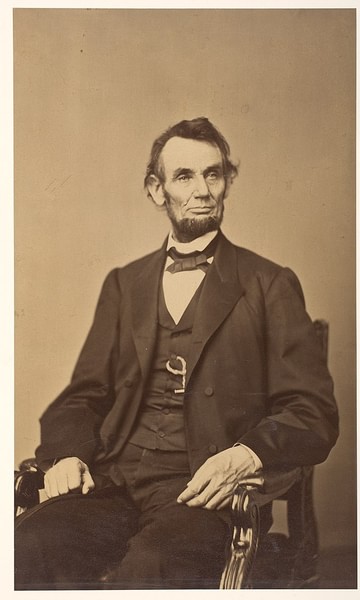
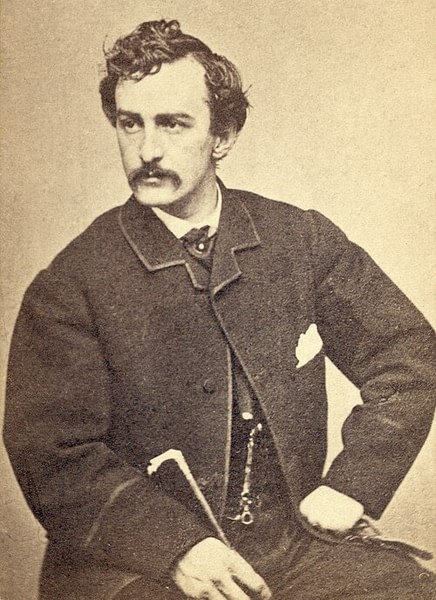
Washington, D.C. – April 15, 1865 – On the evening of April 14, 1865, just five days after Confederate General Robert E. Lee’s surrender effectively ended the American Civil War, the nation was plunged back into a profound and unprecedented crisis. At approximately 10:15 p.m., while attending a performance of "Our American Cousin" at Ford’s Theatre, President Abraham Lincoln was shot in the back of the head by John Wilkes Booth, a renowned actor and fervent Confederate sympathizer. Lincoln, the architect of Union victory and a symbol of national reconciliation, succumbed to his wounds the following morning at 7:22 a.m. His assassination, a meticulously planned conspiracy that also targeted Vice President Andrew Johnson and Secretary of State William H. Seward, shattered the fragile peace and irrevocably altered the course of American Reconstruction, leaving an already broken nation grappling with unimaginable grief and uncertainty.
The tragic event unfolded amidst widespread jubilation over the war’s end, transforming a moment of triumph into one of unparalleled sorrow. Lincoln’s death not only robbed the United States of its wartime leader but also removed a figure whose vision for a merciful and unified post-war era was desperately needed. The immediate aftermath was marked by chaos, a frantic manhunt, and a national outpouring of grief that solidified Lincoln’s place as a martyred president, forever shaping the collective memory of the Civil War and its arduous healing process.
The Nation’s Fragile Peace: April 1865
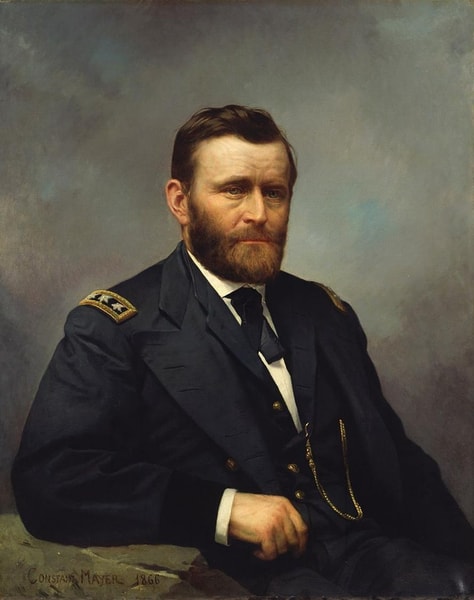
The spring of 1865 brought a palpable sense of relief and burgeoning hope to the war-weary United States. On April 10, Washington, D.C., awoke to the thunderous sound of a 500-gun salute, not of war, but of peace. The previous day, at Appomattox Court House, Confederate General Robert E. Lee had surrendered his Army of Northern Virginia to Union General Ulysses S. Grant, signaling the effective end of the four-year-long American Civil War. Despite the dreary, muddy weather, the capital erupted in spontaneous celebration. Journalist Noah Brooks, who had been breakfasting with President Lincoln when the news broke, vividly recalled the scene: "The streets, horribly muddy, were alive with people, cheering and singing, carrying flags and saluting everybody." Bands played, tears of joy flowed freely, and as night fell, the dark sky was illuminated with celebratory fireworks. After years of agonizing conflict and immense sacrifice, the Union had been preserved, and the long-awaited peace seemed finally within grasp.
However, beneath this veneer of jubilation lay deep divisions and the daunting challenge of national reconstruction. The war had cost over 600,000 lives, left vast swathes of the South devastated, and created millions of newly freed African Americans whose future remained uncertain. President Lincoln, though celebrated for his leadership, understood that the most difficult work still lay ahead. His vision for healing the nation was one of magnanimity and inclusion, famously articulated in his second inaugural address: "With malice toward none, with charity for all."
Lincoln’s Vision and Booth’s Fury
On the evening of April 11, just a day after the capital’s ecstatic celebrations, crowds gathered on the White House lawn, eager to hear President Lincoln speak. Many anticipated a triumphant address, a shared moment of victory. Instead, Lincoln, appearing gaunt and weary, delivered a speech that was remarkably forward-looking and sober. Standing at a second-story window, illuminated by the flickering light of a candle held by his son Tad, he read from a manuscript, his voice speaking not of past glories but of the immense struggles to come. He emphasized the complexities of Reconstruction, the imperative to bind the nation’s wounds, and, crucially, the need to extend suffrage to African Americans, particularly those who had bravely served in the Union army. Lincoln’s address was a call for unity and justice, acknowledging that while the fighting might be over, the work of forging a truly united and equitable nation had only just begun.
For many, Lincoln’s words were confusing or even disheartening, as they tempered the mood of unbridled joy. But for one man in the crowd, they ignited a furious, murderous rage. John Wilkes Booth, a celebrated actor from a prominent theatrical family, was a staunch Confederate sympathizer. Throughout the war, he had watched from the sidelines, bitter and helpless as the South’s fortunes dwindled. He had previously plotted to kidnap Lincoln to aid the Confederacy, even enlisting several co-conspirators, but had never found the opportunity to act. Now, with the war essentially over and Lincoln advocating for Black suffrage, Booth’s dark thoughts crystallized into a deadly resolve. Turning to his friend Lewis Powell, Booth seethed, "That is the last speech he will ever make." The seeds of assassination had been sown.
A Fateful Good Friday: Lincoln’s Last Hours
Good Friday, April 14, 1865, dawned with a sense of renewed optimism for President Lincoln. Despite suffering from a splitting headache the night before, he was in good spirits. His eldest son, Robert Todd Lincoln, was visiting from Virginia for the Easter weekend, bringing a welcome familial presence. Lincoln began his day early, as was his custom, attending to the usual stream of supplicants in his office. At around 11 a.m., he joined Robert and his wife, Mary, for breakfast. During the meal, Robert presented his father with a portrait of the recently defeated General Robert E. Lee, jokingly remarking on the rebel general’s plight. Lincoln, polishing his glasses, examined the image thoughtfully. "It’s a good face," he said softly, a poignant reflection on the human cost of the conflict. "I am glad the war is over."
Returning to his duties, Lincoln met with Speaker of the House Schuyler Colfax and Senator John Cresswell, greeting them with the cheerful exclamation, "Creswell, old fellow, everything is bright this morning. The war is over. It has been a tough time, but we have lived it out." After signing off on appointments and granting a military discharge, he dispatched a messenger to Ford’s Theatre on 10th Street, reserving the State Box for that evening’s performance of the comedy Our American Cousin. He informed the theater management that they could expect a distinguished guest: General Ulysses S. Grant, the savior of the Union. The prospect of Grant’s attendance promised an even larger and more enthusiastic turnout.
In the early afternoon, Lincoln walked to the War Department for a meeting with Grant and several cabinet members. The discussion revolved around the ongoing situation in the South; while Lee had surrendered, Confederate General Joseph E. Johnston still commanded a force of over 20,000 men. Lincoln, however, exuded an unusual confidence, attributing it to a peculiar dream he had experienced repeatedly before every major event of the war – Fort Sumter, Antietam, Gettysburg. In this recurring dream, he found himself alone on a raft, "floating, floating away on some vast and indistinct expanse, toward an unknown shore." He believed this dream invariably heralded a significant event, and in this instance, he was certain it foretold Johnston’s imminent surrender.
Following the meeting, Lincoln detained Grant, eager to finalize their evening plans. To his dismay, Grant explained that he and his wife, Julia, had to catch a train to visit their children in Philadelphia. While the official reason was family, both men understood the underlying truth: Mary Todd Lincoln had grown increasingly jealous of the Grants, and Julia wished to avoid a potentially uncomfortable scene at the theater. Lincoln, unwilling to press the issue, allowed Grant to depart, but his demeanor visibly darkened as he returned to his office. His bodyguard, William H. Crook, observed the president’s somber mood, noting Lincoln’s unusual complaint that he no longer wished to go to the theater. At 4:30 p.m., as Crook’s shift ended, Lincoln bid him an uncharacteristically solemn farewell: "Good-bye, Crook," a stark departure from his usual "Good night," a detail that would haunt the bodyguard forever.
Despite his earlier melancholy, Lincoln seemed to regain some cheer on the carriage ride to the theater with Mary Todd. He held her hand, sharing dreams of their post-presidency life: a trip to Europe, followed by a return to Springfield, Illinois, where he would resume his law practice. They picked up their last-minute guests, Major Henry Rathbone and his fiancée, Clara Harris, who were filling in for the absent Grants. Arriving at Ford’s Theatre around 8:30 p.m., they were late, with Act I already underway. Nevertheless, the orchestra immediately struck up "Hail to the Chief" as the presidential party entered the State Box. The 1,700-strong audience erupted in cheers, their faces turned upward in adoration. As the applause subsided, the Lincolns settled in. Mary Todd, touched by her husband’s rare public display of affection, found herself clinging to his arm. "What will Miss Harris think of my hanging on to you so?" she whispered. Lincoln, his attention fixed on the stage, replied, "Why, she will think nothing about it." It would be his last known public utterance.
The Conspirator’s Final Plan
Earlier that afternoon, while Lincoln was discussing the war’s end with Grant, John Wilkes Booth was also making his way to Ford’s Theatre. Dressed impeccably in a dark suit, silk hat, and kid gloves, with an overcoat draped over his arm, he exuded an air of casual confidence. He greeted Harry Ford, one of the theater’s owners, and inquired about the evening’s performance. Ford, brimming with excitement, announced Our American Cousin and then, with a mischievous grin, added, "The President is going to be here tonight with General Grant! They’ve got General Lee as a prisoner. We’re going to put him in the other box!" Booth’s composure shattered. "Never!" he snapped, his voice laced with contempt. "Lee would never let himself be used as the Romans used their captives and be paraded." Ford, taken aback by Booth’s intense reaction, quickly clarified his jest about Lee but reiterated Lincoln’s confirmed attendance.
Booth departed, his mind racing. Walking down 10th Street, he encountered John F. Coyle, editor of the National Intelligencer. Booth launched into a bitter tirade about the Confederacy’s defeat. Then, his conversation took a chilling turn: he asked Coyle what would happen if Lincoln and all his immediate successors were killed simultaneously. Coyle, dismissive, guessed "Anarchy… But what nonsense: they don’t make Brutuses nowadays." Booth feigned agreement, but the wheels of his murderous plot were already spinning. He made a stop at Kirkwood House to inquire about Vice President Andrew Johnson’s presence, then passed a group of 440 Confederate prisoners of war, their sight further hardening his resolve.
At 8:00 p.m., Booth convened his co-conspirators at Herndon House for a candlelit meeting. The time for kidnapping, he declared, was over. Assassination was now the only option. "It would be the greatest thing in the world," he exclaimed, driven by a desire to avenge the South and plunge the federal government into chaos. He swiftly assigned roles: Lewis Powell, an ex-Confederate soldier, was tasked with killing Secretary of State William H. Seward, who was bedridden from a carriage accident. George Atzerodt, a German-American repairman, was to assassinate Vice President Johnson at Kirkwood House. When Atzerodt hesitated, claiming he had only agreed to kidnapping, Booth, in a crazed fury, threatened to shoot him, forcing his reluctant compliance. Booth himself would kill Lincoln, while David Herold, a fourth conspirator, would aid in their escape. The attacks were synchronized, scheduled for around 10 p.m.
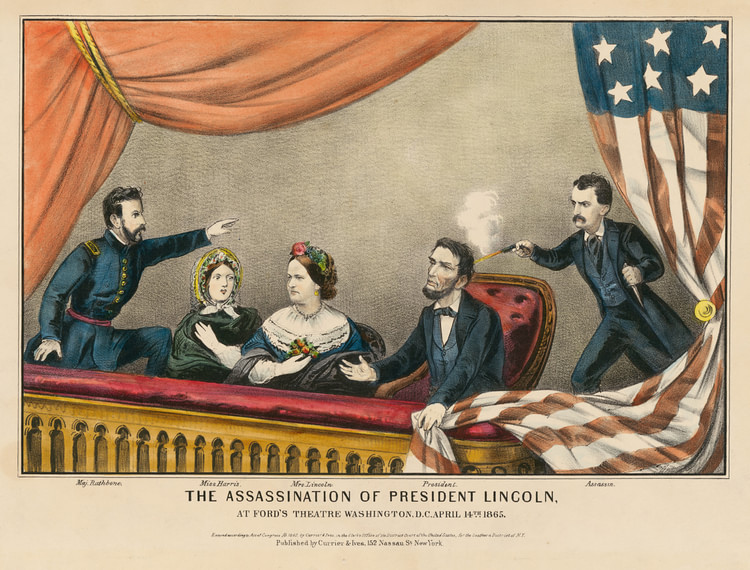
The conspirators dispersed into the night to prepare for their grisly tasks. Booth, armed with a .41 caliber Deringer pistol and a large Bowie knife, returned to Ford’s Theatre at 10:10 p.m. As a famous actor, he had unrestricted access to all parts of the building, his presence causing no alarm. Several acquaintances recognized him, including actress Jeannie Gourlay, who later recalled him looking "pale as death." At 10:14 p.m., Booth quietly entered the State Box corridor, closing the door behind him and using a wooden board to jam it shut, securing his access. He waited in the shadows, listening for a specific line from the play that he knew would elicit a burst of laughter from the audience, providing cover for his gunshot. Presently, he heard it:
"Don’t know the manners of good society, eh? Wal, I guess I know enough to turn you inside out, you sockdologizing old mantrap!"
As expected, the audience erupted with laughter. This was Booth’s cue. "I care not what becomes of me," he would later write in his diary. "I struck boldly, for my country and that alone." He stepped forward, raised his pistol, and fired.
The Assassination & Immediate Aftermath
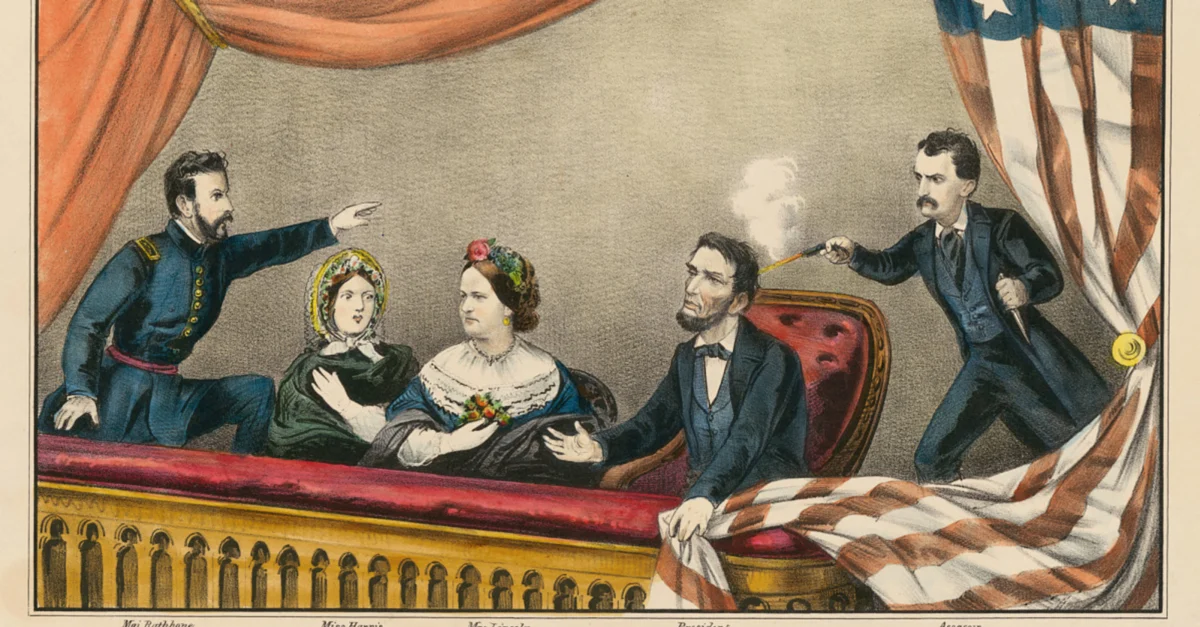
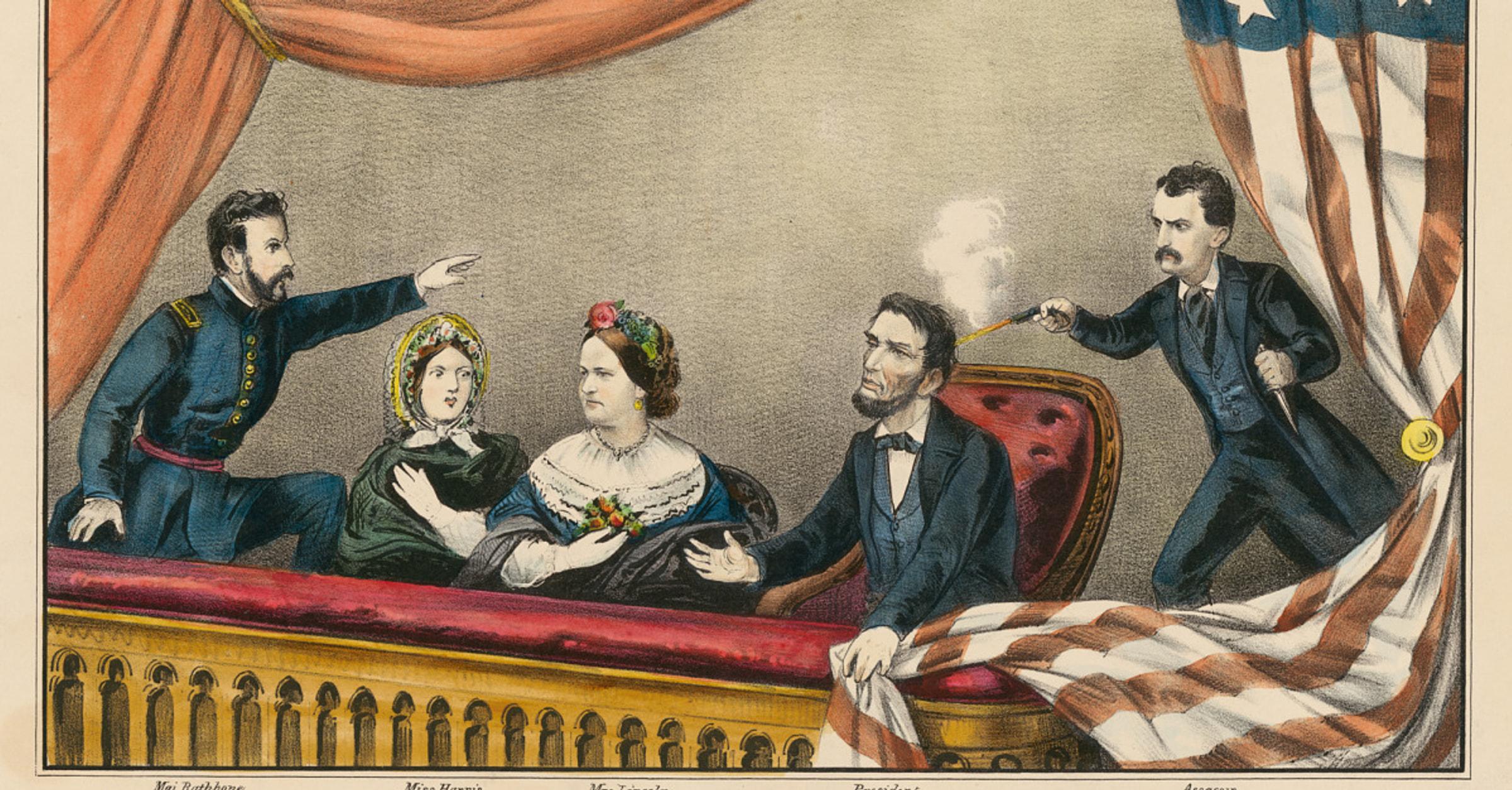
A flash, a half-muffled explosion, and then silence, broken only by the lingering laughter from the audience. Lincoln slumped forward in his rocking chair, his head drooping onto his chest, the bullet having entered just behind his left ear. Major Rathbone, the Lincolns’ last-minute guest, instinctively lunged at the assassin, wrapping his arms around him. Booth, like a cornered animal, snarled, "Let go of me, or I will kill you!" Rathbone, undeterred, managed to grab Booth by the throat, but the actor, with a desperate jerk, freed his right arm, wrenched his Bowie knife from his pocket, and plunged it deep into the major’s arm. Rathbone cried out in pain, releasing his grip, and Booth, with a theatrical flourish, leaped from the box, falling twelve feet onto the stage below. He landed with a sickening crunch, breaking the fibula of his left leg.
Adrenaline coursing through his veins, the triumphant assassin ignored the searing pain. He rose, raised the bloodied knife above his head, and, in a moment of melodramatic defiance, shouted either "Sic semper tyrannis!" (‘Thus always to tyrants,’ the state motto of Virginia), "The South is avenged," or both. He then limped across the stage and exited. The audience, dumbfounded, sat in stunned silence, unsure of what they had just witnessed. Their haze was shattered by Mary Todd Lincoln’s heartrending wail and Major Rathbone’s frantic cries of "Stop that man!" Those closest to Booth would later recall his lips drawn against his teeth, panting, muttering to himself, "I-I have done it." The assassin vanished through a stage door into an alley, where the theater’s teenage bill-carrier, Joseph ‘Peanuts’ Borroughs, stood holding his horse. With immense effort, the injured Booth pulled himself onto the horse and rode off into the night. By the time soldiers and theatergoers emerged in pursuit, he was gone.
Meanwhile, 23-year-old surgeon Charles Leale, an army doctor who had been in the audience, rushed into the State Box. He found Lincoln slumped in his chair, appearing as if in a deep sleep. It took Leale only moments to recognize the wound as mortal. He and two other physicians who joined him decided the president needed to be moved. With great care, they carried him across the street to a modest boarding house owned by William Petersen. Lincoln was placed on a bed in a cramped nine-by-fifteen-foot bedroom, a bed too short for his towering frame. Leale and the other surgeons worked feverishly, while cabinet members and other officials crowded the building, a mixture of despair and disbelief etched on their faces.
Vice President Andrew Johnson was present; Atzerodt, tasked with his assassination, had failed to muster the courage for the attack. Similarly, Lewis Powell had failed to kill Secretary of State Seward, though he brutally attacked him, leaving him gravely wounded. Only Booth had succeeded in his mission. Senator Charles Sumner, a great champion of the Union, broke down in tears upon seeing the president. Secretary of the Navy Gideon Welles would remember Lincoln’s appearance: "His features were calm and striking. I had never seen him to better advantage than for the first hour, perhaps, that I was there. After that his right eye began to swell and become discolored." Mrs. Lincoln was inconsolable, her grief so profound that she had to be taken to an adjacent room, her sobs echoing through the hushed house. The surgeons did what they could, but it soon became clear that all efforts were futile. At 7:22 a.m. on April 15, 1865, approximately nine hours after he was shot, President Abraham Lincoln drew his final breath and died. The assembled onlookers and surgeons stood in misty-eyed silence as Secretary of War Edwin Stanton uttered the immortal words: "Now he belongs to the ages."
Official Responses & The Manhunt Begins
The immediate official response to Lincoln’s assassination was a mixture of shock, grief, and swift, decisive action. Secretary Stanton immediately took charge, establishing a command center at the Petersen House and initiating a massive manhunt for John Wilkes Booth and his co-conspirators. Telegrams were dispatched across the nation, announcing the tragedy and detailing descriptions of the fugitives. Washington D.C., a city that had just celebrated peace, was now plunged into a state of martial law, its streets patrolled by armed soldiers. The initial confusion quickly gave way to a relentless pursuit, as federal troops and detectives fanned out across the Mid-Atlantic states.
Booth, his leg severely broken, managed to escape Washington with David Herold, who had failed to assist Powell in the attack on Seward. They crossed the Anacostia River into Maryland and sought refuge at the home of Dr. Samuel Mudd, who set Booth’s leg. This act would later implicate Mudd in the conspiracy. The pair continued their flight through Southern Maryland and into Virginia, aided by Confederate sympathizers along the way. A reward of $100,000 – an astronomical sum at the time – was offered for Booth’s capture, dead or alive.
The extensive 12-day manhunt culminated on April 26, when federal troops tracked Booth and Herold to a barn on Richard Garrett’s farm near Port Royal, Virginia. Herold surrendered, but Booth, refusing to give up, was barricaded inside. When the barn was set ablaze, Booth was shot through the neck by Sergeant Boston Corbett, a Union soldier. He died hours later, reportedly muttering, "Useless, useless." His final words were, "Tell my mother I died for my country."
A Nation in Mourning: The Funeral and Public Grief
The nation’s grief was unprecedented. News of Lincoln’s death spread rapidly, transforming the recent jubilation into profound sorrow. Flags were lowered to half-mast, businesses closed, and people dressed in black. Public mourning was intense and widespread. Lincoln’s body lay in state in the Capitol Rotunda from April 19 to 20, where thousands of Americans filed past to pay their respects.
On April 21, Lincoln’s body, accompanied by that of his son Willie (who had died in 1862), embarked on a two-week, 1,600-mile funeral train journey from Washington D.C. back to his hometown of Springfield, Illinois. The route mirrored, in part, his inaugural journey four years earlier. Millions of Americans lined the tracks in cities, towns, and rural areas, standing in silent reverence, weeping, and casting flowers onto the passing train. This extraordinary public display of mourning underscored the deep personal connection many felt to their fallen president, transforming him into a national martyr and an enduring symbol of American unity and sacrifice.
The Shadow Over Reconstruction
Lincoln’s assassination cast a long and dark shadow over the period of Reconstruction, profoundly altering its trajectory. Lincoln’s vision, rooted in his "malice toward none" philosophy, advocated for a lenient and conciliatory approach to bringing the Southern states back into the Union. He sought to heal the nation’s wounds swiftly, integrate former Confederates back into civil society, and gradually extend rights to African Americans. His leadership, known for its political acumen and moral authority, would have been crucial in navigating the complex and often contentious process of rebuilding.
However, his successor, Vice President Andrew Johnson, a Southern Democrat who had remained loyal to the Union, lacked Lincoln’s political skill, temperament, and moral standing. Johnson’s approach to Reconstruction was more lenient towards former Confederates and less committed to protecting the rights of freed slaves. This brought him into direct conflict with the "Radical Republicans" in Congress, who believed the South needed to be fundamentally restructured and that African Americans required federal protection and civil rights. The ensuing power struggle between President Johnson and Congress led to years of political infighting, Johnson’s impeachment, and a more punitive, yet ultimately inconsistent, Reconstruction policy. Lincoln’s absence created a vacuum, allowing factionalism and racial tensions to fester, arguably delaying true national reconciliation and leaving a legacy of racial injustice that would plague the South for generations. His death ensured that the darkest and most tumultuous days of Reconstruction, as he himself had predicted, lay ahead.
Justice for the Conspirators
In the aftermath of Booth’s death, the remaining conspirators were swiftly apprehended. Eight individuals – David Herold, Lewis Powell, George Atzerodt, Mary Surratt (the boarding house owner where the conspirators met), Samuel Arnold, Michael O’Laughlen, Edmund Spangler, and Dr. Samuel Mudd – were tried by a military tribunal, an controversial decision given that civilian courts were operational. The trials, conducted under intense public pressure and a desire for swift justice, began on May 10, 1865.
On July 7, 1865, four of the conspirators – Mary Surratt, Lewis Powell, David Herold, and George Atzerodt – were found guilty and hanged. Mary Surratt became the first woman executed by the United States federal government. Samuel Arnold, Michael O’Laughlen, and Dr. Samuel Mudd received life sentences (O’Laughlen died in prison of yellow fever in 1867). Edmund Spangler, a stagehand at Ford’s Theatre, was sentenced to six years. The swift and severe punishments reflected the nation’s outrage and determination to hold those responsible for the unprecedented act accountable.
Legacy of a Martyr
The assassination of Abraham Lincoln, occurring at the precipice of peace, indelibly etched his image into the fabric of American history as a martyred president. His death, at a moment when his unique leadership was most needed, transformed him into a powerful symbol of national sacrifice and the enduring struggle for unity and equality. His vision for a reconstructed America, though tragically cut short, continues to inspire ideals of reconciliation and justice. The shockwaves of that fateful Good Friday reverberated for decades, shaping the political landscape, defining the challenges of Reconstruction, and forever altering the narrative of a nation striving to heal its deepest wounds. Lincoln’s final words, "Why, she will think nothing about it," uttered moments before the shot, stand in stark contrast to the profound and lasting impact his death would have, ensuring that the world would, indeed, think of little else.