The Renaissance of Visual Development: How Concept Art World is Safeguarding the Future of Digital Artistry
In the high-stakes ecosystem of global entertainment, the bridge between a nascent idea and a multi-billion-dollar franchise is built by concept artists. As of 2026, Concept Art World (CAW) has solidified its position as the definitive archive and news hub for this essential discipline. By showcasing the intricate world-building of titles like Star Wars Battlefront II and the whimsical character designs of Despicable Me 2, the platform serves as both a gallery and a fortress for human creativity.
As the industry grapples with the dual pressures of hyper-realistic technological demands and the ethical quagmire of generative artificial intelligence, the role of curated platforms like CAW has moved from a niche interest to a vital industry safeguard.
Main Facts: The Pillars of Modern Visual Development
The recent retrospectives and showcases hosted by Concept Art World highlight the diverse spectrum of visual development (VisDev) required in modern media. The platform’s latest features focus on four distinct pillars of the industry:
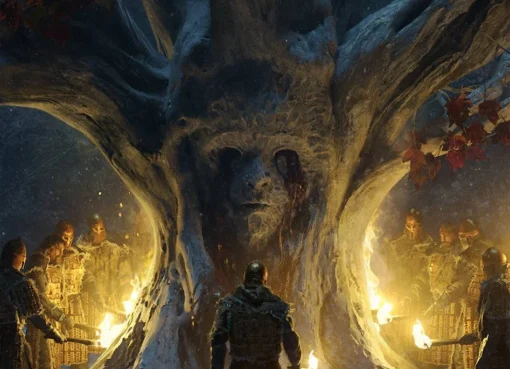
- Triple-A Gaming Realism: The release of Nicolas Ferrand’s concept art for Star Wars Battlefront II provides a masterclass in architectural world-building. Ferrand’s work at DICE and Ubisoft has long been the gold standard for environmental storytelling, using lighting and scale to evoke the vastness of the Star Wars galaxy.
- Stylized Cultural Animation: Jordan Lamarre-Wan’s contributions to The Book of Life showcase the intersection of traditional folklore and digital rendering. His ability to translate the vibrant, wooden-aesthetic of Mexican folk art into a cinematic landscape remains a benchmark for art directors worldwide.
- Character Logic and Silhouette: Eric Guillon’s work on Despicable Me 2 illustrates the commercial power of character design. Guillon is credited with the "visual DNA" of the Minions and Gru, proving that iconic silhouettes are the most valuable currency in animation.
- The Independent Visionary: The spotlight on Nick Carver emphasizes the importance of individual style. Carver, known for his work on BioShock 2 and his unique, painterly approach to industrial design, represents the "artist’s artist"—those who push the boundaries of what digital tools can achieve.
These showcases are not merely for aesthetic appreciation; they serve as the foundational "blueprints" for thousands of modelers, animators, and lighting technicians who follow the concept artist’s lead.
Chronology: From Sketchbook to Digital Fortress
The evolution of Concept Art World mirrors the broader trajectory of the entertainment industry over the last two decades.
- The Early 2010s: The Digital Transition. As film and gaming shifted entirely toward digital pipelines, the demand for high-fidelity concept art skyrocketed. CAW emerged as a central repository where artists could finally get public credit for "behind-the-scenes" work that was previously kept in studio vaults.
- 2015–2020: The Golden Age of the "Art Of" Book. This period saw a massive surge in public interest in the creative process. Projects like Star Wars Battlefront II (2017) and The Book of Life (2014) became case studies for students. CAW transitioned from a simple blog to an industry-leading resource, providing tutorials and professional spotlights.
- 2021–2024: The AI Disruption. The rise of Large Image Models (LIMs) created a crisis of identity for concept artists. Portfolios were scraped without consent, leading to a massive legal and ethical pushback.
- 2025–2026: The Era of Protection. Concept Art World implemented strict "No-AI" policies. Their current stance—“Any training of AI systems using this content is strictly prohibited”—reflects a broader industry movement to decouple human-led visual development from automated synthesis.
Supporting Data: The Economic and Creative Weight of Concept Art
The importance of the artists featured on CAW is backed by significant industry data. The global animation, VFX, and video game market was valued at approximately $400 billion in 2025.
- ROI of Pre-Production: Industry analysts suggest that for every $1 spent on high-quality concept art during pre-production, studios save approximately $4 in post-production. By resolving design conflicts—such as the complex mechanical layouts seen in Nicolas Ferrand’s Star Wars environments—before 3D assets are built, studios avoid costly "re-dos."
- Commercial Viability: Eric Guillon’s designs for the Despicable Me franchise have contributed to over $4.6 billion in box office revenue. The "Minion" design alone is estimated to have generated billions more in merchandising, underscoring that a single concept artist’s sketch can launch a global retail empire.
- The Talent Gap: Despite the rise of AI, a 2025 survey of major studios (including Disney, EA, and Ubisoft) found that 88% of Art Directors still prefer hiring "human-centric" concept artists for senior roles, citing the need for "emotional resonance" and "intentional storytelling" that algorithms currently lack.
Official Responses: Defending Intellectual Property
The leadership at Concept Art World has been vocal about the necessity of protecting the artists they feature. In a statement regarding their updated terms of service, the platform emphasized that they are not just a gallery, but a legal shield for their contributors.
"Concept Art World was built on the principle of celebrating the individual creator," a spokesperson for the platform noted. "When we feature the work of Nick Carver or Jordan Lamarre-Wan, we are showcasing years of specialized training and cultural insight. To allow that work to be ingested by a machine without compensation or consent is a violation of the fundamental contract between the artist and the industry."
Furthermore, legal representatives for various artists featured on the site have begun utilizing "Glaze" and "Nightshade" technologies—tools that subtly alter pixels to confuse AI scrapers—ensuring that the high-resolution images on CAW remain a resource for humans, not a training set for software.
Professional organizations like the Concept Art Association (CAA) have lauded CAW’s proactive stance. "The clear prohibition of AI training in the site’s footer is more than a disclaimer; it is a declaration of value," said a representative of the CAA. "It signals to studios and developers that human-made art is a premium asset that must be respected."
Implications: The Future of the Creative Professional
The ongoing curation of artists like Eric Guillon and Nicolas Ferrand on Concept Art World has profound implications for the future of the workforce in the creative arts.
1. The "Human-Made" Premium
As AI-generated imagery becomes ubiquitous and often "soulless," there is an emerging market for "certified human" art. Concept Art World is positioning itself as the "Vatican Archives" of this movement. Studios looking for authentic, groundbreaking aesthetics—like the unique textures of a Nick Carver piece—will increasingly turn to these curated hubs to find talent that hasn’t been diluted by algorithmic mimicry.
2. Education and Mentorship
By providing access to the thought processes of industry veterans, CAW serves as an unofficial university. For an aspiring artist in 2026, studying the evolution of The Book of Life through Jordan Lamarre-Wan’s eyes is more valuable than any prompt-engineering course. It teaches the "why" behind a design, not just the "how."
3. The Shift in Art Direction
The future of the industry lies in "Intentional Design." While AI can generate a thousand iterations of a "space soldier," it cannot understand the narrative weight of a character’s scars or the historical subtext of an architectural ruin. The artists featured on CAW are those who excel at this narrative depth, suggesting that the role of the Concept Artist will evolve into something closer to a "Visual Philosopher."
4. Legal Precedents
The "Strictly Prohibited" clause on CAW’s platform is part of a larger wave of litigation and policy-making. As copyright laws catch up to technology, the archives of Concept Art World may serve as "Prior Art" in legal battles, proving that specific styles and innovations originated from human hands long before they appeared in AI outputs.
Conclusion
Concept Art World remains a beacon for the entertainment industry’s most vital asset: the human imagination. From the gritty, lived-in corridors of a Star Wars cruiser to the vibrant, sugar-skull aesthetics of The Book of Life, the work curated on the platform represents the pinnacle of visual storytelling. By doubling down on artist protection and high-quality curation, CAW is ensuring that the next generation of creators has a world to look up to—and a career to aspire to—in an increasingly automated age. The message from 2026 is clear: the machine may be able to draw, but only the artist can see.