Snap’s Augmented Reality Gambit: A Deep Dive into the $2,195 Standalone "Specs"
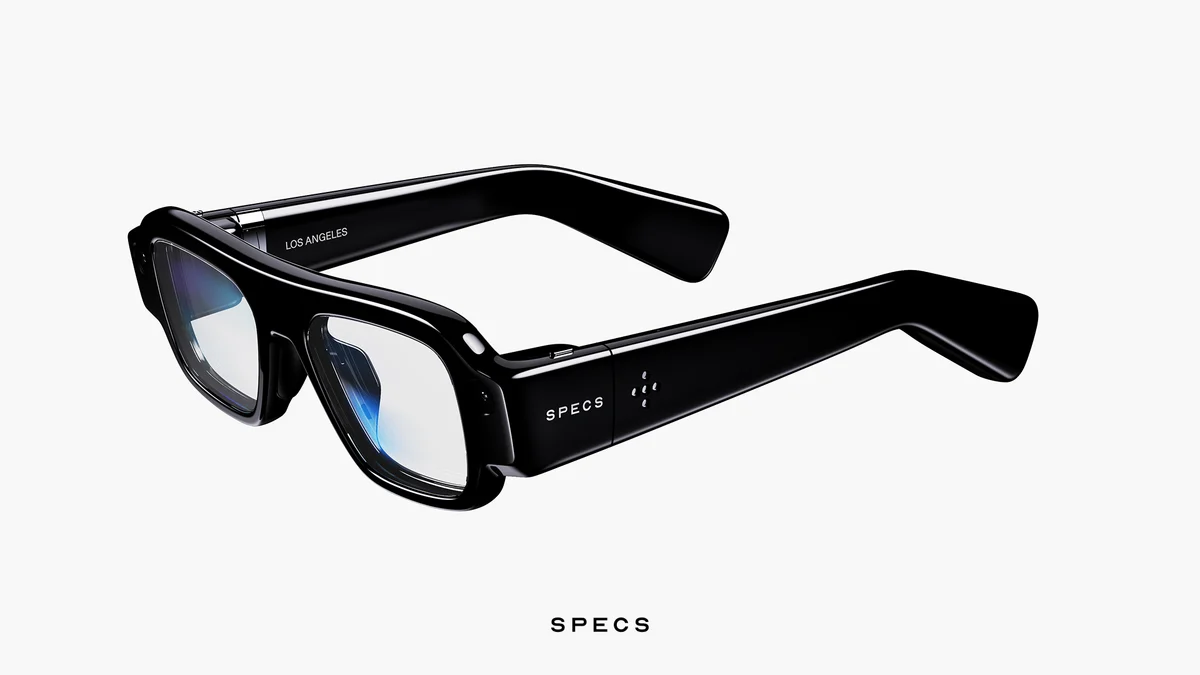
In a move that signals a definitive shift from social media software to hardware-centric spatial computing, Snap Inc. CEO Evan Spiegel recently took the stage to provide a live demonstration of the company’s latest technological milestone: the fifth-generation "Specs." Unlike previous iterations of Spectacles, which served primarily as camera-equipped sunglasses for social sharing, these new standalone true Augmented Reality (AR) glasses represent a bold attempt to leapfrog industry titans like Meta and Apple.
Priced at a premium $2,195, the Specs are positioned not as a mass-market consumer accessory, but as a sophisticated development platform and a statement of intent. By demonstrating a functional, tether-free AR experience live—including an official Harry Potter-themed interaction—Snap is attempting to prove that the future of computing isn’t just wearable, but ready for the real world today.
Main Facts: The Specs at a Glance
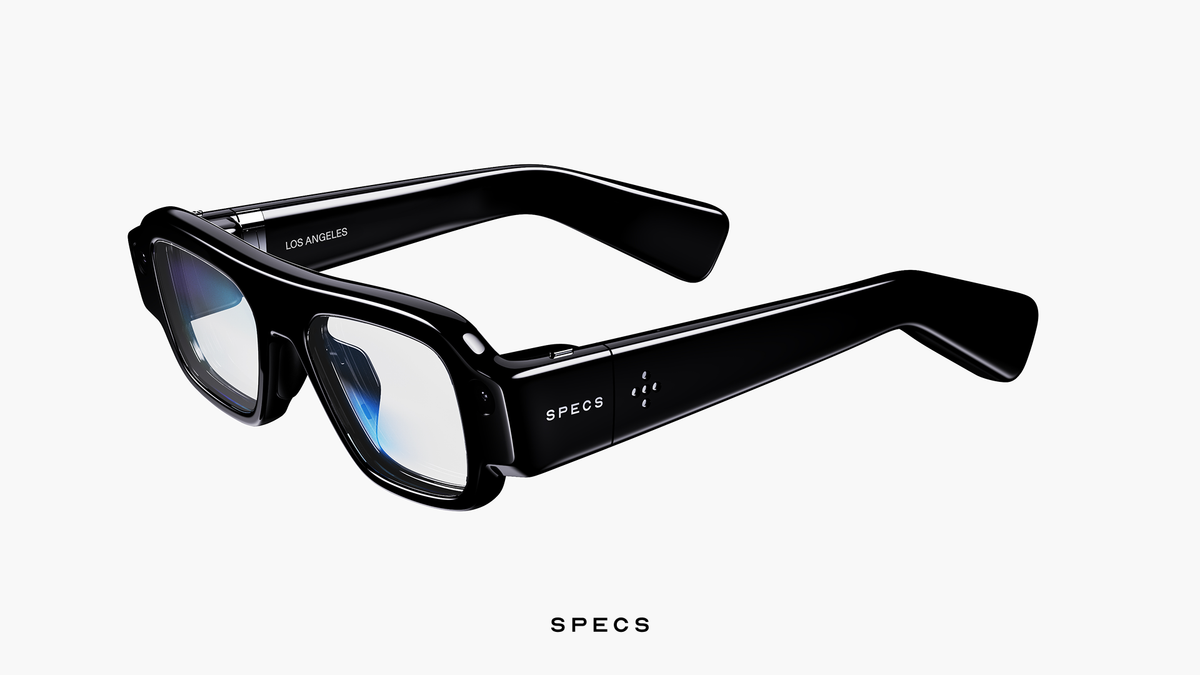
The latest iteration of Snap’s Specs marks a significant departure from the "Spectacles" branding of the past, opting for a moniker that suggests a more professional, utility-driven device. The hardware is designed to be entirely standalone, meaning it does not require a connection to a smartphone or a pocket-bound compute pack to function.
Key Technical Specifications
- Optics: True see-through AR powered by advanced waveguides and Liquid Crystal on Silicon (LCoS) projectors.
- Price Point: $2,195 (USD).
- Market Position: The first fully standalone true AR glasses available for purchase outside of the Chinese market.
- Operating System: Snap OS, a custom-built environment designed specifically for spatial interaction.
- Connectivity: Enhanced by an optional cellular charging case, allowing for on-the-go data without Wi-Fi dependence.
- AI Integration: A cross-platform AI agent capable of multimodal perception (seeing and hearing the user’s environment).
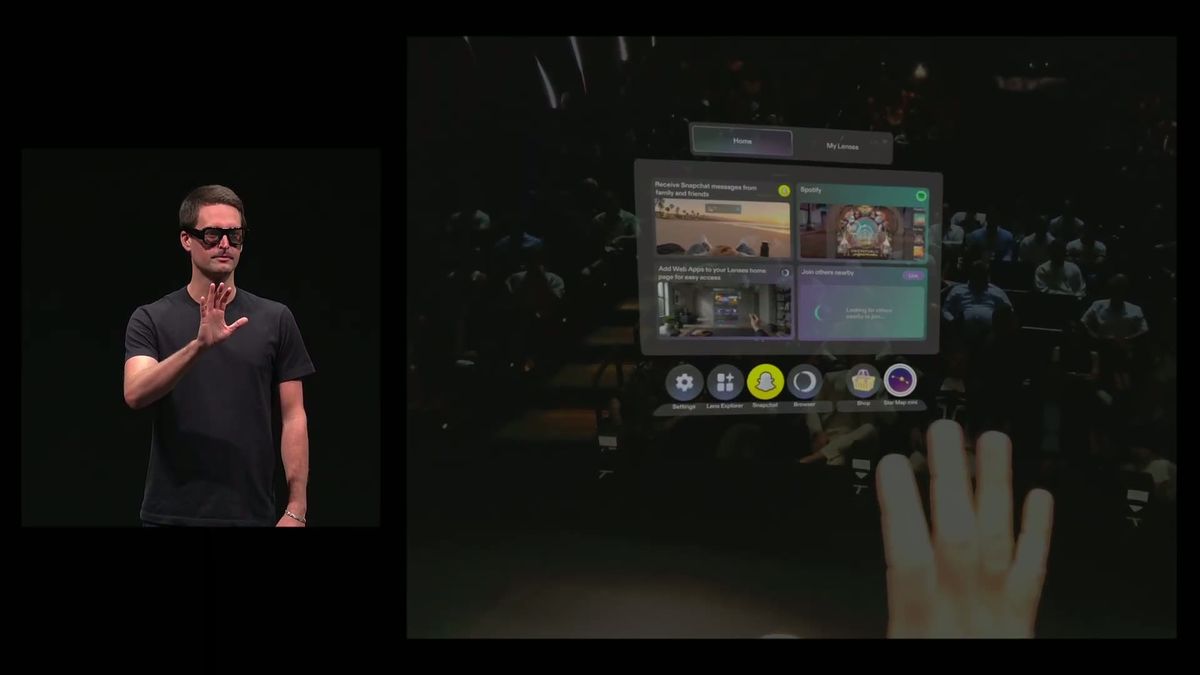
The live demo performed by Spiegel highlighted the device’s ability to render complex digital geometry over the physical world with low latency. Most notably, the partnership with HBO for a Harry Potter experience suggests that Snap is leaning heavily into high-value intellectual property to demonstrate the entertainment potential of spatial computing.
Chronology: The Long Road to "True AR"
Snap’s journey into hardware has been a decade-long exercise in persistence. To understand the significance of the current Specs, one must look at the evolution of the product line.
2016–2019: The Camera Era
Snap launched the original Spectacles in 2016 via "Snapbots"—bright yellow vending machines. These were simple: they recorded circular video and synced to the Snapchat app. While they garnered immense hype, they were ultimately a niche product. Versions 2 and 3 improved the aesthetics and added depth sensing, but they remained "smart glasses" rather than "AR glasses."
2021: The Developer Preview
In May 2021, Snap revealed its first "true" AR Spectacles. These featured dual waveguide displays but were never sold to the public. They were distributed to a select group of creators to experiment with Lens Studio. This version was criticized for its 30-minute battery life and limited field of view, but it served as the blueprint for the current model.
June 2024: Pre-orders Open
Snap officially opened pre-orders for the new $2,195 Specs. This announcement set the stage for a fall release in the United States, United Kingdom, and France. The price tag immediately signaled a shift in strategy, moving away from the $299 consumer impulse-buy territory into the professional hardware space.
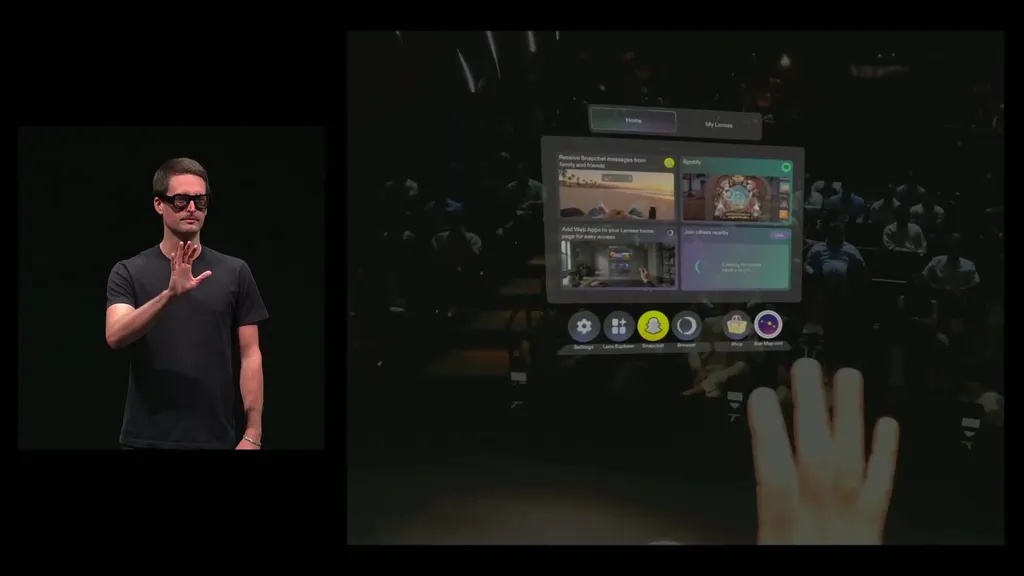
September 2024: The Live Demonstration
Spiegel’s live demo served as a "proof of life" for the hardware. By showing the device working in real-time on stage—avoiding the pitfalls of pre-rendered marketing "concept" videos—Snap sought to establish credibility in a field where many competitors (including Magic Leap and Meta) have struggled to ship consumer-ready standalone hardware.
Supporting Data: The Economics and Engineering of $2,195
The $2,195 price point has raised eyebrows, but it reflects the immense cost of miniaturizing spatial computing components. To achieve "true AR," Snap has had to balance three competing pillars of engineering: thermal management, optical clarity, and weight.
The Challenge of Standalone Computing
Most AR glasses on the market today (such as those from Xreal or Rokid) are "tethered," meaning they use a cable to plug into a phone or a puck. This offloads the battery and processor, keeping the glasses light. Snap’s Specs, however, house the processors (dual Qualcomm Snapdragon chips), batteries, and cooling systems within the frame itself. This requires a sophisticated thermal architecture to prevent the glasses from overheating against the user’s temples.
Optical Performance
The Specs utilize LCoS micro-displays. Unlike the passthrough AR of the Apple Vision Pro (which uses cameras to show you a video of the world), Snap uses see-through waveguides. This means the user is looking at the actual world through glass, with light projected into their eyes. While this preserves "human connection" and eye contact, it is significantly harder to achieve high brightness and a wide field of view (FoV). Current reports suggest the Specs offer a roughly 46-degree diagonal FoV—a significant jump from the 2021 model but still a fraction of the human visual field.

Software Ecosystem: Snap OS and Lens Studio
The hardware is only as good as the software. Snap’s advantage lies in its "Lens Studio" ecosystem, which boasts hundreds of thousands of developers who have already built millions of AR effects for the Snapchat app. By porting these capabilities to Snap OS, the company enters the market with a pre-existing library of content that Meta and Apple are still racing to build.
Official Responses: Evan Spiegel’s Vision
During the launch event, Evan Spiegel emphasized that the Specs are designed to enhance human relationships rather than replace them. This is a subtle but clear jab at "passthrough" headsets like the Apple Vision Pro or Meta Quest 3, which can feel isolating.
"Specs represent a new way to interact with the world and each other," Spiegel noted during the presentation. He argued that by keeping the user’s eyes visible and their hands free, AR can become a "natural extension" of the senses.
Snap executives have also addressed the price point, framing the $2,195 cost as part of a "Developer Program" philosophy. The goal is not to sell ten million units this year, but to put the most advanced AR tool in the hands of the people who will build the "killer apps" of the 2030s. The inclusion of a cellular charging case is a direct response to developer feedback regarding the need for "all-day connectivity" and the limitations of current battery technology.
Implications: The High-Stakes Battle for the Face
The release of the Specs carries heavy implications for the tech industry at large. Snap is currently caught in a "pincer movement" between Meta and Apple, yet it has managed to carve out a unique first-mover advantage in the standalone see-through category.
1. Beating Meta to the Punch
While Meta recently teased "Project Orion"—its own high-end AR glasses—they are currently estimated to cost $10,000 per unit to manufacture and are not for sale. Snap, by contrast, is shipping a product that people can actually buy. This gives Snap a crucial lead in gathering real-world usage data and developer loyalty.
2. The "Social Spatial" Paradigm
Snap’s integration of a cross-platform AI agent suggests that the future of AR is not just visual, but conversational. If the Specs can successfully use AI to understand what a user is looking at—such as identifying a plant or translating a menu—the device moves from a toy to a utility. The Harry Potter demo shows that entertainment will be the "hook," but AI utility will be the "glue" that keeps users wearing the device.
3. The Price of Entry
The $2,195 price tag creates a "luxury gate" for AR. This risks making the technology an elitist tool in the short term. However, history shows that hardware costs typically follow a "Wright’s Law" curve—as cumulative production doubles, costs fall. By starting at the high end, Snap is following the Tesla playbook: build a high-cost, low-volume "Roadster" to fund the development of a mass-market "Model 3."

4. The Privacy Frontier
As with any wearable with cameras, the Specs will reignite debates over privacy. Snap has attempted to mitigate this with prominent LED lights that signal when recording is taking place, but the "always-on" nature of an AI agent that "sees" through the user’s eyes remains a hurdle for social acceptance in public spaces.
Conclusion
Snap’s Specs are a gamble of immense proportions. At $2,195, they are a niche product for a niche audience. Yet, by successfully demoing a standalone, true AR experience live on stage, Evan Spiegel has proven that Snap is no longer just a "camera company" or a messaging app. It is a formidable hardware contender. Whether the Specs become the foundation of a new computing paradigm or remain an expensive curiosity for developers will depend on whether that Harry Potter magic can be translated into everyday, indispensable utility. For now, Snap has done what its larger rivals have yet to do: they have put the future on sale.