Transformers: Beyond Reality Redux — A Technical and Critical Analysis of the Meta Quest Port
The Transformers franchise has long been a cornerstone of global pop culture, transitioning from 1980s toy lines to multi-billion dollar cinematic spectacles. However, its history in the interactive medium has been a journey of peaks and valleys. The latest entry into this digital catalog, Transformers: Beyond Reality Redux, represents the brand’s attempt to solidify its presence in the virtual reality (VR) ecosystem.
Originally debuting on the PlayStation VR (PSVR) in 2022 and receiving a technical update for the PlayStation VR2 (PSVR2) in 2023, the title has now arrived on the Meta Quest platform. While the "Redux" suffix implies a refined, definitive version of the experience, the reality of the port suggests a significant compromise in visual fidelity and mechanical depth.
I. Main Facts: The Core Specifications
Transformers: Beyond Reality Redux is an arcade-style, on-rails first-person shooter (FPS) developed and published by META4 Interactive Inc. It seeks to transport players into the heart of the conflict between the Autobots and Decepticons, positioning the player as a human ally equipped with Cybertronian-enhanced weaponry.
Key Details at a Glance:
- Transformers: Beyond Reality Redux
- Platform: Meta Quest (Reviewed on Quest 3S)
- Developer/Publisher: META4 Interactive Inc.
- Release Date: September 10, 2026
- Genre: On-rails VR Shooter
- Price: $19.99 USD
- Campaign Structure: 6 Narrative Stages plus an Endless Arcade Mode
The game utilizes an "on-rails" movement system, a classic arcade trope where the player’s forward progression is controlled by the software, allowing the user to focus entirely on aiming and defensive maneuvers. This design choice is intended to simplify the VR experience and mitigate motion sickness, though it places a heavy burden on the combat mechanics to provide the necessary engagement.
II. Chronology: From Console Roots to Mobile VR
To understand the current state of Beyond Reality Redux, one must look at the developmental timeline of the project.
- The 2022 Debut (PSVR): The original Transformers: Beyond Reality launched during the twilight of the first-generation PlayStation VR. It was met with modest reviews, praised for its use of the license but criticized for its repetitive gameplay.
- The 2023 Surprise (PSVR2): In a move that caught the VR community off guard, META4 Interactive released a PlayStation VR2 version. This iteration took advantage of the PS5’s hardware, offering improved haptics, higher resolution, and better lighting effects.
- The 2026 Meta Quest Launch (Redux): The "Redux" version marks the game’s transition to standalone VR. Released on September 10, 2026, this port was designed to bring the Transformers experience to the largest install base in VR. However, the transition from tethered console hardware to the mobile chipset of the Quest series necessitated significant architectural changes.
While the "Redux" version claims to add minor gameplay improvements—such as balance tweaks and refined tracking—the chronological progression shows a downward trend in visual complexity as the game moved from high-end consoles to standalone mobile units.
III. Supporting Data: Analyzing the Gameplay and Technical Deficiencies
The critical reception of Beyond Reality Redux hinges on three primary pillars: mechanical feedback, enemy variety, and visual presentation. Based on extensive testing on the Quest 3S, the data points toward a product that struggles to meet the standards of modern VR titles.
1. Mechanical Feedback and Combat Loop
In an on-rails shooter, the "feel" of the weaponry is paramount. Classic examples like Time Crisis or The House of the Dead relied on physical recoil or satisfying environmental destruction to maintain player interest. Beyond Reality Redux fails to replicate this satisfaction.
- Weaponry: The primary weapon functions as a continuous-fire laser. Testers noted a lack of "weight" or "force" in the shooting. The firing rate is described as sluggish, and the haptic feedback provided by the Quest controllers is insufficient to simulate the power of a giant robot-slaying weapon.
- Defense: Players are equipped with a shield and a sword for deflecting incoming projectiles. While functional, these mechanics often feel like chores rather than strategic choices. The game’s difficulty curve is notably flat, allowing players to "tank" damage with little consequence, which further devalues the defensive mechanics.
2. Enemy Diversity and AI Patterns
The game features six stages, each culminating in a boss battle against an iconic Decepticon. However, the path to these bosses is populated by a limited roster of generic enemies.
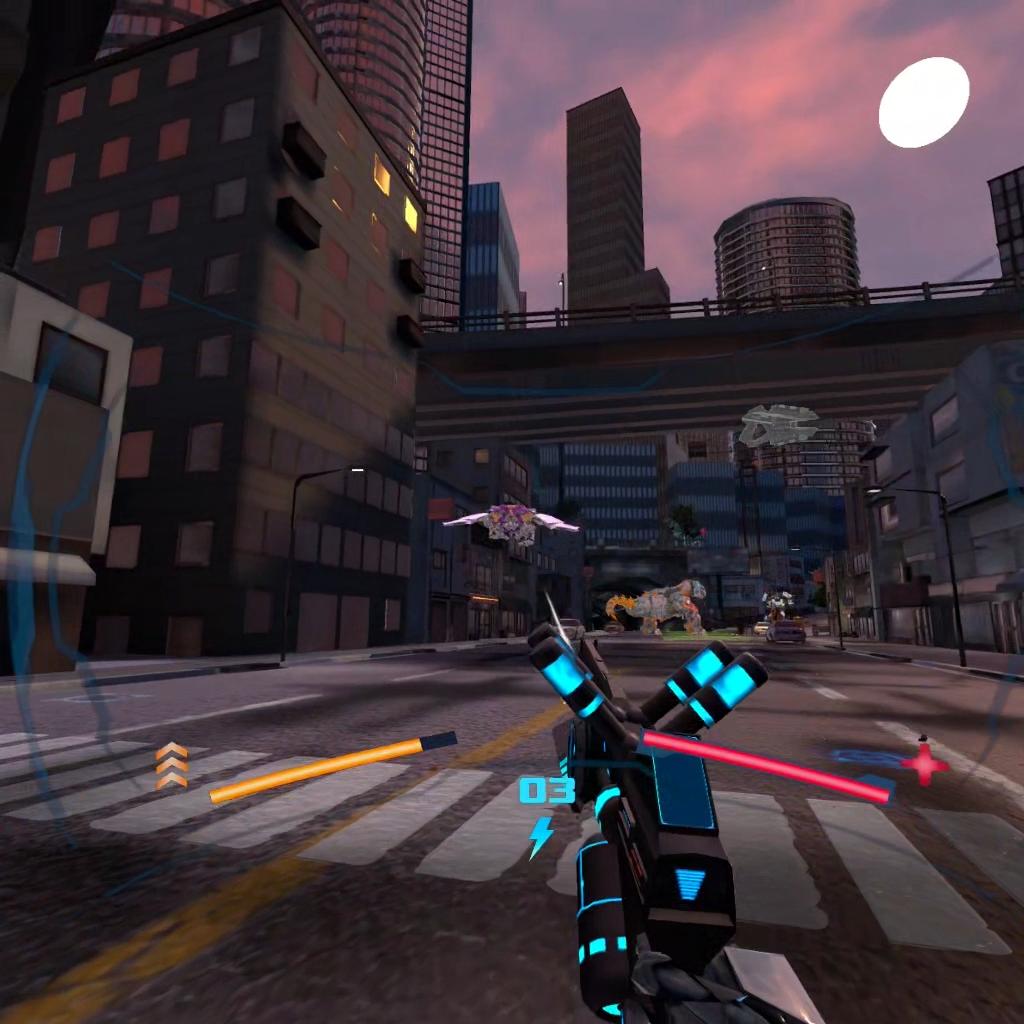
- Repetition: The same drone models appear across multiple environments. Their attack patterns are predictable, typically floating into the field of view and firing slow-moving projectiles.
- Interaction: There is a distinct lack of environmental interaction. Unlike contemporary VR shooters where the environment can be used tactically, the world of Beyond Reality Redux remains static and unresponsive to the player’s actions.
3. Technical Performance and Visual Fidelity
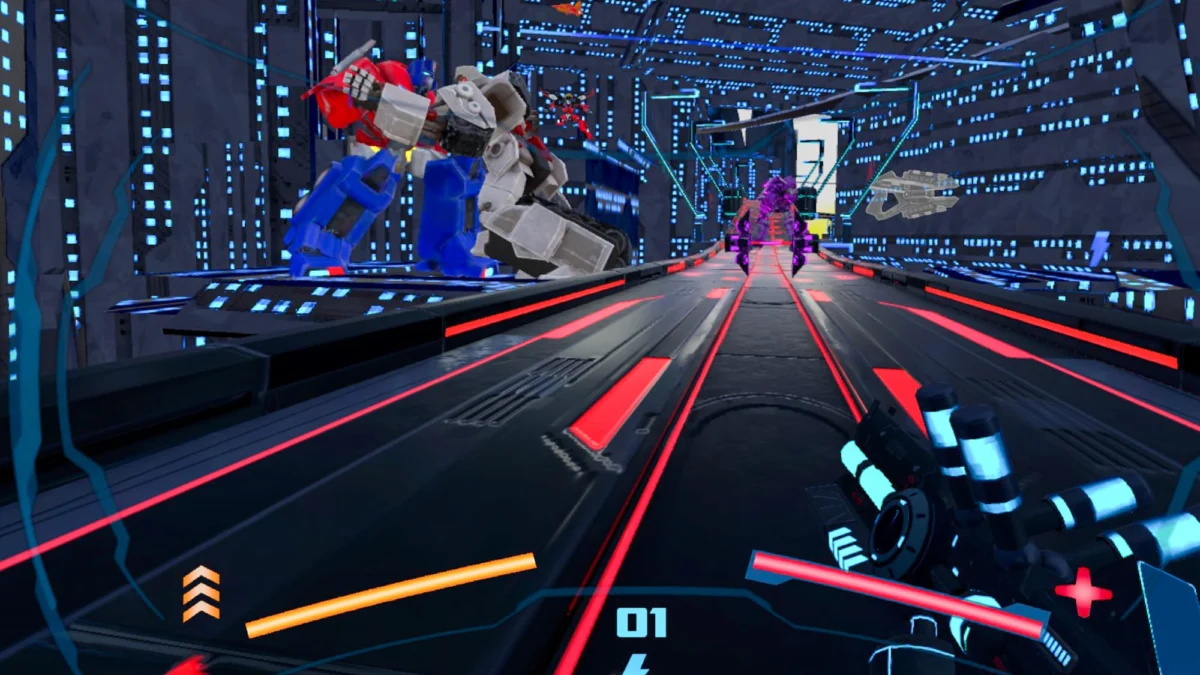
The most striking data point is the visual disparity between the Quest port and its predecessors.
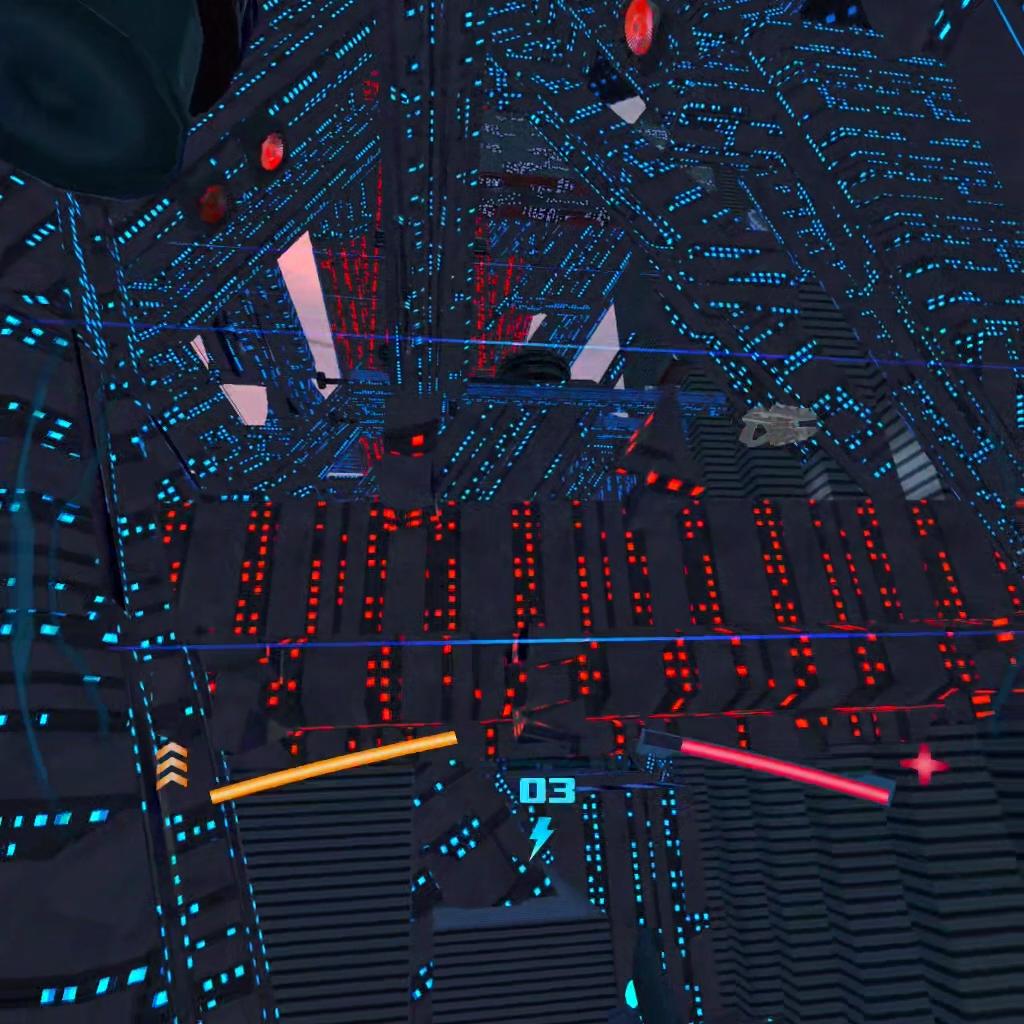
- Texture Mapping: Large sections of the environment appear to lack high-resolution textures, resulting in flat, monochromatic surfaces.
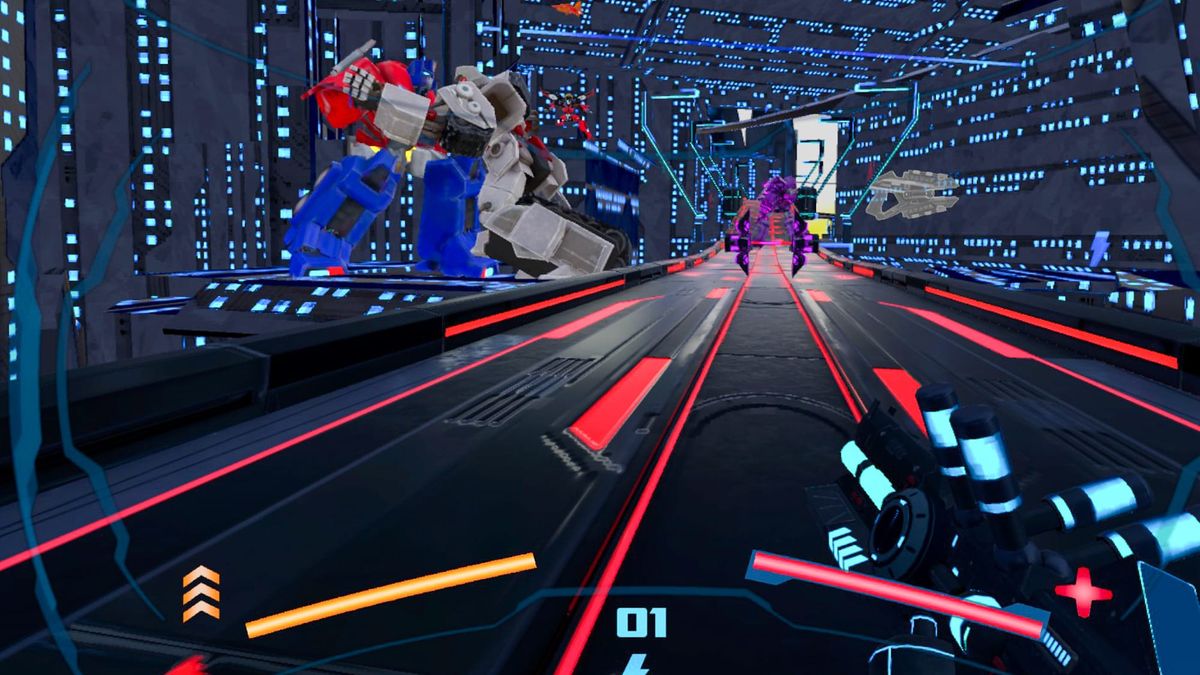
- Character Models: While the giant Transformers (Optimus Prime, Bumblebee, etc.) maintain their scale, their models lack the intricate "weathering" and mechanical detail seen in the PSVR2 version.
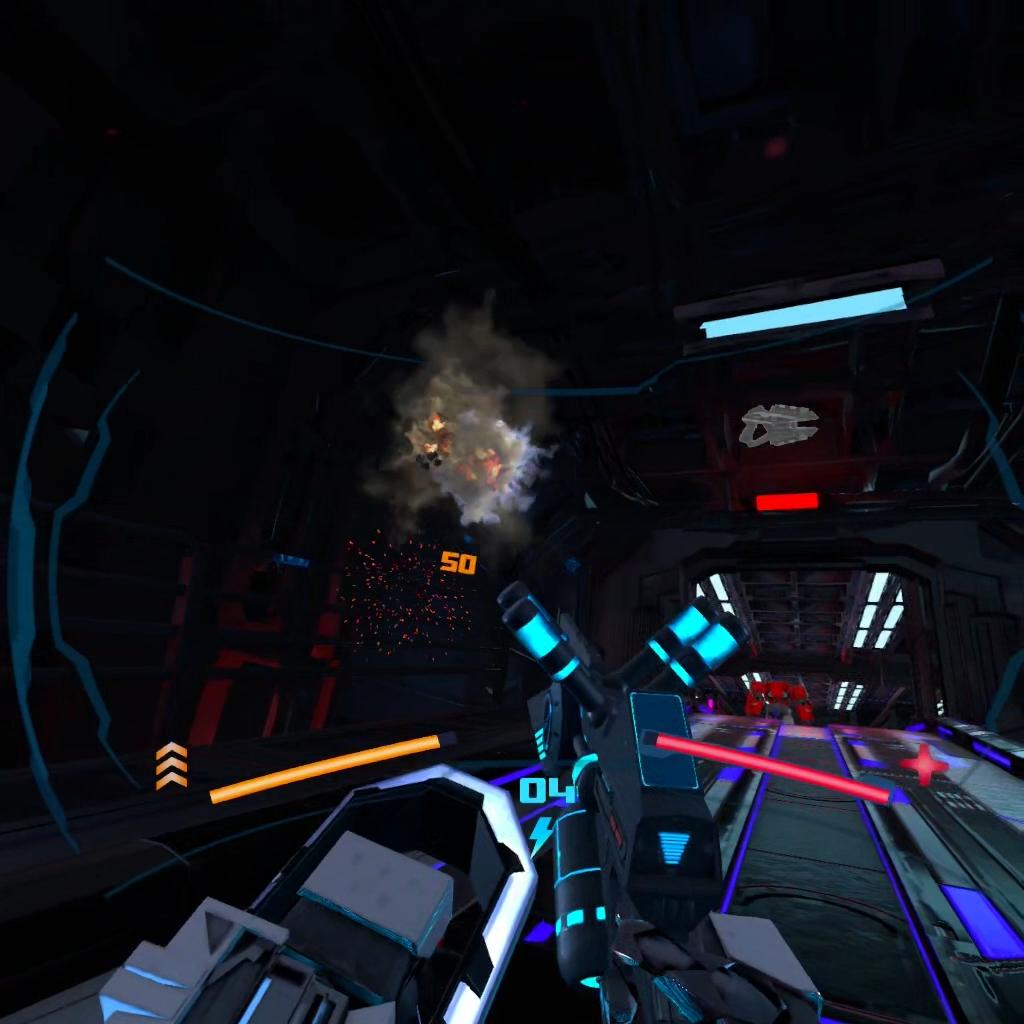
- Lighting and Effects: The dynamic lighting system has been significantly scaled back. Explosions, which should be a highlight of a Transformers game, are small, brief, and lack the visual "punch" required to make the player feel like they are in a high-stakes battle.
IV. Official Responses and Positioning
While META4 Interactive has not issued a formal "defense" of the port’s visual downgrades, the "Redux" branding itself serves as the official positioning for the title. By labeling it a "Redux," the developers are signaling that this is the optimized version for the Meta ecosystem.
The developer’s intent appears to be accessibility. By pricing the game at $19.99, they are positioning it as a "budget" or "entry-level" VR experience. This price point is often used to justify shorter campaign lengths and less complex graphics. Furthermore, the inclusion of an "Endless Arcade Mode" is an attempt to address concerns regarding the game’s longevity, providing a repeatable loop for players who enjoy the core shooting mechanic.
From a comfort standpoint, the developers have prioritized a "Comfortable" rating. The on-rails movement is intentionally slow, and the game offers both seated and standing modes. This indicates that the target demographic includes younger fans of the franchise and VR newcomers who may be susceptible to motion sickness.
V. Implications: The Future of Licensed VR Content
The release of Transformers: Beyond Reality Redux carries several implications for the VR industry and the future of licensed gaming.
1. The "Quest Port" Dilemma
This release highlights the ongoing challenge for developers moving from high-powered PC/Console VR to standalone headsets. There is a fine line between "optimization" and "diminishment." When a port loses too much of its visual soul, it risks alienating the very fans it seeks to attract. Beyond Reality Redux serves as a cautionary tale that a recognizable brand name cannot always compensate for technical shortcomings.
2. The Value Proposition of VR Shooters
In a market saturated with high-quality shooters like Pistol Whip, Superhot VR, and Resident Evil 4, a $20 price tag is no longer a shield against criticism. Consumers expect a level of polish and "juice" (satisfying visual/auditory feedback) that Beyond Reality Redux currently lacks. The implication for the market is that even licensed IP must compete on a mechanical level with indie hits.
3. Brand Management
For the Transformers brand, this game represents a missed opportunity to leverage VR for "scale." The most successful moments in the game are when players stand at the feet of a ten-story-tall Optimus Prime. If future titles can marry that sense of scale with engaging, modern gameplay, the franchise could thrive in VR. As it stands, Beyond Reality Redux feels more like a relic of an older era of gaming—a "PowerPoint presentation" of action rather than the action itself.
Final Assessment
Transformers: Beyond Reality Redux is a functional but uninspired port. For die-hard fans of the series who only own a Meta Quest, there may be a fleeting novelty in seeing Megatron in 3D. However, for the broader VR community, the game’s lack of polish, downgraded visuals, and humdrum combat make it difficult to recommend. It serves as a reminder that in the world of Virtual Reality, being "Beyond Reality" is only half the battle; the other half is being fun.