Beyond the Big Screen: A Definitive Guide to Immersive Cinema on Apple Vision Pro and Meta Quest

The promise of virtual reality (VR) and spatial computing has always centered on the "presence" of the user—the feeling of being elsewhere. However, as many early adopters of the Apple Vision Pro and Meta Quest 3 have discovered, simply strapping a screen to one’s face does not guaranteed a transformative experience. For many, the initial excitement of a "giant virtual screen" quickly fades when viewing standard 2D content that was never designed for an immersive medium.
The true potential of these headsets lies in a burgeoning genre of entertainment: content made specifically for VR. From 8K stereoscopic thrillers to interactive "diorama" mysteries, the landscape of digital storytelling is shifting. This report explores the premier titles currently available, the technical evolution of the medium, and the implications for the future of the cinematic arts.
1. Main Facts: The State of Immersive Entertainment in 2024
The current VR entertainment market is bifurcated into two primary ecosystems: the high-fidelity, curated library of Apple Immersive Video and the diverse, interactive, and often indie-driven world of the Meta Quest Store and SteamVR.
The Three Pillars of VR Content
To understand the current market, one must distinguish between three distinct formats:
- Scripted Immersive Video (180°/360°): Filmed with specialized camera rigs, these provide a "window" into a 3D world. Apple’s 180-degree, 8K format is currently the gold standard for visual fidelity.
- Interactive VR Films: These are real-time rendered experiences (like video games) where the viewer can often move their head to change perspectives or interact with objects, creating a sense of "being inside" an animated world.
- Enhanced 3D Cinema: Traditional Hollywood blockbusters (e.g., Avatar) converted for 3D. While not "native VR," the absence of "ghosting" and the high brightness of modern headsets make this the superior way to consume 3D films compared to traditional theaters.
Hardware Comparison: A Summary
| Feature | Meta Quest 3 / 3S | Apple Vision Pro |
|---|---|---|
| Primary Strength | Interactive stories & YouTube VR | Premium 8K 3D & Spatial Audio |
| Best App | Meta Horizon TV / Bigscreen | Apple TV / Disney+ |
| Content Library | Massive, diverse, indie-heavy | Curated, high-production value |
| Price Point | Consumer-friendly ($299 – $499) | Enterprise/Prosumer ($3,499) |
2. Chronology: From 360-Degree Experiments to Spatial Masterpieces
The journey toward immersive cinema has been one of trial and error, moving from low-resolution novelty to high-fidelity narrative.
- 2016–2018: The "360-Degree" Boom. Early VR headsets relied heavily on monoscopic 360-degree videos. While novel, the lack of depth (3D) and low resolution often led to "screen door effect" and motion sickness. Titles like Invasion! (2016) proved that animation was the most viable path forward for the hardware of the era.
- 2019–2021: The Rise of Interactive Narratives. With the launch of the Oculus Quest, developers began focusing on 6-Degrees-of-Freedom (6DOF) experiences. Madrid Noir and The Line showcased how users could exist within a "diorama," moving their bodies to look around corners of a digital set.
- 2022–2023: Documentary Excellence. Projects like Space Explorers: The ISS Experience pushed the boundaries of what was possible with physical camera rigs, capturing the most realistic footage of space ever recorded.
- 2024: The Apple Immersive Era. With the launch of the Vision Pro, Apple introduced a proprietary 180-degree 3D video format. This eliminated the "stretched" look of 360-degree videos by focusing all pixels in front of the viewer, paired with high-bitrate 8K resolution.
3. Supporting Data: Curated Recommendations for the Modern Viewer
To assist users in navigating this complex landscape, we have categorized the most significant titles by their strengths and platform availability.
Top-Tier Narrative and Documentary Experiences
| Title | Format | Platform | Why It Matters |
|---|---|---|---|
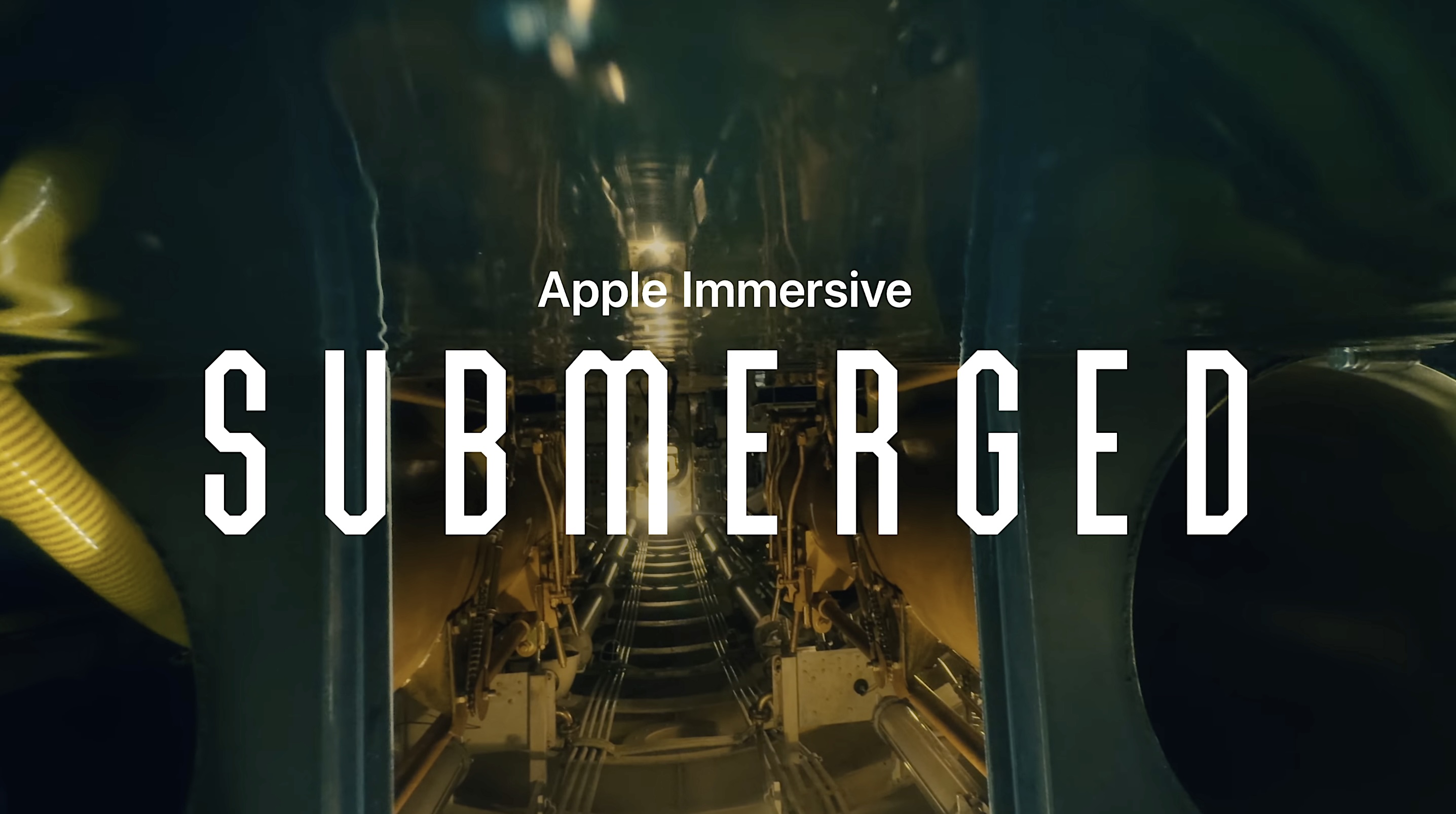
| Submerged | 180° 3D Video | Apple Vision Pro | The first scripted blockbuster-quality VR thriller. |
| Space Explorers | 360° 3D Video | Meta Quest | The definitive documentary on life in orbit. |
| Madrid Noir | Interactive 6DOF | Quest / SteamVR | A stylish mystery that feels like a live stage play. |
| Notes on Blindness | Interactive Audio/Visual | Quest / PC VR | An emotional masterpiece using VR to simulate sight loss. |
| Traveling While Black | 360° 3D Video | Quest / Multi | Uses "presence" to deepen the impact of historical testimony. |
The "Diorama" Effect: Animation in VR
Animation remains the most comfortable way to experience VR. Unlike live-action, which can look "uncanny" if the resolution is slightly off, animated worlds like Gloomy Eyes or Namoo allow the viewer to feel like they are looking into a magical, handcrafted toy box.
- Wolves in the Walls: This title is frequently cited by industry experts as a benchmark for character interaction. The protagonist, Lucy, acknowledges the viewer’s presence, bridging the gap between audience and participant.
- The Line: Winner of a Primetime Emmy, this short film uses simple hand interactions to guide a miniature romance, making it the ideal "first-time" experience for those who do not play video games.
The 3D Cinema Library: A Resurgence
While 3D TV died in the 2010s, VR has resurrected it. On the Apple Vision Pro, the Disney+ and Apple TV apps offer a library of 3D titles that surpass the theatrical experience in clarity and depth.
- Avatar: The Way of Water: The gold standard for 3D depth.
- Dune: Part Two: The scale of the sandworms is uniquely terrifying when they occupy a 100-foot virtual screen.
- Gravity: The sense of vertigo and isolation in space is amplified by the total immersion of a headset.
4. Official Responses and Industry Context
Major players in the tech and film industries have begun to weigh in on the necessity of "spatial" storytelling.
Apple’s Strategy: Apple has positioned "Apple Immersive Video" as a new category of filmmaking. By providing directors with specialized 8K camera systems and proprietary post-production tools, they are attempting to solve the "content gap" that plagued previous VR launches. Their release of Submerged, directed by Edward Berger (All Quiet on the Western Front), signals a move to bring Academy Award-level talent into the spatial fold.
Meta’s Ecosystem: Meta has focused on the "social" and "interactive" aspects of cinema. Through Meta Horizon TV, they have democratized access to 180-degree sports and concert content. However, Meta’s library relies more heavily on third-party creators and "YouTube VR" style uploads, which vary significantly in quality.
The Filmmaker’s Perspective: Directors working in the medium note that the "language of film" must be rewritten for VR. Traditional techniques—such as fast cuts, shaky cams, and extreme close-ups—often cause physical discomfort in a headset. Instead, VR filmmaking requires "long takes" and "spatial blocking," where the director guides the viewer’s eye through sound and lighting rather than forced camera movement.
5. Implications: The Future of the "Gaze"
The transition from 2D screens to immersive environments carries profound implications for the future of entertainment and human psychology.
The End of the "Frame"
For over a century, cinema has been defined by the frame—the director chooses exactly what you see. In VR, the viewer regains agency. This shift from "storytelling" to "story-living" changes the emotional weight of the content. In Traveling While Black, sitting in a booth at a real DC diner while hearing stories of the Civil Rights movement creates a level of empathy that a flat television screen struggle to replicate.
Technical Hurdles and the "Uncanny Valley"
Despite the progress, several challenges remain:
- Bitrate and Resolution: To truly fool the human eye, 16K resolution per eye is likely required. Current 8K streams are impressive but still fall short of "indistinguishable from reality."
- Comfort and Ergonomics: The "binge-watching" culture is difficult to sustain when wearing a 600-gram device on the face.
- Motion Sickness: Until "vestibular-visual" mismatch is solved, high-action content (like drone racing or roller coasters) will remain a niche for those with "VR legs."
Conclusion
We are currently in the "silent film era" of spatial computing. The titles mentioned in this report—Submerged, Space Explorers, and Madrid Noir—are the pioneers of a new art form. While Netflix and other traditional streaming giants have been slow to adopt native VR apps, the investment from Apple and Meta ensures that the medium is moving beyond tech demos and into the realm of legitimate, high-art cinema. For the user, the message is clear: if you are only using your headset to watch 2D movies, you are only seeing half the picture.