Breaking the Silence: Inside the Controversial U.S. Release of ‘NAZA’ and the New Frontier of Independent Distribution
In an era where the intersection of geopolitical conflict and investigative cinema has never been more volatile, few films have generated as much friction as NAZA. The new documentary, helmed by Israeli filmmakers Yuval Abraham and Rachel Szor, has emerged from the fall festival circuit not merely as a piece of acclaimed cinema, but as a significant political flashpoint. As it prepares to debut in U.S. theaters next month, the film is bypassing the traditional Hollywood distribution apparatus in favor of an unconventional, rapid-response strategy led by international media heavyweights.
NAZA—an unflinching examination of the Israeli military’s internal mechanisms and its aerial campaign in Gaza—is set to challenge both the cinematic landscape and the political discourse surrounding the ongoing conflict. By utilizing a distribution model designed to circumvent potential censorship and commercial hesitation, its creators are signaling a new era of "guerrilla" high-end documentary release.
The Core Revelation: Whistleblowers and the Mechanics of Warfare
At its heart, NAZA is a cinematic extension of years of rigorous investigative journalism. The documentary centers on interviews with 24 whistleblowers from within the Israeli military and intelligence apparatus. These individuals provide a rare, behind-the-curtain look at the protocols governing Israeli airstrikes in Gaza, detailing the decision-making processes that lead to the destruction of targets and the high toll on Palestinian civilian life.
The filmmakers, Abraham and Szor, have long been voices of dissent within the Israeli media landscape. Their work seeks to peel back the layers of what they describe as a "systemic dehumanization" required to maintain a prolonged military occupation and an intensive bombing campaign. The film does not merely document the aftermath of strikes; it interrogates the "inner workings" of the system—the algorithms, the command structures, and the psychological frameworks that allow for mass casualties.
In a joint statement, the filmmakers noted: “We made this film out of a sense of obligation to use our position as Israeli filmmakers and journalists to examine the systems behind the mass killing of Palestinian civilians for which our country is responsible.” This mission statement underscores the film’s primary objective: to transform classified or obscured military data into a visceral, public moral inquiry.
A Timeline of Rapid Ascent: From Venice to New York
The trajectory of NAZA has been remarkably swift, reflecting the urgency of its subject matter. Unlike many documentaries that spend years on the festival circuit seeking a home, NAZA has moved from its world premiere to a theatrical rollout in a matter of weeks.
- September 2024: NAZA premiered at the Venice International Film Festival. It was immediately hailed by critics for its technical precision and its bravery, ultimately securing the Special Jury Prize—a prestigious honor that signaled its importance to the global film community.
- September 26, 2024: The film is scheduled for its North American premiere at the New York Film Festival (NYFF). This selection is significant, as NYFF often serves as the primary gatekeeper for films aiming for Academy Award consideration and high-brow intellectual engagement.
- September 30, 2024: Following its NYFF debut, the film will begin its exclusive theatrical run at the IFC Center in Manhattan.
- October 9, 2024: The release will expand into Los Angeles and other major metropolitan markets, with a wider national rollout planned for the following weeks.
This compressed timeline is a deliberate choice. The producers believe that the film’s relevance is tied to the current news cycle, and waiting for a traditional 2025 release would diminish its impact as a tool for public discourse.

The Distribution Strategy: Bypassing the Gatekeepers
The most notable business aspect of NAZA is its lack of a traditional U.S. distributor. Usually, a film of this pedigree—a Venice winner with rave reviews—would be the subject of a bidding war between specialized outfits like A24, Neon, or Sony Pictures Classics. However, the controversial nature of the film’s content, which directly critiques the Israeli Defense Forces (IDF), likely made traditional distributors wary of political blowback or organized boycotts.
Recognizing these hurdles, the film’s producers—the British news outlet The Guardian and the French film giant mk2—opted to lead the distribution themselves. They have assembled an ad-hoc team of U.S. and international consultants to manage the theatrical logistics.
This move is a direct response to the challenges faced by Abraham and Szor’s previous work, No Other Land. That film, which explored the forced displacement of Palestinians in the West Bank, won major awards at the Berlin International Film Festival but struggled to find a foothold in American theaters. Distributors were reportedly hesitant to touch a film that was being labeled as "anti-Israel" by certain political factions. By self-distributing NAZA, the filmmakers ensure that the "silence" they seek to break isn’t reinforced by the commercial caution of Hollywood executives.
Supporting Data: The Journalistic Foundation
NAZA is not an isolated creative endeavor; it is the culmination of a massive collaborative investigation. Much of the data and many of the revelations featured in the film were developed in tandem with The Guardian, +972 Magazine, and Local Call.
Earlier this year, these outlets published groundbreaking reports on the Israeli military’s use of artificial intelligence (AI) to generate target lists in Gaza. These reports—which detailed systems like "Lavender" and "Where’s Daddy?"—revealed how technology was being used to automate the identification of targets, often with minimal human oversight and a high tolerance for civilian "collateral damage."
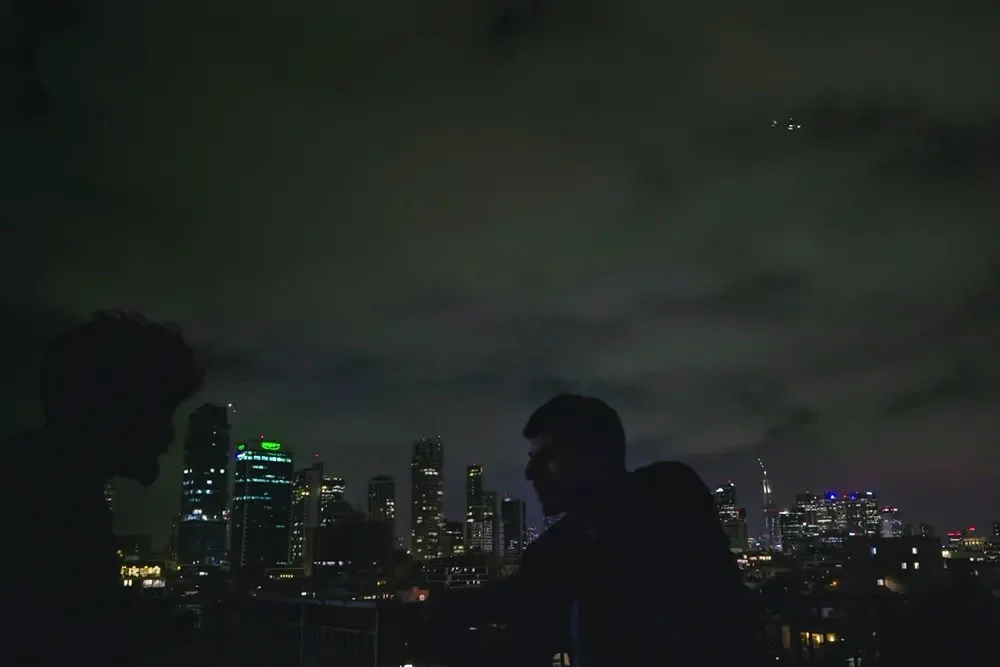
The documentary provides the visual and emotional context that investigative prose often lacks. While the articles provided the statistics and the technical descriptions, the film captures the faces of those who operated the systems and the haunting silence of the Tel Aviv rooftops where the filmmakers spent three years documenting the military’s nocturnal operations. This synergy between "hard" investigative journalism and "soft" cinematic storytelling provides NAZA with a level of evidentiary weight that is difficult for critics to dismiss as mere propaganda.
Official Responses: A State in Opposition
The reaction from the Israeli government and military establishment has been swift and severe, further elevating the film’s profile as a "subversive" document.

The IDF Response:
General Eyal Zamir, the Director General of Israel’s Ministry of Defense and former IDF Deputy Chief of Staff, has been vocal in his opposition. Zamir has reportedly pledged to use "every tool at our disposal" to halt the film’s dissemination, citing concerns over the exposure of classified military protocols and the potential for the film to incite international legal action against Israeli soldiers.
The Political Response:
Prime Minister Benjamin Netanyahu has also weighed in, albeit indirectly, by floating the idea of stripping Israeli citizenship from individuals who share classified information that "harms the state’s security." While NAZA was not mentioned by name in every instance, the timing of these statements—coinciding with the film’s festival success—has been interpreted by civil rights groups as a direct threat to the 24 whistleblowers who appear in the documentary.
These responses have created a "Streisand Effect," where the government’s attempts to suppress the film have only increased international curiosity and reinforced the filmmakers’ narrative that the state is desperate to maintain a veil of secrecy over its military operations.
Implications: Cinema as a Tool of Accountability
The release of NAZA carries profound implications for the future of documentary filmmaking and the ethics of wartime reporting.
- The Rise of "Media-Led" Distribution: By having The Guardian act as a distributor, the line between "news" and "cinema" continues to blur. This suggests a future where legacy media organizations don’t just report the news but also produce and distribute the primary cultural artifacts that define the public’s understanding of events.
- The Ethics of Internal Dissent: NAZA highlights a growing rift within Israeli society itself. The fact that 24 members of the military were willing to speak—at great personal and legal risk—suggests a significant internal struggle regarding the morality of modern warfare. The film serves as a platform for a specific type of Israeli patriotism: one that believes the only way to save the country is to expose its darkest actions.
- The Impact of AI in Modern Combat: As the first major documentary to deeply investigate AI-driven warfare, NAZA will likely be cited in future debates regarding international law and the Geneva Conventions. It raises the question: who is responsible when an algorithm chooses a target?
- The Breaking of Silence: As Abraham and Szor noted, their goal was to explore "not only the words being said but also those that are not said, the silence." By bringing these voices to American screens during an election year and a period of heightened campus and social activism, NAZA is poised to be more than a movie; it is a catalyst for a global conversation on accountability, dehumanization, and the cost of silence.
As NAZA opens at the IFC Center on September 30, the world will be watching to see if the film can translate its festival accolades into a broader movement for transparency. In a landscape often dominated by curated narratives, NAZA stands as a stark, independently-driven reminder of the power of the whistleblower and the lens.