The Kryptonian Crisis: Inside DC’s Historic and Persistent Box Office Struggle
The cinematic landscape of the 2020s has been defined by a shifting tide in the superhero genre, but for Warner Bros. and DC Studios, that tide has often felt like a relentless undertow. Despite high-profile leadership changes, expensive rebrands, and the occasional billion-dollar outlier, DC is currently navigating one of the most significant and sustained box office "bad streaks" in the history of mainstream Hollywood.
While 2025’s Superman appeared to signal a definitive turning point for the brand, the recent commercial failure of Supergirl: Woman of Tomorrow (2026) has reignited concerns that the "DC brand" remains a difficult sell to a global audience increasingly wary of caped crusaders.
Main Facts: The Supergirl Stumble and the DCU Paradox
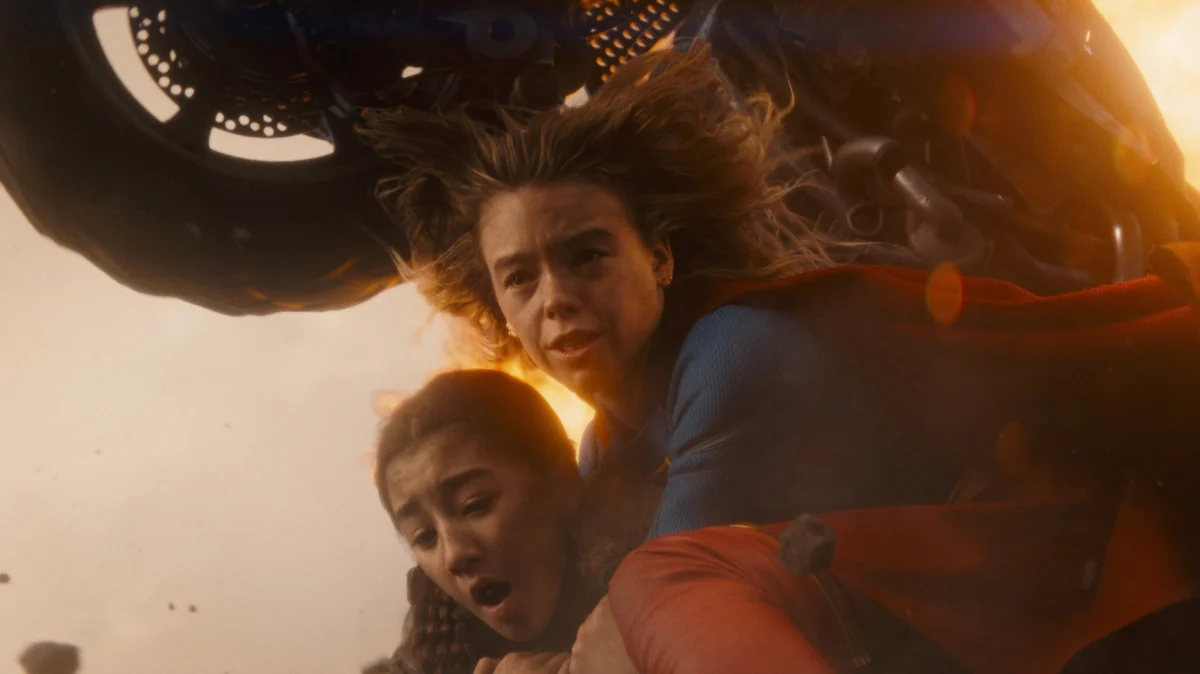
The latest data point in this troubling trend is the performance of Supergirl: Woman of Tomorrow. Despite positive critical buzz and the momentum generated by James Gunn’s successful Superman reboot a year prior, Supergirl has faltered significantly. On a reported production budget of $170 million—not including a global marketing campaign likely exceeding $100 million—the film is projected to finish its theatrical run with less than $200 million worldwide.
In the modern accounting of tentpole filmmaking, these numbers represent a substantial loss for Warner Bros. Discovery. This failure is particularly stinging because it follows the massive success of Superman (2025), which earned $618 million and was hailed as the "savior" of the franchise. The disparity between these two films suggests that while audiences may still show up for the "Big Three" (Superman, Batman, Wonder Woman), the broader DC Universe remains on shaky ground.
Since 2020, Warner Bros.’ DC output has generated approximately $3.8 billion in global box office revenue across 13 theatrical releases. While that figure sounds impressive in isolation, it was achieved against a staggering combined production budget of roughly $2.2 billion. When accounting for the theaters’ 50% cut of ticket sales and the massive marketing spends, the profitability of the DC slate over the last six years is remarkably thin, if not net-negative.
Chronology: A Decade of Turbulence (2013–2026)
To understand the current crisis, one must look at the foundation of the modern DC cinematic era. The journey began with Zack Snyder’s Man of Steel in 2013, a film that performed well ($668 million) but divided critics and fans. This polarization became a recurring theme.
The Rise and Fall of the DCEU (2016–2019)
The "DC Extended Universe" (DCEU) hit its first major wall with 2017’s Justice League. Following the lukewarm reception of Batman v Superman: Dawn of Justice and Suicide Squad (2016), Justice League became a notorious production disaster. Its failure to cross $700 million on a $300 million budget effectively ended the "Snyderverse" era and sent the studio into a tailspin of reactive decision-making.
There were bright spots: Wonder Woman (2017) and Aquaman (2018) were genuine hits, with the latter crossing the $1 billion mark. However, these successes felt like isolated events rather than the result of a cohesive brand strategy.
The Pandemic and the "Project Popcorn" Era (2020–2021)
The COVID-19 pandemic dealt a heavy blow to DC. Birds of Prey (2020) saw its run cut short, earning only $205 million. More controversially, Warner Bros. opted for a day-and-date release strategy on HBO Max for Wonder Woman 1984 and James Gunn’s The Suicide Squad (2021). While these films were hampered by theater closures, their box office totals ($169 million and $168 million, respectively) were catastrophic compared to their $180 million+ budgets.
The Year of Disasters (2023)
If 2021 was a pandemic anomaly, 2023 was a systemic failure. DC released four major films, and none were hits:
- Shazam! Fury of the Gods: $134 million (Budget: $125M)
- The Flash: $271 million (Budget: $200M+)
- Blue Beetle: $130 million (Budget: $120M)
- Aquaman and the Lost Kingdom: $440 million (Budget: $205M)
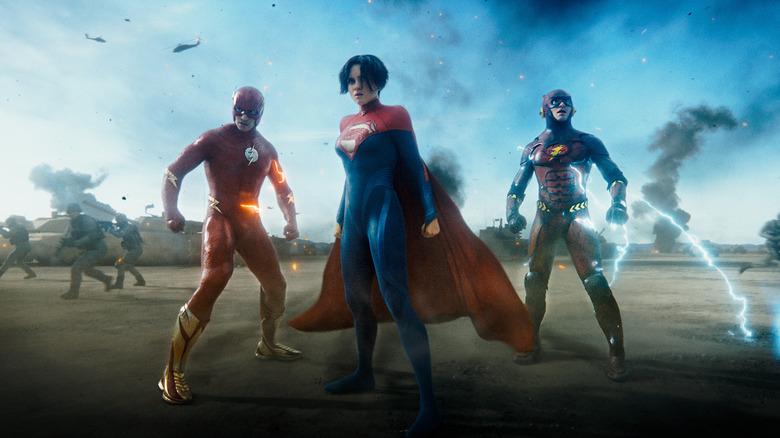
The Flash, in particular, was marketed as one of the greatest superhero movies ever made, yet it became one of the biggest financial "bombs" in the history of the genre.
The New Hope and the New Reality (2024–2026)
In 2024, the brand hit another low with Joker: Folie à Deux. Despite the first film’s $1 billion success, the sequel collapsed with just $207 million on a $200 million budget. This set the stage for James Gunn and Peter Safran’s official DCU reboot. While Superman (2025) succeeded, the subsequent failure of Supergirl (2026) indicates that the "Gunn Effect" may not be a universal cure-all for the brand’s deep-seated issues.
Supporting Data: DC vs. The Competition
The severity of DC’s struggle is best illustrated when compared to its primary rival, the Marvel Cinematic Universe (MCU). Despite its own widely publicized "slump" in Phase 4 and 5, Marvel’s numbers remain in a different league.
| Metric | DC (2020–Present) | MCU (2020–Present) |
|---|---|---|
| Number of Films | 13 | 14 |
| Total Box Office | ~$3.8 Billion | ~$9.9 Billion |
| Estimated Total Budget | ~$2.2 Billion | ~$2.7 Billion |
| Average Per Film | ~$292 Million | ~$707 Million |
The data shows that even Marvel’s "disappointments" (such as Eternals or Ant-Man and the Wasp: Quantumania) often outearn DC’s mid-tier successes. Marvel has also maintained the ability to produce "event" films like Spider-Man: No Way Home and Deadpool & Wolverine that cross the $1 billion threshold—a feat DC has not achieved since 2019’s Joker.
Furthermore, DC’s reliance on "Elseworlds" projects—films like The Batman ($772 million) that exist outside the main continuity—has created brand confusion. While The Batman was a financial win, it did not help the "main" DC universe films, as audiences seem to view them as unrelated products.
Official Responses and Strategic Pivots
Warner Bros. Discovery CEO David Zaslav has been vocal about the need for a "ten-year plan" for DC, similar to the structure Kevin Feige built at Marvel. This led to the formation of DC Studios and the hiring of James Gunn and Peter Safran.
In internal memos and public press events, Gunn has emphasized "story first" and a departure from the "interconnected homework" feel that plagued later DCEU entries. The studio’s response to the Supergirl disappointment has been one of measured caution. Sources close to the studio suggest that while the box office is disappointing, they are banking on the film’s critical reception to build long-term value on streaming platforms.
However, the industry remains skeptical. Analysts suggest that Warner Bros. may be forced to reconsider the budgets for non-"Big Three" characters. If a character like Supergirl cannot break even on a $170 million budget, the upcoming films for more obscure properties like The Authority or Swamp Thing may face significant budget slashes or be moved to Max (formerly HBO Max) as streaming exclusives.
Implications: The Future of the DCU
The persistent bad streak at DC has several major implications for the future of the film industry and the superhero genre:
- The End of the "Blank Check" Era: The days of granting $200 million budgets to secondary superhero characters are likely over. To survive, DC may need to adopt the "Blumhouse" or "Joker" model: lower budgets ($50M–$80M) that allow for profitability even with a modest $200M–$300M box office return.
- Brand Dilution and Fatigue: DC’s history of reboots (from Snyder to Hamada to Gunn) has exhausted the general audience. The "Supergirl" failure suggests that even with a "fresh start," the baggage of past failures continues to weigh down new projects.
- The Necessity of Quality Control: Gunn’s Superman proved that audiences will show up for a high-quality, optimistic take on iconic characters. The implication is that DC can no longer rely on the "superhero" label alone; every film must be an undeniable "event" to cut through the noise.
- The Theatrical vs. Streaming Divide: If the "bad streak" continues into 2027, Warner Bros. Discovery may be forced to prioritize DC as a premier TV brand for Max, reserving theatrical releases only for the most established icons like Batman.
In conclusion, DC is at a crossroads. The success of Superman (2025) provided a glimmer of hope, but the Supergirl (2026) results serve as a sobering reminder that the road to recovery is long. For DC Studios to truly right the ship, they must find a way to make the "DC" logo a mark of guaranteed quality in the eyes of a skeptical global public. Until then, the brand remains in the midst of a historic and costly struggle for relevance.