The Erosion of the Inner Self: Are We Losing Our Humanity to Technology?
Introduction: The Elusive Nature of Self
The quest to understand "who and why we are" is an age-old human endeavor, a journey as profound as it is elusive. While our physical existence is readily apparent – a glance in the mirror confirms our tangible presence – the deeper reality of our being lies in the intricate tapestry of our inner, psychological landscape. Personality, character, and behavior are shaped by forces that transcend mere physical form and practical necessities. These internal dimensions, often referred to as the "Self Within," represent the very essence of human individuality. Yet, a growing concern is emerging: as technology becomes increasingly interwoven with our lives, are we inadvertently sacrificing this vital inner dimension of consciousness, potentially leading to a diminished understanding of ourselves and our place in the world?
H2: The Art of Revealing the Inner Self: From Rembrandt to the Digital Age
Throughout history, humanity has sought to capture and convey the multifaceted nature of the self. In the 17th century, masters like Rembrandt van Rijn possessed an unparalleled ability to not only render the physical likeness of their subjects but also to imbue their portraits with a profound sense of their inner psychological reality. A Rembrandt portrait was more than just an image; it was a window into the soul, revealing personality beyond the mere facade.
H3: The Dawn of Photography: A New Lens on Reality
The advent of photography in the mid-19th century offered a revolutionary new way to capture a likeness. The ability to have one’s "picture" taken, especially by a skilled photographer, provided a seemingly objective record of existence. However, as the original text suggests, even the most accomplished photographic portraits, when compared to the depth of a Rembrandt, often struggled to convey the same degree of inner psychological truth. The mechanical reproduction of the external world, while powerful, did not always penetrate the subtle nuances of human emotion and character that an artist’s hand, guided by intuition and observation, could achieve.
H3: The Michelangelo Principle: Beyond the Surface
The enduring quote attributed to Michelangelo, "Revealing the personality beyond the facade… the one within," encapsulates the aspiration of all great portraiture, whether painted or captured by the lens. It highlights a fundamental human desire to see and understand not just the outward appearance, but the complex inner life that defines us. This pursuit of inner revelation is intrinsically linked to our psychological and emotional makeup, our unique perspectives, and our individual journeys of self-discovery.
H2: The Technological Tide: A Threat to Inner Consciousness?
A compelling argument is being made by some contemporary science writers that this "Self Within" – the core of our individuality and personality – might be at risk of being lost to consciousness in an era where technology is rapidly becoming our primary mode of interaction with the world. The concern is not that technology itself is inherently detrimental, but rather how our reliance on it for understanding and validation could reshape our very definition of existence.
H3: The Allure of the Machine: Objective Truth vs. Subjective Experience
The reasoning behind this apprehension is not difficult to grasp. If we begin to believe that all truths, from the intricacies of the physical universe to the complexities of our own physical and psychological realities, are solely discoverable through the "computerized elegance" and "deductive powers" of advanced machines, we risk a subtle but significant shift in our cognitive landscape. As the esteemed paleontologist Loren Eiseley observed, this can lead to an unconscious denial of the human realm in favor of "the world of pure technics."
H3: The Digital Echo Chamber: Losing the "Why"
In essence, this technological assimilation could mean that the profoundly subjective and personal mental world – the realm of our thoughts, feelings, ideas, dreams, opinions, questions, hopes, fears, and inspirations – which constitutes the unique "you," may cease to be an integral part of our journey of self-realization. Instead, we might find ourselves reduced to an "objective consciousness," reacting solely to external events and "happenings" within a purely material, time-and-space-bound existence. The deeply human, introspective quest for meaning, purpose, and understanding – the "why" behind our experiences – could be overshadowed by a data-driven, fact-based approach to reality.
H2: The Role of the Right Hemisphere: Fostering Subjectivity and Spirituality
The human brain, with its specialized hemispheres, plays a crucial role in shaping our experience of consciousness. The left hemisphere is often associated with logic, language, and analytical thinking, while the right hemisphere is more attuned to intuition, creativity, emotional processing, and holistic understanding. It is this right-brain dominance that often fosters the subjective, human mental aspect of consciousness – the realm where we engage in speculation about the "why" of ourselves and the events around us.
H3: The Fading Inner Journey: When Spirituality Becomes Elusive
This inner exploration also encompasses our moral and spiritual feelings, our developing principles and purposes that extend beyond the immediate "facts of life." These are the elements that contribute to a meaningful inner journey of self-realization, a journey that transcends our immediate sensory experiences in time and space. The concern is that if we become overly reliant on objective, technologically mediated information, this subjective, right-brain-driven exploration will become increasingly elusive, potentially even non-existent. In such a scenario, the right hemisphere, the seat of much of our introspective and spiritual capacity, might "largely atrophy."
H2: Malcolm Muggeridge: A Testament to the Enduring Inner Life
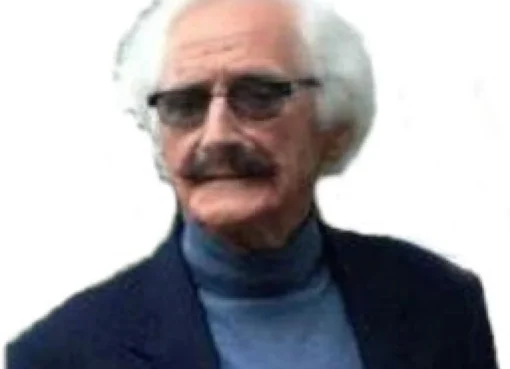
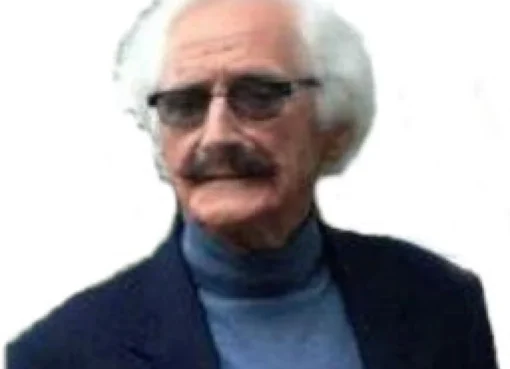
The poignant reflections on the potential erosion of the inner self are brought into sharp relief by the life and writings of Malcolm Muggeridge. A distinguished BBC broadcaster, writer-historian, documentary-maker, and world traveler, Muggeridge was, by many accounts, an intellectually brilliant and thoroughly secular individual. Yet, his final autobiographical work, "Conversion," revealed a deeply spiritually-questing dimension to his being that was unexpected to those who knew him.
H3: The Unsuspected Inner World: A Glimpse into Muggeridge’s Depth
At the outset of "Conversion," Muggeridge describes an "extraordinary – and unsuspected" spiritual complexity within his own wide-ranging inner world. This internal landscape was characterized by a constant mental life, even amidst a remarkably adventurous and externally focused existence. He came to inhabit an inner mental world rich with "felt-thoughts" and persistent, insistent spiritual questions concerning his own existence and the broader human condition.
H3: Dualistic Consciousness: The Strength of the Inner and Outer
For the author of this article, Muggeridge exemplifies the "intuitive, creative spirit in man," a spirit born from a "dualistic consciousness" – one that is both outer and inner directed. This duality, the ability to navigate both the external world of action and the internal world of reflection, is presented as a hallmark of a fully realized human being.
H2: The Revealing Passage: Muggeridge’s Own Words
To illustrate the profound depths and extent to which the persuasions of the "inner life" can guide and shape an individual, the article presents a direct excerpt from Muggeridge’s "Conversion." This passage offers a powerful testament to the enduring human capacity for introspection, spiritual seeking, and a profound sense of a destiny that transcends the mundane.
H3: A Life Beyond the Ego: The Call to Eternity
Muggeridge writes:
"Yet it is also true that from my earliest years there was something else going on inside me than vague aspirations to make a name for myself and a stir in the world: something that led me to feel myself a stranger among strangers in a strange land, whose true habitat was elsewhere; that brought an indefinable melancholy into my life, especially in its early years, and, at the same time, a mysterious exaltation, an awareness that, mixed up with the devices and desires of the ego… another destiny whose realization would swallow up time into Eternity, transform flesh into spirit, knowledge into faith and reveal in transcendental terms what our earthly life truly signifies."
This deeply personal reflection speaks to an innate human yearning for something more, a recognition of a deeper purpose and a destiny that extends beyond the immediate concerns of worldly ambition. It highlights the power of inner experience to shape our perception of reality and to imbue our lives with transcendental meaning.
H2: The Concluding Message: Preserving Our Humanity
The overarching message conveyed by this exploration is a powerful call to action: "Don’t surrender your inspirational, reflective inner life to the machine." In an age increasingly dominated by technological advancement and data-driven decision-making, it is crucial to actively cultivate and protect our subjective, introspective capacities.
H3: Embracing Duality: The Key to a Richer Existence
The article advocates for maintaining our "duality of consciousness" – the harmonious integration of our outer, active engagement with the world and our inner, reflective exploration of ourselves. This balance is essential for a well-rounded and meaningful human experience.
H3: The Simple Wisdom: Reconnecting with Ourselves
The final, perhaps deceptively simple, advice – "Spend more time walking the dog" – serves as a potent metaphor for reconnecting with the present moment, engaging with the tangible world in a mindful way, and allowing space for spontaneous thought and reflection. These seemingly mundane activities can be powerful antidotes to the relentless demands of the digital realm, providing opportunities to nurture the "Self Within" and preserve the richness of our inner lives. The journey of self-discovery is ongoing, and while technology offers invaluable tools, it should not come at the expense of the profound and essential human experience of introspection and inner exploration.