Embracing the Full Spectrum of Self: Day 7 of a Transformative Journey into Gratitude and Authenticity
[City, State] – [Date] – In a world increasingly seeking solace and deeper meaning, programs designed to foster personal well-being are gaining significant traction. Among these, the "7 Days of Gratitude" initiative stands out, culminating on its seventh day with a profound exploration into the symbiotic relationship between gratitude and authenticity. This final day is not merely an endpoint but an invitation to integrate a week’s worth of reflective practices into a truly transformative way of living, challenging participants to embrace their true selves while extending kindness to the world.
The program, championed by wellness advocates, posits that one week can indeed be life-altering, particularly when dedicated to intentional practices of thankfulness and genuine self-expression. Day 7, a synthesis of the week’s lessons, encourages participants to engage in acts of anonymous giving and deep self-reflection, ultimately seeking the freedom found in unadulterated self-acceptance.
Main Facts: The Culmination of a Transformative Week
Day 7 of the "7 Days of Gratitude" program serves as a powerful capstone, integrating the core principles of thankfulness with the often-challenging journey of authentic self-expression. It presents participants with both outward-facing acts of generosity and inward-focused practices of introspection, designed to solidify a newfound appreciation for life and self.
The Core Tenets of Day 7: Giving and Introspection
The day’s activities are meticulously crafted to elicit a profound emotional and spiritual response. The initial directive challenges individuals to step outside their comfort zones and engage in altruistic acts without expectation of recognition. Participants are encouraged to:
- Give an anonymous gift to someone: This act is not about the material value of the gift but the intention behind it. It fosters a sense of selfless contribution, allowing the giver to experience the pure joy of making another person’s day without the need for external validation. The anonymity removes any ego-driven motives, distilling the act down to its most benevolent form.
- Leave a gift for someone where they will find it, with their name on it: This variation adds a personal touch, allowing the recipient to feel seen and valued, while still providing the giver with the unique satisfaction of a thoughtful, perhaps unexpected, gesture. The instruction emphasizes "discovering how good that feels," highlighting the intrinsic reward of generosity.
These acts of giving are more than just charitable deeds; they are experiential lessons in the reciprocal nature of kindness. The program suggests that by actively seeking to uplift others, participants inadvertently uplift themselves, tapping into a wellspring of positive emotions often overshadowed by daily stressors.
Beyond external acts, Day 7 deeply emphasizes personal introspection, particularly through a continuous gratitude practice and a guided meditation. The overarching message resonates: "So gratitude becomes this invitation to be open to feeling what’s here and available to feel. Even if it’s sad, or mad, or anything it turns out." This statement is pivotal, reframing gratitude not as a superficial positivity but as a radical acceptance of the entire spectrum of human emotion, recognizing that even challenging feelings hold lessons and contribute to a richer understanding of existence.
Unveiling the Interplay: Gratitude and Authenticity
The profound link between gratitude and authenticity is the cornerstone of Day 7. The program posits that true gratitude cannot fully flourish without genuine self-knowledge and acceptance. To genuinely appreciate what one has, one must first understand what one values, what one likes, and what one deeply feels. This requires an honest self-assessment, a shedding of societal masks, and a willingness to be vulnerable to both the joys of acquisition and being, and the inherent pain and grief of loss.
The journey towards authenticity, often fraught with the conditioning of conformity ("keep it on the down low," "don’t rock the boat"), is presented as a necessary precursor to experiencing gratitude in its most profound form. By peeling back these layers of learned behavior, individuals can access a deeper, more authentic state of being, where gratitude flows naturally from a place of genuine self-connection rather than superficial obligation.
Chronology: A Seven-Day Path to Inner Renewal
The "7 Days of Gratitude" program is structured as a progressive journey, each day building upon the insights and practices of the previous one. Day 7, therefore, is not an isolated event but the culmination of a week-long immersion into mindful living and emotional intelligence.
Building Blocks of Gratitude
While the specific daily themes for days 1-6 are not explicitly detailed, one can infer a methodical progression. Typically, such programs begin with foundational gratitude practices, encouraging participants to acknowledge basic blessings: the roof over their head, the food on their table, the air they breathe. Subsequent days likely delve into more complex aspects, such as gratitude for relationships, personal achievements, challenges overcome, and the beauty of nature. This sequential approach helps to cultivate a habit of noticing and appreciating, gradually expanding the individual’s capacity for thankfulness.
Day 7 strategically introduces the active expression of gratitude through giving. After days of internalizing and journaling about blessings, the outward act of generosity provides a powerful means to manifest this cultivated gratitude. It transforms an internal state into an external action, creating a feedback loop where giving reinforces the feeling of thankfulness. The challenge to give anonymously or with a personal touch encourages participants to consider the impact of their actions on others, fostering empathy and connection.
The Daily Practice: A Continuous Invitation
Central to the program is the repeated daily inquiry: "What am I grateful for right now?" This seemingly simple question is a powerful mindfulness tool. Participants are encouraged to ask this question throughout the day, transforming mundane moments into opportunities for reflection. The instruction to journal these discoveries underscores the importance of metacognition – thinking about one’s thinking – and observing the subtle shifts in perception and emotion.
This continuous practice serves several purposes:
- Heightened Awareness: It trains the mind to actively seek out positivity, shifting focus away from negativity bias.
- Emotional Regulation: By consciously directing attention to gratitude, individuals can mitigate stress, anxiety, and frustration.
- Accumulative Effect: Over seven days, this repeated inquiry builds a robust mental framework for gratitude, making it a more automatic response rather than a conscious effort.
- Self-Discovery: Journaling allows for a deeper understanding of personal values, preferences, and sources of joy, which directly feeds into the journey of authenticity.
The Ten-Minute Meditation: A Journey Inward
The guided "Ten Minute Meditation" is designed to deepen the gratitude practice, moving beyond intellectual recognition to a felt, embodied experience. The steps are gentle yet profound:
- Comfort and Breath: "Make yourself comfortable, take 3 deep breaths, feel your body, and invite yourself to relax with each exhalation." This initial phase establishes a state of mindfulness and prepares the body and mind for deeper introspection.
- Finding the First Gratitude: "Find just one thing you are genuinely grateful for right now and write down what you are feeling in your journal." This step grounds the practice, focusing on a single, accessible source of thankfulness.
- Expanding to the Second: "Find a second thing you are genuinely grateful for right now. Notice the feelings of gratitude in your body. Write down what you are feeling in your journal." The emphasis here is on sensory awareness, connecting the intellectual concept of gratitude to its physical manifestation.
- Unlocking Abundance: "Find a third thing you are genuinely grateful for right now. If you can find one thing, you can find two. If you can find two things, you can find three. If you can find three things, you can find ten thousand." This powerful affirmation shifts perspective from scarcity to abundance, illustrating that gratitude, once accessed, can be found in countless aspects of life.
- Embodying Gratitude: "Bring curiosity to your current experience as you notice the frequency and vibrations of gratitude moving through your whole being. Write down what you notice as you continue to feel gratitude. Keep noticing all the things you are grateful for." This final stage encourages a holistic experience, inviting participants to truly "feel" gratitude not just as an emotion but as an energetic state, permeating their entire being.
This meditation reinforces the idea that gratitude is not limited to grand gestures or significant events but can be found in the simplest, most immediate aspects of life. It also serves as a crucial bridge to the theme of authenticity, as the ability to genuinely feel and articulate gratitude requires a deep connection to one’s inner self.
Supporting Data: The Science and Psychology Behind the Practice
The principles underpinning the "7 Days of Gratitude" program are not merely anecdotal; they are increasingly supported by a robust body of scientific research in positive psychology, neuroscience, and behavioral economics. The benefits of gratitude, authenticity, and altruism are well-documented, providing a strong empirical foundation for such initiatives.
The Neurobiology of Gratitude
Pioneering research by psychologists Robert Emmons and Michael McCullough has consistently demonstrated the profound psychological and physiological benefits of gratitude. Studies have shown that regularly practicing gratitude can:
- Boost Well-being: Individuals who keep gratitude journals report higher levels of positive emotions, optimism, and life satisfaction.
- Reduce Stress and Depression: Gratitude acts as a buffer against negative emotions, lowering cortisol levels and promoting resilience.
- Improve Sleep Quality: Focusing on positive aspects before bed can lead to more restful sleep.
- Strengthen Relationships: Expressing gratitude fosters stronger social bonds, increases empathy, and reduces feelings of loneliness.
- Enhance Physical Health: Grateful individuals often report fewer aches and pains and are more likely to engage in health-promoting behaviors.
Neuroscientific studies reveal that gratitude activates specific brain regions associated with reward, social cognition, and moral judgment, such as the medial prefrontal cortex. This activation leads to the release of neurotransmitters like dopamine (linked to pleasure and motivation) and serotonin (linked to mood regulation), effectively "rewiring" the brain for greater happiness and contentment.
The Power of Authentic Living
The call for authenticity in the program resonates with extensive psychological literature. Authenticity, defined as living in accordance with one’s true self, values, and beliefs, is a cornerstone of psychological well-being. Research by figures like Carl Rogers and more contemporary psychologists such as Stephen Joseph highlights that authentic individuals tend to:
- Possess Higher Self-Esteem: They feel more comfortable in their own skin, leading to greater self-acceptance.
- Experience Stronger Relationships: Genuine connections are built on honesty and trust, leading to deeper and more fulfilling interactions.
- Exhibit Greater Resilience: Authentic individuals are better equipped to navigate life’s challenges because their responses are rooted in their core values, providing a stable internal compass.
- Suffer Less from Anxiety and Depression: The constant effort to conform or wear a "mask" is mentally exhausting and can lead to significant psychological distress. Living authentically reduces this cognitive load.
Conversely, the cost of inauthenticity is high. Societal conditioning, as noted in the article ("keep it on the down low," "don’t make eye contact," "find out what is wanted and conform to that"), often pushes individuals away from their true selves. This can manifest as chronic stress, burnout, feelings of emptiness, and a pervasive sense of disconnect from one’s own life. The program’s emphasis on "just be myself" directly addresses this societal pressure, advocating for the liberating power of self-acceptance.

Altruism and Its Reciprocal Rewards
The Day 7 challenge of giving anonymous gifts taps into the well-documented benefits of altruism. Research consistently shows that acts of kindness and generosity have a profound positive impact not only on the recipient but also on the giver. This phenomenon, often termed the "helper’s high," involves:
- Increased Happiness: Giving stimulates the brain’s reward centers, releasing endorphins and creating a sense of joy and satisfaction.
- Reduced Stress: Helping others can distract from personal worries and provide a sense of purpose.
- Improved Physical Health: Studies suggest that altruistic individuals tend to have lower blood pressure and a longer lifespan.
- Enhanced Social Connection: Acts of giving foster empathy, strengthen community bonds, and combat feelings of isolation.
The anonymous nature of one of the Day 7 challenges amplifies these benefits by stripping away any potential for external praise or obligation, allowing the giver to experience the pure, intrinsic reward of their action.
Mindfulness as a Gateway
The inclusion of a ten-minute meditation underscores the critical role of mindfulness in cultivating both gratitude and authenticity. Mindfulness, the practice of being present and non-judgmentally aware, enables individuals to:
- Observe Thoughts and Emotions: Meditation helps in recognizing the patterns of thought and emotional responses, including the subtle ways conditioning manifests.
- Cultivate Self-Compassion: By observing inner experiences without judgment, individuals can develop a kinder, more accepting attitude towards themselves, a crucial step for authenticity.
- Enhance Emotional Regulation: A mindful approach allows for a greater space between stimulus and response, enabling more considered and authentic reactions.
- Deepen Appreciation: By slowing down and paying attention, the meditation helps individuals truly "feel the frequency and vibrations of gratitude," transforming it from a fleeting thought into an embodied experience.
Expert Perspectives: Unpacking the Synergy of Gratitude and Authenticity
The "7 Days of Gratitude" program, particularly its emphasis on Day 7, aligns with the insights of leading wellness experts, psychologists, and mindfulness practitioners who advocate for a holistic approach to personal growth. These experts often highlight the intricate synergy between gratitude and authenticity as fundamental pillars of a fulfilling life.
The Wisdom of Vulnerability
"True gratitude requires a certain level of vulnerability," explains Dr. Elena Petrova, a clinical psychologist specializing in positive psychology. "If you can only be grateful for the ‘good’ things and suppress feelings of sadness or anger, you’re not experiencing life authentically. The beauty of the ‘7 Days of Gratitude’ program, especially Day 7’s reflection, is its invitation to be open to all feelings. It acknowledges that to truly appreciate joy, one must also be willing to feel the pain of loss or the discomfort of anger. This full spectrum emotional literacy is what makes gratitude profound, not superficial."
Petrova emphasizes that societal conditioning often teaches individuals to avoid uncomfortable emotions and to present a perpetually positive facade. "This ‘toxic positivity’ is the antithesis of authenticity. The program’s insight — ‘Even if it’s sad, or mad, or anything it turns out’ — is incredibly liberating. It gives permission to be human, which is the first step towards genuine gratitude." The journey of peeling back layers of conditioning, as described in the article, is a common therapeutic process. "It’s about re-learning to trust your inner compass, rather than constantly seeking external validation or conforming to perceived expectations," Petrova adds.
Cultivating Genuine Connection
From a sociological perspective, the program’s focus on authenticity is crucial for fostering meaningful relationships and a more compassionate society. "When individuals are encouraged to ‘just be myself,’ the quality of their interactions fundamentally changes," states Dr. Marcus Thorne, a specialist in community psychology. "The masks come off, and genuine connection becomes possible. This, in turn, creates a fertile ground for communal gratitude and collective well-being."
Thorne points to the anonymous gifting challenge as a powerful mechanism for this. "Acts of selfless giving, without the expectation of praise, break down barriers and foster a sense of shared humanity. When you combine this with the personal journey towards authenticity, you start to see a ripple effect where individuals are not only more grateful for their own lives but also more inclined to contribute genuinely to the lives of others." He suggests that such programs are vital in an increasingly fragmented world, offering tools to rebuild connection from the inside out.
A Holistic Approach to Well-being
Mindfulness coaches and spiritual guides often resonate with the program’s integrated approach. "The ‘7 Days of Gratitude’ isn’t just about feeling good; it’s about being whole," says Sarah Chen, a renowned mindfulness practitioner. "The meditation component, which guides participants to feel gratitude in their ‘whole being,’ is key. It’s not just a mental exercise; it’s an embodied experience. And this embodiment is where true, lasting change happens."
Chen elaborates on the concept of "frequency and vibrations of gratitude." "While these terms might sound esoteric, they refer to the tangible energetic shifts that occur when we align with positive emotions. When you authentically connect with what you value, and express gratitude for it, your entire system — mind, body, and spirit — resonates at a higher frequency, impacting everything from your mood to your interactions." She views the program as a comprehensive blueprint for cultivating a resilient and joy-filled life, emphasizing that self-acceptance ("what a great starting place, what a great baseline") is the bedrock upon which all other forms of gratitude can be built.
Implications: A Blueprint for Enduring Transformation
The "7 Days of Gratitude" program, particularly its culminating Day 7, offers more than just a temporary boost of positivity; it lays down a blueprint for enduring personal transformation and, by extension, contributes to a more compassionate society. The implications of consistently practicing gratitude and embracing authenticity are far-reaching, affecting individual well-being, interpersonal relationships, and collective consciousness.
Personal Evolution: From Conformity to Self-Acceptance
The most profound implication for participants is the potential for a radical shift in personal identity and self-perception. The journey from "keeping it on the down low" and conforming to external expectations to the liberation of "just being myself" is a powerful testament to personal evolution. This shift impacts every facet of an individual’s life:
- Enhanced Decision-Making: When decisions are rooted in authentic values rather than external pressures, they lead to greater self-concordance and satisfaction.
- Increased Self-Worth: The acceptance of one’s entire emotional landscape, including sadness and anger, fosters a deeper, more resilient sense of self-worth that is not dependent on perfection or external validation.
- Emotional Freedom: The acknowledgment that gratitude can coexist with challenging emotions allows for greater emotional agility and a reduction in the internal conflict that often accompanies inauthenticity.
- Renewed Purpose: By clarifying what one truly values, individuals often discover a clearer sense of purpose and direction in their lives, leading to greater fulfillment.
The statement "What a gift. What a great starting place. What a great baseline. Maybe you can dance to it" perfectly encapsulates the joy and ease that comes with authentic self-acceptance. It suggests a foundation so solid and joyful that it becomes a source of inspiration and creativity, rather than a burden.
Societal Ripple Effects: Building a More Compassionate World
While the program’s immediate focus is individual transformation, the collective implications are significant. A society composed of more grateful and authentic individuals is inherently more compassionate, understanding, and resilient.
- Stronger Communities: Authentic individuals are more likely to form genuine connections, leading to stronger social networks and supportive communities.
- Increased Empathy: Practicing gratitude and acknowledging one’s full emotional range fosters greater empathy for others’ experiences, reducing judgment and promoting understanding.
- Acts of Kindness as the Norm: When individuals regularly experience the "good feeling" of giving, acts of kindness can become more prevalent, creating a positive feedback loop within society.
- Reduced Conflict: Authentic communication, rooted in self-awareness and respect, can de-escalate conflicts and promote more constructive dialogue.
The vision is one where individuals, freed from the shackles of conformity, contribute their unique gifts to the world, creating a tapestry of diverse yet interconnected human experiences.
Navigating the Path Forward: Sustaining the Practice
The challenge, post-Day 7, lies in sustaining these practices amidst the demands and pressures of daily life. The program implicitly acknowledges this by describing the "layers of conditioning" that "come up and wash away" through "years of inquiry." This suggests that personal transformation is an ongoing journey, not a one-time event.
Strategies for sustained practice include:
- Continued Journaling: Regular reflection helps to reinforce new neural pathways and maintain awareness.
- Daily Mindfulness: Integrating short meditations or mindful pauses throughout the day can keep the connection to gratitude and authenticity alive.
- Conscious Acts of Giving: Making intentional kindness a regular part of one’s routine.
- Seeking Supportive Communities: Engaging with others who are also committed to personal growth can provide encouragement and accountability.
- Self-Compassion: Recognizing that setbacks are part of the journey and approaching oneself with kindness, especially when falling back into old patterns.
The Future of Wellness: A Call to UPLIFT
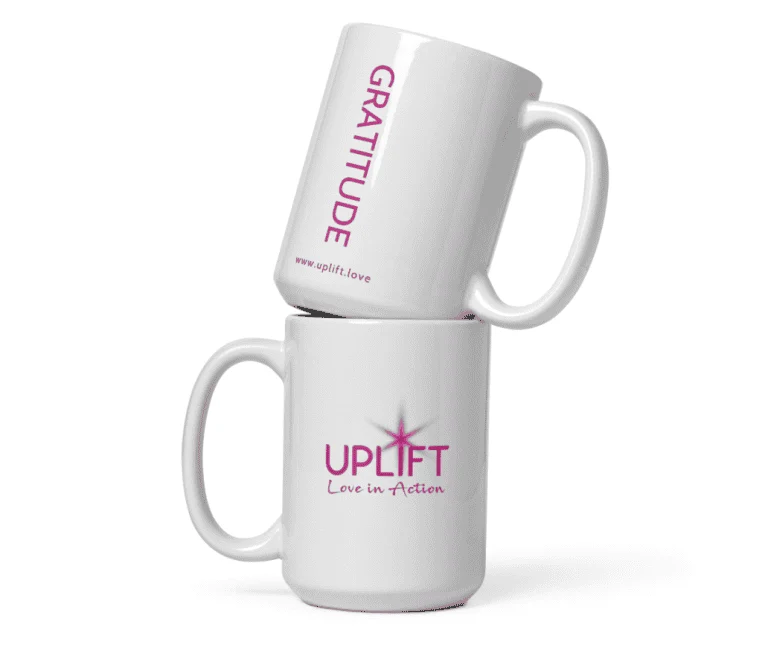
The "7 Days of Gratitude" program is a potent example of the growing trend in wellness initiatives that prioritize internal transformation as a pathway to external impact. Organizations like Uplift.Love, which offer products like "Gratitude Mugs" as tangible reminders of these practices, play a crucial role in making these concepts accessible and integrated into daily life. The special offer on mugs is more than a commercial promotion; it’s an invitation to embed the intention of gratitude into everyday rituals, turning a simple coffee break into a moment of mindful appreciation.
The accompanying calls to action—"Take 5 Deep Breaths," "Financial Contribution," and "Send a Blessing"—underscore a broader mission: to create a world where individual well-being contributes to collective upliftment. Taking five deep breaths is a simple yet powerful act of self-care and presence. Financial contributions support the expansion of such "Love in Action projects," indicating a commitment to spreading these transformative practices. And sending a blessing extends the spirit of gratitude and connection outward, creating ripples of positive energy.
In conclusion, Day 7 of the "7 Days of Gratitude" program is a profound call to action, urging individuals to embrace their authentic selves and to cultivate a deep, all-encompassing gratitude. It offers a powerful reminder that the greatest treasure lies not in external achievements but in the simple, courageous act of "just being myself," a gift that profoundly impacts not only the individual but the entire world around them. It is a baseline from which to dance through life, fully present, fully grateful, and fully authentic.