The Evolution of Virtual Athletics: Realcast Debuts Just Hoops 2.0 with Advanced Hand-Tracking and Mixed Reality Integration
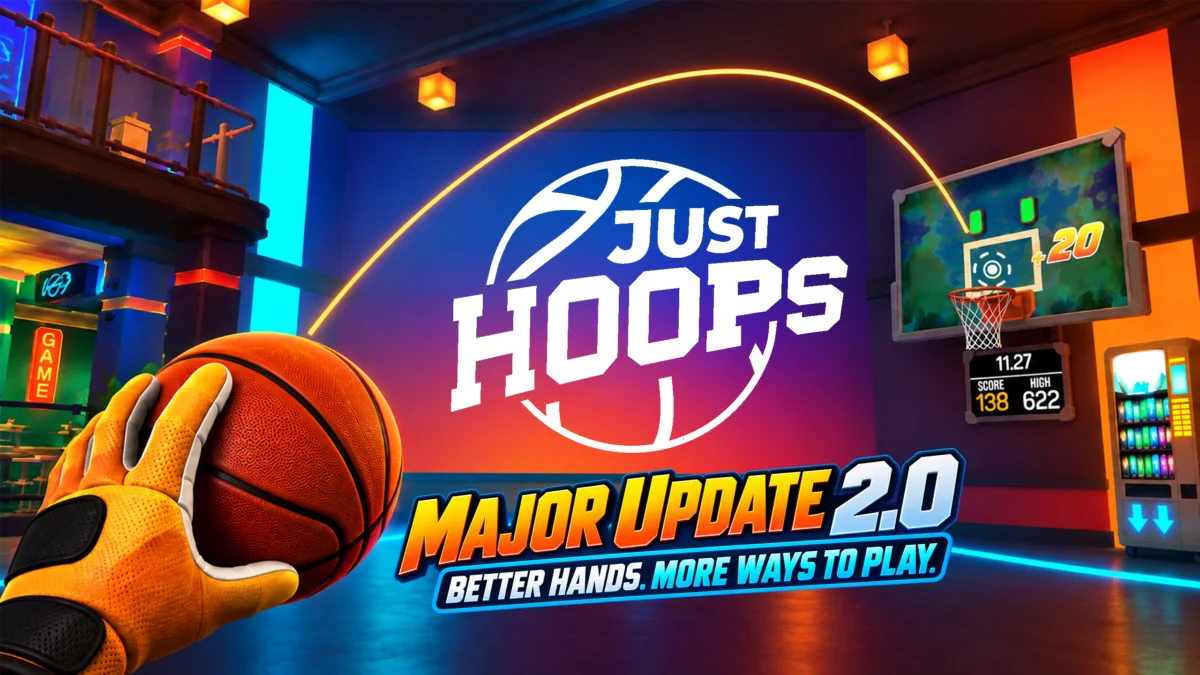
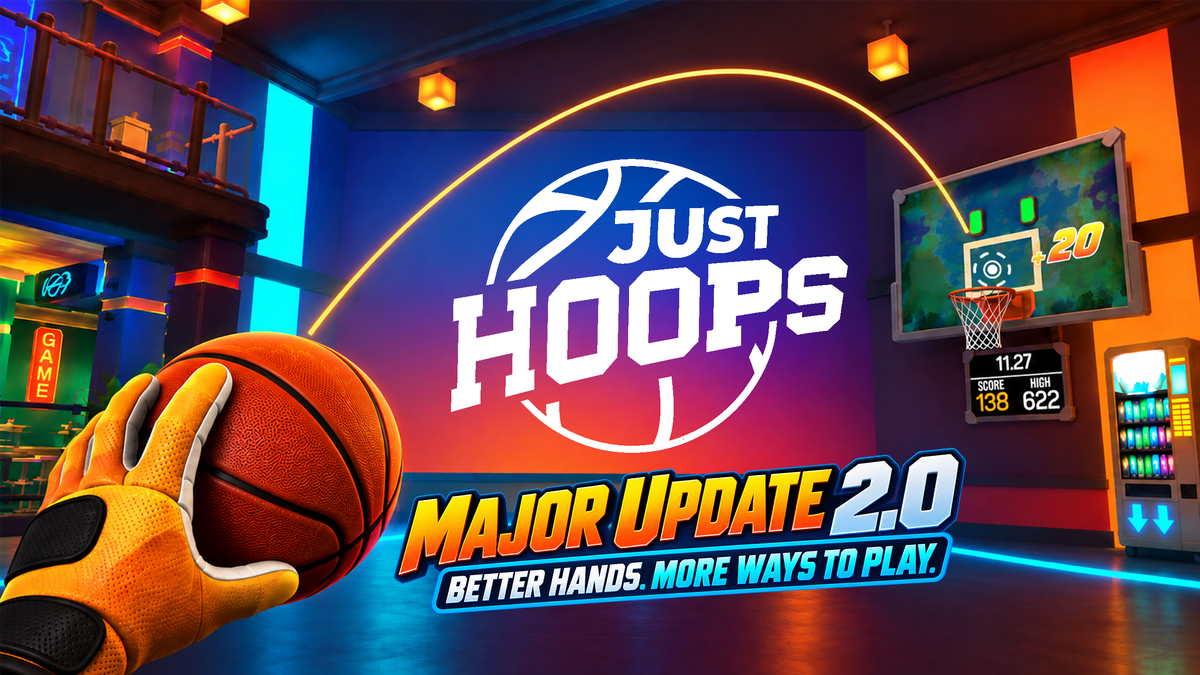
In a move that signals a significant shift toward the "controller-free" future of immersive entertainment, developer Realcast has officially launched the 2.0 update for its acclaimed basketball title, Just Hoops. Timed to coincide with the high-profile announcements at Meta Connect, the update represents more than just a content patch; it is a fundamental reimagining of how users interact with sports physics in a virtual environment. By prioritizing advanced hand-tracking and accessibility, Just Hoops 2.0 positions itself as a flagship example of the next generation of spatial computing games.
Main Facts: A New Era for Virtual Basketball
The Just Hoops 2.0 update is a comprehensive overhaul that addresses both the technical mechanics of virtual sports and the user experience (UX) of the Quest platform. The core of the update revolves around the integration of Meta’s latest hand-tracking APIs, allowing players to discard their Touch controllers in favor of natural, biometric movements.
Key features of the 2.0 update include:
- Dual Shooting Modalities: The introduction of "Natural Shot" and "Pointer Shot" modes to cater to both purists and casual players.
- Advanced Hand-Tracking: Refined haptic-less feedback loops designed to make the act of "releasing" a virtual ball feel intuitive.
- Mixed Reality (MR) "Trickshots": A spatial-aware mode that transforms a user’s physical living room into a customized basketball playground.
- Aesthetic and UI Overhaul: A new 1970s-inspired retro environment and a streamlined user interface to improve navigation.
- Zen Mode: A pressure-free practice environment designed for relaxation and skill acquisition.
This update is currently available on the Meta Quest Store, though the developer has yet to confirm if these hand-tracking-centric features will migrate to the SteamVR version of the game, which traditionally relies on hardware-agnostic controller inputs.
Chronology: From Arcade Roots to Spatial Computing
The journey to Just Hoops 2.0 began over a year ago, fueled by a specific mandate from both the player community and Meta’s developer relations team. To understand the significance of this update, one must look at the timeline of the game’s development and the broader VR hardware landscape.
The Initial Launch: Just Hoops originally entered the market as a nostalgic tribute to the coin-operated basketball machines found in arcades like Chuck E. Cheese or Dave & Buster’s. It focused on high-speed, repetitive shooting and leaderboards.
The Feedback Loop (2023–2024): Throughout the last twelve months, Realcast engaged in an intensive period of data collection. Players reported that while the controller-based shooting was precise, it lacked the "physicality" of real-world basketball. Simultaneously, Meta began pushing developers to prepare for a "hands-first" ecosystem, anticipating the reveal of the Meta VR Glasses and the Quest 3’s enhanced pass-through capabilities.
The Development Phase: Realcast spent the better part of a year refining the "release physics" of the virtual basketball. In VR, the most difficult action to replicate is the "letting go" of an object without a physical button release. The 2.0 update is the culmination of this R&D, utilizing Meta’s latest skeletal tracking to predict the arc of a shot based on finger extension and wrist velocity.
The Meta Connect Release: The update was strategically dropped during Meta Connect, serving as a software showcase for Meta’s hardware vision. As Meta moves toward lighter, more portable wearables, Just Hoops 2.0 serves as a proof of concept that complex sports games can function without bulky peripherals.
Supporting Data: Mechanics, Scoring, and Accessibility
The technical architecture of Just Hoops 2.0 is built on the philosophy of "Incentivized Realism." The developer has introduced a tiered scoring system that rewards players based on the difficulty and "naturalness" of their input method.
The Natural Shot vs. The Pointer Shot
The "Natural Shot" is the update’s centerpiece. It requires the player to mimic the actual biomechanics of a jump shot or a set shot. Because hand-tracking can be notoriously finicky due to occlusion (when one hand hides the other from the headset’s cameras), Realcast implemented optional assists.
- The Reward Tiers: Shooting unassisted in "Natural Shot" mode can award up to eight points per basket. This high-risk, high-reward system is designed to gamify the learning curve of hand-tracking, encouraging players to master the physics rather than relying on software magnets.
- Accessibility through Pointer Shot: Recognizing that not all players have the physical mobility or the ceiling height to perform full shooting motions, the "Pointer Shot" was introduced. This mode allows for a "point-and-flick" gesture, ideal for seated play or casual sessions. While it only awards two points per basket, it ensures that the game remains inclusive for users with disabilities or limited space.
Mixed Reality and Spatial Mapping
The "Trickshots" mode utilizes the Quest’s Scene Mesh capabilities. Unlike traditional VR levels, this mode requires the headset to map the user’s furniture, walls, and obstacles.
- Dynamic Obstacles: Players can virtually place hoops on their real-world refrigerators or bounce balls off their actual sofas.
- Social Integration: The multiplayer component supports private rooms for up to four players, allowing friends to compete in a shared mixed-reality space, effectively turning a living room into a social "H-O-R-S-E" arena.
Quality of Life Improvements
The update also addresses the "friction" of the VR experience. The 1970s-inspired retro environment is not merely a cosmetic change; it utilizes a specific color palette that reduces eye strain during long sessions. Furthermore, the redesigned UI moves away from laser-pointer menus to touch-responsive holographic interfaces, further leaning into the hand-tracking theme.
Official Responses: The Developer and Platform Synergy
While official press releases often stick to feature lists, the subtext of the Just Hoops 2.0 launch reveals a deep synergy between Realcast and Meta.
Realcast’s Perspective:
The developers have stated that the 2.0 update is a direct response to player feedback. According to the studio, the goal was to "lower the barrier to entry while raising the ceiling for mastery." By focusing on hand tracking, Realcast is betting on the idea that the most intuitive controller is the one we are born with. Their commitment to a year-long development cycle for a free update suggests a long-term strategy to make Just Hoops the definitive basketball simulation for the spatial computing era.
Meta’s Strategic Interest:
Meta’s involvement cannot be overstated. With the recent announcement of the controller-free Meta VR Glasses, the platform owner needs a library of games that feel "native" to a hands-only interface. Just Hoops serves as a "Goldilocks" title—it is complex enough to demonstrate the power of the sensors but simple enough to be understood by the "non-gamer" demographic Meta is currently courting. By providing "added support" to Realcast, Meta is effectively subsidizing the transition of the Quest library from a gaming console to a general-purpose spatial computer.
Implications: The Future of Virtual Sports and Hardware
The release of Just Hoops 2.0 has broader implications for the VR industry and the future of digital athletics.
1. The Obsolescence of the Controller
For years, the VR industry has been tethered to plastic controllers. While these provide haptic feedback and precision, they are a barrier to "frictionless" entry. Just Hoops 2.0 proves that for sports, the loss of haptic buttons can be compensated for by sophisticated physics and visual feedback. If Just Hoops succeeds, expect a wave of "2.0" updates for other sports titles like Eleven Table Tennis or Golf+ to further minimize controller dependency.
2. The "Wii Sports" Moment for Mixed Reality
In the mid-2000s, Wii Sports brought gaming to the masses because the movement (swinging a remote) matched the action (swinging a racket). Just Hoops 2.0 in Mixed Reality offers a similar "aha!" moment. When a user sees a virtual hoop in their actual kitchen and uses their actual hands to throw a ball, the abstraction of gaming disappears. This could be the "killer app" mechanic that moves VR from a niche hobby to a household staple.
3. Gamified Fitness and Mental Health
The inclusion of "Zen Mode" reflects a growing trend in the industry: the use of VR for "active relaxation." By removing the pressure of the clock, Just Hoops transforms from a competitive arcade game into a rhythmic, meditative experience. This aligns with recent studies suggesting that repetitive, low-impact movements in VR can aid in stress reduction and motor skill retention.
4. The Platform Gap
The uncertainty regarding the SteamVR version of the update highlights a growing schism in the industry. As Meta moves toward proprietary hand-tracking and MR features, PC-based VR (which relies on external sensors and standard controllers) risks being left behind. Just Hoops 2.0 may be one of the first titles where the "mobile" VR version is significantly more advanced and feature-rich than its PC counterpart, signaling a shift in where the "premium" VR experience actually lives.
Conclusion
Just Hoops 2.0 is a landmark update that successfully bridges the gap between nostalgic arcade fun and futuristic technology. By leveraging Meta’s hardware advancements and listening to a dedicated player base, Realcast has created a blueprint for the future of virtual sports. As we move toward a world of "VR Glasses" and invisible interfaces, Just Hoops stands as a testament to the idea that the simplest games are often the best vessels for the most complex technological leaps. Whether you are a competitive athlete looking to master the "Natural Shot" or a casual user wanting to play "Trickshots" in your living room, the 2.0 update offers a compelling glimpse into the future of play.