
From Pit Lane to Pole Position: Analyzing Downtown Club’s Transition to Full Release on Meta Quest and Pico
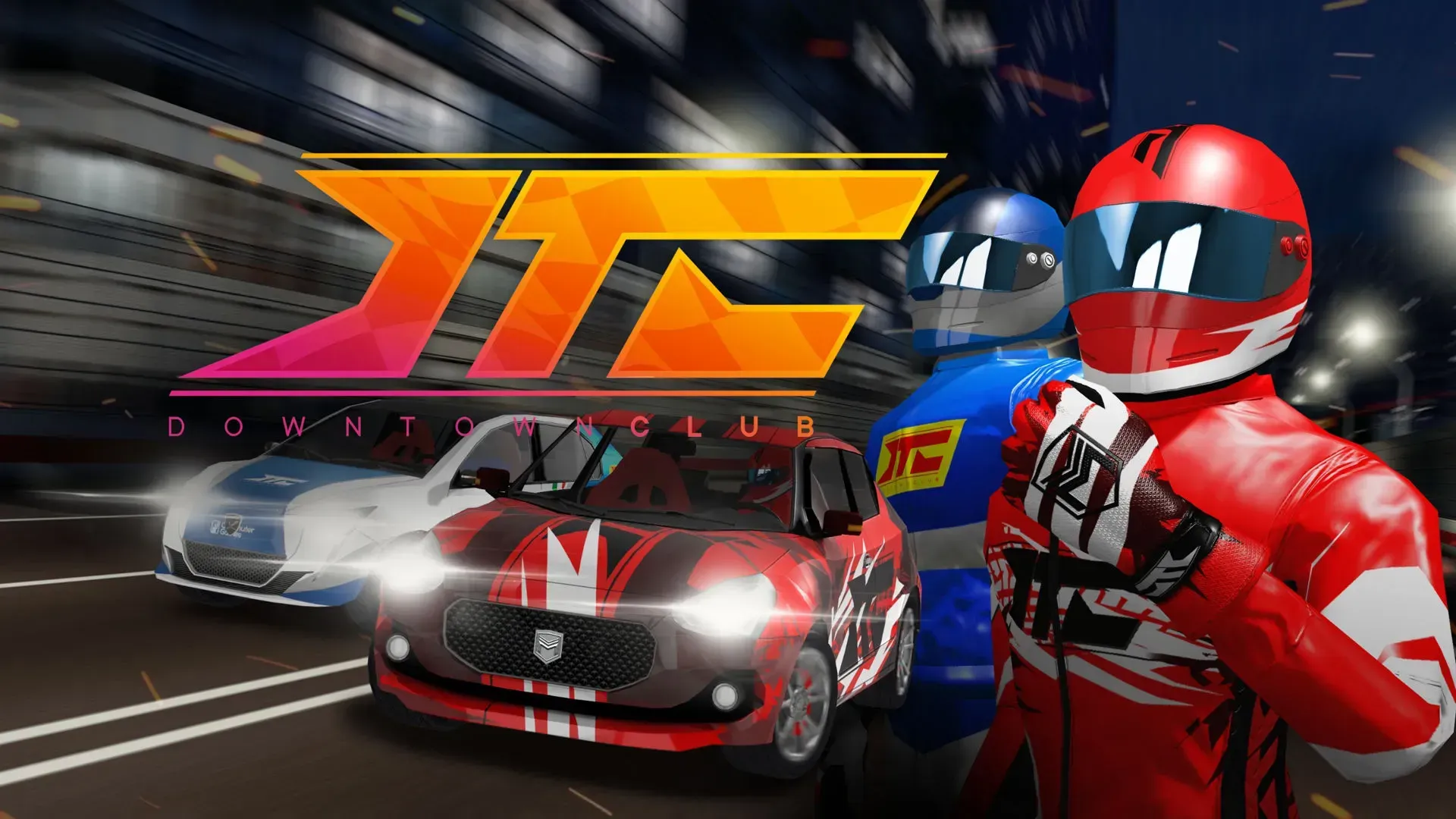
The landscape of virtual reality racing is about to undergo a significant shift as Commuter Games prepares to transition its flagship title, Downtown Club, from its long-standing Early Access phase to a comprehensive full release. Scheduled for June 11, the "v1.4.0" update marks a pivotal moment for the "simcade" racer, promising to address years of community feedback while introducing technical refinements that aim to set a new standard for standalone VR racing titles.
Main Facts: The Road to Version 1.4.0
The announcement from Commuter Games confirms that Downtown Club will officially conclude its Early Access journey on both the Meta Quest and Pico 4 platforms simultaneously. This synchronized release is a strategic move, ensuring that the entire standalone VR ecosystem can access the final product on day one.
The cornerstone of this transition is the v1.4.0 update, which is far more than a mere numerical increment. It introduces a suite of features designed to bridge the gap between casual arcade fun and the technical depth required by simulation enthusiasts. Key additions include:
- Integrated Voice Chat: A critical social layer for the burgeoning multiplayer community.
- Dynamic Environmental Effects: The introduction of in-game rain, affecting both visual fidelity and tire-to-tarmac physics.
- Advanced Racing Mechanics: The implementation of slipstream (drafting) physics, allowing for more strategic high-speed overtaking.
- Enhanced Artificial Intelligence: A complete overhaul of rival driver behavior to provide a more competitive and "human-like" challenge.
- Optimized Performance: Refined frame rates and stability improvements tailored for the mobile chipsets of the Quest and Pico headsets.
Downtown Club differentiates itself through a unique control philosophy. While most VR racers force a choice between traditional controller inputs or virtual steering, Commuter Games has refined a "hybrid" approach. Players can utilize standard thumbsticks for precision or engage with a fully interactive virtual cockpit, where hands physically grip the steering wheel and shift gears. This versatility is expected to be a major draw for the full release.
Chronology: Two Years in the Garage
The journey of Downtown Club began nearly two years ago, launching into Early Access during a period when the standalone VR market was hungry for a dedicated street-racing title. At its inception, the game was a "diamond in the rough"—it showcased a promising physics engine but suffered from the typical growing pains of an indie VR project.
The Early Access Era (2022–2023)
In its earliest builds, Downtown Club faced criticism for its "sparse" nature. Initial reviews highlighted a lack of content, with a limited roster of vehicles and a dearth of tracks. Perhaps more significantly, the lack of multiplayer support felt like a missed opportunity in an era where social VR was exploding. Critics at the time also pointed to a lackluster soundtrack and AI racers that followed rigid, predictable paths, often leading to "conga line" racing rather than dynamic competition.
The Mid-Cycle Pivot (2024)
Commuter Games took this feedback to heart. Throughout 2024, the studio entered a phase of rapid iteration. They began "toiling away in the garage," as industry observers noted, focusing on the core driving feel. Updates during this period introduced new vehicle classes and expanded the urban environments, moving the game away from closed-circuit feel toward a more expansive "Downtown" atmosphere.
The Final Push (Spring 2025 – Present)
The lead-up to the June 11 release has been characterized by a focus on "polish and presence." The developers shifted their focus from adding raw content to refining the experience. This led to the development of the v1.4.0 features, specifically the weather systems and social tools, which were identified as the final hurdles before the game could be considered a "complete" retail product.
Supporting Data: The Mechanics of a Simcade Evolution
To understand the impact of the v1.4.0 update, one must look at the technical data points that Commuter Games has addressed. The "simcade" genre is a difficult balance to strike; it requires the accessibility of titles like Need for Speed with the granular physics of Assetto Corsa.
The Physics of Rain and Slipstream
The introduction of rain is not merely aesthetic. In VR, weather effects present a unique challenge: they must be rendered in stereoscopic 3D without causing motion sickness or significant frame rate drops. Commuter Games has reportedly optimized their particle system to ensure that rain droplets on the windshield and the reflection on the asphalt do not compromise the 72Hz/90Hz targets required for a smooth VR experience.
Furthermore, the slipstream mechanic adds a mathematical layer to the racing. By calculating the "low-pressure zone" behind a lead car, the game now rewards players who can maintain a tight line, providing a speed boost that encourages aggressive but calculated driving. This is expected to transform the multiplayer meta-game, moving it away from simple "time-trial" style racing toward genuine tactical combat.
AI and Pathfinding Improvements
Data from the Early Access period showed that players often became frustrated with AI that either ignored the player’s presence or made nonsensical maneuvers. The new AI in v1.4.0 utilizes a more sophisticated "awareness" algorithm. Rival drivers will now defend their lines, attempt to break the player’s slipstream, and make mistakes under pressure—variables that are essential for a convincing racing simulation.
Hardware Parity
The decision to release on both Meta Quest and Pico 4 is backed by sales data indicating a growing parity in the standalone market. While Meta remains the dominant force, the Pico 4 has a dedicated following in European and Asian markets. By ensuring feature parity, including the new voice chat and weather systems, Commuter Games is maximizing its Day 1 "Total Addressable Market" (TAM).
Official Responses: The Developer’s Vision
While the studio has remained focused on development, communications from Commuter Games throughout the Early Access period have emphasized a "community-first" philosophy. In various developer logs and social media interactions, the team has expressed that Downtown Club was never intended to be a static product.
"We viewed Early Access as a collaborative workshop," a representative for the studio hinted during a recent community Q&A. "The feedback regarding the ‘appalling soundtrack’ and the ‘robotic AI’ wasn’t just heard—it was documented and used as the blueprint for our roadmap. Version 1.4.0 is our way of showing that we’ve put new tread on the tires and upped the horsepower."
The developers have also emphasized that the transition to full release does not mean the end of development. Instead, it marks the beginning of a "Live Service" model where the foundation is now stable enough to support seasonal content, new car licenses, and potentially larger-scale tournament structures.
Implications: The Future of Standalone VR Racing
The full release of Downtown Club carries significant implications for the VR industry at large. It serves as a case study for the "Early Access done right" model in the VR space, where many titles often languish in "development hell" or are abandoned before reaching version 1.0.
Competitive Landscape
With Downtown Club reaching maturity, it enters a competitive arena alongside titles like Grid Legends (Quest) and V-Speedway. However, its focus on "simcade" physics and virtual cockpit interaction gives it a unique value proposition. If successful, it may force other developers to prioritize tactile VR interactions (like physical gear shifting) over traditional button-mapping.
Social and Esports Potential
The addition of voice chat and refined multiplayer mechanics suggests that Commuter Games is eyeing the competitive racing scene. Standalone VR has lacked a "definitive" racing esport. By providing a stable, social, and technically deep platform, Downtown Club could potentially fill that void, leading to organized leagues and community-driven tournaments.
The "Prosumer" Shift
The inclusion of features like slipstreaming and dynamic weather signals a shift in what standalone VR users expect. No longer are "mobile VR" experiences expected to be watered-down versions of PC counterparts. As hardware like the Quest 3 and Pico 4 Pro becomes more prevalent, the demand for "high-fidelity" mechanics in a portable format is rising. Downtown Club is positioned at the forefront of this trend.
Conclusion
When Downtown Club hits the Meta Quest and Pico stores on June 11, it will be more than just a software update; it will be a testament to the power of iterative development and community engagement. By transforming a "sparse" and "lackluster" early build into a feature-rich, socially connected, and technically impressive racer, Commuter Games has set a high bar for their contemporaries.
For the players, the message is clear: the wait in the pit lane is over. Whether you are a casual driver looking for a scenic rain-soaked cruise through a virtual city, or a competitive racer looking to exploit a slipstream on the final lap, Downtown Club v1.4.0 is ready to take the green flag. The "garage work" is complete, and the road ahead looks wide open.



Leave a Comment