The Unseen Compass: Navigating Purpose and the Metaphysical in a World of Appearances
A chance encounter in a local coffee shop sparks a profound discussion about the human spirit, the limits of empirical understanding, and the enduring quest for meaning beyond the tangible.
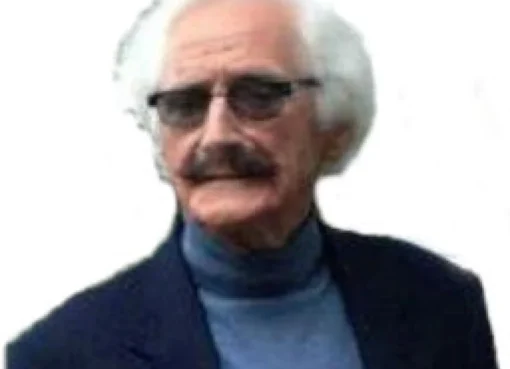
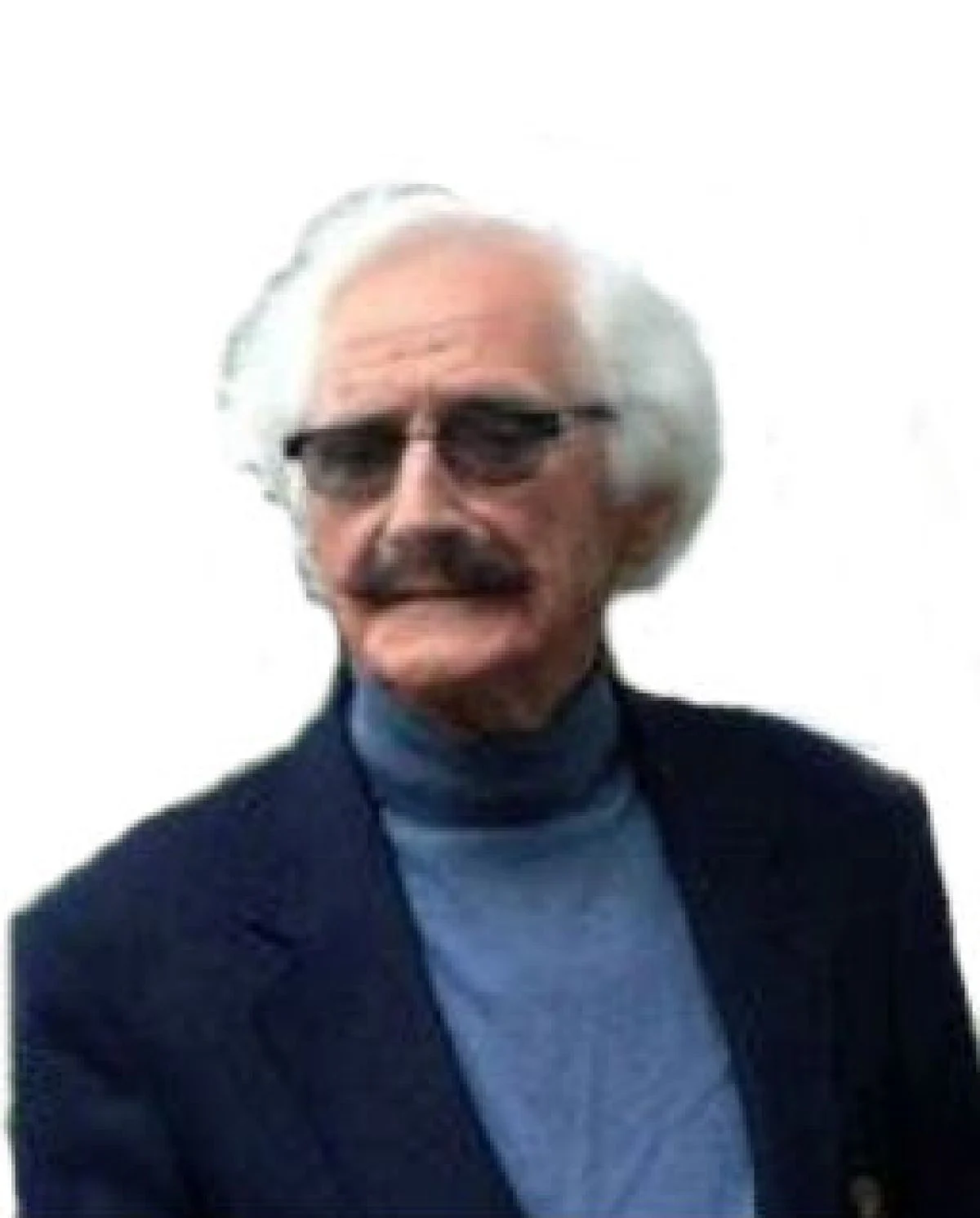
The mundane act of having a car serviced can often lead to unexpected journeys of the mind. For a retired professor of philosophy and psychology, a recent visit to a local coffee shop for a routine cappuccino turned into an illuminating exchange with two university students, prompting a deep dive into the perennial questions of purpose, human nature, and the elusive concept of the metaphysical. This article explores the genesis of this conversation, delving into the complexities of human motivation, the demonstrable power of altruism, and the profound implications of understanding consciousness beyond the five senses.
The Search for Purpose: A Historical Perspective
The conversation, as it often does when the professor’s background is revealed, quickly gravitated towards the fundamental human drive for purpose. "It’s not easy to talk about purpose," the professor admitted, reflecting on the long and often violent history of both individual and collective human endeavors. The stark reality of centuries marked by conflict and a persistent deficit in benevolent and spiritually tolerant attitudes between individuals and nations cast a somber shadow over the discussion. This historical context serves as a crucial backdrop, highlighting the inherent challenges in fostering a unified sense of purpose grounded in positive values.
The professor’s observation resonates with a fundamental tension in human experience: our capacity for both immense cruelty and profound compassion. The very history that illustrates our failings also contains powerful counter-narratives of resilience and altruism. This duality, the professor suggested, underscores the complexity of the human condition and the ongoing struggle to reconcile our baser instincts with our higher aspirations. The pursuit of purpose, therefore, is not a singular, easily defined goal, but rather an ongoing negotiation with our own nature and the world around us.
The Tangible Manifestations of Altruism: Doctors Without Borders as a Beacon
Despite the historical backdrop of conflict, the professor pointed to the burgeoning landscape of charitable organizations as a powerful testament to the human capacity for good. "Even so," he stated, "there are many charitable groups throughout the world nowadays working to try and ease the sufferings of those less fortunate than themselves." He specifically highlighted Doctors Without Borders (Médecins Sans Frontières, or MSF) as a prime example of a "most humanistic of organizations."
The dedication of MSF’s medical professionals, who work and often die in some of the world’s most dangerous and politically unstable regions, serves as a compelling illustration of altruistic action. These individuals, driven by an innate compassion and a deep-seated need to alleviate suffering, willingly place their lives and careers on the line. Their commitment extends far beyond geographical boundaries, taking them to distant and perilous locations to serve a cause that transcends personal gain. The professor eloquently described this driving force as "the greatest of all moral persuasions, that internal force known as the human spirit."
This commitment to humanitarian aid, exemplified by MSF, provides concrete evidence that the pursuit of purpose can manifest in tangible acts of selflessness. It demonstrates that, even in the face of overwhelming adversity, the human spirit possesses an indomitable drive to act for the betterment of others. The work of these individuals challenges cynical perspectives by showcasing the profound impact of empathy and dedication in creating positive change, offering a powerful counterpoint to the historical narratives of conflict.
Unveiling the Metaphysical: Beyond the Senses
The conversation then took a turn towards a more abstract, yet equally significant, concept: the metaphysical. It was at this juncture that the professor observed a critical gap in understanding among the students, with only one grasping the meaning of the term. "Now we come to the point: the significance of the word metaphysical," he announced, setting the stage for a deeper exploration.
He defined the metaphysical as denoting "a level of awareness in human consciousness that goes beyond the world of appearances; beyond the workings of the five senses." This distinction is crucial, as it separates the tangible, empirically verifiable aspects of existence from the realm of abstract thought, intuition, and subjective experience.
The professor elaborated on this concept, describing metaphysical awareness as a "silent dialogue" constantly engaged in by a "questing imagination." This inner dialogue probes the "how and why of the psychological complexity of one’s self," driven by a force long identified as "spirit, the human spirit." This definition posits that our internal lives, our thoughts, feelings, and intuitions, are not merely passive reflections of external stimuli but active participants in shaping our understanding of ourselves and the world.
Aristotle and the Genesis of Metaphysics
To provide historical grounding, the professor introduced the work of the ancient Greek scientist and philosopher Aristotle, who is credited with coining the term "metaphysical." Aristotle used "meta" (meaning "beyond" or "after") in conjunction with "physics" to denote the abstract nature of mental activity that transcends the physical world. This etymological insight reveals the profound connection between the physical and the abstract, suggesting that our understanding of reality is incomplete without considering these non-physical dimensions.
The professor explained that this concept encompasses a range of internal experiences, including thoughts, ideas, feelings, hunches, and ruminations. These are all considered manifestations of an intuitive consciousness, often described as inspirational and serving the forces of "spirit," which are believed to originate from the "soul." This conceptual framework suggests a layered understanding of human consciousness, where the observable, rational mind is complemented by a deeper, intuitive, and perhaps spiritual dimension.
The Duality of Human Consciousness: Mind as a Partnership
The discussion culminated in the professor’s articulation of a long-held view of human consciousness as comprising a duality. This duality, he explained, consists of the "outwardly directed rational and sensory brain" and the "inwardly directed intuitive and spiritual brain." It is the harmonious interplay between these two aspects that forms the complex and multifaceted entity we recognize as "mind."
This model of the mind as a partnership between the analytical and the intuitive is fundamental to understanding human behavior and experience. The rational brain processes external information through our senses, enabling us to navigate the physical world. The intuitive or spiritual brain, however, taps into deeper, less tangible sources of knowledge and understanding, influencing our emotions, creativity, and sense of self. This duality suggests that a complete understanding of human consciousness requires acknowledging both its empirical and its subjective dimensions.
The Unacknowledged Realm of Inner Experience
Despite the professor’s efforts to illuminate these profound concepts, the response from the students was telling. When asked if they ever pondered the "unique nature of their own personalities," the professor was met with "a couple of blank looks." This observation underscores a potential disconnect between the academic pursuit of knowledge and the personal exploration of one’s inner world, particularly in an age often dominated by external validation and quantifiable achievements.
This lack of immediate engagement with the concept of personality uniqueness highlights a broader societal trend. In a world that often prioritizes outward success, measurable skills, and tangible outcomes, the exploration of the internal landscape—the nuances of personality, the depths of intuition, and the search for personal meaning—can be overlooked. The professor’s experience suggests that while intellectual curiosity may exist, the cultivation of self-awareness and introspection may require more deliberate effort.
A Neuroscientist’s Perspective: Mind as a Metaphysical Entity
As the coffee cups emptied and the time for departure neared, the professor sought to leave the students with a lasting thought, one that encapsulates the metaphysical nature of mind. He invoked the words of the late Wilder Penfield, a preeminent Canadian neuroscientist and brain surgeon. Penfield, after years of intricate study of the brain, famously described mind as a "non-temporal, non-spatial entity."
This powerful statement from a leading figure in neuroscience provides a scientific endorsement for the concept of mind as something that transcends the physical limitations of time and space. By defining mind in these terms, Penfield implicitly aligns with the philosophical understanding of the metaphysical—an entity that exists beyond the material realm and is not bound by the conventional laws of physics. This perspective suggests that while the brain is the physical organ, the mind, with its consciousness and subjective experience, may operate on a different plane of existence.
Implications and the Path Forward
The encounter in the coffee shop, while brief, carries significant implications for how we understand ourselves and our place in the world. It highlights the ongoing tension between our tangible, empirical reality and the less tangible, yet equally potent, realm of consciousness, purpose, and spirit.
Main Facts:
- A retired professor of philosophy and psychology engaged two university students in a discussion about purpose and the metaphysical.
- The conversation highlighted the historical prevalence of conflict alongside the modern rise of humanitarian efforts like Doctors Without Borders.
- The term "metaphysical" was defined as consciousness beyond sensory perception, a concept less understood by the students.
- Aristotle’s coining of the term "metaphysical" was discussed, linking it to abstract mental activity.
- Human consciousness was presented as a duality of rational/sensory and intuitive/spiritual brains.
- The students showed limited engagement when asked about their personal personalities.
- Neuroscientist Wilder Penfield’s description of mind as a "non-temporal, non-spatial entity" was cited as a scientific perspective on the metaphysical.
Chronology:
- Car Servicing & Coffee Shop Visit: The professor’s routine visit initiated the encounter.
- Revelation of Background: The students learned of the professor’s expertise in philosophy and psychology, leading to questions about purpose.
- Discussion on Purpose & History: The professor contextualized the search for purpose within human history, acknowledging both conflict and altruism.
- Highlighting Altruism: Doctors Without Borders was presented as a prime example of humanistic action.
- Introduction to the Metaphysical: The concept of consciousness beyond sensory experience was introduced and defined.
- Aristotle’s Contribution: The philosophical origins of the term "metaphysical" were explored.
- The Duality of Mind: A model of consciousness as a partnership between rational and intuitive aspects was presented.
- Student Response to Personal Reflection: The students’ lack of engagement with questions about personality was noted.
- Penfield’s Scientific Perspective: The neuroscientist’s definition of mind as non-temporal and non-spatial was shared.
- Concluding Thoughts: The professor left the students with a profound concept to consider.
Supporting Data:
- Historical Record of Conflict: While not explicitly detailed, the professor’s statement "nations, as well as individuals, have been fighting and killing each other off throughout history" refers to the vast body of historical evidence of human conflict.
- Existence of Charitable Organizations: The specific mention of "many charitable groups throughout the world nowadays" and the detailed example of Doctors Without Borders serve as empirical evidence of altruistic endeavors.
- Doctors Without Borders’ Mission: The description of their work in "dangerous places" and the risks undertaken by their personnel provides qualitative data on the impact of altruism.
- Aristotle’s Philosophical Works: His foundational contributions to philosophy, particularly his treatise "Metaphysics," serve as historical and philosophical support for the concept.
- Wilder Penfield’s Research: His decades of work as a neuroscientist and brain surgeon, culminating in his description of mind, represent scientific data supporting the notion of a non-physical aspect of consciousness.
Official Responses:
In the context of this anecdotal news article, there are no formal "official responses" in the traditional sense of governmental or institutional statements. However, the implied "response" comes from:
- The Students: Their "blank looks" to the question about personality uniqueness can be interpreted as an informal response, indicating a lack of immediate engagement or prior consideration of the topic.
- The Professor: His role as an educator and his sharing of knowledge can be seen as an "official" response within the context of the dialogue, aiming to inform and provoke thought.
Implications:
- The Need for Deeper Self-Exploration: The students’ reaction suggests a societal tendency to overlook introspective exploration, emphasizing the importance of fostering self-awareness alongside academic learning.
- Reconciling the Tangible and Intangible: The article underscores the challenge of integrating our understanding of the physical world with the abstract realities of consciousness, purpose, and spirit.
- The Enduring Power of the Human Spirit: Despite historical and contemporary challenges, the persistence of altruistic action and the philosophical pursuit of meaning demonstrate the resilient nature of human aspiration.
- Rethinking Education: The encounter prompts reflection on educational approaches that might better equip individuals to engage with metaphysical concepts and cultivate a richer inner life.
- The Ongoing Quest for Meaning: The dialogue serves as a microcosm of the universal human quest for purpose, suggesting that this search is not confined to academic discourse but is an intrinsic part of the human experience, often sparked by the most ordinary of circumstances.
The professor’s reflection leaves us with a potent reminder: while the world of appearances can be readily understood and navigated, the true depth of human experience—our purpose, our spirit, and the very nature of our consciousness—lies in realms that beckon us to look beyond the visible, to engage in that silent dialogue of the soul, and to embrace the profound, often unacknowledged, power of the metaphysical.