The Architect of Dreams: James Gray Receives Top Honors at Locarno as ‘Paper Tiger’ Roars to Life
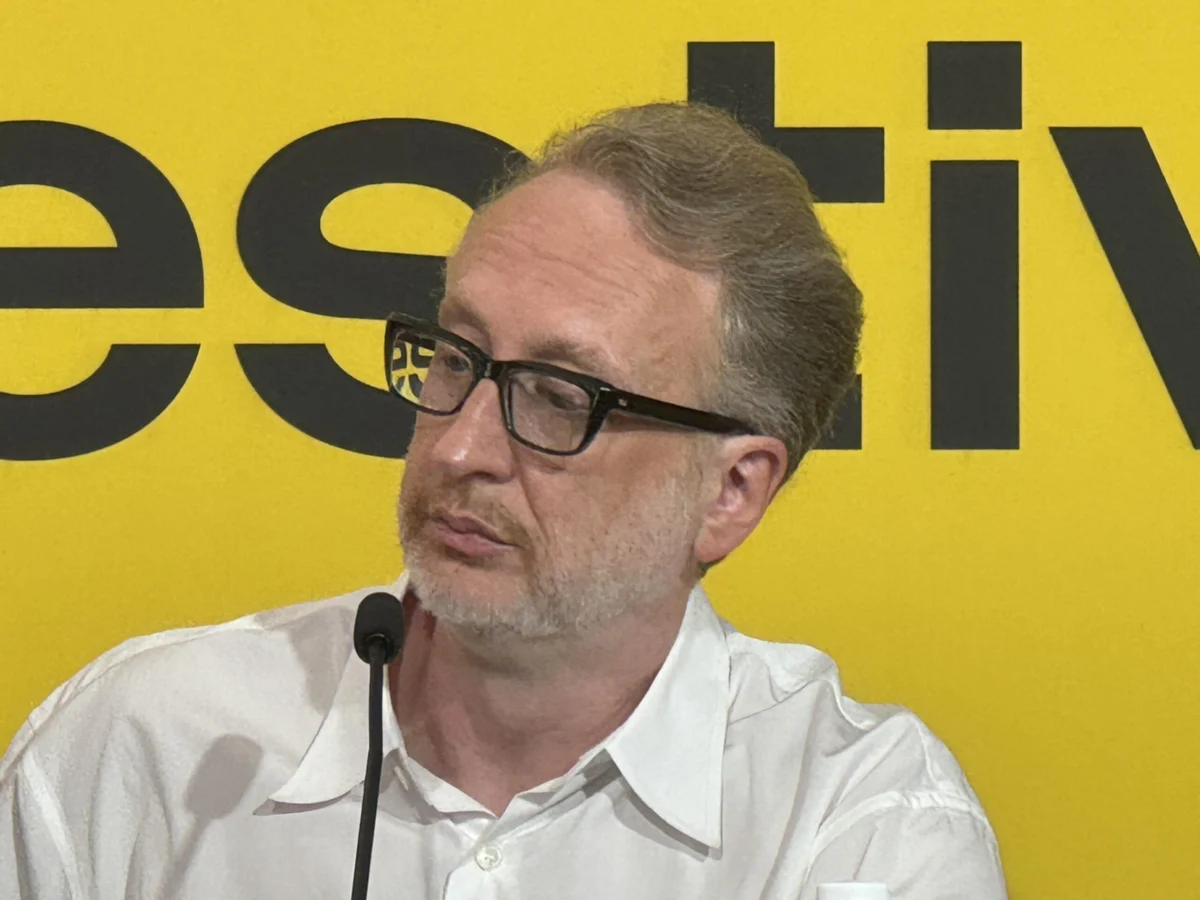
LOCARNO, SWITZERLAND — In the shimmering heat of the 77th Locarno Film Festival, amidst the cobblestone charm of the Ticino region, American auteur James Gray has emerged not merely as a guest of honor, but as a philosophical beacon for the future of the moving image. Gray, a filmmaker whose career has been defined by a meticulous devotion to the classical grammar of cinema, arrived at the festival this weekend to receive a prestigious honorary award, marking a celebratory milestone in a career that has spanned three decades of uncompromising storytelling.
The centerpiece of his visit was the Swiss premiere of his latest feature, Paper Tiger, a gritty, New York-centric thriller that sees the director returning to the urban landscapes that first established his reputation. Screening on the legendary Piazza Grande—an open-air cathedral of cinema capable of seating 8,000 spectators—the film represents a homecoming for Gray’s thematic obsessions: family, the American Dream, and the crushing weight of systemic corruption.
Main Facts: A Celebration of Auteurism and ‘Paper Tiger’
James Gray’s presence in Locarno is multifaceted, serving as both a retrospective of his influential body of work and a launchpad for his newest endeavor. The festival, renowned for its commitment to "discovery" and its celebration of directors who maintain a singular voice, bestowed Gray with an honorary award for his contributions to the art form.
Paper Tiger, Gray’s latest directorial effort, boasts a powerhouse ensemble cast including Adam Driver, Miles Teller, and Scarlett Johansson. The narrative follows two brothers (Driver and Teller) whose desperate pursuit of upward mobility and the elusive American Dream inadvertently entangles them with the ruthless Russian mafia in New York City. The film marks a tonal shift from the cosmic existentialism of Ad Astra and the semi-autobiographical intimacy of Armageddon Time, leaning back into the noir-inflected realism of Gray’s earlier works like Little Odessa and The Yards.
Beyond the premiere, the festival curated a selection of Gray’s modern classics, including the 2007 police drama We Own the Night and the 2008 romantic tragedy Two Lovers. These screenings, coupled with a masterclass scheduled for Monday, provide a comprehensive look at a filmmaker who is often described as more "European" in his sensibilities than his Hollywood contemporaries.
Chronology: From the Press Room to the Piazza Grande
The weekend’s events began with an intimate but intellectually rigorous press conference on Sunday evening. Gray, known for his erudite and often self-deprecating manner, met with international journalists to discuss the genesis of Paper Tiger and his broader views on the state of the industry.
During this session, Gray articulated a profound defense of cinema as a unique psychological experience. He moved from the theoretical—comparing the duration of a film to the cycles of human REM sleep—to the practical, discussing the logistical hurdles of filming in a rapidly changing New York City.
Following the press conference, the focus shifted to the Piazza Grande. As dusk fell over Locarno, Gray was ushered onto the stage to receive his honorary award before an audience of thousands. The atmosphere was one of reverence, reflecting Gray’s status as a "director’s director." The subsequent screening of Paper Tiger was met with the kind of rapturous reception typical of Locarno’s high-capacity venue, where the scale of the screen mirrors the ambition of Gray’s visual style.
The schedule continues into the week, with Gray’s masterclass expected to delve deeper into his technical process, specifically his preference for 35mm film and his collaboration with world-class cinematographers to achieve his signature chiaroscuro aesthetic.
Supporting Data: Cinema as the Ultimate Art Form
A significant portion of Gray’s discourse in Locarno centered on the historical and psychological significance of film. He challenged the audience and the press to consider the rapid evolution of cinema compared to other artistic disciplines.
"The first full-length sound film is, I think, 1928," Gray noted during the press conference. "Between 1920 and 1933, you have in the first five years of the art form… as we know it now, you have an ocean of masterpieces. M [Fritz Lang’s 1931 masterpiece] is what? A year and a half after the first full-length sound film."
Gray used this chronology to argue that cinema was not a slow evolution but an explosive realization of a centuries-old human desire. He drew a sharp contrast between the millennium-long development of musical scales or the centuries required to master perspective in painting (from the cave paintings of Lascaux to the Renaissance) and the near-instantaneous maturity of film.
The "Dream" Hypothesis
Gray’s central thesis is that cinema is the culmination of what previous artists were attempting to achieve. He cited Hieronymus Bosch’s triptychs and Richard Wagner’s Der Ring des Nibelungen as examples of "artists trying to get past their art form." According to Gray, these creators were striving for a medium that could replicate the immersive, non-linear experience of a dream.
"To me, movies are the most beautiful art form because it’s the closest thing we have to a dream," he explained. "Your REM sleep is one and a half to two hours per night, if you’re lucky. Cinema is the clearest window into somebody else’s consciousness."
Official Responses: On the Craft and Collaboration
When the conversation turned to the practicalities of the set, Gray offered a rare glimpse into his directorial philosophy, particularly regarding his work with high-profile actors like Adam Driver and Scarlett Johansson. In an industry often dominated by rigid storyboarding and "pre-visualization," Gray’s approach is notably organic.
The Actor-Centric Set
Gray explicitly distanced himself from the "representational" style of directors like Alfred Hitchcock, who famously viewed actors as "cattle" or chess pieces to be moved. Instead, Gray prioritizes the comfort and intuition of his cast.
"When I go to the set, I let the actor always tell me what they want to do," Gray stated. "I have in mind exactly the way I want to shoot. But I have the actor tell me what they want to do, what’s comfortable to them. Then I try to make sure that my original idea of what needs to be communicated in the story is in line with how they’re moving in the scene."
The "Messiness" of Truth
One of the more revealing aspects of Gray’s process is his reliance on rehearsals and first takes. He admitted that he often shoots the rehearsal because "messiness is always interesting." This search for authenticity leads him to a binary editing process: "I’m either using take one or take 25," he said, suggesting that the truth of a performance is found either in its initial raw instinct or after the actor has been pushed past their practiced defenses.
In a moment of characteristic humility, Gray added, "I have no acting talent. I’m not a good director of actors. It is all about how good they are and letting them have the freedom to be themselves in the scene and to listen to each other. That is the key and the core to acting."
Implications: The Resilience of the Mid-Budget Auteur
The reception of James Gray at Locarno and the anticipation surrounding Paper Tiger carry significant implications for the broader film industry. At a time when the "middle-class" of cinema—films with substantial budgets that are neither micro-budget indies nor billion-dollar franchises—is under threat, Gray’s ability to secure A-list talent for a Russian mafia drama is a testament to the enduring power of the director-led model.
The "New York" Legacy
By returning to New York for Paper Tiger, Gray is re-engaging with his roots. For decades, Gray has been the preeminent chronicler of the city’s outer boroughs, capturing a version of New York that is far removed from the glitz of Manhattan. His return to this setting suggests a "back to basics" approach that may resonate with audiences weary of CGI-heavy spectacles.
The European-American Divide
Gray’s career continues to highlight the fascinating divide between American and European film culture. While he has often struggled for box-office dominance in the United States, he is treated as royalty in Europe. The Locarno honor reinforces the idea that the "Old World" remains the primary guardian of the auteurist tradition. This support is crucial for directors like Gray, providing them with the cultural capital necessary to continue making personal, challenging films within the Hollywood system.
The Future of ‘Paper Tiger’
As Paper Tiger begins its journey through the festival circuit, the buzz from Locarno suggests a potential awards-season contender, particularly for its lead performances. The pairing of Adam Driver and Miles Teller—two of the most sought-after actors of their generation—combined with Gray’s stylistic rigor, positions the film as a significant cultural event for the upcoming autumn movie season.
As the Locarno Film Festival continues through August 15, the images of James Gray on the Piazza Grande will likely serve as the defining memory of this edition: a filmmaker standing at the intersection of history and dreams, proving that even in a digital age, the "ocean of masterpieces" is still being fed by new tides.