The Digital Canvas Awakens: How Infinidream.ai is Resurrecting the Idle Screen
Introduction: Beyond the Black Mirror
For decades, the relationship between humans and their personal computers has followed a binary rhythm: intense engagement or total darkness. When we step away from our workstations, the screen—a high-resolution portal that costs hundreds or thousands of dollars—inevitably fades into a "black mirror," a literal void in the room. At best, we are greeted by a bouncing logo or a utilitarian clock, a stark reminder of the machine’s idle state.
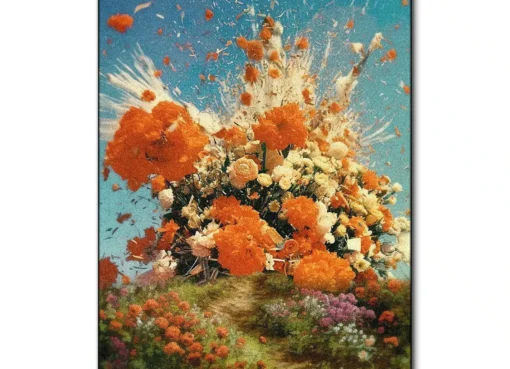
Scott Draves, a pioneer in the realm of algorithmic art, views this silence not as a necessity, but as a missed opportunity. His latest venture, Infinidream.ai, seeks to transform these millions of idle displays into a global gallery of living, breathing AI-generated art. By launching a dedicated application for Mac and Windows, Draves is challenging the notion of what a screensaver should be, moving past static images and repetitive loops into a realm of "generative ambient energy."
Infinidream.ai is not merely a software utility; it is a philosophical argument for the enrichment of our physical spaces through digital evolution. It turns the dormant monitor into a kinetic sculpture, a source of light and mood that shifts as subtly as the shadows in a room.
Main Facts: The Architecture of a Living Painting
At its core, Infinidream.ai is a desktop application designed to curate and display AI-generated art that evolves in real-time. Unlike traditional digital frames that cycle through a folder of JPEGs, or video backgrounds that repeat every 30 seconds, Infinidream utilizes generative models to ensure that the art is in a constant state of flux.
Key Features of the Platform:
- Cross-Platform Accessibility: The app is currently available for both macOS and Windows, ensuring a broad reach across professional and personal computing environments.
- The "Living" Mechanism: The software does not play video files. Instead, it navigates the "latent space" of AI models, allowing a painting to slowly morph, breathe, and shift its composition. This ensures that the viewer never sees the exact same image twice.
- Artist-Centric Curation: Rather than relying on raw, unprompted AI noise, the platform features a curated selection of works from dozens of digital and AI artists. These styles range from the surreal and abstract to the hypnotic and atmospheric.
- Customizable Tempo: Users have agency over the "vibe" of their space. The art can be set to a "slow-motion" drift for a meditative office environment or accelerated to a more dynamic "burning fire" tempo for social gatherings.
- Ambient Integration: The app functions as a traditional screensaver that triggers after a period of inactivity, but it can also be toggled into a dedicated fullscreen mode, effectively turning a secondary monitor into a piece of high-end digital décor.
Infinidream.ai is currently offered under a "free to try" model, requiring only a user account to begin streaming the collective imagination of its artist network.
Chronology: From Electric Sheep to the AI Frontier
To understand the significance of Infinidream.ai, one must look back at the career of its creator, Scott Draves. A New York-based artist and software engineer, Draves has spent over a quarter-century exploring how code can mimic the processes of biological evolution.
1999: The Birth of Electric Sheep
Long before the term "Generative AI" entered the mainstream lexicon, Draves created Electric Sheep. Named after Philip K. Dick’s novel Do Androids Dream of Electric Sheep?, the project was a landmark in distributed computing and digital art. It turned the screensavers of 450,000 computers into a networked supercomputer.
Each participating machine would render a small piece of a complex fractal animation. These "sheep" were then shared across the network. Users could vote on the sheep they found most aesthetically pleasing; the most popular sheep would "survive" and "reproduce," passing their genetic code (mathematical parameters) to the next generation of animations.
2000s–2010s: Museum Recognition
The success of Electric Sheep elevated generative art from a niche internet hobby to a recognized contemporary art form. Draves’ work was exhibited at the Museum of Modern Art (MoMA) and the Los Angeles County Museum of Art (LACMA). It proved that digital art could be communal, evolutionary, and persistent.
2023–2024: The AI Pivot
With the explosion of Diffusion models and Large Language Models, the tools for generative art underwent a tectonic shift. Draves recognized that the "living" quality he sought to achieve with fractals in 1999 could now be realized with much greater complexity and emotional depth through AI. Infinidream.ai was conceived as the spiritual successor to Electric Sheep—moving from abstract fractals to the vast, representational, and surreal worlds made possible by modern neural networks.
Supporting Data: The Tech Behind the Canvas
The technical challenge of Infinidream.ai lies in the balance between visual quality and computational efficiency. Traditional AI art generation (like Midjourney or DALL-E) requires significant GPU power to create a single static image. Infinidream, however, must provide a smooth, continuous transition without overheating the user’s computer or consuming excessive bandwidth.
Latent Space Navigation
The "magic" of the app’s movement comes from a technique known as latent space interpolation. Every AI model has a "latent space"—a mathematical map of all the possible images it can generate. By slowly moving the "coordinates" within this space, the app can create a seamless transition between two different states of a painting. This creates the "breathing" effect described by early users, where a cloud might slowly turn into a face, or a landscape might shift from autumn to winter over several minutes.
The Network Effect
While Electric Sheep relied on local rendering, Infinidream.ai leverages a hybrid approach. By utilizing modern web technologies and optimized desktop wrappers, the app can stream high-fidelity generative sequences that are curated on the backend. This allows the platform to introduce new artists and styles instantly without requiring the user to download massive update files.
Energy and Environment
One of the historical criticisms of screensavers is their energy consumption. However, Draves argues that as OLED and high-efficiency LED displays become standard, the "cost" of displaying art is minimal compared to the aesthetic and psychological value it provides. Furthermore, by giving a second life to older monitors—often relegated to landfills—Infinidream.ai offers a way to repurpose hardware as dedicated art frames.

Official Responses: A Vision for Ambient Art
Scott Draves has been vocal about his desire to move away from the "attention economy." In a world where every app is designed to trigger a dopamine response through notifications and rapid-fire content, Infinidream.ai is intentionally quiet.
"There’s a moment every few hours when your computer just sits there," Draves notes. "Screen dark, or worse: showing the time in giant white numerals against a black void, quietly announcing that nothing interesting is happening. That moment is wasted."
Draves describes the experience of Infinidream.ai as being similar to a Calder mobile or a kinetic sculpture. "It’s the kind of thing that makes a space feel different without demanding anything from you," he explains.
Artists participating in the project have echoed this sentiment. Many AI artists find that their work is often consumed in a "scroll-and-forget" manner on platforms like Instagram or X (formerly Twitter). Infinidream provides a more permanent, atmospheric home for their creations. The curation process is rigorous, ensuring that the art remains "moody, abstract, hypnotic, and strange" rather than falling into the trap of generic AI-generated imagery.
Implications: The Future of Digital Feng Shui
The emergence of platforms like Infinidream.ai signals a shift in how we perceive our living and working environments. As remote work becomes a permanent fixture for millions, the home office has become a sanctuary that requires careful aesthetic management.
1. The Rise of "Digital Feng Shui"
Interior designers are increasingly looking at screens as "dynamic wallpaper." Infinidream.ai allows a room’s atmosphere to change based on the time of day or the user’s mood. A bright, energetic abstract piece can fuel a morning of deep work, while a slow, dark, surrealist landscape can help wind down the room in the evening.
2. The Democratization of Fine Art
Historically, owning "living art" or kinetic installations was the province of the wealthy or those with access to specialized galleries. By turning standard consumer hardware into a canvas, Infinidream.ai democratizes the experience of high-end generative art. It bridges the gap between a high-tech workstation and a sophisticated living space.
3. Redefining the AI Narrative
Much of the current discourse around AI is centered on productivity, deepfakes, or job displacement. Infinidream.ai offers a more poetic alternative. It frames AI as a tool for "ambient intelligence"—a technology that doesn’t just work for us, but lives with us, enhancing our environment in subtle, non-intrusive ways.
4. The Longevity of Digital Displays
As monitor technology plateaus in terms of resolution, the differentiator for hardware will increasingly be the content it displays. Software like Infinidream provides a compelling reason for users to keep their screens on, potentially leading to a new market for "always-on" low-power displays integrated into furniture and architecture.
Conclusion: Turning the Lights On
The "dead screen" problem is a relic of an era when computers were strictly tools—gray boxes to be shut down the moment the work was done. Today, our devices are extensions of our identities and our environments.
Infinidream.ai offers a simple but profound upgrade to the daily human experience. By inviting dozens of artists to inhabit the idle moments of our lives, Scott Draves is proving that technology does not have to be cold or utilitarian. It can be a source of wonder.
As the app’s tagline suggests: "Your screen is on anyway. It might as well be beautiful." For those looking to banish the black void of the idle monitor, the journey into the infinite dream is now only a download away.
Availability: Infinidream.ai is available for download at infinidream.ai. The app is free to try for Mac and Windows users, offering a gateway into the next generation of ambient generative art.