Meta Connect 2026: Incentivizing the "Hands-First" Future with a $1 Million Developer Competition
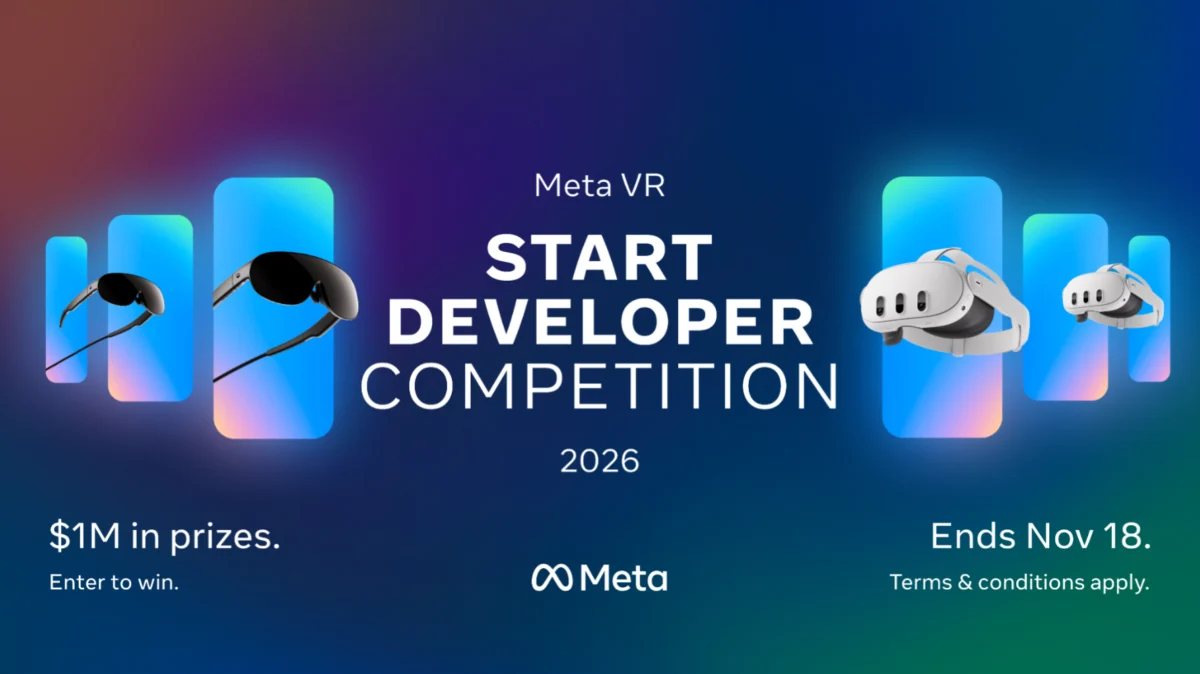
The landscape of spatial computing is undergoing a fundamental shift, moving away from the peripheral-heavy interactions of the past decade toward a more intuitive, "hands-first" paradigm. At the Meta Connect 2026 Developer State of the Union, Meta Platforms Inc. solidified this strategic pivot by announcing the Meta VR Start Developer Competition 2026. With a $1 million prize pool aimed at fostering innovation for both the Meta Quest ecosystem and the newly unveiled Meta VR Glasses, the competition serves as a clarion call for developers to redefine how users interact with digital environments.
Main Facts: The $1 Million Push for Natural Interaction
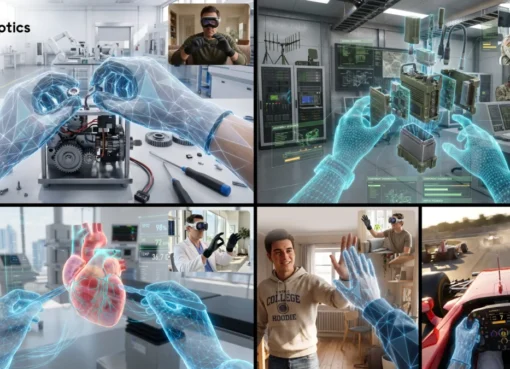
The Meta VR Start Developer Competition 2026 is designed to catalyze the development of applications that prioritize hand tracking and natural user interfaces. As Meta prepares to transition from bulky headsets to sleek, wearable glasses, the reliance on physical controllers is being phased out in favor of biometric inputs.
Prize Structure and Categories
The competition will distribute a total of $1 million across 20 distinct prizes. Each winning entry is eligible for an award of up to $100,000. The awards are categorized across three primary pillars of the Meta ecosystem:
- Gaming: Immersive experiences that leverage hand-tracking for gameplay mechanics.
- Entertainment: Passive or interactive media experiences, including social VR and streaming.
- Productivity: Tools designed for the "infinite office," focusing on utility, 3D modeling, and collaborative workspaces.
Entry Requirements and "Hands-First" Focus
Meta has established rigorous "Hard Requirements" for participants. The most significant is the "hands-first" mandate. While the Quest line continues to support Touch Plus controllers, the competition specifically rewards apps that make interaction "more natural and gameplay more intuitive than ever before" through hand and eye tracking.
Qualifying entries are not limited to brand-new software. Meta is actively encouraging the "adaptation or significant updating" of existing titles. According to official guidelines, a "significant update" includes:
- Implementing hand interactions as a primary feature.
- Integrating multiplayer or social support.
- Introducing a robust Mixed Reality (MR) interaction mode.
- Releasing new tools for User-Generated Content (UGC) creation.
The deadline for submission via the Devpost platform is November 18, 2026. To participate, developers must be members of the Meta VR Start program, a prerequisite that ensures contestants have access to Meta’s internal support infrastructure.
Chronology: From Oculus Start to the VR Glasses Era
The 2026 competition is the latest evolution in Meta’s long-standing effort to cultivate an independent developer community. Understanding the trajectory of this program provides context for the current $1 million investment.
The Evolution of the Program
The initiative began years ago as Oculus Start, a grassroots program designed to help indie developers overcome the high entry barriers of VR development. As Meta rebranded and shifted its focus toward the broader "metaverse" concept, the program became Meta Horizon Start. The 2026 rebranding to Meta VR Start reflects a broader hardware vision that extends beyond the Horizon social platform to include high-end wearable optics.
The 2025 Precedent
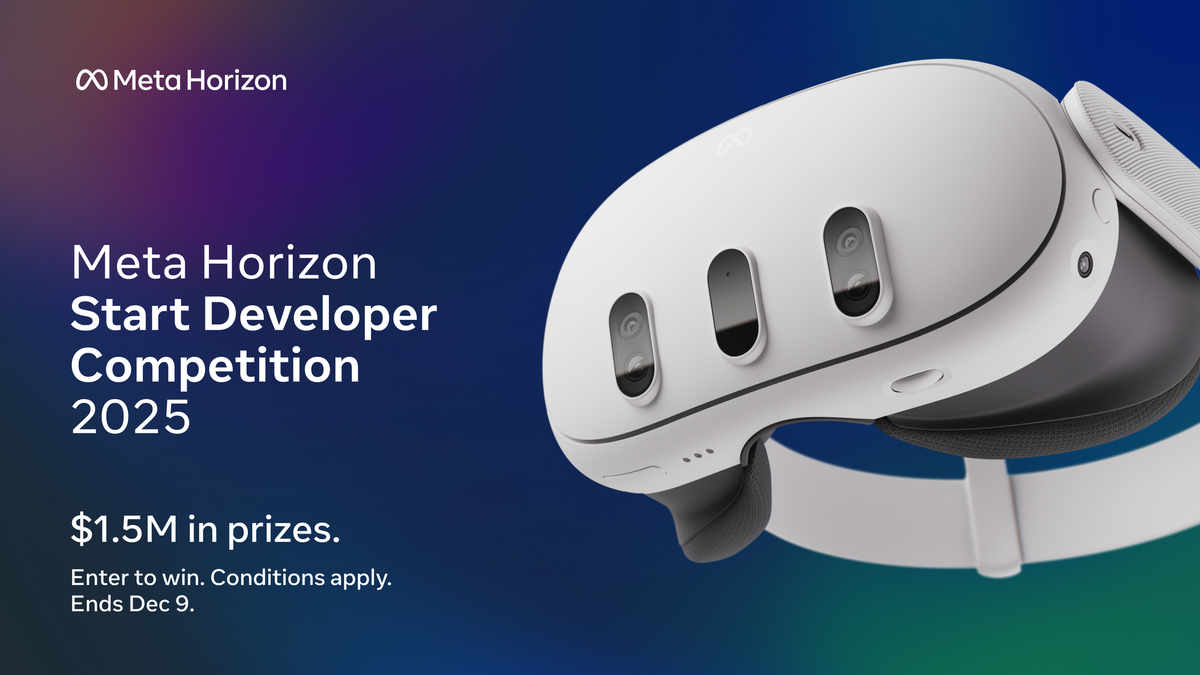
In late 2025, Meta launched a similar competition with a slightly larger prize pool of $1.5 million, distributed across 32 prizes. That competition focused heavily on lifestyle and gaming apps for the Quest 3 and the then-unreleased Quest 3S. The 2025 iteration was largely seen as an effort to populate the Meta Horizon Store with content that utilized the improved passthrough capabilities of the Quest 3 hardware.
The 2026 Pivot
The announcement at the 2026 State of the Union represents a narrowing of focus. While the prize pool is smaller in total dollars ($1 million vs $1.5 million), the individual prize ceilings remain high at $100,000. This suggests Meta is looking for higher-quality, more specialized applications rather than a high volume of generic ports. The timing is also critical, as it aligns perfectly with the announcement of the Meta VR Glasses, scheduled for a Spring 2027 release.

Supporting Data: Hardware as the Catalyst
The impetus for this competition is the hardware itself. The Meta VR Glasses, officially unveiled at the same event, represent the most significant form-factor change in the company’s history.
Meta VR Glasses Specifications
To understand why "hands-first" development is mandatory, one must look at the specs of the upcoming device:
- Weight: Approximately 100 grams (compared to the ~500g of the Quest 3).
- Display: 2.4K micro-OLED displays per eye, offering significantly higher pixel density than previous LCD models.
- Compute: Powered by a tethered "puck" containing the Qualcomm Snapdragon Reality Elite chipset.
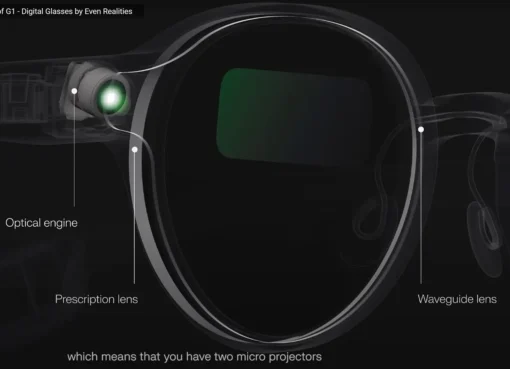
- Interaction: The device features no default controllers. It relies entirely on Eye and Hand Tracking.
The Controller Dilemma
While the Meta VR Glasses will support the Touch Plus controllers (introduced with the Quest 3) as an optional accessory, they are not included in the $1,300 retail package. This hardware decision creates a "content gap." If developers do not update their apps to support hand tracking, the flagship VR Glasses will launch with a library that is largely unplayable without additional purchases. The $1 million competition is, in essence, a strategic subsidy to ensure the 2027 launch is supported by a "hands-first" software catalog.
Official Responses: Meta’s Vision for Developer Relations
During the State of the Union address, Meta’s developer relations leadership emphasized that the VR Start program is more than just a financial grant. It is a comprehensive support ecosystem.
Beyond the Prize Money
Meta representatives highlighted that VR Start members receive:
- Direct access to Meta developer relations staff for troubleshooting.
- Entry into a community Discord featuring veteran VR engineers.
- Advanced technical education and "go-to-market" guidance.
- Software credits and "exclusive Meta events."
"Our goal is to lower the friction between a developer’s vision and the final product on the store," a Meta spokesperson noted during the event. "The move to VR Glasses requires a fundamental rethink of the UI/UX. We aren’t just asking for ports; we are asking for a reimagining of what spatial interaction looks like when the barrier of a plastic controller is removed."
The Role of Devpost
By partnering with Devpost for the submission process, Meta is leveraging a platform familiar to the global hackathon and developer community. This move is intended to attract talent from outside the traditional gaming sphere—specifically targeting productivity and utility developers who may have previously focused on mobile or web applications.
Implications: The High Stakes of the Spatial War
The Meta VR Start Developer Competition 2026 is a tactical move in a much larger strategic war for the future of computing. As Apple continues to refine the Vision Pro and its "VisionOS," Meta is under pressure to prove that its ecosystem is not just for gamers, but for general-purpose computing.
1. Social Acceptance and the "Glasses" Form Factor
For VR to achieve mainstream adoption, it must pass the "social friction" test. Bulky headsets and handheld wands are acceptable in a living room but impractical in a cafe or office. By incentivizing "hands-first" apps, Meta is preparing users for a future where they can interact with digital overlays using the same gestures they use in the physical world. This competition is the first step in training the developer base to build for a world where "the interface is invisible."
2. The Challenge of "Controller-Less" Gaming
The gaming industry faces the steepest climb. Many VR titles rely on the haptic feedback and physical triggers of controllers. Removing these inputs requires a total overhaul of game design. Meta’s $100,000 prizes serve as "R&D grants" for studios to experiment with gesture-based combat, menu navigation, and movement mechanics. If successful, this could lead to a new genre of "naturalistic" gaming that appeals to non-gamers.

3. Ecosystem Lock-in
By requiring membership in the Meta VR Start program, Meta is ensuring that the next generation of "killer apps" is built natively for their platform. The "go-to-market guidance" offered to winners suggests that Meta will heavily promote these "hands-first" titles in the Horizon Store, giving winners a massive advantage in visibility as the VR Glasses launch in 2027.
4. The $1,300 Hurdle
With the VR Glasses priced at $1,300, Meta is targeting a premium demographic. This audience expects polished, professional-grade software. The competition’s focus on productivity and high-end entertainment suggests Meta is trying to move away from the "tech demo" feel of many early Quest apps toward a more sophisticated software suite that justifies a four-figure hardware investment.
Conclusion
The Meta VR Start Developer Competition 2026 is a pivotal bridge between the era of the "VR headset" and the era of "spatial glasses." By putting $1 million on the table, Meta is not just buying apps; it is buying a transition. As the November 18 deadline approaches, the industry will be watching closely to see if developers can solve the "hands-first" puzzle and deliver the intuitive experiences necessary to make the Meta VR Glasses a success in 2027. For the developers, it is an opportunity to be at the forefront of a paradigm shift—and to be handsomely rewarded for doing so.