Alex T. Singer’s “We, the Fleet” Claims the Prestigious Theodore Sturgeon Memorial Award for 2025/2026
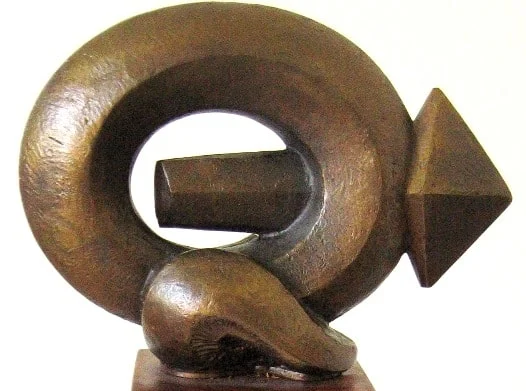
LAWRENCE, KS — The J. Wayne and Elsie M. Gunn Center for the Study of Science Fiction at the University of Kansas has officially announced the winner of the 2025 Theodore Sturgeon Memorial Award. Alex T. Singer has been named the recipient of the prestigious honor for the short story “We, the Fleet,” originally published in the May 2025 issue of Clarkesworld Magazine.
The Sturgeon Award, widely considered one of the three most significant juried honors in the science fiction genre alongside the Nebula and the Hugo, recognizes the best short science fiction story of the year. Singer’s victory places them among a storied lineage of writers who have shaped the boundaries of speculative literature for nearly four decades.
Main Facts: A Night for Short Fiction Excellence
The announcement, which serves as a precursor to the formal ceremony scheduled for October 2026, highlights a particularly competitive year for short fiction. Alex T. Singer’s “We, the Fleet” emerged as the winner from a field of finalists that represented the vanguard of contemporary science fiction.
Following closely behind the winner were two distinguished runners-up. Second place was awarded to Rich Larson for “The Sack of Burley Cottage,” published in Reactor (June 2025). Larson, a prolific and highly acclaimed voice in the "New Space Opera" and "Biopunk" subgenres, further solidified his reputation with this recognition. Third place was secured by Alaya Dawn Johnson for “The Shadow on the Nest,” published in Uncanny Magazine (September-October 2025). Johnson, a previous Nebula and World Fantasy Award winner, continues to be a dominant force in the intersection of literary fiction and speculative world-building.
The Sturgeon Award is unique in its focus on the short story format, a medium that many critics argue is the true "heart" of science fiction. While novels often capture the commercial spotlight, the short story remains the laboratory where new ideas, social critiques, and linguistic experiments are first tested.
Chronology: From Publication to the Hall Center Podium
The journey for this year’s winner began in early 2025, a year that saw a surge in high-quality short fiction across digital and print platforms.
- May 2025: “We, the Fleet” is published in Clarkesworld Magazine, edited by Neil Clarke. The story immediately garners critical attention for its prose and thematic depth.
- Late 2025: The Sturgeon Award jury begins the arduous task of reviewing hundreds of eligible stories published throughout the calendar year.
- Early 2026: The short list of finalists is curated, featuring a diverse array of voices ranging from established veterans to emerging talents.
- Late 2026 (Upcoming): The formal presentation of the award will take place during the fifth annual Sturgeon Symposium. The event is scheduled for October 15-16, 2026, at the Hall Center for the Humanities in Lawrence, Kansas.
- October 15, 2026: The ceremony will feature a reception, a formal reading by Loyer (representing the symposium’s keynote presence), and a Q&A session focused on the theme “Expanding Speculative Horizons.”
Supporting Data: The Jury and the Legacy of the Gunn Center
The integrity of the Sturgeon Award is upheld by its rotating panel of jurors, who are themselves luminaries within the field. This year’s panel featured a "powerhouse" of speculative talent:
- Elizabeth Bear: A multi-Hugo and Locus Award winner known for her versatility across hard SF and epic fantasy.
- Kelly Link: A Pulitzer Prize finalist and MacArthur "Genius" Grant recipient, often cited as one of the greatest living short story writers.
- Sarah Pinsker: A Nebula and Hugo winner whose work often explores the intersection of technology and music.
- Noël Sturgeon: The daughter of Theodore Sturgeon, ensuring the award remains true to her father’s literary ethos.
- Taryne Taylor: A prominent scholar and editor specializing in speculative fiction and its cultural impacts.
The award was established in 1987 by the late James Gunn, a titan of science fiction scholarship, in conjunction with the heirs of Theodore Sturgeon. Sturgeon, who passed away in 1985, was a writer who prioritized the "human" element in science fiction. His work often focused on love, empathy, and the social "other," famously encapsulated in his novel More Than Human.
The Gunn Center for the Study of Science Fiction at the University of Kansas has served as the steward of this legacy. Since its founding, the Center has become a global hub for the academic study of the genre, bridging the gap between "fandom" and "academia."
Official Responses: Celebrating the Genre’s Growth
While formal acceptance speeches are reserved for the October symposium, the literary community has already begun to react to Singer’s win. Editors at Clarkesworld noted that “We, the Fleet” represents a sophisticated evolution of the "sentient ship" trope, blending emotional resonance with rigorous speculative concepts.
A representative from the Gunn Center stated:
"The Sturgeon Award continues to serve as a beacon for what is possible in the short form. Alex T. Singer’s work exemplifies the very best of what Theodore Sturgeon himself championed: stories that use the fantastic to illuminate the human condition. In a year of exceptional entries, ‘We, the Fleet’ stood out for its luminous prose and its daring vision of the future."
Juror Sarah Pinsker commented on the difficulty of the selection process, noting that the "sheer breadth of imagination" in this year’s finalists made the final decision one of the closest in recent memory. The inclusion of runners-up like Rich Larson and Alaya Dawn Johnson underscores the "embarrassment of riches" currently available to readers of short speculative fiction.
Implications: Short Fiction in the Digital Age
The results of the 2025 Sturgeon Award highlight several significant trends in the science fiction industry:
1. The Dominance of Digital Magazines
The top three stories all originated in digital-first publications (Clarkesworld, Reactor, and Uncanny). This reinforces the shift away from traditional print "slicks" toward online platforms that offer global accessibility and rapid publication cycles. These magazines have become the primary gatekeepers and nurturers of award-winning talent.
2. The Theme of "Expanding Speculative Horizons"
The theme of the upcoming symposium reflects a broader movement within the genre to move beyond Western-centric or "Golden Age" tropes. The finalists this year represent a more global, inclusive vision of the future, dealing with themes of collective identity, environmental collapse, and the ethics of artificial consciousness.
3. The Enduring Relevance of Sturgeon’s Law
Theodore Sturgeon famously coined "Sturgeon’s Law," which states that "ninety percent of everything is crap," with the corollary being that the remaining ten percent is worth dying for. The Sturgeon Award exists to find and celebrate that ten percent. In an era of AI-generated content and a saturated media market, the role of a curated, juried award becomes even more vital in identifying works of genuine literary merit.
4. Career Trajectories for Winners
For Alex T. Singer, this win is a "career-making" moment. Previous winners of the Sturgeon Award include giants like Connie Willis, James Tiptree Jr., and Ted Chiang. Winning the Sturgeon often leads to major book deals, inclusion in "Year’s Best" anthologies, and increased visibility for future projects.
Looking Ahead: The Sturgeon Symposium 2026
As the community looks toward the October 2026 ceremony in Lawrence, the focus remains on the evolution of the field. The Sturgeon Symposium has grown into a vital intellectual gathering, where writers, fans, and scholars dissect the "Expanding Speculative Horizons" of the 21st century.
The Hall Center for the Humanities will host two days of intensive dialogue. Beyond the award ceremony, the symposium will explore how science fiction can address the pressing anxieties of the current era—from the climate crisis to the blurring lines between biological and digital life.
For the University of Kansas, the event reaffirms its status as the "home" of science fiction scholarship. For the winners and finalists, it is a moment of validation. And for the readers, it is a reminder that in the short story, the universe can still be found in a few thousand words.
For more information on the Sturgeon Award, the Gunn Center, or the upcoming 2026 Symposium, interested parties are encouraged to visit the official website of the Gunn Center for the Study of Science Fiction at the University of Kansas.