The Augmented Future of Advertising: How Smart Glasses Could Revitalize Billboards

London, UK – [Insert Date] – The ubiquitous smartphone has long been accused of drawing our gaze downwards, away from the world around us. This trend, perhaps most vividly satirized in the 2021 film "Don’t Look Up," has prompted speculation about the future of traditional advertising, particularly billboards. However, a new technological frontier – smart glasses – could paradoxically usher in a renaissance for these roadside giants, transforming them from static displays into dynamic, interactive gateways to information and experiences.
While the widespread adoption of smart glasses remains an open question, their potential to project digital content directly into the wearer’s field of vision presents a compelling argument for the future relevance of out-of-home advertising. Far from rendering billboards obsolete, this technology could imbue them with a level of interactivity and utility previously unimaginable, marking a significant evolution in how brands connect with consumers.
The Shifting Gaze: From Screens to the Street
The narrative surrounding technological advancement and advertising has often been one of displacement. The rise of digital platforms was expected to decimate traditional media, and the smartphone, in particular, seemed poised to eclipse physical advertising. Why, one might ask, would anyone glance at a static poster when their personal device can deliver tailored content and immersive experiences?
Yet, a closer examination of the burgeoning smart glasses market suggests a different trajectory. The fundamental appeal of smart glasses lies in their ability to deliver digital information and entertainment without requiring users to look down. This inherent characteristic positions them not as a replacement for the world around us, but as an enhancement of it. In this context, the existing urban landscape, already a canvas for a vast array of outdoor advertising, becomes an even more fertile ground for innovation.

The key lies in the power of augmented reality (AR), a technology that overlays digital information and imagery onto the real world. As smart glasses become more sophisticated, their capacity to seamlessly integrate AR experiences with physical objects will unlock unprecedented potential for billboards. Imagine walking down a street and, with a glance through your smart glasses, a static movie poster transforms into a dynamic trailer, or an advertisement for a local restaurant provides real-time menu information and booking options. This is not mere speculation; it represents a tangible future where physical advertising becomes a launchpad for rich digital engagement.
Electric Garden: A Precursor to the Augmented Billboard
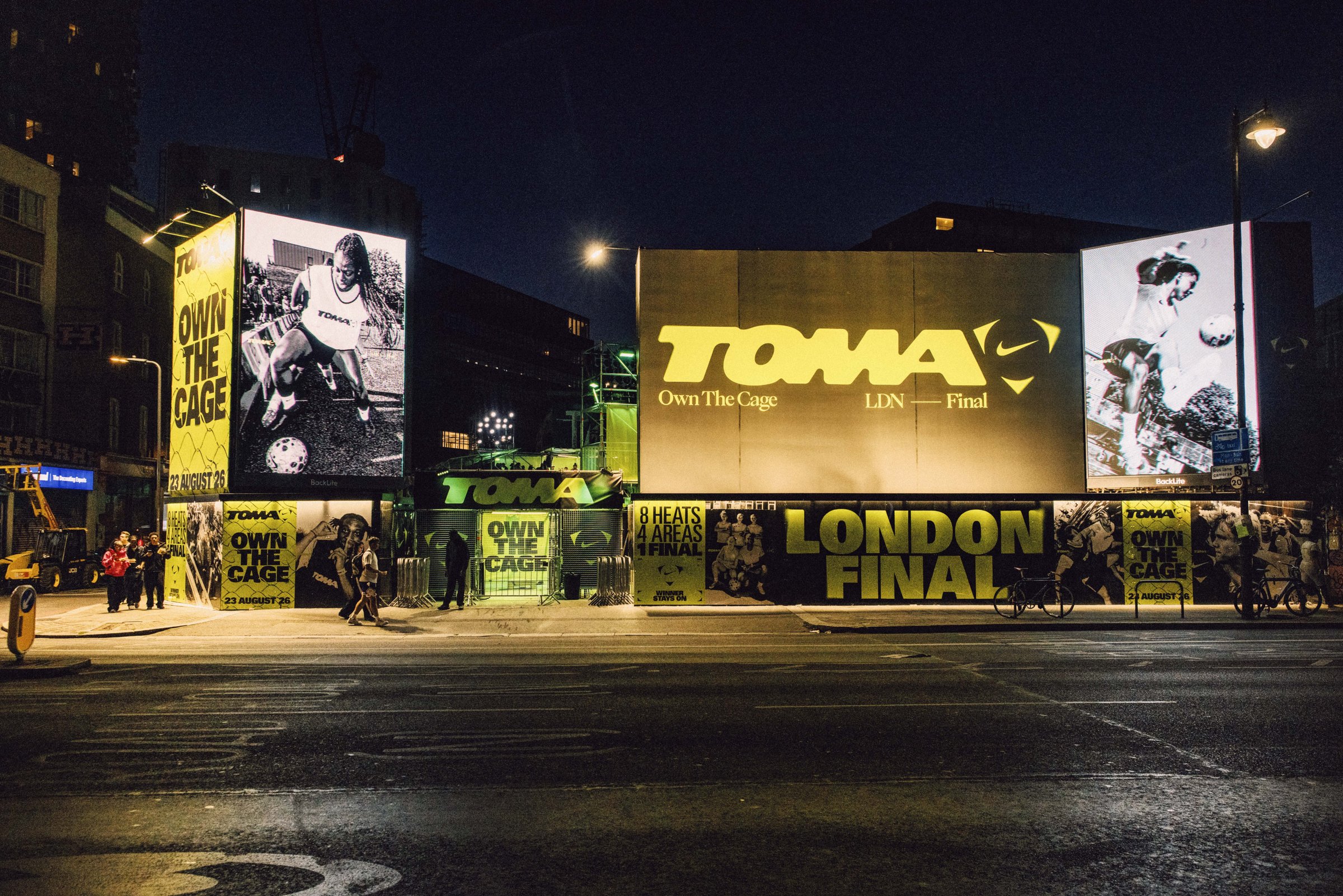
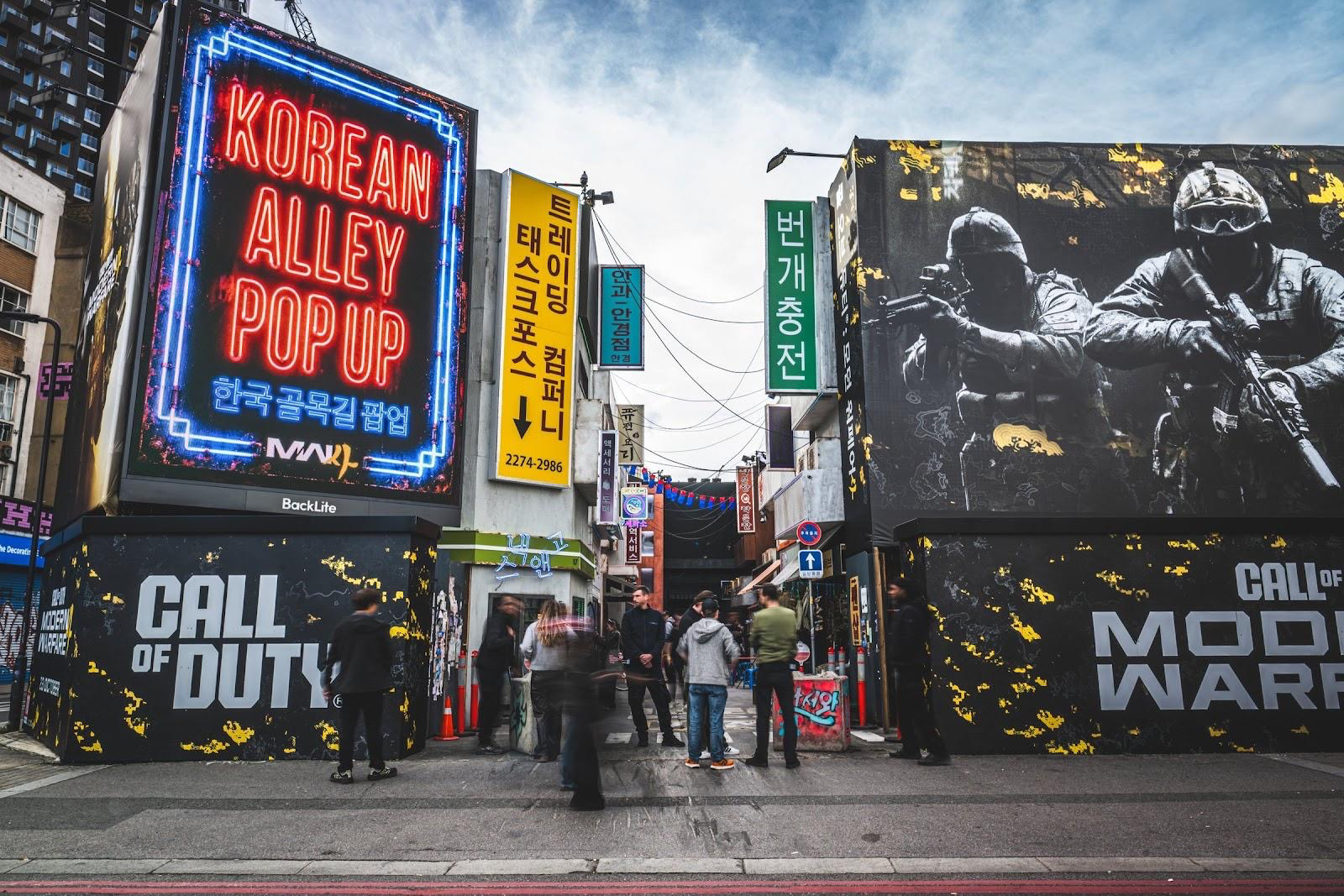
The concept of bridging the gap between digital screens and physical experiences is already being explored in innovative ways. Electric Garden, a striking 21,000-square-foot open-air site on Shoreditch High Street in London, is a prime example. Billing itself as "the billboard you can walk into," Electric Garden utilizes a row of giant digital screens that act as a gateway to a curated physical space. Brands can run campaigns on the digital displays, which then seamlessly transition into immersive, tangible environments for consumers to explore.
The launch campaign for Activision’s "Call of Duty: Modern Warfare 4" exemplified this approach. The site was transformed into a neon-lit, Seoul-inspired alleyway, complete with authentic-looking convenience stores, plastic stools, and interactive code-breaking missions. Alex Ezen, co-founder of Electric Garden, articulated the strategic advantage: "A screen can capture attention, but a physical experience gives people a reason to stop, take part and share it." This sentiment underscores the enduring power of experiential marketing, a power that augmented reality, facilitated by smart glasses, can amplify on a grand scale.
From Passive Display to Interactive Hub: The Evolution of the Billboard
For over a century, the billboard has operated primarily as a one-way communication channel. While QR codes emerged as an attempt to introduce interactivity, their practical adoption has been limited. The need to physically stop, retrieve a smartphone, and align it with a pixelated square proved a significant barrier for widespread, spontaneous engagement.

The advent of smart glasses, however, promises to revolutionize this dynamic. The inherent design of these devices encourages users to remain engaged with their surroundings. When directed at a billboard, smart glasses could trigger a cascade of interactive possibilities, likely powered by sophisticated AI assistants embedded within the eyewear.
Consider the humble movie billboard. With smart glasses, a user could instantly:
- Play the trailer: Access the full cinematic preview with a simple gesture or voice command.
- Discover showtimes and locations: Receive immediate information about nearby cinemas and screening schedules.
- Navigate to the venue: Have turn-by-turn directions overlaid directly onto their field of vision, guiding them to the nearest multiplex.
This vision, while echoing the speculative narratives of science fiction like "Black Mirror," is increasingly grounded in technological reality. The rapid evolution of AR capabilities and the growing investment in the smart glasses sector suggest that these functionalities are not distant fantasies but achievable advancements.
The Creative Challenge: Designing for the Augmented Urban Canvas
The prospect of smart glasses and AR transforming billboards presents a significant, yet exhilarating, challenge for designers and advertisers. The creative brief will evolve from designing static visuals to crafting dynamic, context-aware experiences that respond to user interaction and environmental cues.

This shift demands a new paradigm in advertising design, one that embraces:
- Layered Information: Content will need to be designed in layers, with essential information immediately accessible and deeper dives available upon user request.
- Contextual Relevance: AR experiences will need to be tailored to the specific location and time, offering personalized content that resonates with the individual user.
- Seamless Integration: The digital overlays must feel natural and intuitive, enhancing rather than distracting from the real-world environment.
- Interactivity and Gamification: Engaging users through interactive elements, puzzles, or mini-games integrated with the billboard content will be crucial for capturing and retaining attention.
The implications extend beyond mere advertisement. Imagine public service announcements that provide real-time emergency information, historical markers that offer immersive virtual tours of bygone eras, or navigational aids that transform city streets into interactive guides. The potential applications are vast, limited only by imagination and technological capability.
Supporting Data and Industry Trends
The growing investment in AR and smart glasses technology provides a strong foundation for this predicted evolution. Major tech companies, including Apple, Google, and Meta, are heavily investing in the development of AR hardware and software, signaling a clear industry-wide commitment to this future.
- Market Growth: The global AR market is projected to experience significant growth in the coming years. Analysts predict a substantial increase in revenue, driven by advancements in hardware, software, and the increasing adoption of AR-enabled devices across various sectors, including advertising and entertainment.
- Developer Ecosystem: A burgeoning ecosystem of AR developers and creative agencies are already experimenting with AR experiences, creating proof-of-concept campaigns and platforms that demonstrate the potential of this technology.
- Consumer Interest: While widespread adoption of smart glasses is still nascent, early indicators suggest growing consumer interest in AR applications that offer practical benefits and novel forms of entertainment.
Official Responses and Industry Outlook
The advertising industry is keenly aware of the transformative potential of AR and smart glasses. Forward-thinking agencies and brands are actively exploring how to integrate these technologies into their strategies.
- Experiential Marketing Agencies: Companies specializing in experiential marketing are at the forefront of developing AR-powered campaigns that leverage physical spaces and digital overlays to create memorable brand interactions.
- Advertising Technology Providers: The ad tech sector is actively developing platforms and tools that will enable advertisers to create, deploy, and measure AR campaigns effectively. This includes advancements in AR ad formats, targeting capabilities, and analytics.
- Brand Pilots: Several leading brands have already initiated pilot programs and experimental campaigns utilizing AR technology, often in conjunction with physical installations or events, to gauge consumer response and refine their strategies.
The consensus within the industry is that the convergence of smart glasses, AR, and out-of-home advertising represents a significant opportunity to re-engage audiences in a meaningful and impactful way. The challenges lie in developing scalable and accessible solutions, ensuring user privacy, and establishing clear metrics for success in this new advertising frontier.
The Road Ahead: Implications for Consumers and Advertisers
The widespread integration of smart glasses into daily life will undoubtedly reshape our interaction with the urban environment and, consequently, with advertising.
For Consumers:
- Enhanced Information Access: Billboards will transform into dynamic information hubs, providing instant access to relevant data, entertainment, and navigation.
- Immersive Experiences: Advertisements will evolve into engaging, interactive experiences that blur the lines between the physical and digital worlds.
- Personalized Content: AR will allow for hyper-personalized advertising, delivering content that is highly relevant to individual interests and needs.
For Advertisers:
- Increased Engagement: The interactive nature of AR-powered billboards will lead to higher engagement rates and longer dwell times.
- Measurable Impact: New analytics tools will emerge to track user interactions, engagement metrics, and conversion rates for AR campaigns.
- Creative Innovation: Designers and marketers will have a new, expansive canvas for creative expression, pushing the boundaries of storytelling and brand communication.
- Bridging the Digital-Physical Divide: AR offers a powerful way to connect online brand engagement with real-world consumer behavior, creating a more cohesive and impactful customer journey.
While the timeline for mass adoption of smart glasses remains uncertain, the trajectory is clear. The technology is advancing rapidly, and the advertising industry is poised to harness its potential. The billboard, a steadfast fixture of our urban landscapes for generations, is on the cusp of a remarkable transformation, poised to become an integral part of an augmented future, making the world around us not just seen, but experienced.