From Modality to Standalone: The Evolution of In Death’s "Siege of Heaven"
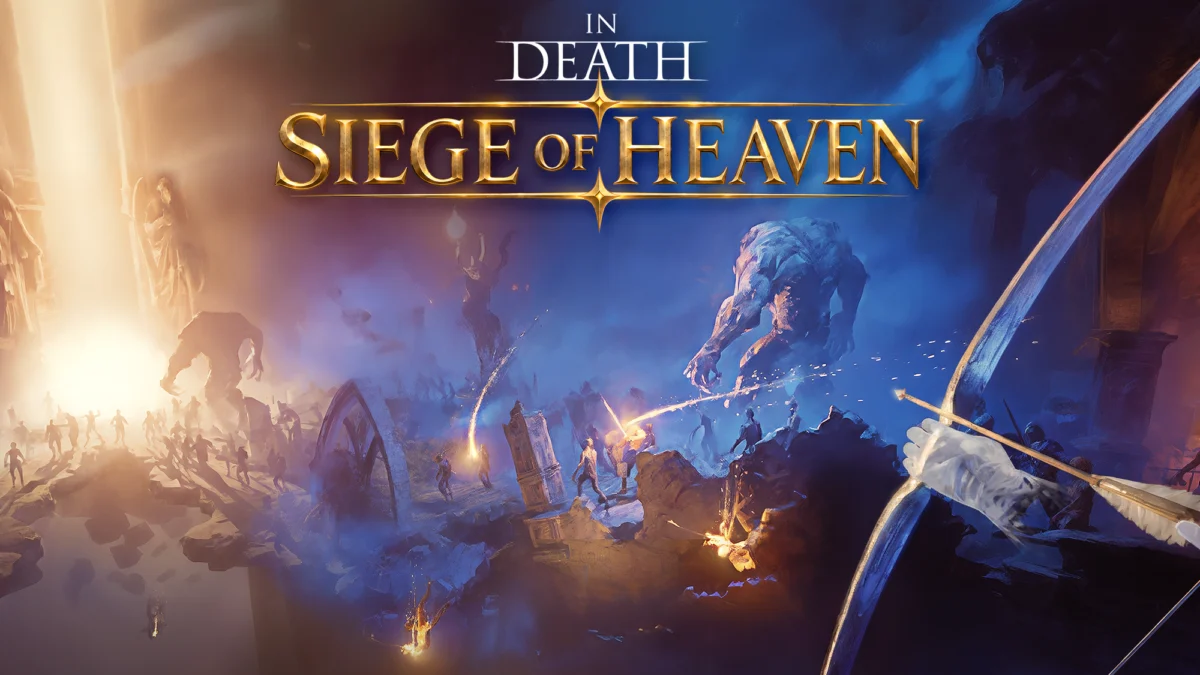
The virtual reality landscape is undergoing a period of significant strategic recalibration. As hardware matures and the user base expands beyond early adopters into more casual demographics, developers are finding that the "one-size-fits-all" approach to game design is no longer the most effective path toward sustainability. In a landmark move for the platform, Superbright, the developers behind the critically acclaimed VR roguelite In Death: Unchained, has announced that its popular "Siege of Heaven" mode will be spun off into a separate standalone title for the Meta Quest ecosystem.
This decision marks a pivotal moment for one of VR’s most enduring franchises. By decoupling the accessible, wave-based archery mechanics of Siege of Heaven from the punishingly difficult and atmospheric main game, Superbright aims to capture a broader audience, secure the studio’s financial future, and implement technical overhauls that were previously deemed too hazardous for the original game’s architecture.
Main Facts: A Strategic Bifurcation
The core of the announcement, delivered by Superbright CEO Wojtek Podgorski via the studio’s official Discord server, centers on the transition of "Siege of Heaven" from an internal game mode to a dedicated storefront entry. Since its debut as a free update for In Death: Unchained, Siege of Heaven has served as a sanctuary for players who enjoy the game’s industry-leading archery mechanics but find the core roguelite loop—characterized by procedurally generated purgatories and high-stakes "teleport-and-shoot" movement—too intense or physically demanding.
The standalone version of Siege of Heaven is designed to address three primary objectives:
- Visibility: Increasing the game’s "discoverability" on the Meta Horizon Store for casual players.
- Monetization: Providing a new revenue stream to fund the development of future projects and the continued maintenance of the In Death universe.
- Technical Modernization: Utilizing a new rendering pipeline, including Mobile HDR, which would have been technically prohibitive to integrate into the existing Unchained build.
Crucially, existing owners of In Death: Unchained will not lose access to the mode. It will remain a part of the original package, ensuring that the veteran community is not penalized. However, the standalone version will feature its own separate leaderboards, offering a "fresh start" for competitive players and a level playing field for newcomers.
Chronology: The Path to Independence
To understand why this move is necessary, one must look at the historical trajectory of the In Death franchise.
Originally developed by Sólfar Studios for PCVR and PSVR in 2018, In Death became an instant classic for its dark, gothic atmosphere and its "gold standard" bow-and-arrow mechanics. When Superbright took over the reins to bring the game to the standalone Quest platform in 2020 as In Death: Unchained, they didn’t just port the game; they expanded it significantly.
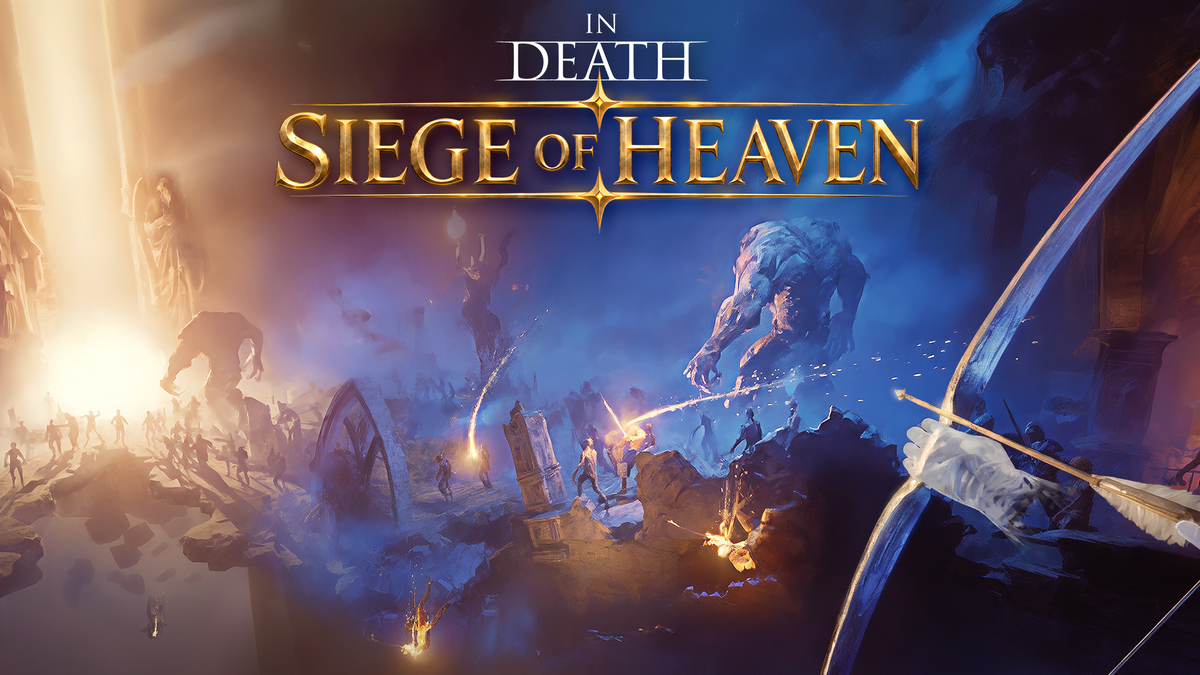
In late 2020, Superbright introduced "Siege of Heaven" as a free content update. At the time, it was envisioned as a "bite-sized" alternative to the main game. While the main mode required players to navigate through vast, haunting cathedrals and abyss-like landscapes using a unique arrow-teleportation system, Siege of Heaven placed the player in a fixed position. From a defensive rampart, players would fend off waves of crusaders, monks, and demonic entities.
Over the next four years, In Death: Unchained received constant updates, including new "Seasons," graphical overhauls for the Quest 2 and Quest 3, and additional maps for Siege of Heaven. However, as the game grew in complexity, the "technical debt" of the original codebase began to clash with the studio’s ambitions. By 2024, the developers realized that the very thing that made Unchained a masterpiece—its massive, interconnected world—was becoming a barrier to the growth of its more accessible component.
Supporting Data: Accessibility and the "Gateway" Effect
The decision to spin off Siege of Heaven is backed by compelling internal data. According to Superbright, approximately 40 percent of the In Death: Unchained player base engages regularly with the Siege of Heaven mode.
The studio noted a recurring trend in player feedback: veteran players often used Siege of Heaven as a "gateway" to introduce friends and family to VR. In the main Unchained mode, enemies can flank the player, and the dark, oppressive atmosphere can be claustrophobic. Furthermore, the locomotion system, while innovative, can be a hurdle for those prone to motion sickness.
Siege of Heaven removes these barriers. By offering a stationary, wave-based experience where the threats are always in front of the player, Superbright created a "casual-friendly" experience that retained the high-fidelity combat of the core game. Despite this success, Podgorski noted that "outside of our community, almost nobody on Quest knows Siege of Heaven exists." Because the Meta Horizon Store focuses on the "flagship" roguelite experience, the more approachable wave-defense aspect remained hidden behind a $29.99 paywall and a "Hardcore" label.
Furthermore, the VR industry at large has seen a shift toward "unbundling." Other successful titles have followed suit:
- GOLF+ recently announced a separate application for its immersive putting mode.
- Soul Assembly spun off "Home Invasion," the mixed reality mode of Drop Dead: The Cabin.
- Combat Waffle Studios released Ghosts of Tabor: Legacy as a separate entity to preserve a specific era of gameplay.
These data points suggest that the VR market is moving toward specialized, modular experiences that cater to specific player niches rather than monolithic "all-in-one" applications.
Official Responses: A Message of Sustainability
In his address to the community, Wojtek Podgorski was candid about the financial and technical realities facing independent VR studios in the current economic climate. The VR industry has been rocked by layoffs and studio closures over the past 24 months as the initial "hype" of the metaverse transition met the reality of slower-than-expected hardware adoption.
"There’s one more big reason we’re doing this," Podgorski explained, "and it goes back to the messages you’ve been sending us. So many of you have asked us to release a paid DLC or give you some way to buy the game again just to support us and keep development going."

He admitted that as a smaller team, building an entirely new DLC expansion from scratch is an "enormous undertaking" that the studio currently lacks the manpower to execute. Releasing Siege of Heaven as a standalone title provides a pragmatic solution. It allows the studio to generate revenue from new players who were previously intimidated by the main game’s difficulty, while also giving "super-fans" a way to support the studio by purchasing the standalone version for themselves or as a gift for others.
From a technical standpoint, Podgorski highlighted that the standalone app allowed for "upgrades under the hood that would have been impossible (or way too risky) to do inside the massive main build." This includes a new rendering setup featuring Mobile HDR, which provides richer lighting, better bloom effects, and a more vibrant visual palette—enhancements that take full advantage of the Quest 3’s processing power without breaking the delicate balance of the original game’s performance.
Implications: The Future of the "In Death" Universe
The standalone release of Siege of Heaven carries several implications for both the franchise and the wider VR industry.
For the Franchise
By creating a separate entry point, Superbright is effectively bifurcating the In Death brand. In Death: Unchained will remain the "hardcore" destination for roguelite enthusiasts, while Siege of Heaven will become the "arcade" entry point. This allows for more targeted marketing. We can expect Siege of Heaven to be marketed with a focus on "fun," "accessibility," and "family-friendly competition," whereas Unchained will continue to lean into its "dark," "intense," and "skill-demanding" reputation.
For the VR Market
This move signals a maturation of the Quest store strategy. Developers are realizing that "burying" a great game mode inside a larger, more niche game can stifle growth. If Siege of Heaven succeeds as a standalone title, it may encourage other developers to look at their own "mini-games" or "side modes" as potential standalone products. This could lead to a more diverse, albeit more fragmented, storefront.
For the Players
For the consumer, the impact is largely positive. Newcomers get a lower-priced, more focused experience. Veterans keep what they already paid for, while gaining the option to play a technically superior version of their favorite mode with fresh leaderboards. The introduction of Mobile HDR also suggests that Superbright is committed to keeping the In Death visuals at the cutting edge of what standalone hardware can provide.
Conclusion
As of this writing, a specific release date and price point for the standalone Siege of Heaven have not been disclosed, and the title has yet to appear for pre-order on the Meta Horizon Store. However, the move represents a savvy blend of community-driven development and survival-focused business strategy.
In an era where many VR studios are struggling to keep the lights on, Superbright is betting on the idea that the "Heaven" they built is worth a second look—this time, standing on its own two feet. Whether this will provide the necessary "fuel" for the studio’s next major project remains to be seen, but for fans of precision archery and atmospheric defense, the gates of heaven are about to open wider than ever before.