The Tactile Marvelous: Inside the SoHo Studio Redefining Surrealism Through Puppetry
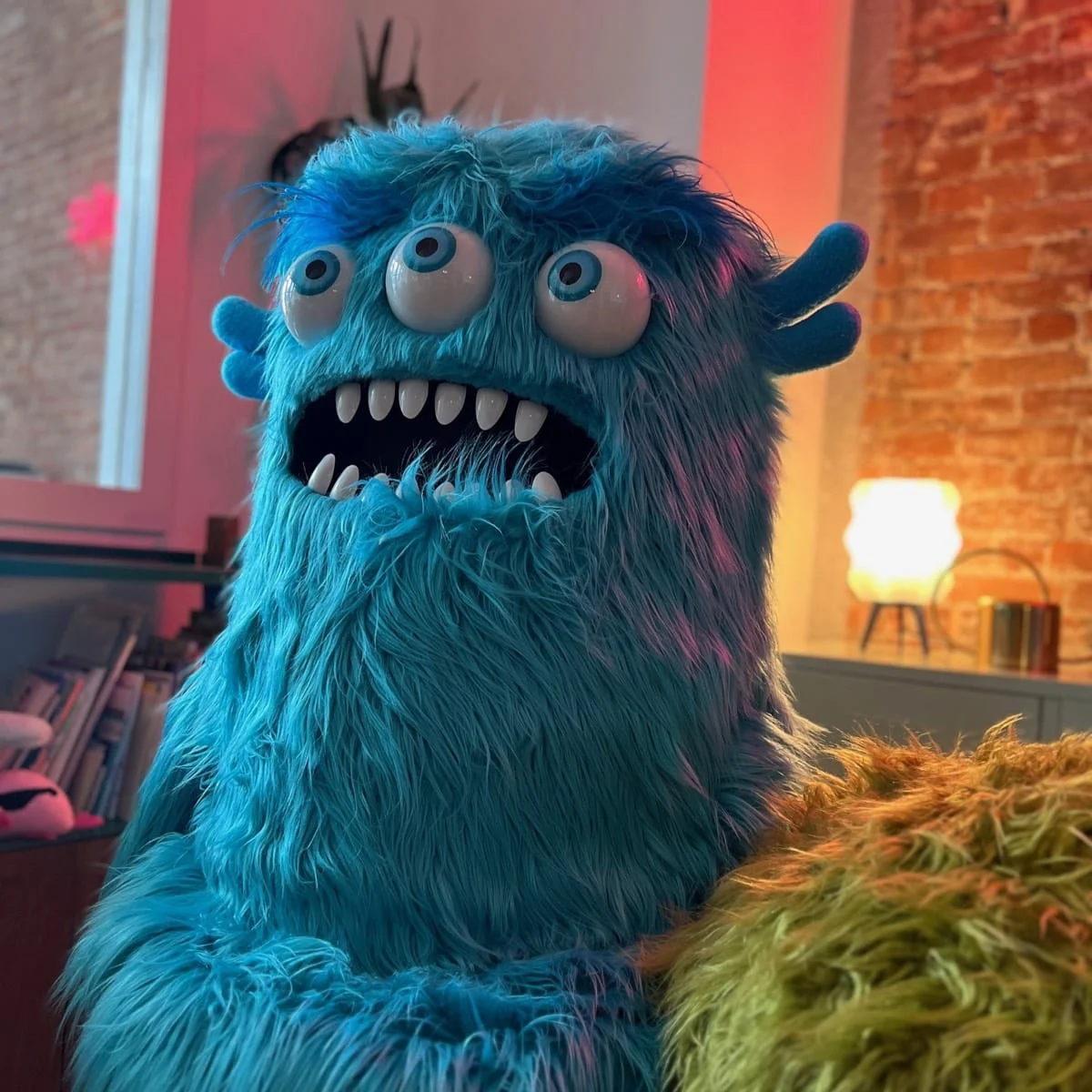
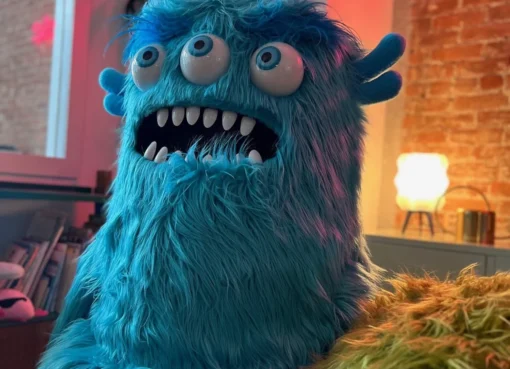
In the heart of Manhattan’s SoHo district, amidst the high-end boutiques and minimalist galleries, lies a workshop where the impossible is manufactured by hand. Furry Puppet Studio does not merely build puppets; they construct physical manifestations of the subconscious. While the casual observer might categorize their output as "whimsical" or "commercial," a deeper analysis reveals a direct lineage to the 20th-century Surrealist movement. This is art that bypasses the digital screen, offering a tangible encounter with the uncanny—a "Surrealism you can hold."
Main Facts: The Intersection of Foam and the Subconscious
Furry Puppet Studio is a specialized design house dedicated to the creation of custom puppets and animatronic creatures. Founded by Zack Buchman, the studio has become the premier destination for directors, musicians, and brands seeking to inject a sense of the "marvelous" into reality. Their client roster—ranging from Apple and CNN to artists like Missy Elliott and Pharrell Williams—suggests a cultural hunger for physical presence in an increasingly CGI-saturated landscape.
The studio’s philosophy rests on a singular, provocative premise: puppetry and surreal art are pursuing the same objective. Both seek to place an entity in front of an audience that defies logic, then convince that audience, however briefly, that the entity is sentient. Whether through oil on canvas or "dream fleece" over foam, the goal is the suspension of disbelief through the creation of a "living" impossibility.

At Furry Puppet, this is achieved through a rigorous, artisanal process. Every creature begins as a solid block of foam, carved by hand without the safety net of an "undo" command. This commitment to physical craft grants their creations a specific "weight"—both literal and ontological—that digital effects often struggle to replicate.
Chronology: From Experimental Film to Public Ambush
To understand the current state of high-concept puppetry, one must trace the evolution of the medium from the mid-20th century to the present.
The Henson Avant-Garde (1960s – 1982)
The lineage begins with Jim Henson. While the public primarily associates Henson with the educational success of Sesame Street, his roots were deeply embedded in experimental filmmaking. In 1965, Henson released Time Piece, a dialogue-free short film that utilized associative logic and rhythmic editing to explore the passage of time. Nominated for an Academy Award and screened at the Museum of Modern Art, Time Piece featured surrealist imagery—a cowboy shooting the Mona Lisa, a gorilla on a pogo stick—that established the puppet-maker as a legitimate avant-garde artist. This experimental streak culminated in the 1982 film The Dark Crystal, which Henson fought to keep "dark and strange," resisting studio pressure to sanitize its eerie, otherworldly atmosphere.
The Big Nazo Rebellion (1986 – Present)
In the mid-1980s, the focus shifted from the screen to the street. Erminio Pinque, a RISD-trained illustrator, founded Big Nazo in Providence, Rhode Island. Pinque’s vision was to create a "puppet show without a stage." By deploying massive, wearable foam creatures into public spaces—parades, festivals, and "creature dance parties"—Big Nazo practiced a form of "public ambush" surrealism. This echoed André Breton’s desire for the "marvelous" to erupt into ordinary life without warning. Pinque’s practice embraced "automatism"—the surrealist belief that accidents and chance encounters hold more truth than a rigid plan.
The Furry Puppet Synthesis (2000s – Present)
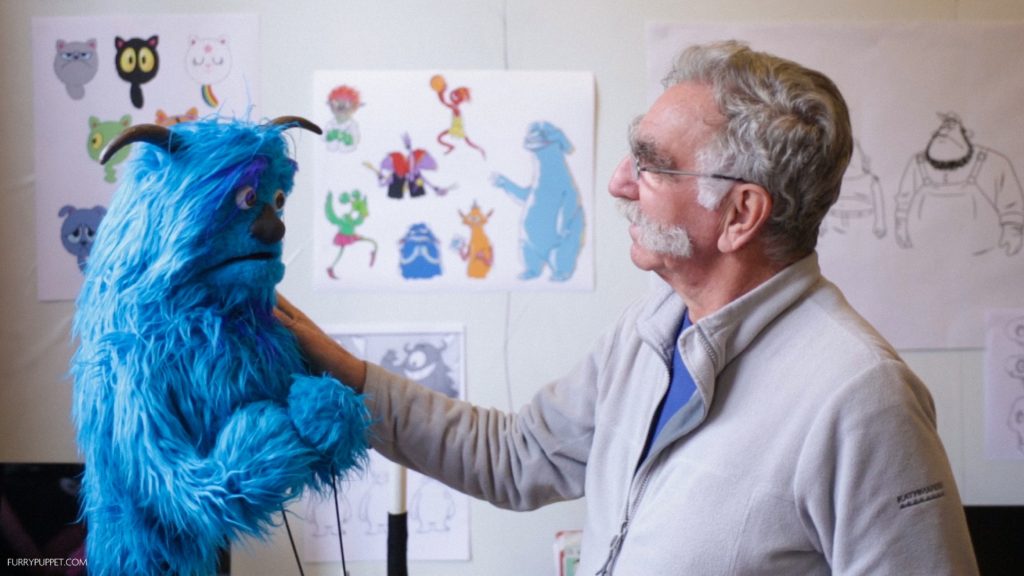
Zack Buchman founded Furry Puppet Studio with an "outsider’s" perspective, having bypassed traditional collegiate training in favor of direct fabrication. Under his leadership, the studio has synthesized the experimental depth of Henson with the tactile boldness of Big Nazo, applying these principles to the high-stakes world of modern media. By integrating mechanical engineering with couture-level costume design, the studio has moved the "uncanny" from the fringe of the art world into the center of the cultural zeitgeist.
Supporting Data: Case Studies in the Uncanny
The studio’s portfolio serves as a catalog of surrealist motifs, updated for the 21st century.
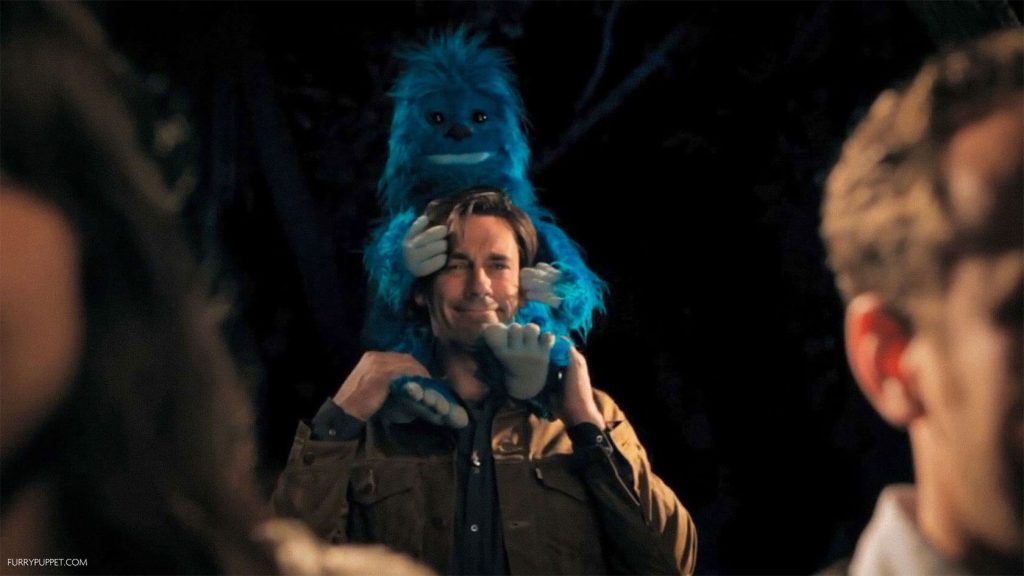
- The Yeti and the Ordinary: In a music video for Herman Düne, a blue yeti (a Furry Puppet build) hitches a ride with actor Jon Hamm. The surrealism here lies in the "unremarkable marvelous"—the creature is treated as a mundane part of the landscape. This technique, popularized by René Magritte, forces the viewer to question the "normalcy" of the surrounding world.
- The Doppelgänger Effect: For a CNN New Year’s Eve broadcast, the studio created puppet doubles of Anderson Cooper and Andy Cohen. This directly invokes the "Doppelgänger" motif—the exact phenomenon Sigmund Freud identified as a primary source of the "uncanny" (Das Unheimliche). The image of a human interacting with a foam version of himself triggers a deep-seated psychological dissonance.
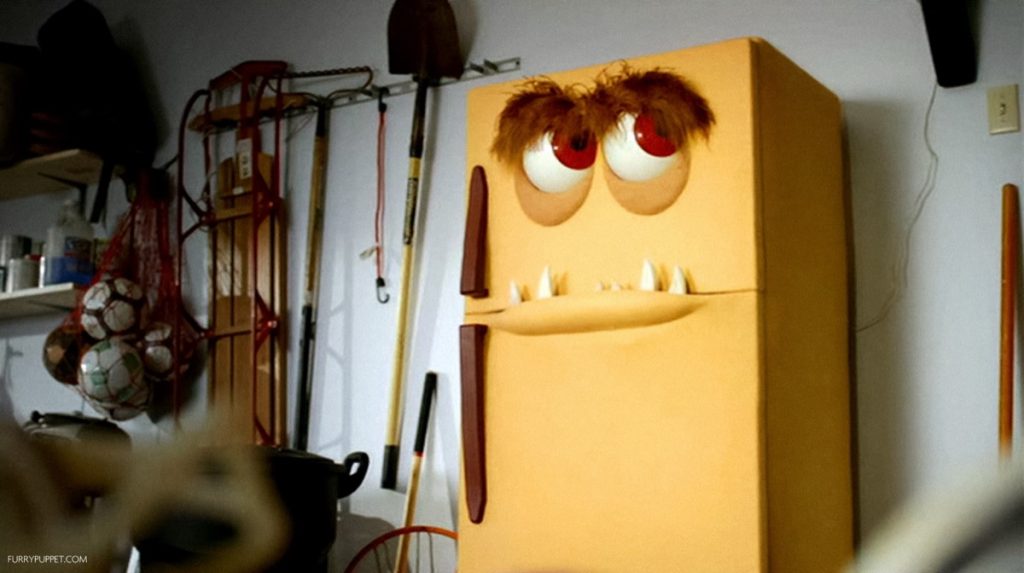
- The Animated Object: Furry Puppet frequently animates everyday items, such as a refrigerator equipped with bushy eyebrows and teeth. This echoes the work of Meret Oppenheim and the surrealist obsession with the "found object" transformed into something sentient and potentially predatory.
- The Engineering of "Dream Fleece": The studio manufactures its own proprietary fabric, dubbed "dream fleece." This material is designed to catch light in a way that suggests organic skin or fur while maintaining the durability required for performance. This technical innovation is supported by a diverse team, including a mechanical engineer and Polly Smith, the legendary costume designer and co-inventor of the sports bra.
Official Responses: The Philosophy of the Hinge
Zack Buchman and his contemporaries view their work as a psychological exercise as much as a mechanical one. Buchman describes the moment of "the hinge"—the final placement of the eyes—as the most critical stage of fabrication.
"Everything before the eyes is just fabrication," Buchman notes. "That single adjustment is where the thing starts looking back at you." This "looking back" is the moment the viewer’s brain stops searching for the rods and wires and accepts the puppet as a living presence. It is the successful navigation of the "Uncanny Valley," a concept proposed by roboticist Masahiro Mori in 1970, which describes the revulsion felt when a non-human entity looks almost too human.
Erminio Pinque of Big Nazo further emphasizes the importance of the unplanned in this process. He has stated that being away from the familiar allows him to "fail wonderfully," suggesting that the most profound artistic breakthroughs occur when the artist loses control of the medium—a core tenet of surrealist automatism.
Implications: The Future of the Physical in a Digital Age
The continued relevance of Furry Puppet Studio and the Henson lineage suggests a significant shift in the aesthetic landscape. As CGI becomes indistinguishable from reality, it ironically loses its power to surprise. The "weight" of a physical puppet—the way it displaces air, the way its fur moves in a real breeze—provides an anchor for belief that digital pixels cannot provide.
The implications for the art world are twofold:
- The Persistence of the Tactile: There is a growing premium on "human-made" artifacts. The fact that a Furry Puppet creature is carved from a solid block with no "undo" button adds a layer of performance and risk to the object itself. This "fabrication-as-performance" aligns the studio with the traditions of fine art sculpture.
- Surrealism as a Commercial Tool: The studio has demonstrated that surrealist imagery is not just for galleries; it is an effective tool for communication. By placing the "impossible" in a commercial context (such as the Apple Japan campaign), they are essentially training a global audience to embrace the surreal as a standard visual vernacular.
In conclusion, the work being done in the SoHo studio is a reminder that the puppet is an avant-garde instrument. It is a vessel for the uncanny, a tool for exploring the boundaries between the living and the inanimate. As we move further into a world of simulated realities, the "Surrealism you can hold" produced by Furry Puppet Studio serves as a necessary, tactile reminder of the power of the physical imagination. The "marvelous" is no longer a distant dream; it is a three-dimensional object, carved from foam, waiting to look back at us.