The Architect of the Unseen: Exploring the Provocative Surrealism of Alfred De Angelo
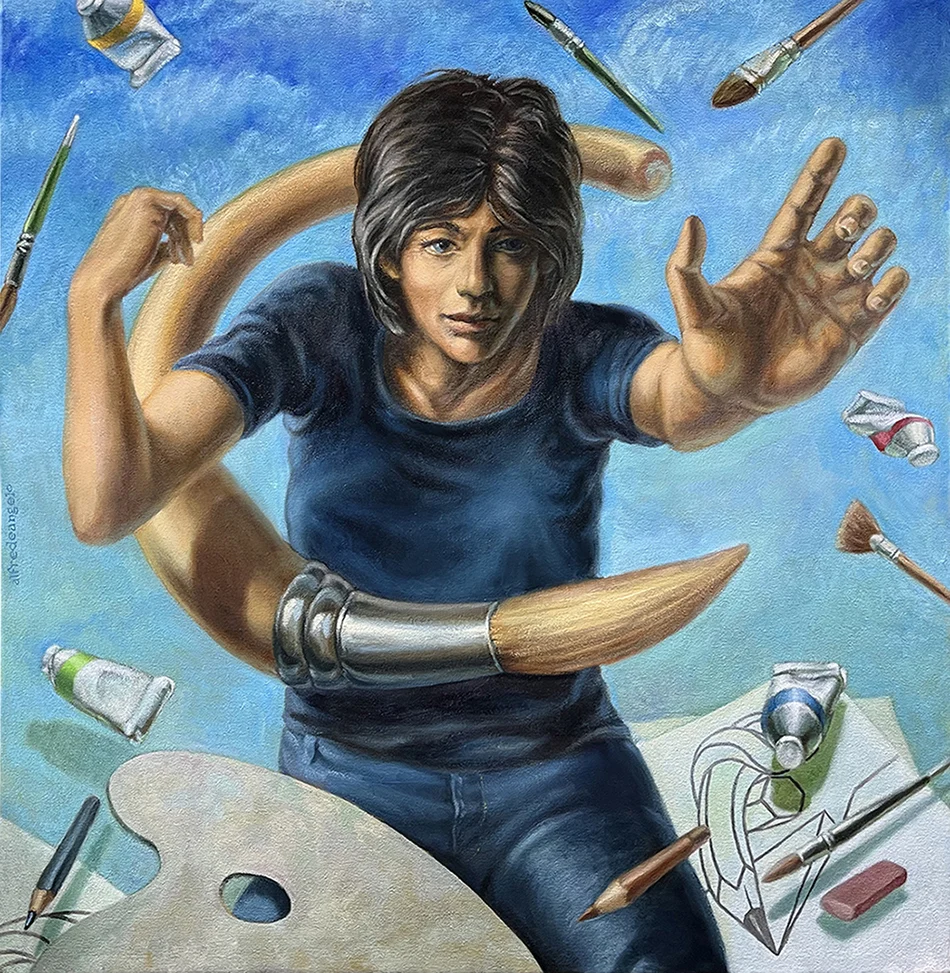
In the contemporary landscape of fine arts, few painters manage to balance the rigorous demands of classical draftsmanship with the ethereal, often unsettling requirements of Surrealism. Alfred De Angelo, a master of the "visual doorway," has emerged as a significant figure in this niche, creating works that do more than merely decorate a space—they transform the viewer’s psychological state. Through a combination of academic excellence and a deeply personal metaphysical inquiry, De Angelo’s portfolio stands as a testament to the enduring power of the painted image to challenge human perception.
Main Facts: The Aesthetic of Provocative Beauty
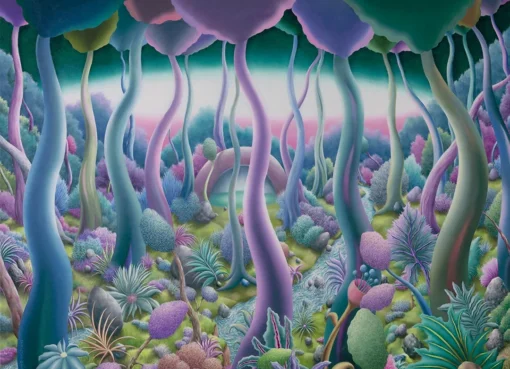
Alfred De Angelo’s work is characterized by what critics often describe as a "sensual world of provocative beauty." Unlike the jarring or intentionally grotesque iterations of Surrealism that populated the mid-20th century, De Angelo’s approach is one of seductive invitation. His paintings are not designed to repel, but to "lure" the viewer. This lure is predicated on a remarkable technical fluency—a mastery of line, color, and composition that provides a sense of grounding even as the subject matter defies the laws of physics or logic.
At the core of his practice is the concept of the "visual doorway." This metaphor suggests that the canvas is not a flat surface, but a portal. De Angelo utilizes his expertise to create depth and texture that suggest a tangible reality, only to subvert that reality with imagery that beguiles and bewilders. The "sensual" nature of his work refers to the tactile quality of his subjects; whether he is rendering the curve of a biological form or the stark geometry of an impossible landscape, the execution is handled with a finesse that demands attention.
The primary objective of De Angelo’s work, as stated in his own artistic philosophy, is to provide the viewer with "permission to be amazed." In a modern world saturated with instant digital imagery and algorithmic predictability, De Angelo’s paintings serve as a friction point—a place where the mind must slow down to process the "essential mystery of existence."
Chronology: A Foundation of Academic Excellence
The technical prowess evident in De Angelo’s work is the result of a rigorous academic trajectory through two of the United States’ most prestigious art institutions. His development as an artist can be traced through these formative years, which provided the tools necessary to articulate his complex internal visions.

The MassArt Years: Establishing the Foundation
De Angelo earned his Bachelor of Fine Arts (BFA) from the Massachusetts College of Art (MassArt) in Boston. As the only independent public college of art and design in the country, MassArt is known for its grueling foundational programs and its emphasis on both the history of art and the evolution of technique. During this period, De Angelo would have been immersed in the traditions of Western painting, honing the "fluent delineation" that would later become his hallmark. It was here that he likely began to move beyond mere representation, exploring how the mastery of form could be used to express subjective experience.
The RISD Experience: Refining the Vision
Following his undergraduate success, De Angelo pursued a Master of Fine Arts (MFA) at the Rhode Island School of Design (RISD). Consistently ranked as one of the top art and design schools in the world, RISD provided an environment where technical skill is taken as a given, and the focus shifts toward conceptual depth and the development of a unique artistic voice.
At RISD, De Angelo was able to finalize what he calls his "private vocabulary of images." The transition from BFA to MFA represents a shift from learning how to paint to learning what to paint—and more importantly, why. His time in Providence allowed him to synthesize his interest in the "localized and subjective" experiences of life into a cohesive surrealist framework.
Supporting Data: The Mechanics of the Private Vocabulary
To understand the impact of De Angelo’s work, one must analyze the "private vocabulary" he mentions in his Artist’s Statement. This vocabulary is not composed of universal symbols—such as the clocks of Dalí or the pipes of Magritte—but is instead a deeply personal set of motifs that attempt to bridge the gap between the artist’s inner life and the viewer’s perception.
Technical Expertise as a Tool for Disruption
Data from art historical analysis suggests that Surrealism is most effective when the "unreal" elements are painted with "real" precision. De Angelo adheres to this principle. His "remarkable fluency" serves a specific purpose: by making the impossible look plausible, he creates a cognitive dissonance in the viewer.

- Delineation: His use of line is precise, creating clear boundaries between objects that may not logically belong together.
- Atmospheric Perspective: He employs classical techniques to create a sense of vast, unfolding space, which enhances the "doorway" effect.
- Color Theory: His palettes often lean toward the sensual, using hues that evoke a physical response—warmth, coolness, or the velvet darkness of a dream.
The Psychological Impact: Amazement vs. Confusion
De Angelo’s work operates on a dual track of "amazement and confusion." In a psychological context, this is known as the "aesthetic of the sublime." By pressing against the limits of a viewer’s understanding, the artwork forces a temporary suspension of the ego. The viewer is "delighted" not because they understand the painting, but because the painting has successfully bypassed their rational filters.
Official Responses: The Artist’s Statement and Philosophical Intent
In his official statement, Alfred De Angelo provides a rare glimpse into the intellectual engine driving his creativity. He posits that human experience is inherently "localized and subjective," consisting of a series of impressions that are difficult to communicate through standard language.
"I am continually developing a private vocabulary of images with which I attempt to express different aspects of these experiences," De Angelo states. "With my surrealist paintings, I try to look ‘through’ outward appearances and somehow embody the essential mystery of existence."
This "looking through" is a direct challenge to the materialist view of the world. By focusing on the "essential mystery," De Angelo aligns himself with the metaphysical tradition of painting. His work is an official rejection of the idea that what we see is all there is.
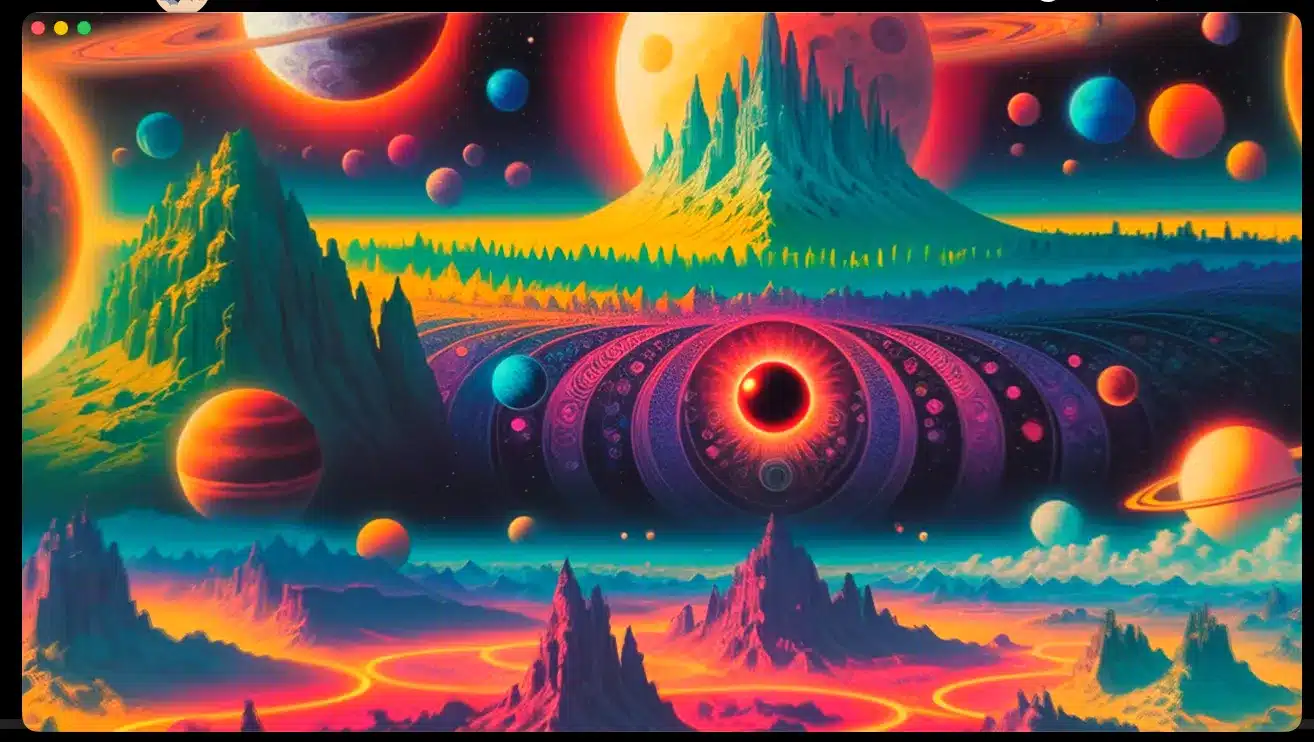
Critics and curators have noted that De Angelo’s work feels particularly relevant in an era of AI-generated art (such as the Infinidream AI projects mentioned in related artistic circles). While AI can generate "surreal" imagery based on data sets, De Angelo’s work is rooted in the "personal scale" of human life. His paintings are not the result of an algorithm, but of a human mind trying to map its own "localized" impressions of reality. This distinction is vital: De Angelo’s work carries the weight of lived experience, which lends a different kind of "impressive" quality to the final image.
Implications: The Future of Surrealism in a Digital Age
The work of Alfred De Angelo has significant implications for the future of contemporary Surrealism and the broader fine arts community. As technology continues to blur the lines between reality and simulation, the role of the traditional painter becomes even more critical.
Reclaiming the "Human Terrain"
As seen in the works of contemporaries like Jacob Holster, there is a growing movement toward "Painterly AI Aesthetics." However, De Angelo represents the "human terrain" in its most refined form. By using traditional media to explore the "essential mystery," he reinforces the idea that the human hand and eye possess a unique ability to capture the nuance of the subconscious.
The Educational Standard
De Angelo’s background at MassArt and RISD sets a high standard for contemporary surrealists. It suggests that to truly "bewilder" a viewer, one must first master the rules of the world they are attempting to subvert. His career implies that the future of Surrealism lies not in random abstraction, but in the sophisticated manipulation of reality by those who understand it most deeply.
Expanding the Limits of Understanding
Ultimately, the implication of De Angelo’s portfolio is that art remains one of the few places where humans are "given permission" to be confused. In a society that demands clarity, data, and immediate answers, De Angelo’s "visual doorways" offer a necessary reprieve. They remind the viewer that mystery is not a problem to be solved, but a reality to be experienced.
As De Angelo continues to develop his "private vocabulary," his work will likely continue to serve as a benchmark for how Surrealism can remain both aesthetically beautiful and intellectually provocative. For those who visit his digital gallery at artistpainter.ws, the experience is clear: you are not just looking at a painting; you are being invited to step through a door into the essential mystery of your own existence.