Nike’s ‘Rip The Script’: A Blockbuster Pivot to Reclaim the Global Football Narrative
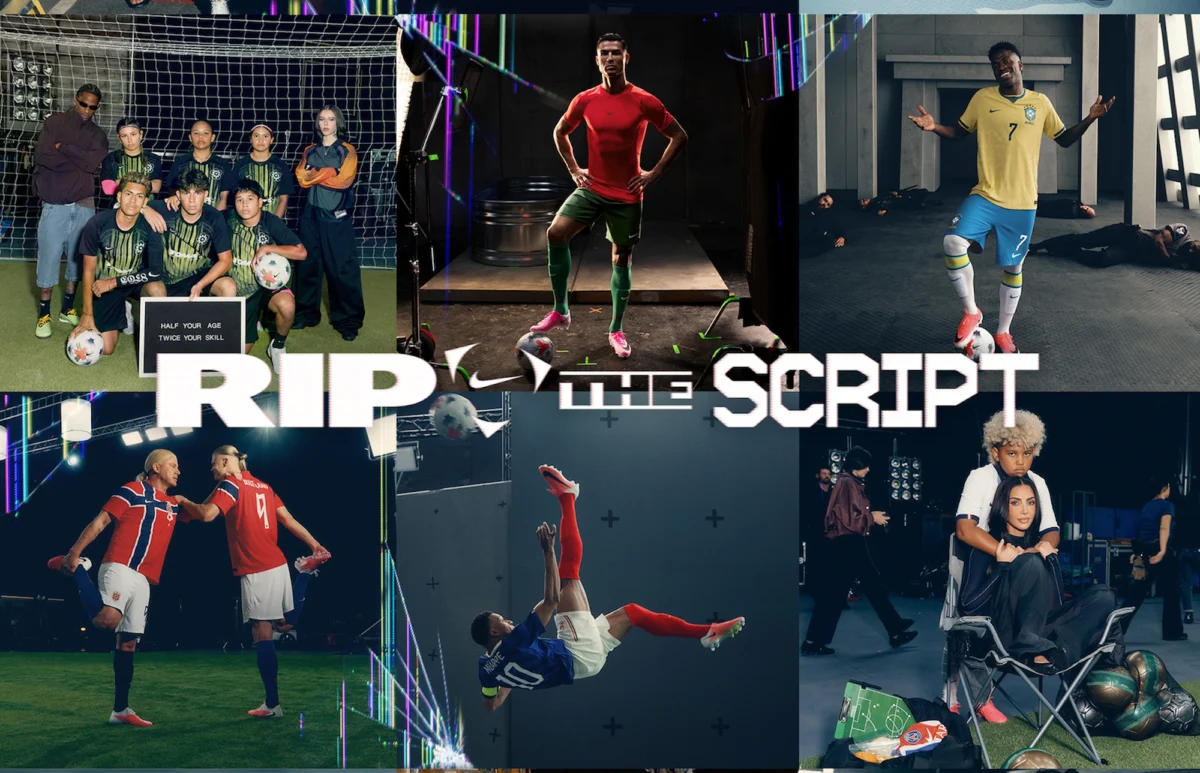
In the high-stakes arena of global sports marketing, the lead-up to a World Cup is often characterized by a battle of aesthetics and cultural positioning. While its perennial rival Adidas has opted for a stylistically "indie" approach—enlisting Timothée Chalamet and Jude Bellingham for a film that leans into suburban nostalgia and "backyard legend" vibes—Nike has chosen a diametrically opposite path. With the launch of its latest campaign, "Rip The Script," Nike has unveiled a sprawling, maximalist "Universe of Nike Football" that signals a return to the high-octane, star-studded blockbuster format that defined the brand’s golden era.
Created by long-time creative partners Wieden+Kennedy and directed by the visionary Dan Streit, the new campaign is more than just a commercial; it is a strategic manifesto. Starring an unprecedented assembly of talent—ranging from Kylian Mbappé and Erling Haaland to pop culture icons Kim Kardashian and Travis Scott—the ad represents Nike’s attempt to assert dominance at a time when the company faces internal financial pressures and an increasingly fragmented media landscape.
The Narrative Arc: From Corporate Control to Controlled Chaos
The "Rip The Script" film begins not on a pitch, but on a sterile, high-pressure film set. This meta-narrative serves as a critique of the very industry Nike inhabits. We see a "whiny," pedantic director—the personification of corporate over-thinking—complaining about Kylian Mbappé’s "theatrics." Surrounding him are some of the world’s most expensive athletes, looking bored and confined by the rigid expectations of the script they are supposed to follow.
The tension breaks when the players, led by Mbappé, decide they have had enough of the "direction." In a moment of rebellion that serves as the campaign’s central metaphor, they seize the ball and sprint off the set, literally ripping through the backdrops of the studio. This transition from the "scripted" world to the "unscripted" world of sport sets the stage for a whirlwind tour through various cinematic and cultural dimensions.
A Journey Through the ‘Nike Universe’
As the athletes race across the studio lot, the film shifts genres with dizzying speed:
- The Live TV Gauntlet: The players disrupt a live news broadcast, blurring the lines between sports and 24-hour media cycles.
- The Avant-Garde Encounter: In a striking black-and-white sequence, the players stumble into a surrealist, arthouse film where French legend Eric Cantona portrays a philosophical fisherman. This nod to the past acknowledges Nike’s heritage of iconic football ads while grounding it in a modern, self-aware context.
- The Mindfulness of Haaland: The film takes a brief, humorous detour into the "Zen" world of Erling Haaland. Known for his meditation celebrations, Haaland is shown being intensely mindful amidst the chaos, a "knowing nod" to his specific public persona.
- The GOAT Debate: Perhaps the most significant narrative beat involves Cristiano Ronaldo and LeBron James. The two titans are presented with a script titled The GOAT’s Goodbye. In a defiant rejection of retirement narratives, they toss the script aside, signaling that their era of dominance is far from over.
Chronology of the Campaign: A Multi-Phased Rollout
The release of the "Rip The Script" film was the culmination of a meticulously planned teaser campaign designed to build digital intrigue before the "blockbuster" dropped.
- The Fractured Approach (Pre-Campaign): In the months leading up to the World Cup, Nike experimented with a "subculture-first" strategy. This included high-profile collaborations with streetwear brand Palace and fashion house Jacquemus. These smaller, niche-focused ads—such as the one featuring Wayne Rooney and Shakespearean themes—suggested Nike might be moving away from the "one big ad" format in favor of targeted, fragmented storytelling.
- The Polaroid Tease: Two weeks prior to the film’s release, Nike’s social media channels began posting lo-fi, Polaroid-style photographs of the cast. These images featured the athletes and celebrities in candid, behind-the-scenes moments. This served to humanize the stars while signaling that something massive was being filmed.
- The Premiere: The full "Rip The Script" film was released across global platforms simultaneously, marking the official launch of the "Universe of Nike Football."
- The Ecosystem Integration: Following the film, Nike launched a series of interactive digital experiences and limited-edition product drops tied to the specific "realms" shown in the ad, ensuring the campaign lived beyond the 90-second video format.
Supporting Data: The Evolution of the Nike Blockbuster
To understand the scale of "Rip The Script," one must look at the historical data of Nike’s football marketing. The brand set the gold standard in 1998 with the "Airport" ad, featuring the Brazilian national team. That ad was celebrated for its simplicity and the raw joy of the game.
However, as the media landscape has evolved, so has Nike’s complexity. "Rip The Script" is a response to the "Attention Economy." In an era where viewers are bombarded with content, Nike has calculated that "simple" is no longer enough to cut through the noise.
The inclusion of non-sporting figures is a data-driven move. By casting Kim Kardashian (as a "Soccer Mom"), Travis Scott, Channing Tatum, and Young Miko, Nike is tapping into audiences that may not follow football religiously but are deeply embedded in the "hype" and "lifestyle" ecosystems. According to market analysis, the "crossover" athlete-celebrity consumer segment has grown by 40% over the last five years, making the "Universe of Nike Football" a necessary expansion of the brand’s traditional footprint.

Official Context: Corporate Pressures and Strategic Pivots
The "Rip The Script" campaign arrives at a pivotal—and arguably precarious—moment for Nike Inc. Recent quarterly reports have indicated a cooling of the brand’s once-meteoric growth. Facing declining sales in key territories and increased competition from "challenger" brands like On Running and Hoka in the performance sector, Nike has been criticized by some analysts for losing its "innovative edge" and "confident brand voice."
Nike’s leadership, including CEO John Donahoe, has acknowledged the need to return to "great storytelling" and "bold marketing." "Rip The Script" is the first major manifestation of this "back-to-basics" (in terms of scale) philosophy.
Official Stance: Nike’s marketing team describes the campaign as an invitation to "reimagine what football can be." By "ripping the script," the brand is telling its consumers—and its shareholders—that it is no longer willing to follow the standard industry playbook. It is opting for "maximalism" to prove that the Swoosh still possesses the cultural gravity to pull together the worlds of sport, music, film, and fashion.
Implications for the Future of Sports Marketing
The "Universe of Nike Football" carries several long-term implications for the industry:
1. The Death of the ‘Pure’ Sports Ad
The inclusion of Kim Kardashian and Travis Scott confirms that Nike no longer views football as an isolated sport. It views it as a pillar of global entertainment. We are likely to see more campaigns where the "pitch" is merely a backdrop for a wider cultural conversation. The "Soccer Mom" trope used for Kardashian specifically targets the massive and growing North American market as it prepares to co-host the next FIFA World Cup.
2. Blockbuster vs. Niche
For the past few years, the trend in advertising has been "hyper-personalization" and "organic subculture engagement." Nike’s decision to go with a "huge budget, everywhere, all at once" approach is a gamble on the power of the mass-market spectacle. If successful, it may trigger a return to the "Big Ad" era among other global conglomerates who have recently pivoted toward smaller influencer-led campaigns.
3. The Athlete as an Intellectual Property
By showing Ronaldo and LeBron James rejecting a "retirement" script, Nike is positioning its top-tier athletes as more than just players; they are "forever brands." This "Universe" allows Nike to keep retired or aging legends like Eric Cantona and Ronaldo relevant by placing them in a cinematic world where their "legend" status is the primary asset, regardless of their current performance on the field.
Conclusion
Nike’s "Rip The Script" is a high-stakes play for cultural relevance. It is a loud, chaotic, and expensive reminder that when it comes to global spectacle, the Swoosh remains unparalleled in its ambition. By merging the elite skills of Mbappé and Haaland with the sheer celebrity wattage of the Kardashian-Scott era, Nike has built a "universe" that is designed to be inescapable.
Whether this "blockbuster" approach can reverse the brand’s recent financial headwinds remains to be seen. However, by "ripping the script," Nike has at least succeeded in changing the conversation. They have moved from being a brand that simply sponsors football to a brand that claims to own the very universe in which football exists. In the world of Nike, the game is no longer just about the 90 minutes on the pitch—it is about the infinite stories that happen when the cameras are supposed to be off.