
Diverse Currents in Culture and Creativity: From AI Storytelling to Book Ban Battles
London, UK / Cedar Rapids, Iowa / Worldwide – The past week has delivered a rich tapestry of developments across the cultural and creative landscapes, touching upon the future of storytelling, the preservation of intellectual freedom, profound artistic legacies, and the trials of travel. From innovative AI tools for writers to a sobering report on escalating book bans, and from the passing of a celebrated illustrator to a deep dive into the craft of film scoring, the global community continues to grapple with evolution and challenge.
This report delves into the significant announcements and discussions shaping the worlds of science fiction, fantasy, literature, and cinema, offering insights into their immediate impact and broader implications.
The Evolving Landscape of Storytelling and Creative Tools
Unleashing Imagination: Joe Stech’s SUPER MEGA SFF STORY IDEATOR
In a significant move for the speculative fiction community, Joe Stech of Compelling Science Fiction has unveiled his "SUPER MEGA SFF STORY IDEATOR." This innovative story prompt generator, designed with a nostalgic SNES-style aesthetic, aims to ignite creativity and combat writer’s block for authors across the genre spectrum.
Main Facts:
Joe Stech, known for his work with Compelling Science Fiction, has launched a free, interactive story prompt generator titled "SUPER MEGA SFF STORY IDEATOR." The tool is characterized by its vibrant, pixel-art visuals, reminiscent of classic Super Nintendo Entertainment System (SNES) games, reflecting Stech’s personal appreciation for that era’s design. The primary goal is to provide a fun and unique mechanism for authors to generate fresh story ideas and overcome creative hurdles.
Supporting Data:
Stech himself articulated his vision for the ideator, stating, "I’ve always enjoyed the vibrant colors and pixel aesthetic of old SNES games. With SUPER MEGA SFF STORY IDEATOR, I’ve created an SNES-style classic story prompt generator for authors to help get the juices flowing. I spent a lot of time pulling in what I think are fun and unique story elements for this kind of generator, I hope you have fun with it!"
An example generated by the ideator showcases its depth and specificity:

- Setting: Asteroid mining colony
- Subgenre: Hopepunk
- Speculative Element: An unaligned superintelligent AI
- Core Conflict: Doing nothing is the worst option
- Protagonist: A traumatized character who keeps the world at arm’s length, not at the volume the media expects – N. K. Jemisin
This particular prompt demonstrates the generator’s ability to combine disparate elements into a cohesive and thought-provoking narrative seed. The "hopepunk" subgenre, emphasizing optimistic defiance and community action in the face of adversity, offers a timely lens through which to explore complex issues. The inclusion of a protagonist archetype, referencing acclaimed author N. K. Jemisin, further suggests a nuanced approach to character development, moving beyond simplistic tropes.
Implications:
The release of tools like the SUPER MEGA SFF STORY IDEATOR highlights a growing trend in digital aids for creative endeavors. Such generators can democratize access to diverse narrative ideas, potentially lowering the barrier to entry for aspiring writers. For established authors, they offer a fresh perspective or a quick spark when traditional brainstorming methods fall short. This intersection of technology and creativity also opens discussions about the role of AI and algorithms in artistic processes, though Stech’s tool is clearly designed as an ideator rather than a generator of complete narratives. Its accessibility and playful design could foster a more experimental approach to genre fiction, encouraging writers to blend elements they might not typically consider.
Voices from the Stage and Screen
Sir Ian McKellen’s Enduring Appeal and Theatrical Passion
The legendary actor Sir Ian McKellen, a titan of both classical theatre and blockbuster cinema, recently shared his distinctive views on his career, fandom, and the unique magic of pantomime in an interview with The Guardian.
Main Facts:
Sir Ian McKellen engaged in a reader Q&A with The Guardian, where he humorously asserted that his iconic character, Gandalf, would decisively defeat Dumbledore in a fictional magical duel. More profoundly, McKellen articulated his deep affection and respect for the art of pantomime, a British theatrical tradition.
Supporting Data:
When asked about his enduring attraction to pantomime, McKellen provided a comprehensive explanation of its multifaceted appeal: "Pantomime uses every possible theatrical device to tell its moral tales — slapstick, sentiment, song, dance, verse, cross-dressing, community singing, extravagant costumes and scenery, audience participation. Anything and everything goes. It is a matchless introduction to all that is possible in a theatre and ideal for children and for a family outing." He also highlighted its cultural specificity, noting, "As a homegrown art form, it hasn’t travelled well. Americans find it as baffling as cricket. My patriotism is rooted in Shakespeare and panto."
This insight underscores McKellen’s commitment not only to high art but also to accessible, popular forms of theatre. His career, spanning from the Royal Shakespeare Company to global franchises like Lord of the Rings and X-Men, demonstrates a rare versatility and an unwavering dedication to performance. The playful "Gandalf vs. Dumbledore" comment also serves as a testament to his engaging personality and his appreciation for the lighter side of fandom.

Implications:
McKellen’s continued visibility and engagement, even in his advanced years, reinforce his status as a cultural icon. His advocacy for pantomime draws attention to the foundational role of diverse theatrical experiences in fostering a love for the arts, especially among younger audiences. In an era dominated by screen entertainment, his words are a powerful reminder of the unique, communal magic of live performance. The interview also illustrates the enduring, good-natured debates that fuel genre fandom, allowing audiences to playfully engage with the characters and worlds they love.
The Sonic Architecture of Murderbot
The Apple TV adaptation of Martha Wells’ beloved Murderbot series is not only capturing hearts with its unique blend of sci-fi, humor, and emotion, but also through its innovative musical score, crafted by composer Amanda Jones.
Main Facts:
Amanda Jones, the composer for the Murderbot series on Apple TV, discussed her approach to blending human and machine sounds in the show’s score during an interview at Deadline’s Sound & Screen Television. Her unique choices include the integration of a traditional Korean saenghwang with modern synthesizers.
Supporting Data:
Jones elaborated on her use of the saenghwang, a Korean mouth organ, as a key element in Murderbot’s musical themes. "It can reach these really high frequencies," Jones explained, "As I’m pitch-shifting it creates this crazy frequency and textures that mess with your ear drum. Any time that Murderbot is trying to make eye contact with someone or experiencing great anxiety, this instrument comes into play coupled with synth." This conscious blending of an ancient, organic instrument with cutting-edge electronic sounds perfectly mirrors the protagonist’s internal conflict and identity as a part-human, part-construct security unit grappling with its own emotions. The score thus becomes an intrinsic part of Murderbot’s characterization, translating its internal turmoil and burgeoning humanity into an auditory experience.
Implications:
Jones’s inventive scoring highlights the critical role of music in shaping a series’ identity and enhancing character depth. Her approach demonstrates how traditional global instruments can be reimagined within contemporary genres like science fiction, pushing the boundaries of sound design. This meticulous attention to musical detail not only enriches the viewing experience but also serves as a testament to the creative synergy required to bring complex literary characters like Murderbot to the screen. The fusion of diverse sonic elements reflects the series’ own thematic exploration of identity, technology, and what it means to be "human."
Classic Sci-Fi Returns to the Screen: Tiptree’s "The Girl Who Was Plugged In" Adaptation

A seminal work of science fiction, James Tiptree Jr.’s "The Girl Who Was Plugged In," is slated for a film adaptation, with Sophie Thatcher confirmed in a leading role.
Main Facts:
Sophie Thatcher has joined Jennifer Kent’s film adaptation of James Tiptree Jr.’s 1974 Hugo Award-winning novella, "The Girl Who Was Plugged In." The announcement, including the lead actor and shooting dates, suggests this adaptation is moving forward robustly, distinguishing it from many speculative optioning announcements.
Supporting Data:
The film will bring to life Tiptree’s "surreal dystopian tale," which explores a woman’s loss of self to technology in her pursuit of love and acceptance. Thatcher is cast as P Burke, a disfigured and suicidal young protagonist. She is recruited by a powerful mega-tech corporation to remotely control Delphi, a genetically engineered, beautiful, yet brainless "flesh body" created solely for influencing consumer masses and selling products. As Delphi’s public persona ascends to stardom, P Burke becomes deeply entangled and obsessed, leading to a descent into "tech psychosis" with severe and tragic consequences. The novella, published under Tiptree’s pseudonym (Alice Sheldon), is celebrated for its prescient commentary on consumerism, body image, and the alienating potential of technology.
Implications:
The adaptation of "The Girl Who Was Plugged In" underscores the enduring relevance of classic science fiction in contemporary discourse. Tiptree’s themes of identity, technology’s seductive dangers, and the commodification of the human form resonate powerfully in an age of social media, virtual reality, and increasing digital immersion. Jennifer Kent’s involvement, known for her psychologically intense films like The Babadook, promises a nuanced and perhaps chilling interpretation of the source material. This film could reignite interest in Tiptree’s pioneering work and spark critical conversations about our relationship with technology and constructed realities.
The Battle for Books: A PEN America Report
Book Bans Intensify and Diversify, Targeting Nonfiction and Diverse Voices
A recent report from PEN America has revealed a disturbing escalation in book banning efforts across U.S. schools and libraries, with a notable shift in focus towards nonfiction and materials representing diverse communities. The findings challenge prevalent narratives about the nature of these removals.
Main Facts:
PEN America’s latest report, detailed in Publishers Weekly, indicates a significant increase in book bans in U.S. schools and libraries, with a concerning trend: nonfiction titles and books featuring diverse representations are increasingly targeted. The report documents thousands of book removals between July 2024 and June 2025.

Supporting Data:
Kasey Meehan, director of PEN America’s Freedom to Read program, directly refuted the common justification for these bans, stating to PW that the report "pushes back on the prevailing narrative around the book ban movement, that it’s removing harmful, obscene, or inappropriate material. We know that to not be true." Instead, Meehan emphasized, "what’s happening here is the removal of books across diverse representations, nonfiction books, and all kinds of books that are intended for young audiences."
The research identified a staggering 3,743 unique titles removed from school classrooms and libraries within the specified year, amounting to 6,780 instances of book removals across 23 states. While fiction still constitutes the majority of banned books, the proportion of nonfiction titles saw a marked increase. The previous year (2023–2024) saw 85% fiction and 14% nonfiction, but the latest period witnessed fiction drop to 69% and nonfiction surge to 29% (over 1,100 nonfiction titles). Many of these nonfiction books are specifically educational or informational, covering subjects like "art, language, politics, geography, identity, puberty, mental health, self-help," including textbooks and reference materials.
The report also highlighted specific demographic targets:
- BIPOC individuals and subjects: Featured in 44% of cases, marking "the largest percentage that PEN America has ever reported in this category."
- LGBTQ+ titles: Increased from 25% in 2023-2024 to 39% in the current period.
- Transgender or genderqueer content: Found in 19% of removed books, citing examples such as Aiden Thomas’s YA novel Cemetery Boys and Elliot Page’s memoir Pageboy.
- Neurodivergence or disability: Central to 10% of targeted titles, including Elana K. Arnold’s A Boy Called Bat and Nicola Yoon’s Everything Everything.
The most frequently banned topics were "violence (non-sexual)," followed by "death and grief," and surprisingly, "empowerment and self-esteem," further contradicting the narrative of removing "harmful" content.
Official Responses:
The findings have prompted strong reactions from intellectual freedom advocates, educators, and librarians. The American Library Association (ALA) and other organizations have echoed PEN America’s concerns, emphasizing that these bans disproportionately harm marginalized students and limit access to diverse perspectives essential for a well-rounded education. Many educators express frustration over the politicization of school curricula and the erosion of professional autonomy in selecting appropriate learning materials. Parental rights groups, while often initiating these challenges, typically frame their actions as protecting children from age-inappropriate or ideologically objectionable content, setting up a contentious debate over local control versus intellectual freedom.
Implications:
The implications of this escalating trend are far-reaching. Beyond the immediate loss of access to specific books, these bans create a chilling effect on authors, publishers, librarians, and educators, potentially leading to self-censorship and a narrower range of published works for young audiences. The targeting of nonfiction and diverse narratives hinders students’ ability to develop critical thinking skills, understand different cultures, and explore their own identities. This systematic removal of books addressing challenging or sensitive topics, particularly those related to violence, grief, and self-esteem, could also deprive young people of crucial resources for navigating complex real-world issues. The long-term impact on literary diversity, educational quality, and the fundamental right to read remains a grave concern for advocates of open inquiry and a robust intellectual environment.
Journeys, Legacies, and Milestones
Cora Buhlert’s Eastercon Odyssey: A Quest to the Convention

The often-unseen adventures of convention travel were vividly brought to light in Cora Buhlert’s initial report from Iridescence, the 2026 Eastercon in Birmingham, UK, where her journey to the hotel proved to be a challenging quest in itself.
Main Facts:
Cora Buhlert’s first installment of her 2026 Eastercon report, "Cora’s Adventures at Iridescence," recounts her arduous and unexpected journey from Birmingham Airport to her hotel, highlighting the logistical challenges faced by convention attendees.
Supporting Data:
Buhlert’s narrative details a journey that was "much longer and more exhausting than expected." After taking the monorail from Birmingham Airport to Birmingham International railway station, which is theoretically connected to the NEC (National Exhibition Centre) and the Hilton Metropole, she faced an unexpected ordeal. The NEC, described as a "brutalist behemoth," was eerily empty in the early morning, giving off a "creepy vibe" as she navigated deserted hallways with her luggage. Outside, signposts were unhelpful, directing her only to car parks and "Resorts World" rather than the Hilton. Relying on Google Maps, she discovered the Hilton was behind another hotel, the Moxy, necessitating a trek across a plaza and a large car park. The final obstacle was a fence without an opening, blocking the direct path to her destination. This vivid account captures the often-unforeseen difficulties of navigating large convention complexes, especially outside of peak event hours.
Implications:
Buhlert’s detailed account serves as a humorous yet practical reminder of the hidden challenges in convention attendance. It underscores the importance of clear wayfinding and accessible routes for event venues, especially for international travelers laden with luggage. For convention organizers, it offers valuable feedback on attendee experience, suggesting that the journey to the event location can be as significant as the event itself in shaping overall impressions. For readers, it’s a relatable tale of travel mishaps that often become memorable parts of any adventure.
Jonathan Gleich Seeks Beta Readers for "The Vampire Priest"
Long-time science fiction and fantasy fan Jonathan Gleich is inviting the community to participate in the final stages of his latest novel, "The Vampire Priest," by seeking beta readers.
Main Facts:
Jonathan Gleich, a veteran of SFF fandom, is currently seeking beta readers for his new novel, "The Vampire Priest." In an effort to reach a broad audience, he is also offering a free audiobook version of the novel.

Supporting Data:
Gleich’s deep roots in fandom span back to the 1970s, including pioneering work like running one of the first Star Trek radio talk shows in NYC. His connections within the community are extensive, mentioning acquaintances like Linda Bushyager, Toni Lay, and Jim Burns, and his involvement in numerous Star Trek conventions alongside figures like Joan Winston, Shuster, and Townsley. This background underscores his long-standing passion for speculative fiction and community engagement. His second book, "The Vampire Priest," is described as a novel about a unique protagonist, suggesting a fresh take on classic genre tropes. The offering of a free audiobook download demonstrates a commitment to accessibility and a willingness to engage directly with potential readers and critics.
Implications:
This initiative highlights the crucial role of community and peer feedback in the modern publishing landscape. Beta readers provide invaluable insights into a manuscript’s strengths and weaknesses before publication, a process often central to refining a novel. Gleich’s approach, leveraging his extensive fandom network and offering a free audiobook, illustrates the evolving strategies authors use to connect with readers and build an audience in both traditional and independent publishing spheres. It reinforces the idea that fandom remains a vibrant incubator for new creative talent.
Free Reads from Grist‘s Imagine 2200 Series
Grist‘s Imagine 2200 climate fiction series continues to showcase compelling narratives, bringing back author T.K. Rex for a new story ahead of their debut collection.
Main Facts:
Grist‘s Imagine 2200 series has welcomed back author T.K. Rex, offering a new short story, "Forty-Seven Vacant Floors of Ur," as a free read. This precedes the publication of Rex’s debut collection, The Wildcraft Drones.
Supporting Data:
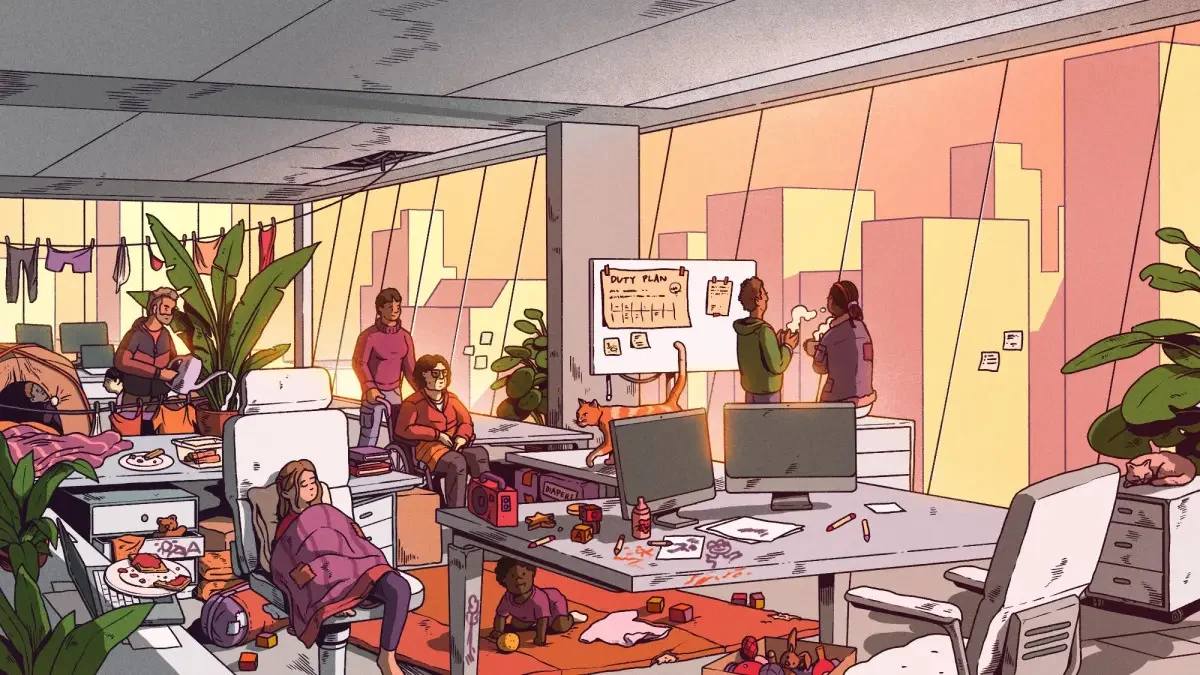
T.K. Rex previously contributed "A Holdout in the Northern California Designated Wildcraft Zone" to Imagine 2200 in 2022, exploring the intricate relationships between humans, nature, and technology—themes that continue to be central to her work. The new story, "Forty-Seven Vacant Floors of Ur," is set in a near-future San Francisco. It follows Morgan Bernd, "the third-to-last employed user experience writer in Silicon Valley," whose final task is to train the AI destined to replace him. On his last day, Morgan ascends to the empty 47th floor of a skyscraper he never truly worked in. From this vantage point, looking down at a "sea of tents" below, he makes a decision described as "quiet, risky, and completely human." This narrative promises a poignant exploration of technological displacement, urban inequality, and the enduring resilience of human agency.
Implications:
The Imagine 2200 series’ commitment to climate fiction highlights the growing importance of speculative literature in addressing pressing global issues. T.K. Rex’s stories, particularly "Forty-Seven Vacant Floors of Ur," offer timely commentary on the socio-economic impacts of AI and automation, juxtaposed with stark visual imagery of urban poverty. By offering these stories as free reads, Grist contributes to the accessibility of meaningful, thought-provoking fiction and amplifies voices exploring critical future scenarios. It demonstrates the power of speculative fiction not just to entertain, but to provoke reflection and encourage societal dialogue on complex challenges.

"The Sheep Detectives": A Return to the Lost Art of Family Films
A New York Times critic has championed "The Sheep Detectives," a unique film that not only delights audiences but also sparks a broader conversation about the decline of a specific genre of family-friendly cinema.
Main Facts:
A New York Times critic has reviewed "The Sheep Detectives," a film adaptation of Leonie Swann’s 2005 novel "Three Bags Full." The review praises the film for its unique premise and its successful revival of the lost art of the PG-rated, family-friendly live-action movie.
Supporting Data:
The critic initially approached the film with skepticism, having to repeatedly explain its ludicrous-sounding premise: "yes, the sheep are solving the murder; no, it’s not animated, or at least not in the way you’re thinking of." However, the film, directed by Kyle Balda and penned by Craig Mazin (The Last of Us, Chernobyl), ultimately won them over. The story revolves around a kindly shepherd named George (Hugh Jackman), who reads mystery novels to his flock. When George is found dead, his sheep, led by the intelligent Lily (voiced by Julia Louis-Dreyfus), embark on a mission to solve his murder by venturing into the village to uncover motives.
Beyond its charming plot, the review uses "The Sheep Detectives" as a touchstone to lament the disappearance of a specific type of PG-rated movie that flourished in the 1980s and ’90s. These were films like E.T. the Extra-Terrestrial, The Princess Bride, and Babe, intended for *


Leave a Comment