
Ancient Sumerian Poem Unveils Royal Piety and Political Ingenuity in Ur III Mesopotamia
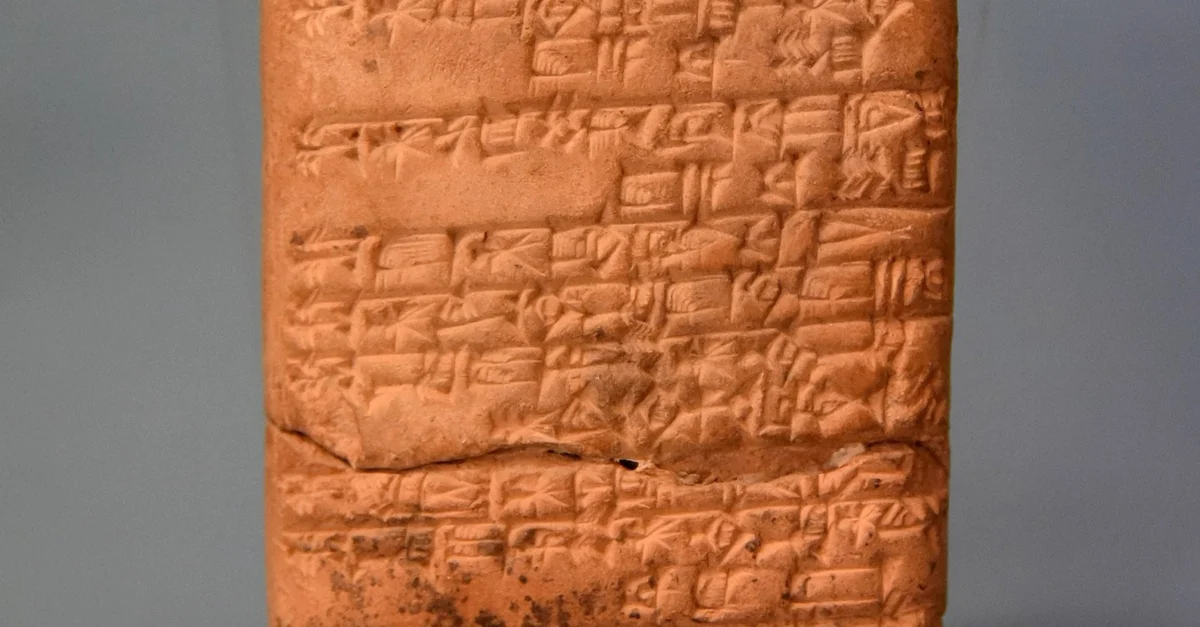
UR, MESOPOTAMIA – A remarkable Sumerian poem, tentatively titled "Shulgi and Ninlil’s Barge," offers an invaluable glimpse into the sophisticated blend of religious devotion and political strategy employed by ancient Mesopotamian monarchs. Dated to the illustrious reign of King Shulgi of Ur (2094 – circa 2046 BCE), this cuneiform text celebrates a pivotal event: the ceremonial caulking of the barge belonging to the revered goddess Ninlil, consort of the mighty sky god Enlil, followed by a grand banquet hosted by the king himself. The poem culminates in Ninlil’s divine blessing, promising Shulgi a prosperous and enduring reign – a clear testament to the symbiotic relationship between king, gods, and the welfare of the kingdom.
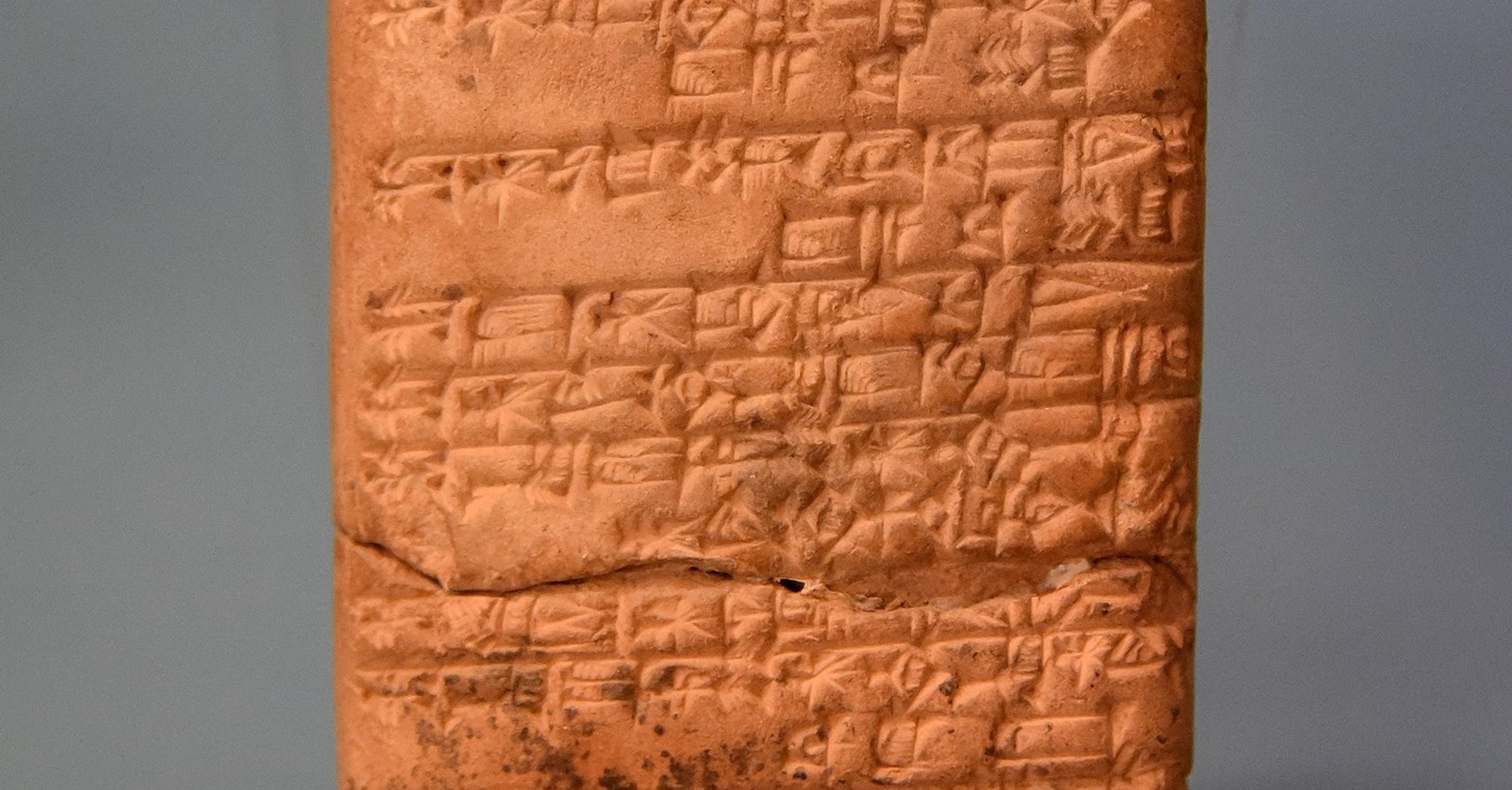
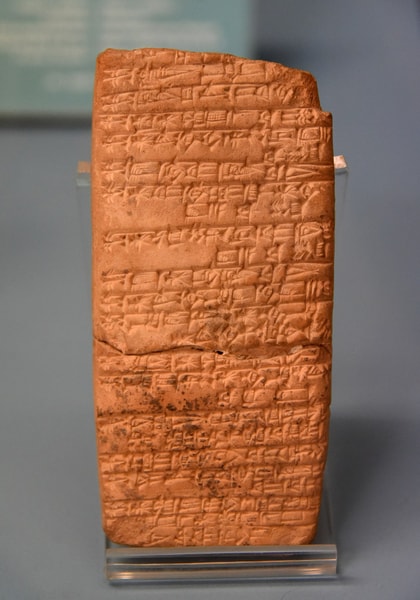
Discovered amidst the ancient ruins of Nippur in the mid-19th century, this literary work, also known to scholars as Shulgi R, provides a vivid narrative of a ritual journey, a royal feast, and the profound theological beliefs that underpinned Sumerian society. Though the cuneiform tablet remains damaged, its surviving lines vividly depict riverine travel on the life-giving Tigris and Euphrates, the opulence of royal religious festivals, and the strategic importance of appeasing the divine powers for political legitimacy and social cohesion. Today, "Shulgi and Ninlil’s Barge" is frequently anthologized, standing as a cherished example of Mesopotamian literary heritage and a key to understanding the cultural and political landscape of the Ur III period.
Main Facts: A Royal Dedication to the Divine
"Shulgi and Ninlil’s Barge" recounts a specific historical event from the eighth year of King Shulgi’s reign, a year officially recorded in his inscriptions as "the Year in which Ninlil’s barge was caulked." The poem, a modern designation given its lost original title, details a meticulously planned royal initiative. King Shulgi, the second monarch of the powerful Ur III Dynasty, orchestrated the restoration and ceremonial launch of a sacred barge dedicated to Ninlil, the prominent goddess whose cult, alongside that of her husband Enlil, centered in the holy city of Nippur.
The narrative unfolds with the preparation of the magnificent vessel, its journey downriver from Nippur to the sacred site of Tummal – a significant pilgrimage destination located just south of Nippur – and the lavish nighttime banquet held there in honor of the divine couple. The following morning, the barge, presumably carrying the cult statues of Ninlil and Enlil, returned to Nippur. The poem concludes with Ninlil, visibly pleased by Shulgi’s devotion, bestowing upon him a divine blessing for a long and prosperous rule. This act of divine endorsement served not merely as a religious affirmation but as a potent political statement, solidifying Shulgi’s authority in the eyes of his subjects.
The discovery of the poem in Nippur suggests its prominent role in the city’s scribal schools, where it likely served both as a literary text for education and a cultural artifact for reinforcing state ideology. Its fragmented state notwithstanding, the poem’s detailed descriptions offer unparalleled insights into ancient shipbuilding, river transportation, religious ceremonies, and the elaborate banquets that marked significant state and religious occasions. Its enduring popularity among modern scholars and enthusiasts underscores its profound artistic and historical value, serving as a direct conduit to the spiritual and political heart of ancient Sumer.
Chronology: The Ur III Renaissance and Shulgi’s Ascendancy
The historical backdrop to "Shulgi and Ninlil’s Barge" is the Ur III Period (circa 2112 – circa 2004 BCE), often hailed as the "Sumerian Renaissance." This era witnessed a resurgence of Sumerian art, culture, and political power after a period of foreign domination by the Gutians (circa 2141 – circa 2050 BCE). The Gutians had, according to later Sumerian accounts, dismantled the mighty Akkadian Empire (2350/2334 – 2154 BCE), which had previously subjugated the independent Sumerian city-states. The kings of Ur III positioned themselves as the restorers of pre-Akkadian Sumerian traditions, though some scholars debate the extent of this "revival."
The dynasty was founded by Ur-Nammu (reign circa 2112-2094 BCE), a visionary king who understood the crucial link between honoring the gods, maintaining public goodwill, and establishing a stable administration. His policies laid the groundwork for a unified and prosperous Sumerian state. Tragically, Ur-Nammu met his end in battle against the Gutians in 2094 BCE.
His son, Shulgi, ascended the throne with a clear mandate: avenge his father’s death and expel the invaders. Shulgi not only succeeded in driving the Gutians from Sumer but also embarked on an ambitious program of state-building that defined his long and impactful reign. He initiated widespread reforms to bolster the kingdom’s infrastructure, stimulate trade, and strengthen the economy. A staunch advocate for literacy, he established numerous scribal schools, ensuring the preservation and dissemination of Sumerian knowledge and culture. He either maintained or formalized the Code of Ur-Nammu, his father’s groundbreaking law code, further cementing legal order across his domain. Shulgi is also credited with standardizing weights and measures, timekeeping, and the calendar, vital steps toward unifying the disparate cities under his rule. He is even thought to have pioneered the establishment of roadside inns with landscaped gardens, facilitating travel and commerce.
Central to Shulgi’s vision of unity was the deliberate cultivation of his image as a pious and benevolent ruler, mirroring his father’s approach. He presented himself as a father figure and an exemplary role model, especially in matters of religious observance. One of his most famous feats, commemorated in A Praise Poem of Shulgi, was his legendary run: covering 100 miles from Nippur to Ur to officiate at a religious festival, and then immediately running back to Nippur to perform the same duties – a remarkable 200-mile journey completed in a single day. This extraordinary display of physical prowess and religious devotion underscored his commitment to the divine and his tireless service to the state.
The ritual involving Ninlil’s barge in his eighth regnal year was another carefully orchestrated event designed to reinforce this image of royal piety. It showcased his unwavering respect for the principal deities, particularly Enlil and Ninlil, from whom the kings of Ur III claimed their authority derived. This strategic blend of religious ceremony and political messaging was not unique to Shulgi; his younger son (or grandson), Shu-Sin (reign circa 2037 – circa 2028 BCE), continued the tradition, constructing his own barge for Ninlil and performing a similar ritual in his eighth year, demonstrating the lasting impact of Shulgi’s carefully crafted legacy.
Supporting Data: Unveiling the Ritual and Its Profound Meaning
"Shulgi and Ninlil’s Barge" is more than just a historical record; it is a meticulously crafted piece of literature designed to immortalize a significant event and reinforce royal ideology. Its structure and content offer deep insights into Sumerian religious practices, artistic expression, and the strategic use of ritual.
The Poem’s Structure and Performance
The poem is divided into two distinct sections, each marked by a unique musical notation: sa-gida (lines 1-39) and sa-gara (lines 41-91). Scholar Shail Vyas suggests these terms might have linguistic roots in similar words (sadja and svara) from the distant Indus Valley Civilization, hinting at potential cultural exchanges or shared musical terminology. The sa-gida section functions as a direct address to and praise of the barge itself, vividly describing its magnificent construction and symbolic attributes. The sa-gara section, conversely, unfolds the narrative of the ritual journey: the departure from Nippur, the voyage to Tummal, the opulent banquet, the return to Nippur, and the climactic blessing from Ninlil.
Scholars like Jeremy Black affirm that the poem was almost certainly sung, likely as a public performance during a ceremonial occasion associated with the festival. The sa-gida would have extolled the physical and symbolic grandeur of the barge, while the sa-gara would have recounted and commemorated the event itself. Together, these musical sections would have served to honor not only Ninlil and Enlil but also other significant deities mentioned in the work, such as Enki (god of water and wisdom), Nanna (the moon god), and Ninurta (god of war and irrigation), whose cult statues would have accompanied the divine couple on their sacred voyage. This multi-deity veneration underscored the interconnectedness of the Sumerian pantheon and the king’s respect for the divine order.
The Sacred Journey and Banquet
The river journey described in the poem was a central element of the ritual, symbolizing the gods’ presence and their journey through the human realm. Travel by boat on the Tigris and Euphrates was a primary mode of transportation in ancient Mesopotamia, and the poem imbues this practical act with profound spiritual significance. Nippur, the starting point, was not just a city but a consecrated cult center, chiefly associated with Enlil and Ninlil. By Shulgi’s time, Nippur had become a preeminent pilgrimage site, as had nearby Tummal, the destination of the barge. The choice of Tummal for the banquet underscored its sacred status and its importance in the broader religious landscape.
The poem’s initial sa-gida section provides a highly detailed and symbolic description of Ninlil’s barge. It is depicted as a vessel of divine favor, its timbers and components imbued with mythical qualities. Its covering reed-mats are likened to "daylight spreading wide," its punting poles to "dragons sleeping a sweet sleep," and its floor-planks to "flood-currents, sparkling in the pure Euphrates." The barge is adorned with a "glittering golden sun-disc" and a banner signifying "the divine powers of kingship." The vivid imagery paints a picture of a magnificent, almost living entity, itself a manifestation of divine glory, crafted by the faithful provider, King Shulgi.
The banquet itself was a crucial element of the ritual. As scholar Jeremy Black notes, just as gods lived in temples and were provided with food and furnishings, they also had ceremonial barges for festivals. The overnight trip to Tummal, culminating in a feast, was a grand ceremonial progression, typical of the cultic life of the Ur III Dynasty. Such banquets were not merely acts of hospitality but deeply sacred communion, where the king would present "great food-offerings" to the gods, signifying his devotion and ensuring their beneficence. The poem describes the gods passing the day in "abundance" and decreeing a "fate to be pre-eminent forever" for the king who facilitated this holy event.
The Divine Patrons: Enlil and Ninlil
At the heart of the poem’s religious significance are the deities Enlil and Ninlil. Enlil, one of the most powerful gods in the Sumerian pantheon, was often associated with the sky god An (Anu). However, Ninlil, his consort, held immense prestige and, in some traditions, was even depicted as more powerful than Enlil or Anu, possessing the crucial ability to determine fate. This attribute made her an indispensable figure to consult before any major decision and a primary recipient of royal veneration. Monarchs, including Shulgi, lavished special attention upon her, hoping to secure her benevolent gaze and the stability of their rule.
In the poem, Ninlil’s blessing is the ultimate validation of Shulgi’s piety and an affirmation of his divinely ordained kingship. After her sacred journey and the celebratory banquet, she looks upon Shulgi "with joyful eyes and shining forehead" and bestows a powerful benediction. She promises to "prolong the nights of the crown" placed upon his head by An, "extend the days of the holy sceptre" given by Enlil, and ensure the "firm foundation of your throne" bestowed by Enki. This elaborate blessing, invoking multiple key deities, underscores the collective divine approval of Shulgi’s reign and his exemplary conduct as a pious shepherd of his people.
Excerpts from the Ancient Text
The surviving cuneiform text offers tantalizing glimpses into the poem’s rich language and detailed descriptions. For instance, the sa-gida section’s praise of the barge uses evocative similes: "Your covering reed-mats are the daylight spreading wide over the holy settlements," and "Your punting poles are dragons sleeping a sweet sleep in their lair." Such poetic language not only beautifies the text but also elevates the barge itself to a sacred object, infused with divine energy.
The narrative of the sa-gara section captures the procession’s solemnity and joy: "The great gods bathe in holy water in Nippur… The mother of the Land, Ninlil the fair, comes out (?) from the house, and Enlil embraces her like a pure wild cow." This humanization of the divine makes the ritual relatable and emphasizes the intimate relationship between the gods and their devotees. The conclusion, Ninlil’s blessing, is particularly poignant: "Shepherd…, Shulgi, who has a lasting name, king of jubilation! …May the foundation of your throne that was bestowed on you by Enki be firm!" These lines directly convey the divine validation that Shulgi sought and received, ensuring his place in history and his subjects’ faith in his rule.
Official Responses: The King as Pious Steward
The actions of King Shulgi, as immortalized in "Shulgi and Ninlil’s Barge," represent a sophisticated "official response" by the Ur III monarchy to the imperative of maintaining political legitimacy through religious devotion. In ancient Mesopotamia, a king’s authority was not merely derived from military might or administrative skill; it was fundamentally dependent on the gods looking favorably upon his stewardship of the land and its people. Therefore, orchestrating elaborate religious festivals and acts of piety was not merely a matter of faith but a cornerstone of statecraft.

Shulgi, like his father Ur-Nammu, consciously adopted the persona of a pious steward and a father figure to his people. By personally overseeing the construction and caulking of Ninlil’s barge, leading the ceremonial journey, and hosting the divine banquet, he set an unimpeachable example. This was a clear message to his subjects: if the king, burdened with the immense responsibilities of governance, could dedicate himself so thoroughly to honoring the gods, then his subjects were expected to follow suit. This royal mandate encouraged widespread religious observance and, crucially, fostered a sense of unity and shared purpose across the diverse city-states of Sumer.
Scholar Stephen Bertman highlights the broader context of such celebrations: "The greatness of the gods and their manifold blessings were celebrated on special holy days and festivals… on a larger scale across their country, the people of Mesopotamia also expressed their gratitude in common for the fertility of their land whose bounty sustained their lives and derived from divine favor." Shulgi’s actions were precisely in line with this understanding, ensuring that the collective gratitude and worship were channeled through the figure of the monarch, thereby reinforcing his central role in mediating between the divine and the human.
The poem itself serves as an "official response" – a piece of royal propaganda designed to publicly affirm divine favor for Shulgi. By having the poem performed at subsequent festivals, the message of Shulgi’s piety and Ninlil’s blessing would have been continually reinforced. This narrative not only immortalized Shulgi as a devout and blessed ruler but also established a precedent for future kings. The final message of the poem, where Ninlil explicitly blesses Shulgi with a long and stable reign, implicitly communicates that such piety is a prerequisite for a secure kingship. This was a powerful lesson that Shulgi’s successors, like Shu-Sin, clearly took to heart, replicating the ritual in their own reigns.
Implications: Echoes Through Time of a Sumerian Legacy
The legacy of "Shulgi and Ninlil’s Barge" extends far beyond its immediate historical context, offering profound implications for understanding ancient Mesopotamian civilization and the enduring power of political-religious symbiosis.
Cultural and Religious Impact
The poem stands as a testament to the rich literary tradition of Sumer, showcasing sophisticated poetic techniques, vivid imagery, and a deep engagement with theological concepts. Such works were not merely entertainment; they were integral to the cultural fabric, shaping public perception of the gods, the cosmos, and the role of humanity within it. Through poems like this, the stories of the gods and the deeds of kings were transmitted across generations, fostering a shared cultural identity and religious framework. The fact that it was likely used in scribal schools underscores its pedagogical importance, ensuring that future generations of administrators, priests, and scholars were steeped in the official narratives and religious doctrines. Its continued study today provides invaluable data for reconstructing Sumerian religious practices, artistic conventions, and the daily lives of both commoners and kings.
Political Legitimacy and Social Cohesion
Perhaps the most significant implication of "Shulgi and Ninlil’s Barge" lies in its demonstration of how religious ritual was expertly leveraged for political stability and social cohesion. In a kingdom comprising diverse city-states with local loyalties, grand festivals honoring universal deities like Enlil and Ninlil provided a powerful unifying force. The king, as the central figure in these rituals, became the embodiment of the kingdom’s collective piety, a guarantor of divine favor, and thus, the legitimate ruler. By ensuring the gods were pleased, the king symbolically ensured the fertility of the land, the success of harvests, and the overall prosperity and security of his people. This strategic use of religious devotion created a robust ideological foundation for the Ur III state, helping to integrate disparate populations under a centralized authority and promoting a sense of shared purpose and identity.
Modern Scholarly Insights
For contemporary scholarship, "Shulgi and Ninlil’s Barge" remains a cornerstone for understanding the complexities of the Ur III period. It provides direct evidence of royal administration, religious policy, and the strategic construction of royal ideology. The poem’s detailed descriptions of the barge, the journey, and the banquet offer tangible details about ancient technology, transportation, and social customs. Moreover, the explicit blessing from Ninlil provides a clear articulation of the divine mandate for kingship, a concept central to Mesopotamian political theory. Its inclusion in modern anthologies ensures that the voices of ancient Sumer continue to resonate, providing critical insights into the human condition, the interplay of power and belief, and the enduring quest for meaning and legitimacy in the face of both the divine and the mundane. The poem’s legacy underscores the timeless truth that even in the most ancient civilizations, art, religion, and politics were inextricably intertwined, shaping societies and leaving indelible marks on history.

Leave a Comment