
Ancient Echoes of Discord: Unearthing Sumeria’s "Debate Between Bird and Fish" – A Timeless Tale of Neighbors and Justice
UR, MESOPOTAMIA – Millennia before modern legal systems and diplomatic protocols, the ancient Sumerians grappled with the universal challenge of difficult neighbors and escalating disputes. Unearthed from the sands of time, a remarkable literary work known as The Debate Between Bird and Fish, penned around 2000 BCE during the flourishing Ur III Period, offers a profound glimpse into these foundational societal concerns. More than just an ancient poem, this text stands as the earliest known extant work to explore the theme of interpersonal (or, in this case, inter-species) conflict and its swift escalation, providing both entertainment and a vital moral compass for its time.
This fascinating piece is a prime example of the Sumerian "literary debate" genre, a popular form of intellectual discourse in the late 3rd millennium BCE. These debates typically pitted two entities – often inanimate objects, animals, or even seasons – against each other, arguing for their respective importance or resolving a legal dispute. The ultimate arbiter was usually a deity, but in a unique testament to a king’s perceived wisdom, The Debate Between Bird and Fish culminates in the judgment of the renowned Sumerian ruler, Shulgi of Ur.
The Ancient Roots of Conflict Resolution
The Debate Between Bird and Fish is far more than a simple fable; it is a sophisticated narrative embedded within a rich cultural and educational context. Dating back to the Ur III Period (circa 2112-circa 2004 BCE), a time marked by a resurgence of Sumerian power and culture, the poem reflects the intellectual vibrancy of an era that prioritized literacy and structured learning. Its central theme—the rapid escalation of conflict between close-dwelling entities—resonates across human history, from tribal disputes to modern international relations.
The poem’s narrative structure is typical of the debate genre, beginning with an exposition of the characters and their circumstances, moving through a heated exchange of arguments and insults, and concluding with a definitive judgment. What sets this particular debate apart is not only its early date but also its deviation from the common trope of divine arbitration. Instead, the esteemed King Shulgi, whose reign (2094-circa 2046 BCE) was a golden age for Sumerian literature and education, assumes the role of judge, elevating his status as a wise and just ruler. This detail offers invaluable insight into the perception of kingship in ancient Mesopotamia, where the monarch was often seen as an earthly embodiment of divine order.
The literary debate genre itself was a cornerstone of the edubba, the Sumerian scribal school. These institutions were the intellectual engines of Sumerian society, training generations of scribes who would manage the vast administrative apparatus of the empire, record history, and preserve religious traditions. Poems like The Debate Between Bird and Fish were not merely read; they were copied, memorized, and recited as part of a rigorous curriculum designed to hone students’ rhetorical skills, legal understanding, and moral reasoning. Thus, this ancient poem served a dual purpose: entertaining the populace while simultaneously educating the future administrators and intellectuals of Sumer.
Chronology: A Timeline of Sumerian Poetic Tradition
The narrative of The Debate Between Bird and Fish unfolds against the backdrop of Sumerian cosmology and royal decree, weaving together mythical origins with practical lessons on societal conduct.
The Ur III Period and Literary Flourishing
The Ur III Period represents a pivotal era in Mesopotamian history, characterized by a highly centralized administration, extensive economic networks, and a significant cultural renaissance. It was during this time that Sumerian literature reached new heights, with the systematic collection, copying, and composition of numerous texts. King Shulgi of Ur, the second monarch of this dynasty, was a visionary leader who understood the power of knowledge and education. He initiated widespread reforms, including a dramatic increase in the number of scribal schools, or edubba, across his territories. His patronage of literacy and the arts ensured that complex literary pieces, including the debate poems, became central to the educational curriculum. The dating of The Debate Between Bird and Fish to circa 2000 BCE places it firmly within this vibrant intellectual environment, reflecting Shulgi’s direct influence through its unique resolution.
The Genesis of the Conflict
The poem’s opening lines establish a cosmic stage, beginning with a creation myth familiar to Sumerian audiences. After the chief deities, Anu (god of the heavens) and Enlil (god of wind, air, earth, and storms), have established the fundamental order of the cosmos, it is Enki, the god of wisdom, water, and creation (also known as Nudimmud), who meticulously crafts the marshlands around his sacred city of Eridu. Enki’s benevolent actions provide sustenance for the Sumerians, referred to as "the black-headed," and he carefully places fish and birds in their respective habitats. Crucially, he instructs them on proper behavior, implying an initial state of harmony and order (lines 1-21). This divine decree sets the stage for the subsequent conflict, as the breakdown of this divinely ordained order becomes the central tension of the narrative.
Escalation and Retaliation
The meticulously crafted peace, however, proves fragile. Problems begin when Fish takes offense at Bird’s perceived transgressions. Fish complains bitterly about Bird’s incessant noise, its squawking, and its gluttonous habits, casting the first stone with a torrent of insults: "Croaking, … noise in the marshes … squawking! Forever gobbling away greedily, while your heart is dripping with evil!" (lines 29-30). Fish accuses Bird of being a nuisance, damaging crops, and fouling courtyards with droppings.
Bird, initially dismissive of Fish’s ugly words, eventually retaliates with equal ferocity. Confident in its "multicoloured plumage and multicoloured face," Bird asserts its own superiority, highlighting its aesthetic appeal, its melodious singing, and its importance to human banquets and the temple. Bird retorts by mocking Fish’s physical form, its lack of limbs, its awful smell, and its lowly diet: "Your mouth is flabby (?), but although your mouth goes all the way round, you cannot see behind you. You are bereft of hips, as also of arms, hands and feet…" (lines 57-60). The verbal sparring quickly devolves from mere insult to a deeply personal and destructive exchange, vividly illustrating how quickly "problems can escalate."
The dispute then takes a dramatic and violent turn. Unable to resolve their differences through words, Fish conceives a "plot against Bird," silently slithering to Bird’s nest while she is away seeking food. Fish proceeds to destroy Bird’s "well-built nest of brushwood," smashing her eggs and throwing them into the sea (lines 102-115). The act is one of brutal, premeditated vengeance. Upon returning to find her home and offspring annihilated, Bird, described with "lion-faced and with an eagle’s talons," unleashes her own fury. She searches the marshes for Fish, and, extending her claws, snatches Fish’s "tiny fish-spawn," piling them up in a heap, thus taking her "revenge" (lines 116-121). This cycle of retribution underscores the poem’s core message about the dangers of unchecked conflict.
Royal Intervention and Judgment
With their personal war reaching a destructive peak, the two combatants agree to take their case to a higher authority. "Our judge shall take this up. Let us take our case to Enki, our judge and adjudicator," Fish declares (lines 139-140). However, in a unique narrative twist, the litigation is brought before King Shulgi of Ur, who is described as a "son of Enlil" (lines 141-147). This substitution of a mortal king for a deity as the ultimate arbiter is highly significant, reflecting Shulgi’s elevated status and the perception of his wisdom as akin to divine insight.
Bird presents her case first, detailing Fish’s wanton destruction of her nest and eggs. The fragmented text suggests Fish also argues its point, before King Shulgi delivers his verdict. Shulgi ultimately decides in favor of Bird. His judgment, though partially fragmented, explicitly praises Bird’s "sweet singing" and the "pleasure she brings to banquets and the E-kur (temple)" (lines 168-177). The poem concludes with praise to Father Enki, whose wisdom is implicitly credited with inspiring Shulgi’s just decision.
Supporting Data: Unpacking the Sumerian Debate Genre and its Pedagogy
The rich tapestry of The Debate Between Bird and Fish is best understood within the broader context of Sumerian literary and educational practices. The genre it exemplifies was not merely a form of entertainment; it was a sophisticated tool for intellectual development and moral instruction.
The Literary Debate as a Cultural Phenomenon
The literary debate genre was exceptionally popular in ancient Sumer, particularly during the Ur III period. Seven famous examples, including The Debate Between Bird and Fish, featured non-human characters such as animals, plants, or seasons arguing their respective merits or presenting a legal dispute. These debates often employed intricate rhetorical structures, poetic language, and vivid imagery, making them compelling for audiences. Beyond their entertainment value, these texts served a crucial didactic purpose. By presenting opposing viewpoints and then offering a resolution, they encouraged critical thinking and provided models for argumentation. The relatively small number of known literary debates featuring human characters suggests that the allegorical nature of the non-human debates held a particular appeal, perhaps allowing for a more universal exploration of human traits and societal dilemmas without the specific constraints of human personalities.
The Edubba and the Shaping of Scribes
The edubba, or "House of Tablets," was the bedrock of Sumerian intellectual life. These scribal schools were rigorous institutions where students, predominantly from elite families, underwent years of intensive training. Literacy was not merely about reading and writing; it was about mastering a vast corpus of knowledge, including mathematics, law, history, and literature. King Shulgi’s emphasis on expanding these schools underscored the practical necessity of a literate bureaucracy to manage his empire and the cultural importance of preserving Sumerian heritage.
Poems like The Debate Between Bird and Fish were integral to the edubba curriculum. Students would meticulously copy these texts onto clay tablets, a process that reinforced their cuneiform skills. Beyond transcription, they would memorize and recite the poems, which helped them develop oratorical abilities and a deep understanding of Sumerian literary conventions. Studying such debates taught students not only the mechanics of persuasive argumentation but also the principles of legal reasoning and social ethics. The poem’s narrative, with its clear progression from complaint to escalation to judgment, offered a template for understanding conflict resolution and the role of authority in maintaining order, lessons invaluable for future scribes who would serve as administrators, judges, and record-keepers.
Artistic and Symbolic Interpretations
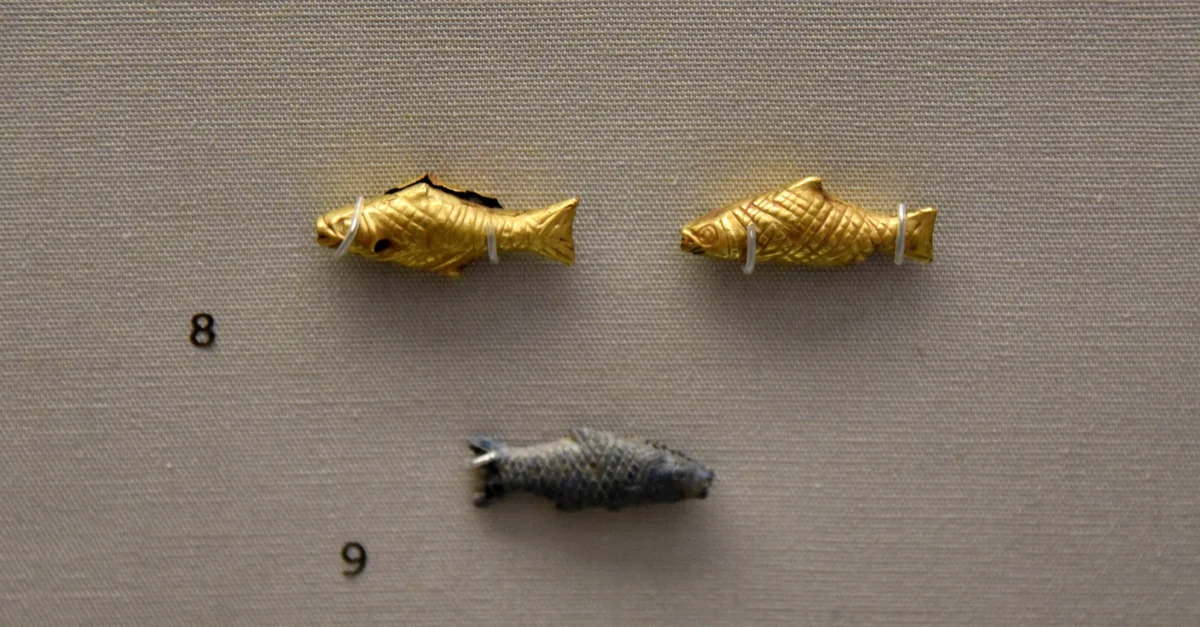
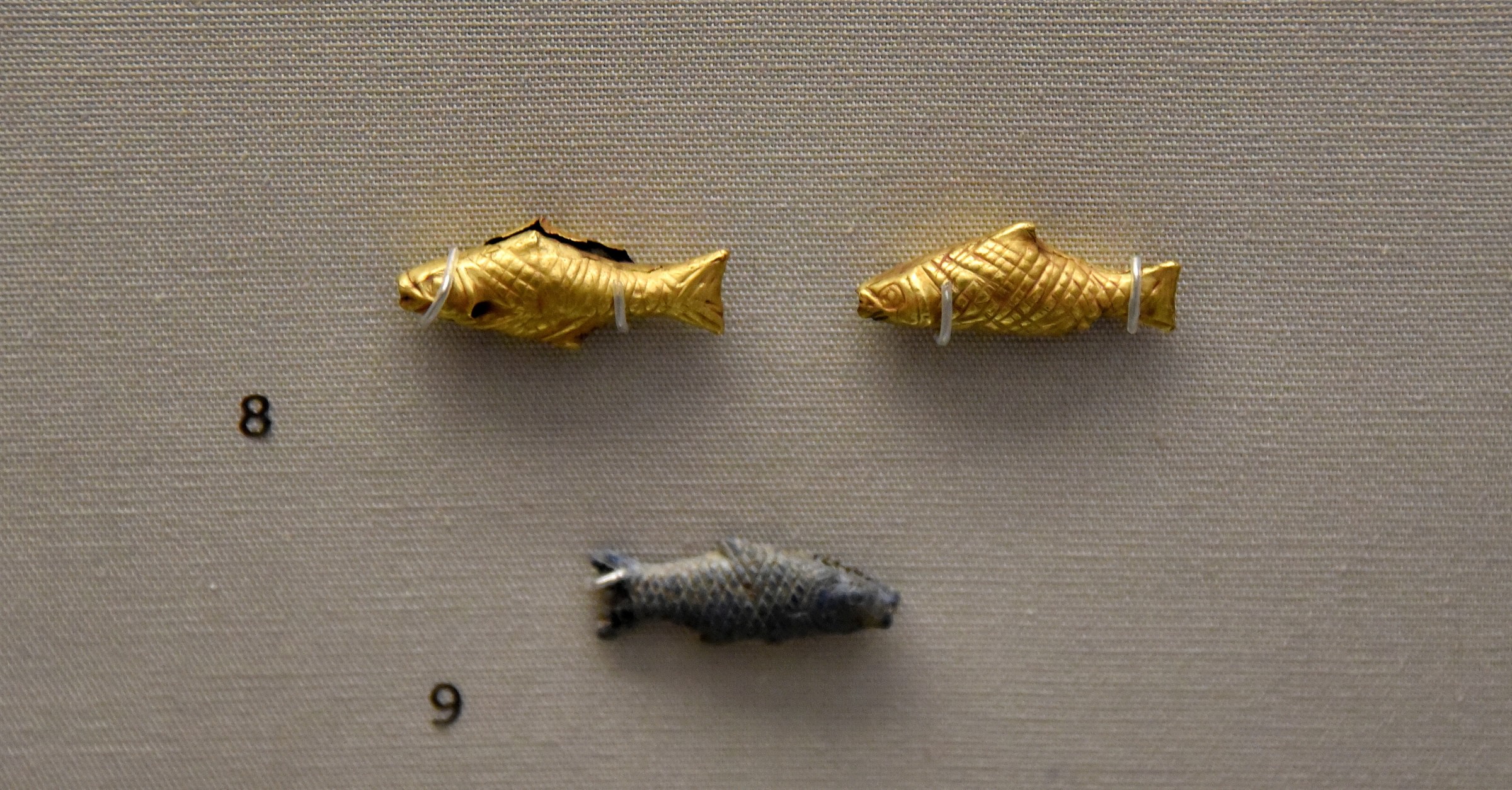
While the provided image of "Puabi’s Gold and Lapis Lazui Fish Amulets, Ur" does not directly illustrate the poem, it serves as a powerful reminder of the artistic sophistication and symbolic significance of animals in Sumerian culture. Queen Puabi’s lavish tomb, discovered in the Royal Cemetery of Ur, yielded exquisite artifacts, including these fish amulets, which likely held protective or spiritual meaning. The presence of such finely crafted animal representations in royal burials suggests a deep reverence for the natural world and its creatures, a reverence that would have informed the personification of Bird and Fish in the literary debate. These animals were not just characters; they embodied archetypal qualities and played symbolic roles within the Sumerian worldview, making their debate relatable and meaningful to the ancient audience.
Official Responses: Scholarly Interpretations and Lingering Questions
The interpretation of The Debate Between Bird and Fish by modern scholars has offered significant insights into Sumerian thought, while also highlighting the challenges of deciphering ancient texts.
Deciphering Shulgi’s Wisdom
One of the most intriguing aspects of the poem is King Shulgi’s judgment. Scholars, including Jeremy Black, have interpreted Shulgi’s decision in favor of Bird as resting "as much on the pleasure created to man and the gods by Bird’s beautiful plumage and attractive singing" (Black, 230). Indeed, the text explicitly mentions Bird’s "sweet singing" and its role in bringing "good cheer in the king’s palace" and delighting the "Anuna gods" (lines 168-177). This suggests that aesthetic value and the capacity to bring joy were significant factors in Sumerian legal and ethical considerations, particularly when intertwined with religious practices and royal pleasure.
However, Black also rightly notes that the poem’s conclusion is fragmented, implying that Shulgi’s rationale likely extended beyond mere aesthetics. It is highly probable that the judgment was also based on "Fish’s savage attack on Bird’s eggs" (Black, 230) and the fact that Fish initiated the conflict with its insults and subsequent destructive act. This nuanced interpretation suggests that Shulgi’s wisdom encompassed both the appreciation of beauty and the condemnation of aggressive, retaliatory behavior. The judgment thus reflects a balanced view of justice, weighing both positive contributions and negative actions. The poem’s final praise to Enki, the god of wisdom, reinforces the idea that Shulgi’s decision was divinely inspired, further legitimizing his authority and sagacity.
The Moral Imperative
Beyond the specific details of the judgment, the poem carries a clear moral imperative: the importance of "getting along with one’s neighbors in accordance with the will of the gods." The escalating conflict between Bird and Fish, moving from verbal insults to mutual destruction of offspring, serves as a cautionary tale. It vividly demonstrates the destructive cycle of vengeance and the profound consequences of failing to resolve disputes peacefully. The resolution by a wise authority figure—be it a god or an enlightened king—underscores the Sumerian belief in the necessity of order and justice to maintain societal harmony. The poem suggests that true wisdom lies not in asserting one’s superiority through force or insult, but in contributing positively to the community and adhering to a higher standard of conduct.
Implications: Echoes Through Millennia
The Debate Between Bird and Fish is more than a historical artifact; it is a foundational text whose themes and lessons continue to resonate in contemporary society.
A Precursor to Modern Storytelling
This ancient Sumerian poem stands as a remarkable precursor to many forms of modern storytelling, from fables and allegories to legal dramas and political satires. Its sophisticated narrative arc, character development (even for non-human characters), and clear thematic message demonstrate a deep understanding of storytelling principles. The universal themes of conflict resolution, civility, justice, and the role of authority transcend cultural and temporal boundaries. The poem reminds us that humanity’s struggles with interpersonal conflict and the quest for equitable solutions are deeply ingrained in our collective history, making this 4,000-year-old text surprisingly relevant to contemporary debates on diplomacy, mediation, and social cohesion. It highlights the enduring human fascination with examining societal problems through the lens of allegorical narratives.
Insights into Sumerian Society and Values
The poem offers invaluable insights into the social and ethical fabric of ancient Sumer. The act of bringing a dispute before a king, rather than solely a deity, speaks volumes about the developed legal system and the powerful role of the monarch in administering justice. It suggests that Sumerian society valued a clear hierarchy and a structured approach to conflict resolution. The specific reasons for Shulgi’s judgment—Bird’s contribution to banquets and temples, its "sweet singing"—reveal an appreciation for aesthetics, cultural contributions, and religious piety as integral components of societal value.
Furthermore, the poem’s inclusion in the edubba curriculum underscores the Sumerian commitment to fostering critical thinking, rhetorical skill, and moral education among its future leaders. It illustrates how literature was not merely for leisure but served as a powerful tool for shaping citizens and maintaining social order. By studying texts like The Debate Between Bird and Fish, Sumerian students learned not only about the intricacies of their language and legal system but also about the enduring importance of empathy, restraint, and the pursuit of justice, guided by both divine wisdom and enlightened human leadership. The poem thus stands as a testament to the sophistication of ancient Sumerian thought and its lasting legacy in the annals of human civilization.



Leave a Comment