Nanshe: The Sumerian Goddess Who Championed Justice and Humanity
Ancient Mesopotamia, a cradle of civilization, gave rise to a rich pantheon of deities whose influences permeated every aspect of daily life. Among these revered figures, one goddess stood out for her unwavering dedication to social justice, compassion, and the welfare of the vulnerable: Nanshe. Known also as Nanse or Nazi, this Sumerian deity’s popularity surged across southern Mesopotamia and beyond during the 3rd millennium BCE, cementing her status as a beacon of fairness and a protector of the disenfranchised within the vast Mesopotamian pantheon. Her narrative offers a compelling glimpse into the moral and ethical aspirations of an ancient society grappling with the complexities of governance, commerce, and human suffering.
Main Facts: A Divine Profile of Compassion
Nanshe was far more than a mere mythological figure; she embodied the highest ideals of Sumerian society. Revered primarily as the goddess of social justice and divination, her domains extended to encompass fresh water, the creatures within it (birds and fish), fertility, and even the accuracy of commercial weights and measures. This multifaceted role positioned her as an omnipresent guardian, ensuring equity in both the natural world and human interactions. She was the compassionate overseer of orphans and widows, offering sanctuary and support to those most susceptible to hardship. Her favor also extended to prophets, endowing them with the crucial ability to interpret dreams with precision – a vital skill in a culture that often sought divine guidance through nocturnal visions.
Her epithet, "Lady of the Storerooms," highlights a critical aspect of her early popularity. In an agrarian society heavily reliant on trade and stored goods, Nanshe’s commitment to correct weights and measures was paramount. This practical application of justice in commerce made her a tangible and indispensable deity for merchants and consumers alike, laying the foundation for her widespread veneration long before her broader social justice roles became fully articulated.
Chronology: Divine Lineage and Ascendant Influence
Nanshe’s origins are deeply intertwined with some of the most prominent figures in Sumerian mythology. She is primarily recognized as the daughter of Enki, the cunning god of wisdom, fresh water, and magic, and Ninhursag, the revered mother goddess of the mountains. This powerful parentage endowed her with innate authority and a connection to fundamental aspects of the world. While some myths occasionally link her parentage to Enlil, the king of the gods, her association with Enki and Ninhursag remains the most consistent and widely accepted.
Her divine siblings further illustrate her connections within the pantheon. In some traditions, she is the sister of Nisaba, the goddess of writing and grain, and the hero-god Ninurta, a deity of war and agriculture. Other myths place her as a sister to Inanna, the vibrant goddess of love, war, and fertility, and Ereshkigal, the formidable queen of the Underworld. These familial ties underscore her integration into the core divine structure of Sumer.
Nanshe’s personal life in the divine realm also reflects her association with practical affairs. Her most commonly recognized consort was Haia, the god of storerooms, a partnership that perfectly complemented her role as the "Lady of the Storerooms" and her oversight of accurate trade. She also had a vizier, Hendursag, whose responsibility was the crucial task of judging human deeds and transgressions, acting as a divine arbiter under Nanshe’s guidance. Interestingly, her earliest consort was Nindara, Hendursag’s older brother and a local god of Lagash, known as a great warrior and the enigmatic "tax collector of the sea." While Nindara’s specific epithet remains somewhat obscure, it points to Nanshe’s long-standing connection to the city of Lagash and its maritime activities.
A testament to her profound compassion was her special concern for refugees. In an era marked by frequent conflicts and societal upheaval, Nanshe’s Sirara Temple, located in the town of Nina, a city within the Lagash region, became a renowned sanctuary. Here, those fleeing war-torn regions found not just physical shelter but also divine solace and protection, underscoring Nanshe’s role as a haven for the displaced and vulnerable. This act of providing refuge further elevated her status as a truly benevolent deity.
Supporting Data: Attributes, Iconography, and Temple Functions
Nanshe’s multifaceted nature is vividly expressed through her iconography and the detailed accounts found in ancient inscriptions and hymns. A significant depiction on a cylinder seal portrays her as a woman gracefully dancing above water, flanked by two winged Anuna – the gods of the earth. Above her, the winged solar disc, a potent symbol of Utu-Shamash, the god of justice, further emphasizes her connection to divine law and righteousness. Enki, her father, entrusted her with the stewardship of the Persian Gulf’s waters and all its marine inhabitants, a responsibility frequently referenced in texts that link her inextricably to aquatic environments.
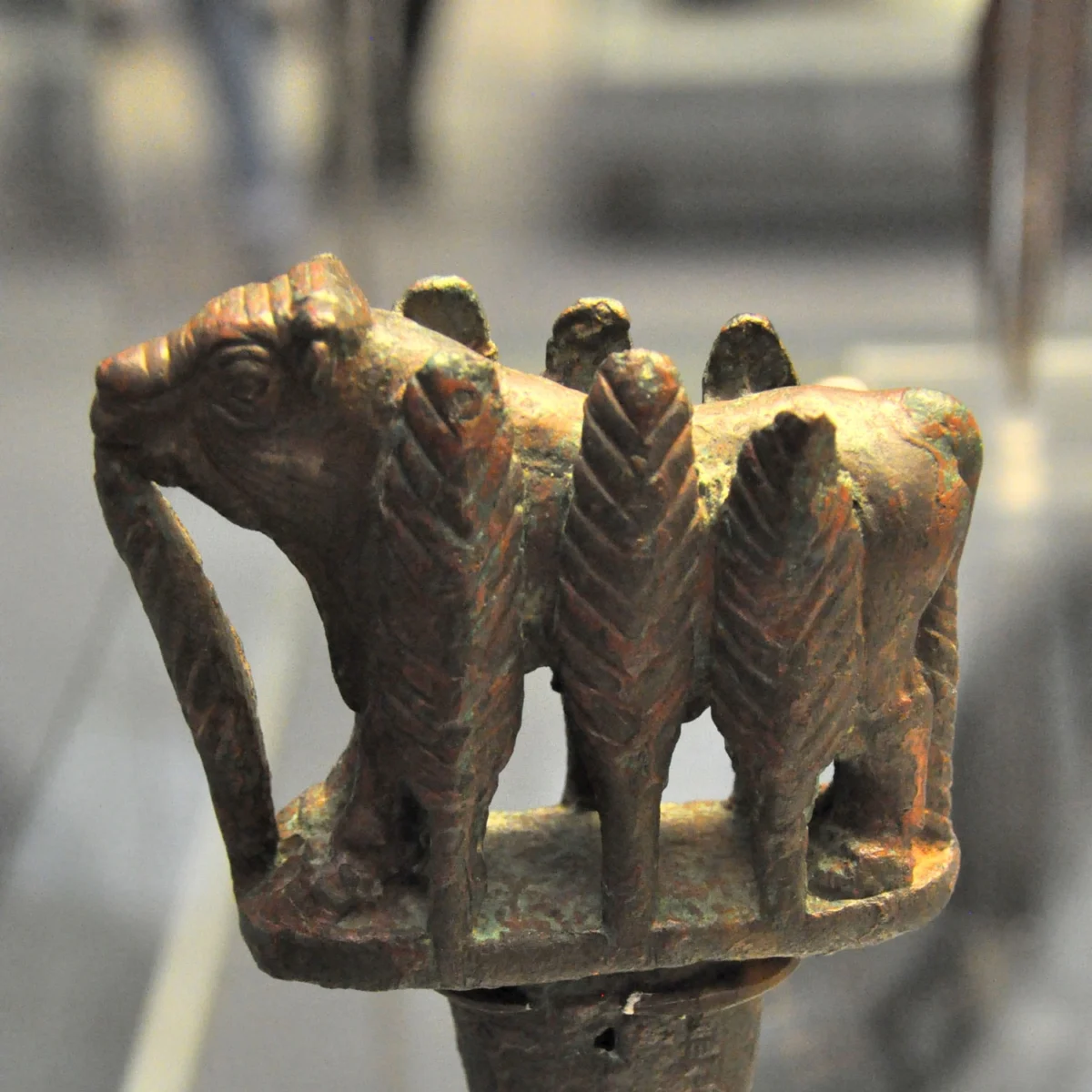
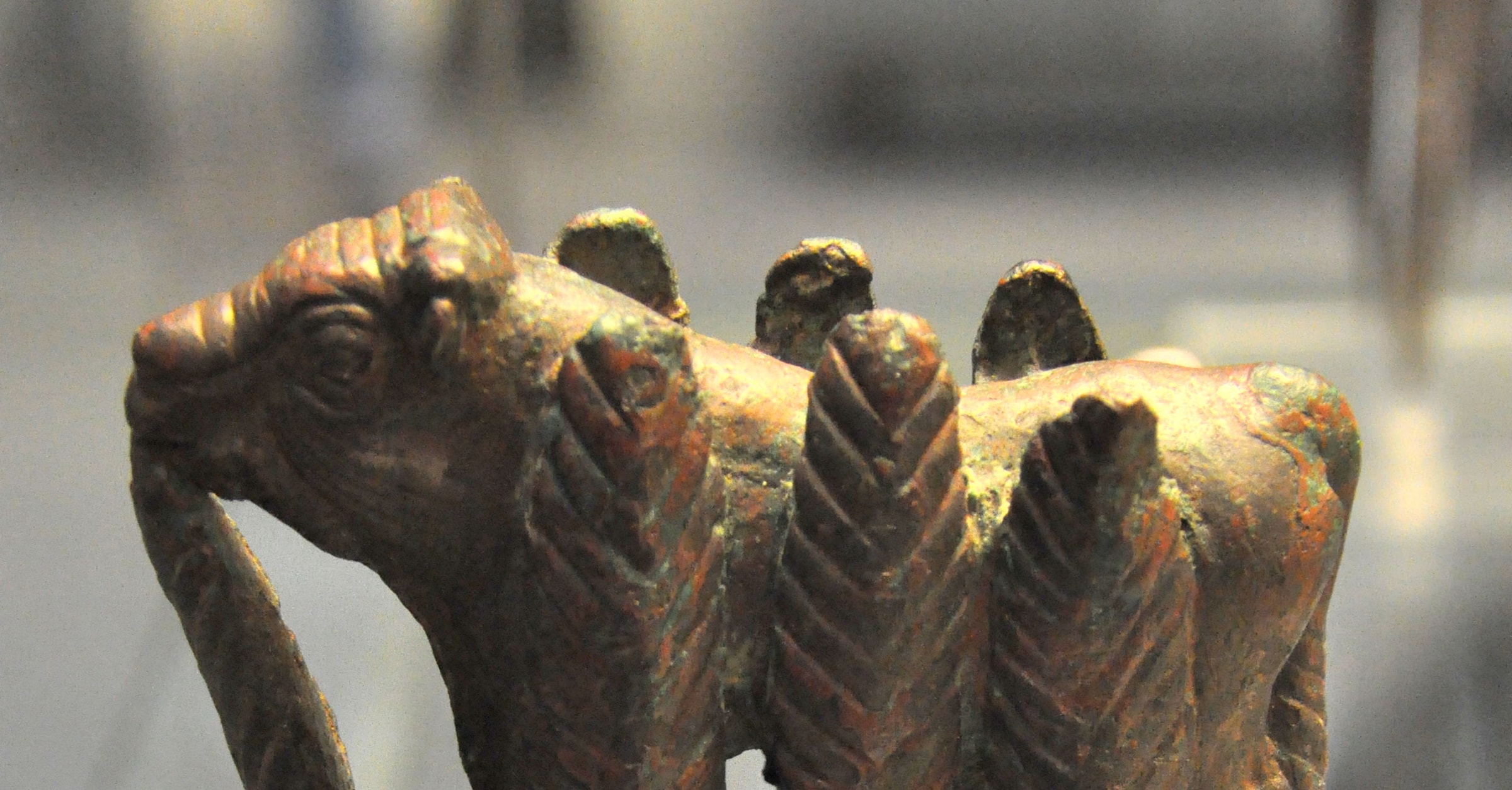
Her primary symbols, the fish and the pelican, are deeply symbolic. The fish naturally connects her to water and, by extension, to life itself, representing abundance and vitality. The pelican, a bird steeped in ancient legend for its supposed self-sacrifice to feed its young, perfectly encapsulates Nanshe’s profound and selfless devotion to humanity. These symbols not only identified her but also communicated her core values to her worshipers.
Across all extant inscriptions and hymns, Nanshe consistently emerges as a paragon of virtue: kind, compassionate, welcoming, and wise. Her character stands in stark contrast to some of the more capricious or vengeful deities in the Mesopotamian pantheon. Her benevolence was a constant, a reassuring presence for those seeking solace and justice.
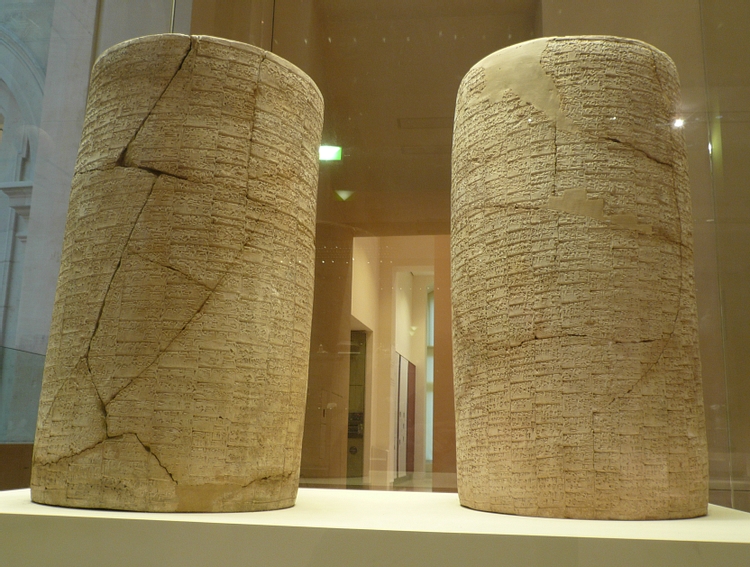
The most famous literary work featuring Nanshe is undoubtedly the Gudea Cylinders. These two remarkable terracotta cylinders, dating to approximately 2125 BCE, contain the epic text The Building of Ningirsu’s Temple. In this narrative, Nanshe plays a pivotal role, interpreting the complex dream of Gudea (circa 2144-2124 BCE), the pious governor of Lagash. Her clear and insightful interpretation not only guides Gudea in his divine mandate to construct a temple for his god Ningirsu but also underscores her authority in matters of prophecy and divine communication. The Gudea Cylinders, through their detailed account, offer invaluable insight into the direct, personal relationship that Mesopotamian rulers sought to cultivate with their deities, with Nanshe serving as a crucial intermediary.
Her mythical origin, as recounted in Enki and Ninhursag, further illustrates her benevolent nature. This intricate myth, set in the fertile land of Dilmun, describes Enki’s successive illicit affairs with his daughters and granddaughters after Ninhursag’s departure. The youngest daughter, Uttu, eventually complains to Ninhursag, who advises her to bury Enki’s seed in the ground. From this act, eight plants spring forth, which Enki, upon his return, consumes. Incensed, Ninhursag curses Enki with the "eye of death" and retreats. Enki falls gravely ill, nearing death, until Ninhursag is persuaded to return. Through a process of absorbing Enki’s pain and transforming it, she gives birth to eight deities, each intended to benefit humanity. Nanshe is one of these eight, born from a divine act of healing and transformation, reinforcing her inherent connection to welfare and positive creation. Of these eight, Nanshe and Ninkasi (goddess of beer) became the most widely known and venerated, reflecting their direct impact on daily life.
Official Responses: Divine Justice and Human Accountability
Nanshe’s influence spread primarily through the channels of commerce, where her reputation as a guardian of justice and fair play was invaluable. She rigorously ensured the accuracy of weights and measures, a critical function in a society where economic transactions were often vulnerable to deceit. In ancient Mesopotamia, where grain or other commodities were exchanged based on weight, unscrupulous merchants could easily manipulate scales, using "small weights for large weights" or "small measures for large measures" to cheat customers.
Nanshe was invoked as a powerful deterrent against such dishonest practices. Individuals swearing oaths to trade fairly often called upon her name, knowing that while she was a kind and compassionate goddess, she was also unyielding in her wrath against those who violated their vows or engaged in transgression. A poignant section from one of her hymns vividly lists the types of individuals who could expect to face her displeasure:
"People who, walking in transgression, reached out with a high hand / Who transgress the established norms, violate contracts / Who looked with favor on the places of evil / Who substituted a small weight for a large weight / Who substituted a small measure for a large measure / Who, having eaten something not belonging to him, did not say ‘I have eaten it’ / Who, having drunk, did not say ‘I have drunk it’ / Who said, ‘I would eat that which is forbidden / Who said, ‘I would drink that which is forbidden." (Kramer, 125)
This excerpt provides a clear articulation of the moral code Nanshe upheld, emphasizing honesty, adherence to contracts, and respect for property. Conversely, the same hymn extols those Nanshe championed, highlighting her role as the ultimate protector of society’s most vulnerable:
"[Nanshe is she] who knows the orphan, who knows the widow / Knows the oppression of man over man, is the orphan’s mother / Nanshe, who cares for the widow / Who seeks out justice for the poorest / The queen brings the refugee to her lap / Finds shelter for the weak." (Kramer, 124)
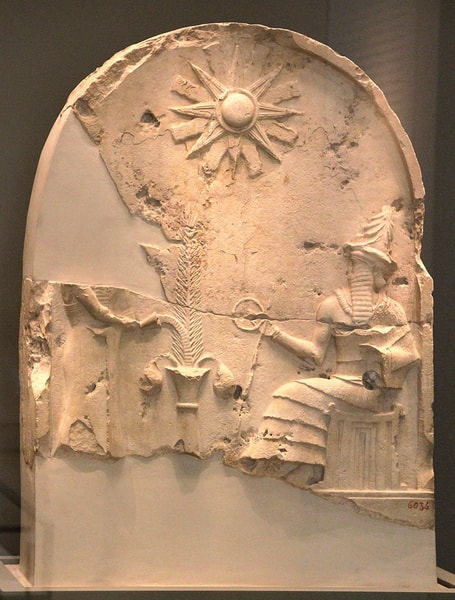
This profound commitment to the forgotten and the oppressed linked her closely with Utu-Shamash, the Sumerian/Akkadian god of justice, whose symbol was the sun. Just as the sun illuminated all corners of the earth, seeing every deed, so too did Utu-Shamash oversee justice. However, Nanshe was perceived as significantly more accessible, her compassion resonating directly with the daily struggles of ordinary people. The Utu-Shamash image, often depicting him with solar rays, symbolized this all-seeing divine justice, yet Nanshe offered a more immediate, maternal touch.
Worship of the Goddess: Ritual, Community, and Enduring Influence
The veneration of Nanshe spanned millennia, from the early 3rd millennium BCE throughout the entirety of Mesopotamia’s rich history and even into the early Christian era. Her enduring appeal is evident in the appropriation of her symbols – the fish and the pelican – by early Christians, who recognized the profound parallels between Nanshe’s devotion to humanity and their own deity’s message of sacrifice and care.
Nanshe’s temple in Lagash was far more than a mere place of worship; it served as a vital community hub and a center for social welfare. Hymns from the time of Gudea describe her priestesses and priests actively engaged in charitable work: feeding the poor, tending to the sick, and providing care for orphans and widows. This practical embodiment of Nanshe’s values solidified her temple’s role as a cornerstone of communal support and social justice initiatives.
A significant annual festival was held at her temple on the first day of the new year, drawing pilgrims from across the land. This festival began with a ritual cleansing, followed by a unique practice known as the "ordeal." The ordeal, a common method in ancient Mesopotamia for determining guilt or innocence, often involved the accused being thrown into a river; survival indicated divine affirmation of innocence. For those seeking an audience with Nanshe to resolve legal disputes or gain prophetic visions, submission to the ordeal was a prerequisite for entering the temple complex, ensuring their purity of heart. Gudea, however, was an exception, his exceptional piety and devotion granting him direct access without needing to undergo the ordeal, further highlighting his revered status.
Gudea’s Dream Vision: A Divine Mandate for Construction
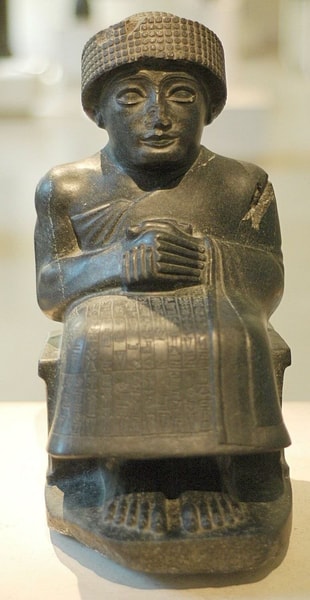
Governor Gudea of Lagash stands as one of Mesopotamia’s most well-known rulers, not just for his political acumen but for his profound piety and dedication to preserving Sumerian literary and religious traditions. His extensive temple building efforts elevated him to such a high status that he was deified and worshipped as a god during the Ur III period (circa 2112 to circa 2004 BCE). His iconic statues, depicting a robed man with clasped hands in prayer, are among the most recognizable pieces of Mesopotamian art. The Gudea of Lagash statues, with their serene expressions, embody the ideal of a devout ruler.
It is in one of the most complete and compelling Sumerian texts, recorded on the Gudea Cylinders, that Nanshe’s role as a divine interpreter shines brightest. Gudea recounts a vivid dream in which Ningirsu, the city god of Lagash, appeared to him, commanding the construction of a temple. However, the dream’s symbolism was complex, and Gudea struggled to grasp its meaning. As translated and commented upon by the eminent Orientalist Samuel Noah Kramer:
"In the dream, Gudea saw a man of tremendous stature with a divine crown on his head, the wings of a lion-headed bird, and a ‘flood wave’ as the lower part of his body; lions crouched to his right and left. This huge man commanded Gudea to build his temple, but he could not grasp the meaning of his words. Day broke – in the dream – and a woman appeared holding a gold stylus and studying a clay tablet on which the starry heaven was depicted. Then a ‘hero’ appeared holding a tablet of lapis lazuli on which he drew a plan of a house; he also placed bricks in a brick mold which stood before Gudea together with a carrying basket. At the same time a specially bred male donkey was impatiently pawing the ground." (Kramer, 138-139)
Unable to decipher this complex vision, Gudea, in his piety, decided to consult Nanshe, renowned for her ability to interpret divine dreams. He embarked on a journey by boat to Nina, stopping at various shrines along the way to offer sacrifices and prayers, seeking divine support for his quest. Upon reaching Nanshe’s temple, after making his offerings, he recounted his dream. Nanshe, with her characteristic wisdom, interpreted each element point by point:
"The man of tremendous stature with a divine crown on his head, the wings of a lion-headed bird, a flood wave as the lower part of his body, and lions crouching to his right and left – that is [my] brother Ningirsu, who commanded [you] to build the temple Eninnu. The breaking of day over the horizon – that is Ningishzida, Gudea’s personal god, rising like the sun. The woman holding a gold stylus and studying a clay tablet on which the starry heaven was depicted – that is Nisaba (the goddess of writing and the patron deity of the edubba), who directs you to build the house in accordance with the ‘holy stars’. The hero holding a tablet of lapis lazuli – that is the architect god Nindub drawing the temple plan. The carrying basket and brick mold in which ‘the brick of fate’ was placed – these betoken the bricks for the Eninnu temple. The male donkey pawing the ground impatiently – that, of course, is Gudea himself, who is impatient to carry out his task." (Kramer, 138-139)
With Nanshe’s clear interpretation, Gudea awoke, offered prayers and sacrifices, and presented the divine mandate to his people. Their enthusiastic response led to the successful construction of the Temple of Ningirsu at Larsa, a monumental undertaking guided by divine vision and Nanshe’s sagacious counsel. The Foundation Pegs from Ningirsu Temple, Girsu, discovered at archaeological sites, stand as tangible evidence of such grand construction projects.
Implications: Nanshe’s Unwavering Virtue and Enduring Legacy
The Gudea Cylinders, along with countless hymns and inscriptions, consistently portray Nanshe as a wise, helpful, and unfailingly benevolent goddess. This consistent depiction sets her apart from many other deities in the Mesopotamian pantheon, who often exhibit human-like flaws and unpredictable temperaments. A striking example of this contrast can be found in the myth Enki and the World Order.
In this narrative, after Enki meticulously creates the world and assigns roles and functions to all living things and deities, Inanna, the popular goddess, confronts him. She complains vehemently that she has been unfairly treated, that other gods have received greater gifts, and that she has been denied her rightful place. Towards the end of her furious tirade, she specifically mentions Nanshe, highlighting the wonderful attributes bestowed upon her sister while lamenting her own perceived shortcomings. Enki’s calm response – "What did I keep from you? What more could we add to you?" – followed by a recitation of Inanna’s already impressive powers, serves to underscore Inanna’s petulance. Throughout Inanna’s outburst, Nanshe and the other gods remain notably silent, their quiet dignity contrasting sharply with Inanna’s dramatic display of ingratitude. Nanshe’s consistent portrayal as selfless and just, even when placed in direct comparison with a powerful and often self-centered deity like Inanna, solidifies her unique standing.
Unlike Enki, who could be mischievous, or Inanna, who was often portrayed as a "spoiled brat," Nanshe is never depicted as petty, selfish, or thoughtless. Her character remains consistently pure, defined by her role as a steadfast defender of the disenfranchised, a companion to the outcast, the poor, the sick, widows, orphans, and foreigners seeking refuge. She was the traveler’s guide, the stranger’s friend, and a source of unwavering support for all in her community. As one of her hymns eloquently states, her central role was:
"To comfort the orphan, to make disappear the widow / To set up a place of destruction for the mighty / To turn over the mighty to the weak / Nanshe searches the heart of the people." (Kramer, 125)
This powerful declaration raises a poignant question: if Nanshe was such a popular and benevolent goddess, devoted to justice and the protection of the vulnerable, why did injustice, suffering, and the oppression of the weak by the mighty persist in ancient Mesopotamia, much as they do today? The Mesopotamian worldview offered a nuanced explanation: while Nanshe always intended the best for humanity, other gods, malevolent demons, or spirits might have had different, darker plans. The best course of action, then, was not to despair but to place one’s trust in the goddess, appeal to her in times of need, offer gratitude in times of plenty, and hope that Nanshe’s benevolent power would ultimately triumph over the forces of darkness and despair.
Crucially, this hope was not passive. The most effective way to ensure a positive outcome was for individuals to actively embody the values Nanshe represented. By calling upon her for protection and guidance, and by striving to spread her light through acts of kindness, fairness, and compassion in their daily lives, worshipers believed they could contribute to the realization of her divine will. Nanshe thus became more than just a deity; she was an aspirational ideal, a divine blueprint for a just and compassionate society, whose enduring legacy continues to inspire reflections on ethical governance and human empathy. Her story remains a profound testament to humanity’s timeless yearning for justice, fairness, and unwavering compassion in an often-unpredictable world.