Sultan Mahmud II: Architect of a Modernizing Empire Amidst Decline
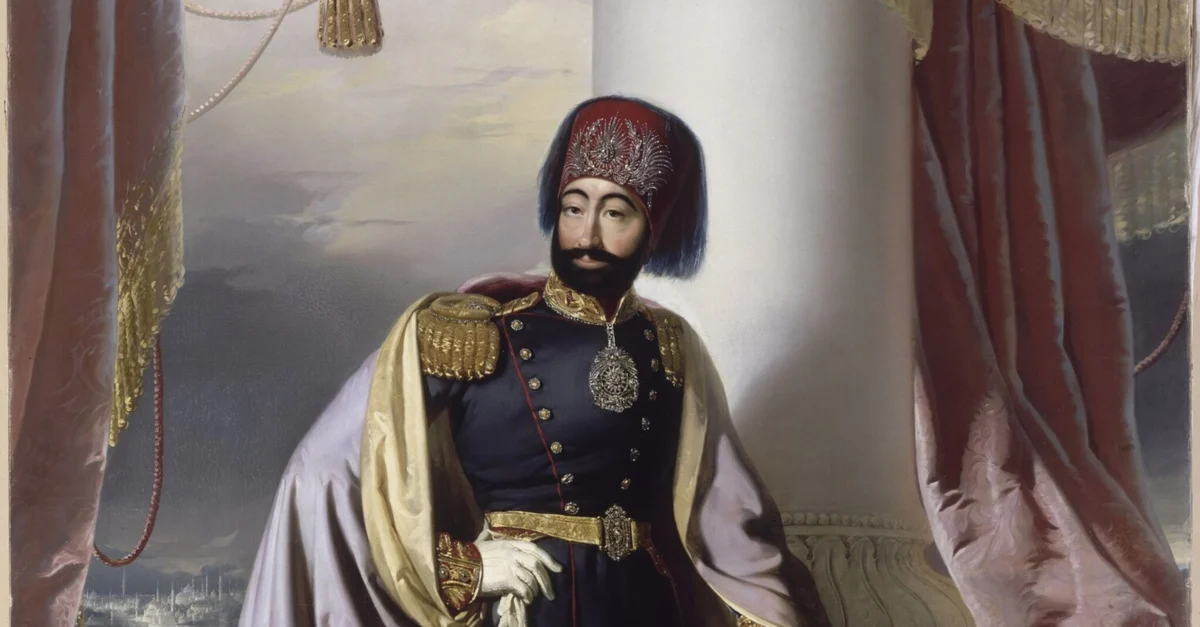
Constantinople, Ottoman Empire – Sultan Mahmud II, reigning from 1808 to 1839, stands as one of the most pivotal and controversial figures in the twilight years of the Ottoman Empire. Dubbed "Infidel Sultan" by some traditionalists, his radical and often ruthless reforms were an audacious attempt to wrench a sprawling, decaying empire into the modern era, directly confronting centuries of entrenched customs and institutions. He systematically dismantled the antiquated structures that had once defined Ottoman power, laying the foundational stones for a new state apparatus that would, against all odds, continue to evolve into the modern Republic of Turkey.
Mahmud II’s tenure was marked by an unwavering commitment to centralized authority and modernization. From the dramatic eradication of the Janissary corps – a powerful military elite that had become an insurmountable obstacle to progress – to the establishment of modern ministries, the implementation of the first official census, and the launch of the state’s first gazette, Takvim-i Vekayi, his vision reshaped the very fabric of Ottoman governance and society. He initiated profound changes not only in military organization but also in bureaucracy, public appearance, and education, signaling a decisive break from the past in a desperate bid for survival against encroaching Western powers and internal fragmentation.
A Realm in Peril: The Setting for a Reformer
Mahmud II was born in 1785 into an empire teetering on the brink of collapse. The once formidable Ottoman state, a dominant force for centuries, found itself in a severe crisis by the late 18th century. Economic stagnation, rampant corruption, and a profoundly outdated military system had eroded its power. European armies, propelled by advancements in tactics and technology, consistently outmaneuvered Ottoman forces, leading to the loss of vast territories, particularly to the burgeoning Russian and Austrian empires.
Amidst this turmoil, a critical debate emerged within Ottoman leadership: should the state cling to a nostalgic vision of a glorious past, seeking salvation in a return to traditional methods, or embrace radical change to adapt to a rapidly modernizing world? Mahmud II, through his actions, decisively championed the latter, understanding that the empire’s survival hinged on a fundamental transformation.
Early Life and a Perilous Ascent
Mahmud’s uncle, Selim III (reigned 1789-1807), was himself a visionary reformer who attempted to reverse the empire’s decline by establishing the Nizam-ı Cedid, a modern army trained in European styles. However, his efforts met fierce resistance from the Janissaries, the elite infantry corps whose vested interests were directly threatened by these innovations. Seeing their privileges and influence curtailed, the Janissaries, rallying behind figures like Kabakçı Mustafa, staged a revolt that ultimately forced Selim III to abdicate in favor of his conservative cousin, Mustafa IV.
While Selim III languished in confinement, provincial notables (ayan) like Alemdar Mustafa Pasha marched on Constantinople with the intent of restoring the reformist sultan. In a desperate act to secure his own position, Mustafa IV ordered the execution of both Selim III and the young 23-year-old Mahmud, believing that eliminating all other potential heirs would prevent any challenge to his throne.
The palace became a scene of frantic chaos. Executioners, acting on Mustafa IV’s command, swiftly murdered Selim III. Mahmud’s fate, however, took a miraculous turn. A courageous palace concubine, Cevri Kalfa, threw ash into the faces of the soldiers sent to kill him, creating a precious window of opportunity. Mahmud, seizing the moment, managed to escape and hide on the palace roof. This narrow escape ensured the continuity of the Ottoman dynasty through Mahmud, a testament to sheer luck and individual bravery that profoundly altered the course of history.
Alemdar Mustafa Pasha’s forces eventually stormed the palace, capturing and executing Kabakçı Mustafa. With Selim III dead and Mustafa IV’s legitimacy shattered, Mahmud II ascended to the throne, inheriting an empire in disarray and a reign destined to be anything but easy.
Consolidating Power: Navigating Internal and External Strife
Mahmud II’s accession coincided with the ongoing Coalition Wars in Europe. The Sublime Porte, the Ottoman government, traditionally sided with France, leading to conflicts with Russia and Great Britain. While the war with Britain concluded in 1809, hostilities with Tsarist Russia persisted until 1812, further draining the empire’s already stretched resources.
Upon assuming the throne, Mahmud faced a stark reality: central authority had eroded to the point where the Sublime Porte exercised little control over its vast territories. Alemdar Mustafa Pasha, now Grand Vizier, attempted to revive the empire by inviting powerful provincial notables to Constantinople. This culminated in the signing of the Sened-i İttifak (Pact of Alliance) on September 29, 1808. This landmark document, often likened to England’s Magna Carta, saw the provincial notables acknowledge the Sultan’s absolute authority in exchange for the Sultan’s recognition of their local power.

However, Mahmud II, ever determined to assert sole sovereignty, harbored no desire to be indebted to Alemdar or to share power. Before the year 1808 concluded, the Janissaries, aiming to restore Mustafa IV, revolted against Alemdar. Mahmud, demonstrating a shrewd and ruthless pragmatism, chose not to intervene, allowing the conflict to play out. Cornered by the Janissaries, Alemdar set fire to a gunpowder magazine, perishing alongside hundreds of his enemies. With Alemdar eliminated and Mustafa IV subsequently executed on Mahmud’s orders, Mahmud II became the sole living heir to the Ottoman throne, consolidating his power through a calculated indifference to the fates of his former benefactors and rivals.
The Stirrings of Nationalism: Uprisings in the Balkans
Mahmud’s reign was characterized by relentless challenges, not least the burgeoning nationalist movements that threatened to tear the multi-ethnic empire apart. The ideas of liberty and national self-determination, ignited by the French Revolution, resonated deeply within the diverse populations under Ottoman rule. The inherent weakness of the central state, exacerbated by Janissary pressure and the arbitrary rule of provincial notables, created fertile ground for dissent.
The Serbian Uprising (1804-1815): Serbia rebelled in 1804, seeking independence from the Sublime Porte. Caught in a war with Russia (1806-1812), the Ottoman army was forced to fight on two fronts. The situation eased in 1812 with the signing of a peace treaty with Russia, prompted by Napoleon’s invasion. This allowed the Ottomans to redeploy forces and suppress the rebellion’s leader, Kara George, in 1813. Miloš Obrenović, a rival of Kara George, was appointed Grand Knez, tasked with ensuring local compliance. However, the defeat was not universally accepted. In 1815, Obrenović himself led a second revolt. Recognizing the difficulty of outright independence, he negotiated for autonomy, which was officially recognized by the Treaty of Edirne in 1829. While not full independence, it marked a significant step towards self-rule and a precedent for other ethnic groups.
The Greek Uprising (1821-1832): Nationalism reached a fever pitch in Greece. The Filiki Eteria (Society of Friends), founded in Odessa in 1814, actively promoted the ideals of the French Revolution. The "Megali Idea" (Great Ideal), a vision to revive ancient Greek civilization and the Byzantine legacy by establishing a Greek state centered in Constantinople, became a powerful motivating force.
Complicating matters, Ali Pasha of Yanina, a powerful governor in Greece, effectively carved out an autonomous state within the empire. Mahmud II, aiming to reassert central control, dismissed Ali Pasha in 1820, prompting him to rebel. As the Ottoman army was engaged in subduing Ali Pasha, the Filiki Eteria launched their own rebellion in the Peloponnese in 1821.

After finally eliminating Ali Pasha in 1822, the Ottoman army turned its attention to the Greek rebellion, but the conflict quickly devolved into a stalemate. Desperate, Sultan Mahmud sought assistance from Kavalalı Mehmed Ali Pasha, the powerful Governor of Egypt. Mehmed Ali agreed, sending his son Ibrahim Pasha with a formidable fleet on the condition that he be granted the governorships of Crete and the Peloponnese upon success. In March 1825, Ibrahim Pasha captured Navarino, seemingly bringing the rebellion to an end.
However, Western powers—France, Great Britain, and Russia—intervened decisively. In an unprecedented act, their combined fleets destroyed the Ottoman/Egyptian fleet at Navarino in 1827 without a declaration of war. This intervention dramatically shifted the balance, leading to a war between Russia and the Sublime Porte in 1828. The subsequent Treaty of Edirne (1829) paved the way for Greek sovereignty, and by the 1830 Protocol of London, Greece was recognized as a fully independent state, later becoming a kingdom in 1832. The loss of Greece was a profound blow to Ottoman prestige and territorial integrity, underscoring the empire’s vulnerability to European intervention.
The Auspicious Incident: Eradicating the Obstacle to Reform
The Janissaries, once the vanguard of Ottoman power, had by Mahmud’s time devolved into a deeply entrenched, corrupt, and ultimately obstructionist force. Their military effectiveness had waned, yet their political power remained immense, acting as a constant check on any sultan attempting reform. Past attempts to curb their influence, such as Selim III’s, had resulted in the ruler’s downfall and death. Mahmud II, acutely aware of his uncle’s fate, understood that any successful modernization hinged on their complete eradication.
Mahmud embarked on a patient, clandestine strategy. Rather than openly confront them, he systematically weakened their internal structures, appointing loyalists or incompetent individuals to key positions within their ranks and among the ulema (religious scholars who often sided with the Janissaries). He meticulously prepared for the inevitable confrontation, knowing he would have only one chance.
In 1826, Mahmud made his move. He ordered the formation of a new auxiliary force, the Eşkinci, to be drawn from within the Janissary corps itself, deliberately provoking them. As expected, on June 15, 1826, the discontented Janissary units rose in rebellion, congregating in their barracks at Et Meydanı. This was precisely what Mahmud had orchestrated. He immediately declared the rebels traitors and, with the support of loyalist artillery and infantry, brutally suppressed the uprising. The Janissary barracks were bombarded and burned, their resistance swiftly crushed.

This event, known as the "Vaka-i Hayriye" or "Auspicious Incident," was a turning point. A full-scale manhunt ensued; Janissaries were hunted down and killed, and every trace of their existence was systematically purged. Their headquarters were demolished, their distinctive uniforms burned, and even their revered military marching band, the Mehter, was disbanded, its compositions destroyed. The elimination of the Janissaries, a force that had actively hindered progress for centuries, cleared the path for Mahmud’s sweeping reforms, earning the event its "auspicious" moniker.
Architect of Modernity: Sweeping Reforms and a New Ottoman Identity
With the Janissaries removed, Mahmud II could finally implement the radical changes necessary for the empire’s survival, mirroring the transformative efforts of figures like Russia’s Peter the Great, who had similarly abolished the streltsy (Russian military units akin to Janissaries) a century earlier.
Military Transformation: The Janissary Corps was replaced by the Asakir-i Mansure-i Muhammediye ("The Trained Victorious Soldiers of Muhammad"), a new army organized and trained along European lines. This marked a fundamental shift from a traditional, irregular force to a disciplined, modern military.
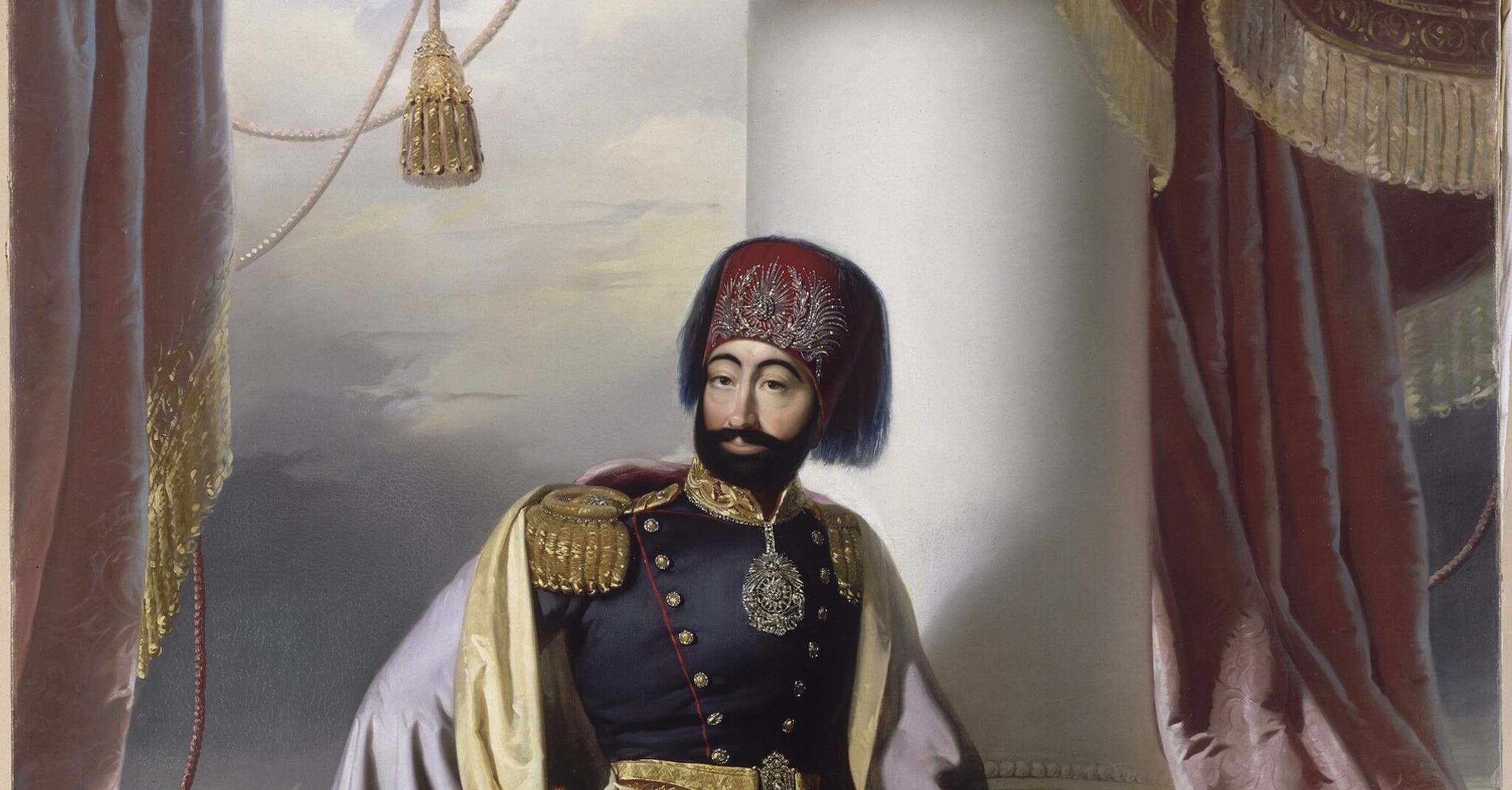
Societal and Cultural Overhaul: Mahmud recognized that modernization extended beyond the military. He introduced regulations on attire, most notably banning the traditional turbans and old headgear associated with the Janissaries and introducing the fez. This sartorial reform extended to civil servants in 1829, replacing traditional robes and baggy trousers (şalvar) with Western-style trousers, jackets (frock coats), and black leather boots. Even the length of mustaches and beards was regulated. These changes were not merely superficial; Mahmud aimed to create a single "Ottoman citizen" by concealing individual religious, sectarian, and social distinctions, fostering a more unified, modern identity. His adoption of European dress and his interest in foreign languages contributed to his moniker, "Infidel Sultan," among conservative elements of the populace.
Administrative Modernization: Mahmud’s administrative reforms were equally profound. Powers previously held by individual, often corrupt, state officials were transferred to modern ministries, establishing institutions that form the bedrock of many contemporary states. These included the Ministry of the Interior, Ministry of Foreign Affairs, Ministry of Justice, Ministry of Finance, and a Council of Ministers. To communicate these reforms and other state affairs to the populace, he founded Takvim-i Vekayi, the empire’s first official gazette. Furthermore, the first modern census in the Ottoman Empire was conducted during his reign, providing crucial demographic and economic data for effective governance.

Educational Reforms: Recognizing the critical role of education, Mahmud made primary education compulsory for both boys and girls in Constantinople in 1824—a remarkably progressive step for its time. He initiated a new, more secular school system focused on arithmetic, science, and foreign languages, while traditional religious schools were largely left untouched. To address the severe shortage of qualified educators, he implemented a groundbreaking program: talented students were sent abroad to complete their studies, returning to fill key positions within the burgeoning modern state apparatus.
Mahmud’s leadership style also differed significantly from his predecessors. As historian N. Berkes notes, he was "the one who ventured outside the capital, traveled, boarded steamships, and even took an interest in learning foreign languages," actively engaging with the modern world. He also strove to curb the arbitrary governance, including property confiscation and executions, that had long been a legacy of earlier sultans, signaling a move towards a more rule-based administration.
The Egyptian Crisis: A Final Humiliation
Despite his monumental reforms, Mahmud II faced a final, devastating challenge in the form of Kavalalı Mehmed Ali Pasha, his own powerful governor of Egypt. Having aided the Sultan during the Greek rebellion, Mehmed Ali demanded the governorships of Syria, Crete, and Adana as compensation for his losses at Navarino. Mahmud’s staunch refusal ignited a new conflict in 1831.
Mehmed Ali Pasha dispatched his son, Ibrahim Pasha, who swiftly conquered Palestine and Syria. In a crushing blow to Ottoman prestige, Ibrahim’s forces then defeated the main Ottoman army at Konya, deep within Anatolia, in 1832. With the Egyptian army marching on Constantinople, Mahmud II was forced to make humiliating concessions, ceding control of Jeddah and effectively granting Mehmed Ali Pasha vast swathes of territory. It was an unprecedented defeat: a provincial governor had successfully challenged and overcome the Sultan himself.
Mahmud, however, could not accept this defeat as final. By 1839, he launched a new campaign to reclaim the lost territories and restore imperial authority. On June 24, 1839, the two armies clashed at Nezib, resulting in an utter catastrophe for the Ottoman forces, with most soldiers perishing. Compounding the disaster, the Ottoman fleet, dispatched from Constantinople to confront the Egyptians, was surrendered to Egypt by its admiral, Ahmed Fevzi Pasha, who had received news of the Sultan’s failing health.

Sultan Mahmud II died on June 30, 1839, just six days after the annihilation of his army and likely unaware of the fleet’s betrayal. His reign, a relentless struggle against internal decay and external pressures, ended in a military humiliation that underscored the empire’s precarious position.
Legacy: The Foundations of a New State
Mahmud II was, without doubt, a radical reformer who transformed the Ottoman State more profoundly than any of his predecessors. His reforms, while necessary, were often met with resistance and sometimes alienated the populace, who felt overwhelmed by the rapid changes. Yet, the sheer scale and scope of his initiatives were unprecedented.
While the immediate success of his reforms in halting the empire’s decline remains a subject of historical debate, there is no denying their long-term impact. The institutions he established, the administrative structures he implemented, and the mindset of modernization he fostered laid the essential groundwork for the Tanzimat era (Reorganization period) that followed his death. Crucially, these reforms ultimately provided the institutional and ideological foundations upon which the modern Republic of Turkey would be built a century later. For his unwavering vision and his ruthless determination to modernize a crumbling empire, Mahmud II stands as one of the most significant and transformative sultans in Ottoman history.