
Reclaiming the Enchanted Mind: Ioan P. Couliano’s "Eros and Magic in the Renaissance" Challenges Modernity’s Foundations
FOR IMMEDIATE RELEASE
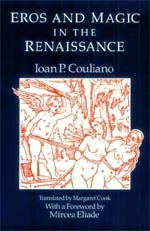
[City, State] – [Date] – A groundbreaking historical and philosophical work, Eros and Magic in the Renaissance by Ioan P. Couliano, continues to provoke profound reflection on the origins of our modern worldview, fundamentally questioning the widely accepted narrative of scientific progress and the very nature of human consciousness. Far from being a niche academic text, Couliano’s meticulously researched and boldly argued book posits that our contemporary understanding of imagination and desire as purely subjective, inconsequential mental phenomena is a recent and, arguably, ill-conceived aberration. Instead, it reveals a vibrant Renaissance era where these inner faculties were considered potent forces capable of shaping and interacting with objective reality, a perspective that was systematically dismantled by a specific historical shift.
This seminal work, originally published in 1984, remains strikingly relevant today, offering a compelling critique of the mechanistic, disenchanted world we inhabit. Couliano, a scholar of religions and a practitioner of magic, brings an unparalleled perspective to his analysis, informed by both rigorous academic discipline and an intimate understanding of the magical traditions he explores. His unique position, honed through extensive collaboration with the renowned historian of religions Mircea Eliade, imbues his scholarship with a freshness and vitality rarely found in conventional historical accounts. Eros and Magic in the Renaissance serves as both a masterful historical sketch of a pivotal intellectual transition and an invaluable contribution to the philosophy of magic, redefining how we perceive the interplay between mind, matter, and the forces that shape human civilization.
The Renaissance Mind: Where Imagination Held Sway
Couliano’s central thesis asserts that the Renaissance fostered a profoundly different understanding of the human psyche and its relationship to the cosmos than that which dominates modern thought. In this era, the imagination (vis phantastica) and desire (eros) were not relegated to the realm of mere subjective fancy but were understood as dynamic, active forces capable of influencing the external world. This perspective was deeply rooted in a rich tapestry of Neoplatonic, Hermetic, and Cabalistic traditions, which envisioned a universe interconnected by sympathies and correspondences, a living organism permeated by spirit.
Leading figures of the Renaissance intellectual revival, such as Marsilio Ficino, Pico della Mirandola, and Giordano Bruno, form the cornerstone of Couliano’s analysis. Ficino, the Florentine Neoplatonist, championed the idea of cosmic sympathy, believing that through specific rituals, talismans, and even musical harmonies, one could draw down celestial influences and direct them through the power of the imagination and intention. His work on astral magic and the animation of images underscores the belief in the active agency of the mind. Pico della Mirandola, in his famous Oration on the Dignity of Man, articulated a vision of humanity as capable of ascending through various planes of existence, endowed with a unique capacity for self-fashioning and magical manipulation of reality. His syncretic approach, blending diverse philosophical and religious traditions, opened new avenues for understanding human potential and the nature of magic.
However, it is Giordano Bruno, the Dominican friar burned at the stake for heresy, whose magnum opus On Bonding in a General Sense (De Vinculis in Genere) serves as a critical cornerstone for Couliano’s exposition. Bruno’s intricate theories on the art of memory, the power of images, and the mechanisms of "bonding" – how one mind can influence another, or how an individual can impress their will upon reality – are meticulously dissected. For Bruno, magic was not mere superstition but a sophisticated psychological and cosmological art, a systematic application of knowledge regarding the hidden connections within the universe and the potent forces of the human will and imagination. His work represents the zenith of Renaissance magical thought, demonstrating a profound belief in the mind’s capacity to engage with and shape the fabric of existence. These thinkers, among others, saw the world as an enchanted place, an animistic tapestry where spirit permeated all things, and human consciousness was a vital, active participant, not a passive observer.
The Unraveling: Chronology of Disenchantment
The vibrant, enchanted worldview of the Renaissance, however, was not destined to endure. Couliano meticulously traces the historical forces that led to its decline, culminating in the triumph of a mechanistic paradigm that still largely defines our reality. This transition was not a gradual, organic evolution towards a more "rational" understanding, but rather a deliberate and often brutal suppression driven by a powerful cultural and religious shift.
The primary catalyst for this profound intellectual and spiritual transformation, according to Couliano, was the Protestant Reformation. Far from being a liberalizing movement, the Reformation is presented as an ultraconservative force that sought to strip Christianity of its remaining vestiges of animism and "enchantment." The medieval Catholic Church, despite its official condemnations, had, in its comparatively lax approach, allowed various forms of popular magic, saint veneration, relics, and localized animistic practices to survive, often interwoven with Christian liturgy and belief. The Reformers, driven by a fundamentalist desire for a "pure" Christianity based solely on scripture, viewed these practices with deep suspicion, condemning them as idolatrous, superstitious, and demonic. This puritanical impulse cast a long shadow over any worldview that posited an active, spiritual dimension to the material world, effectively "disenchanting" the cosmos.
Simultaneously, the nascent sciences of the period found themselves at a crossroads, divided between two fundamentally incompatible approaches. On one side stood the "natural magicians" like Paracelsus, who, while often employing empirical observation, still viewed the world as imbued with vital forces, sympathies, and hidden powers. For them, phenomena were understood through analogies, qualities, and the interaction of active principles. On the other side emerged the "proto-mechanists," thinkers who began to conceptualize the world as a giant, impersonal machine, devoid of inherent will, spirit, or agency. In this emerging worldview, qualities like will and spirit were exiled, confined solely to the human brain and a remote, dualistic Christian spirit world separate from the physical cosmos. This latter perspective, in a slightly modified form, would ultimately become the underlying mythology of dominant strains of modern science. The conflict was not merely one of methodology, but a fundamental clash of ontological premises – two entirely different ways of perceiving and experiencing reality.
Supporting Data: The Clash of Mythologies
Couliano’s brilliance lies in his ability to deconstruct the conventional triumphalist narrative that portrays the victory of the mechanistic worldview as an inevitable outcome of superior reason and empirical evidence. He argues persuasively that this victory was not predicated on inherent intellectual superiority but rather on its congruence with the prevailing puritanical sentiments of the period. The debate was not, as often framed by proponents of mechanism, a struggle between reason and unreason, between science and superstition. Instead, it was a battle between two distinct and incompatible mythologies, two divergent sets of foundational premises about the nature of reality.
To illustrate this, Couliano delves deeper into the specifics of vis phantastica and eros within the Renaissance context. Vis phantastica was understood as the faculty that could apprehend and manipulate "images" or "forms" that were not merely mental representations but possessed a degree of objective reality, capable of influencing the astral and elemental planes. Through concentrated imagination, a magician could, for example, create a simulacrum that would attract certain cosmic energies or influence a distant person. Eros, similarly, was not confined to carnal desire but represented a cosmic, binding force – a desire for connection and union that permeated the universe. Neoplatonic thinkers saw eros as the animating principle of the cosmos, driving all things towards their ideal forms, and human eros as a powerful tool for self-transformation and sympathetic magic.
The Protestant Reformation, with its emphasis on divine transcendence, predestination, and the fallen nature of humanity, found such ideas deeply problematic. The notion that humans could, through their own imagination and will, actively participate in shaping the cosmos bordered on blasphemy, challenging divine omnipotence and promoting a sense of human agency that was deemed hubristic. The mechanist worldview, which posited a distant, clockwork God who set the universe in motion but did not constantly intervene, aligned perfectly with this theological shift. It removed the "magic" from the world, leaving a divinely ordered but ultimately inert machine for humans to study and exploit. This intellectual framework neatly supported the new religious orthodoxy by removing any potential rivals to God’s sole agency and power, making the triumph of mechanism a cultural and political victory as much as a scientific one. The world became a machine, and God became the absent engineer, a vision far more palatable to the Reformers than a world buzzing with spirits and human magical potential.
Official Responses and Academic Reappraisal
Couliano’s work directly challenges what could be considered the "official" historical narrative of scientific progress – a narrative often presented as a linear, inevitable march from primitive superstition to enlightened reason. This triumphalist account, perpetuated in many educational and popular science contexts, posits that the mechanistic worldview simply "won out" because it was inherently superior, more logical, and empirically verifiable. Couliano demonstrates that this simplification ignores the profound ideological and cultural undercurrents that shaped the intellectual landscape.
Historically, the official response to magic and animism in the post-Reformation era was one of intense suppression and demonization. Magic was driven underground, equated with witchcraft and heresy, and its practitioners often faced persecution. The "official" scientific establishment, aligning itself with the new theological paradigms, actively distanced itself from anything smacking of enchantment, solidifying the division between a material world governed by predictable laws and a separate, spiritual realm. Couliano’s work, therefore, acts as a powerful counter-narrative, forcing a reappraisal of this historical "official" response.
Within academia, Couliano’s work, like that of his mentor Mircea Eliade, has often been lauded for its erudition and scope, yet also, at times, met with a degree of skepticism from those entrenched in purely materialist or reductionist frameworks. His willingness to engage with the philosophical underpinnings of magic, rather than simply dismissing it as irrational, places him outside the conventional comfort zone of many historians of science or philosophy. However, for scholars seeking a more nuanced and holistic understanding of intellectual history, and for those critical of the limitations of a purely mechanistic paradigm, Eros and Magic in the Renaissance stands as a crucial text. It compels us to question the very foundations of what we consider "rational" and "scientific," suggesting that our current understanding is a product of specific historical choices, not an ultimate, objective truth. His work forces us to confront the "official" story and consider the alternative mythologies that were suppressed.
Implications: The Enduring Legacy of Disenchantment
The implications of Couliano’s argument are far-reaching, extending beyond historical reinterpretation to shed light on the very fabric of contemporary society. If the mechanistic worldview triumphed not on its inherent rationality but on its cultural and political alignment with puritanical sentiments, then the foundations of our modern scientific and philosophical paradigms are less secure and more contingent than commonly believed. This raises critical questions about the nature of progress, the definition of reason, and the limitations of a purely materialist understanding of the universe.
Couliano provocatively suggests that the "magic" that was banished from the scientific mainstream did not disappear entirely. Instead, it went underground, resurfacing under different names in various modern disciplines. He points to fields such as "psychology," which seeks to understand and influence the inner workings of the mind; "marketing" and "advertising," which masterfully manipulate desire and imagination to shape consumer behavior; and "personal development," which promises to unlock inner potential and transform reality through focused intention and belief. These modern practices, Couliano implies, are in many ways the sophisticated, secularized descendants of Renaissance magical arts, employing techniques of suggestion, image manipulation, and the harnessing of desire, albeit stripped of their explicit cosmological and spiritual dimensions. They tap into the same deep human capacities for vis phantastica and eros, demonstrating their enduring power even in a supposedly disenchanted world.
Ultimately, Eros and Magic in the Renaissance is more than just a history book; it is a profound philosophical meditation on the choices humanity made at a critical juncture in its intellectual development. It challenges us to reconsider the price paid for our "rationality" – the loss of an enchanted world, a diminished sense of human agency, and a fragmented understanding of consciousness. By re-examining the Renaissance, Couliano invites us to contemplate what possibilities were foreclosed, and what aspects of human experience might have been sacrificed in the service of a worldview that continues to shape our perception of reality. After engaging with Couliano’s compelling analysis, one cannot view magic, science, or indeed, the very nature of human consciousness in the same way again. His work serves as an urgent reminder that the past is not merely a collection of facts, but a living narrative that continues to inform and constrain our present, urging us to reclaim a more holistic and perhaps, more magical, understanding of ourselves and the cosmos.




Leave a Comment